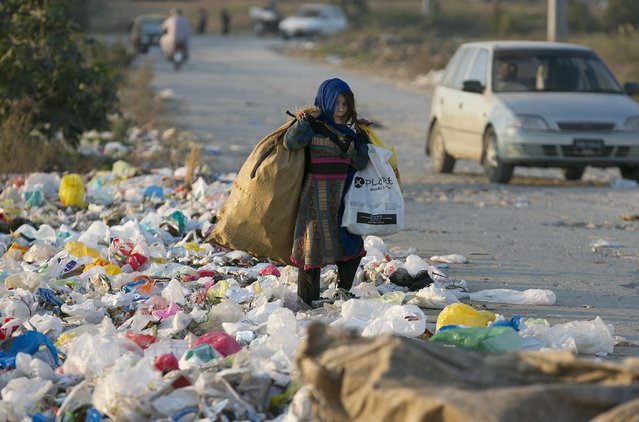
A displaced Pakistani girl collects recyclable goods from a garbage to earn living for her family in Islamabad, Pakistan, Tuesday, January 19, 2016. (Photo by B.K. Bangash/AP Photo)
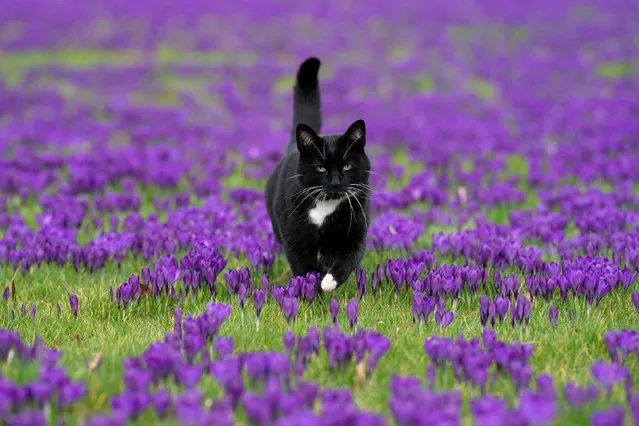
Lord Roscoe the cat runs through the crocuses on the lawns at the National Trust's 17th-century Ham House and Garden in Richmond, London on Monday, March 6, 2023. In recent years more than 500,000 bulbs have been planted to create a spectacle for visitors and to attract bees, butterflies and other pollinating insects. (Photo by Kirsty O'Connor/PA Images via Getty Images)
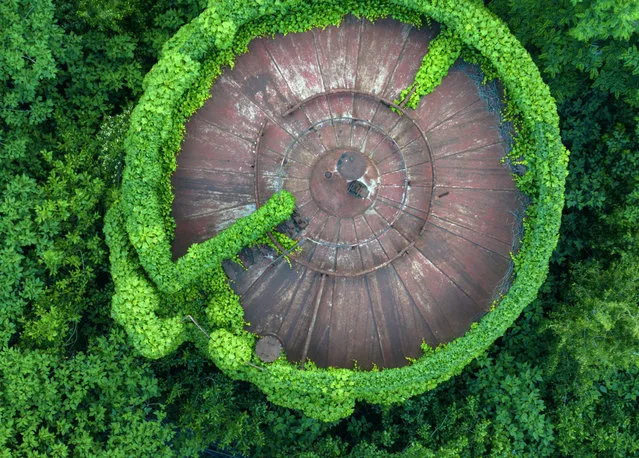
A row of abandoned oil tanks is filled with creepers on the riverside of Liyun River in Huai 'an, East China's Jiangsu Province, May 9, 2023. (Photo credit should read CFOTO/Future Publishing via Getty Images)
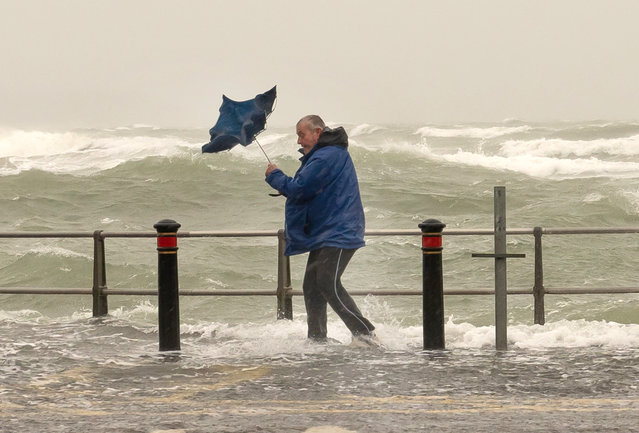
Someone struggles with an umbrella on Mudeford Quay seafront in Dorset, UK during storm Nelson on March 28, 2024. (Photo by Steve Hogan/Picture Exclusive)
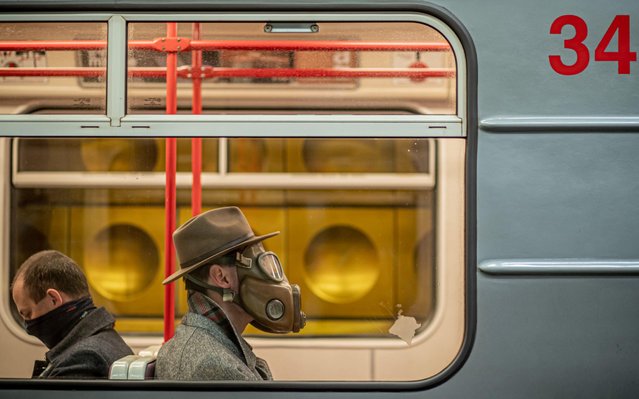
Men wear masks as they sit in the metro in Prague, Czech Republic, 17 March 2020. According to media reports, the Czech government decided to impose a two-week quarantine in the country on the evening of 15 March, and ban all international travel from 16 March 2020. Currently 383 cases of the coronavirus SARS-CoV-2, which causes the Covid-19 disease, have been officially confirmed in Czech Republic. (Photo by Martin Divisek/EPA/EFE)
Personal trainer Antonietta Orsini carries out an exercise class for her neighbours from her balcony while Italians cannot leave their homes due to the coronavirus disease (COVID-19) outbreak, in Rome, Italy, March 18, 2020. (Photo by Remo Casilli/Reuters)
People in traditional Chinese costumes attend a parade to celebrate the upcoming Year of the Dragon on January 28, 2024 in Nanjing, Jiangsu Province of China. The Spring Festival, or the Chinese Lunar New Year, falls on February 10 this year. (Photo by Yang Bo/China News Service/VCG via Getty Images)
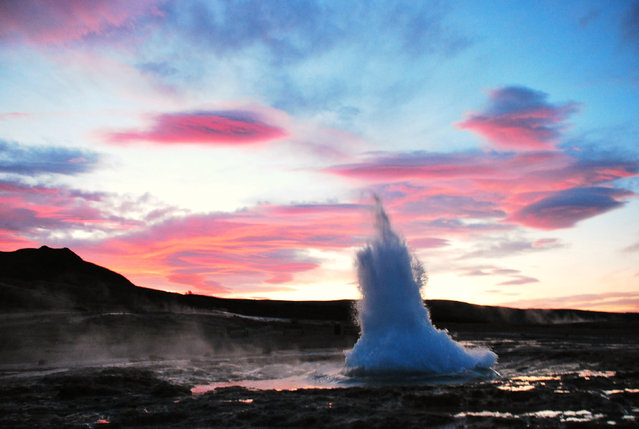
Strokkur geyser against cloudy sky at sunset. Strokkur is a fountain geyser located in a geothermal area beside the Hvítá River in Iceland in the southwest part of the country, east of Reykjavík. It is one of Iceland's most famous geysers, erupting once every 6–10 minutes. Its usual height is 15–20 m, although it can sometimes erupt up to 40 m high. (Photo by Teatsche Dijkhuis/Getty Images/EyeEm)