Loading...
Done
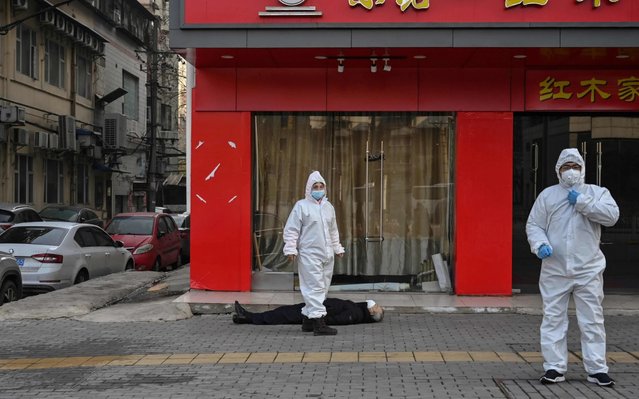
This photo taken on January 30, 2020 shows officials in protective suits checking on an elderly man wearing a facemask who collapsed and died on a street near a hospital in Wuhan. AFP journalists saw the body on January 30, not long before an emergency vehicle arrived carrying police and medical staff in full-body protective suits. The World Health Organization declared a global emergency over the new coronavirus, as China reported on January 31 the death toll had climbed to 213 with nearly 10,000 infections. (Photo by Hector Retamal/AFP Photo)

This photo taken on January 30, 2020 shows officials in protective suits checking on an elderly man wearing a facemask who collapsed and died on a street near a hospital in Wuhan. AFP journalists saw the body on January 30, not long before an emergency vehicle arrived carrying police and medical staff in full-body protective suits. The World Health Organization declared a global emergency over the new coronavirus, as China reported on January 31 the death toll had climbed to 213 with nearly 10,000 infections. (Photo by Hector Retamal/AFP Photo)
Details
02 Feb 2020 00:07:00
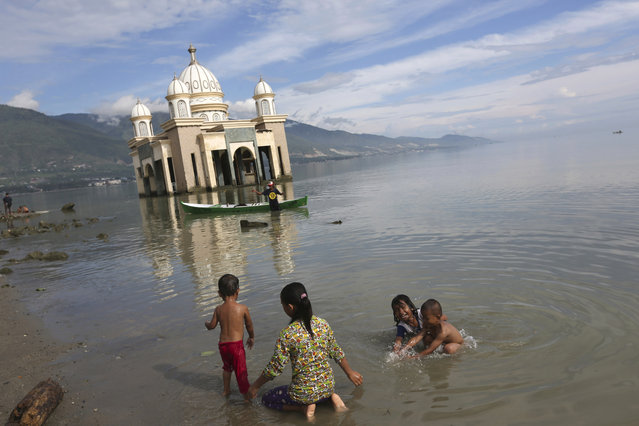
In this Wednesday, April 3, 2019, photo, children play in the water on a beach as a mosque collapsed during the Sept. 28, 2018, earthquake is seen in the background in Palu, Central Sulawesi, Indonesia. The earthquake spawned a large localized tsunami that wiped out coastal areas, while liquefaction caused by the shaking turned entire neighborhoods into rivers of sludge. The disaster killed thousands of people, making it the world’s deadliest seismic event in 2018. (Photo by Tatan Syuflana/AP Photo)

In this Wednesday, April 3, 2019, photo, children play in the water on a beach as a mosque collapsed during the Sept. 28, 2018, earthquake is seen in the background in Palu, Central Sulawesi, Indonesia. The earthquake spawned a large localized tsunami that wiped out coastal areas, while liquefaction caused by the shaking turned entire neighborhoods into rivers of sludge. The disaster killed thousands of people, making it the world’s deadliest seismic event in 2018. (Photo by Tatan Syuflana/AP Photo)
Details
04 May 2019 00:05:00
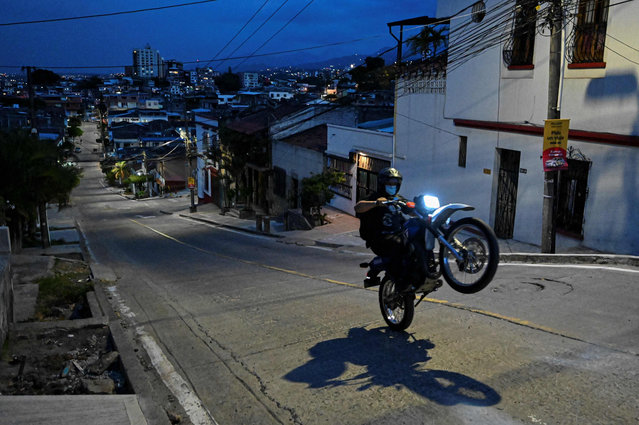
A man rides his motorcycle along an empty street in Cali on April 17, 2021, during a curfew imposed by the government to help curb infections of the novel coronavirus, COVID-19, as weekend partial lockdown takes effect in four Colombian cities. In recent weeks, the Colombian government has imposed, and then tightened, a series of restrictions to stem a third wave of infections that is bringing its health system to the brink of collapse. (Photo by Luis Robayo/AFP Photo)

A man rides his motorcycle along an empty street in Cali on April 17, 2021, during a curfew imposed by the government to help curb infections of the novel coronavirus, COVID-19, as weekend partial lockdown takes effect in four Colombian cities. In recent weeks, the Colombian government has imposed, and then tightened, a series of restrictions to stem a third wave of infections that is bringing its health system to the brink of collapse. (Photo by Luis Robayo/AFP Photo)
Details
19 Apr 2021 10:09:00
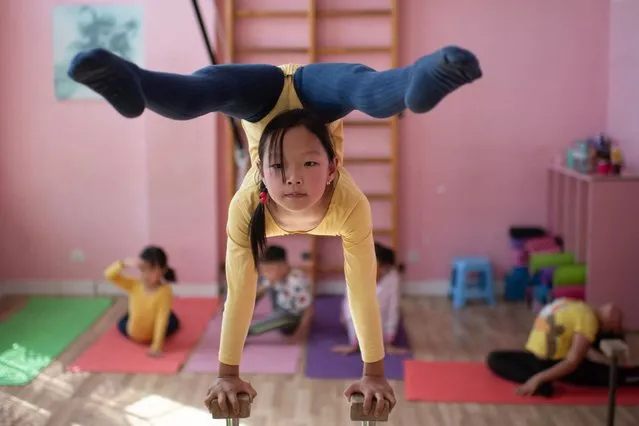
In this picture taken on September 5, 2023, students practice contortionism at the Flower Studio in Ulaanbaatar. Mongolian circus performers fly through the air of a cavernous hall inspectors have warned could collapse at any time, one of the few places left to train if they hope to travel the world with their country's spectacular big top shows. (Photo by Pedro Pardo/AFP Photo)

In this picture taken on September 5, 2023, students practice contortionism at the Flower Studio in Ulaanbaatar. Mongolian circus performers fly through the air of a cavernous hall inspectors have warned could collapse at any time, one of the few places left to train if they hope to travel the world with their country's spectacular big top shows. (Photo by Pedro Pardo/AFP Photo)
Details
28 Oct 2023 06:09:00
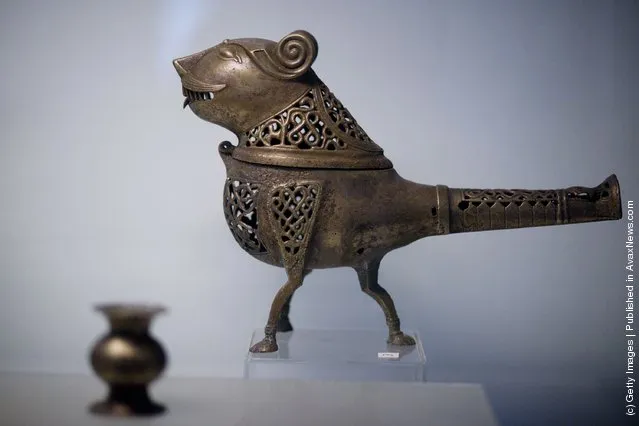
An ancient sculptures, pottery and bowls is displayed in the Kabul Museum August 4, 2011 in Kabul, Afghanistan

An ancient sculpture is displayed in the Kabul Museum August 4, 2011 in Kabul, Afghanistan. The sculptures, which had been destroyed by Islamists during the Taliban regime, were repaired after the collapse of the hardliners in 2001. Portions of the collection have been exhibited in seven countries. (Photo by Majid Saeedi/Getty Images)
Details
05 Aug 2011 09:27:00
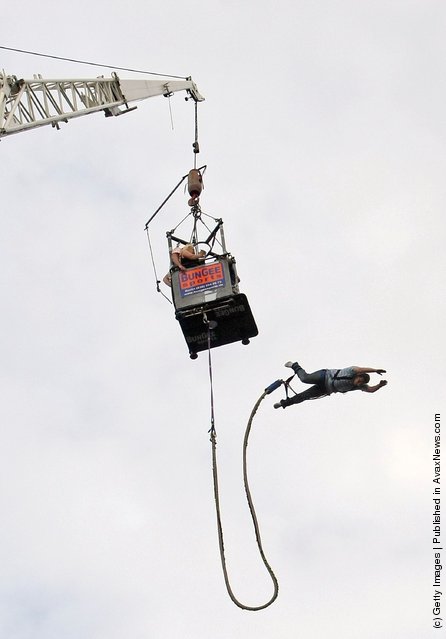
A visiitor bungee jumps during an outdoor festival to celebrate German Unity Day

A visiitor bungee jumps during an outdoor festival to celebrate German Unity Day on the 21st anniversary of German reunification on October 3, 2011 in Berlin, Germany. German Unity Day is a national holiday and marks the day West Germany and East Germany were reunited in 1990 following the collapse of the Iron Curtain. (Photo by Adam Berry/Getty Images)
Details
07 Oct 2011 10:11:00
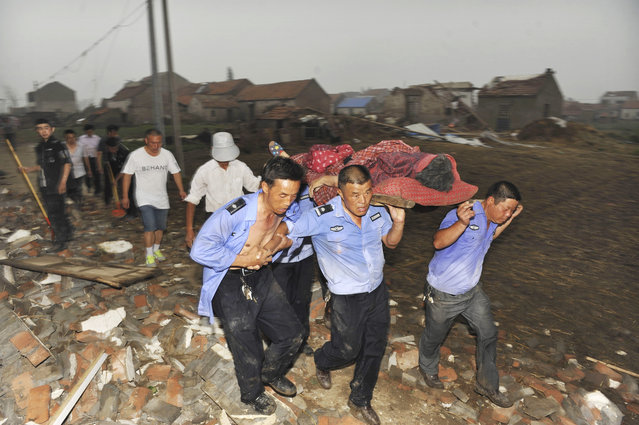
Residents carry an injured woman rescued from a collapsed house in Funing county in Yancheng city of eastern China's Jiangsu Province on Thursday June 23, 2016. A powerful tornado hit Thursday, with reports of dozens killed and large numbers of buildings destroyed in the eastern Chinese province of Jiangsu,  according to state media. (Photo by Chinatopix via AP Photo)

Residents carry an injured woman rescued from a collapsed house in Funing county in Yancheng city of eastern China's Jiangsu Province on Thursday June 23, 2016. A powerful tornado hit Thursday, with reports of dozens killed and large numbers of buildings destroyed in the eastern Chinese province of Jiangsu, according to state media. (Photo by Chinatopix via AP Photo)
Details
24 Jun 2016 13:49:00
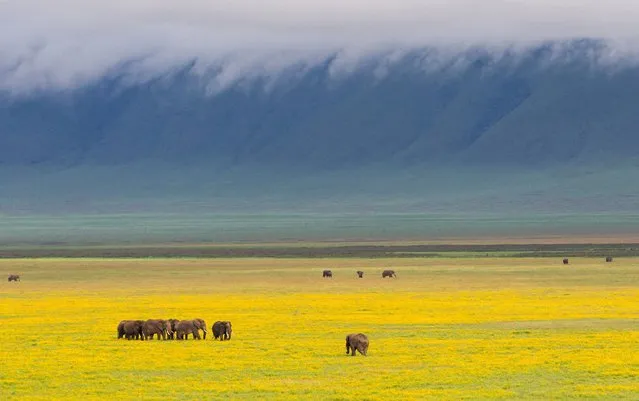
Ngorongoro Crater (Tanzania). At 610m deep and 260 sq km, this is the largest unflooded caldera in the world. A blue-green vision from above it's a haven for engangered wildlife and Maasai livestock. The crater was formed three million years ago when a giant volcano, which could have been as high as Kilimanjaro, exploded and collapsed. The caldera formed the concentric fractures in the crust cracked down to a magma reservoir deep underground. (Photo by John Bryant/Getty Images)

Ngorongoro Crater (Tanzania). At 610m deep and 260 sq km, this is the largest unflooded caldera in the world. A blue-green vision from above it's a haven for engangered wildlife and Maasai livestock. The crater was formed three million years ago when a giant volcano, which could have been as high as Kilimanjaro, exploded and collapsed. The caldera formed the concentric fractures in the crust cracked down to a magma reservoir deep underground. (Photo by John Bryant/Getty Images)
Details
28 Mar 2014 08:08:00