Loading...
Done
A girl walks in front of a graffiti painted on the wall of a house located inside the 15th-century complex built by Mameluk Sultan al-Ashraf Qaitbey, in Cairo's City of the Dead, Egypt February 13, 2017. (Photo by Amr Abdallah Dalsh/Reuters)

A girl walks in front of a graffiti painted on the wall of a house located inside the 15th-century complex built by Mameluk Sultan al-Ashraf Qaitbey, in Cairo's City of the Dead, Egypt February 13, 2017. (Photo by Amr Abdallah Dalsh/Reuters)
Details
25 Feb 2017 00:05:00
A tern chick takes its first steps in the first decade of June 2024 at Nickerson Beach, New York, a common nesting location. (Photo by Suraj Ramamurthy/Solent News)

A tern chick takes its first steps in the first decade of June 2024 at Nickerson Beach, New York, a common nesting location. (Photo by Suraj Ramamurthy/Solent News)
Details
16 Jun 2024 05:55:00
A devotee dressed as Hindu Lord Shiva waits to participate in a parade during “Kumbh Mela” or the Pitcher Festival in Trimbakeshwar, India, August 18, 2015. The Kumbh Mela takes place four times every 12 years at four different river bank locations in India. (Photo by Danish Siddiqui/Reuters)

A devotee dressed as Hindu Lord Shiva waits to participate in a parade during “Kumbh Mela” or the Pitcher Festival in Trimbakeshwar, India, August 18, 2015. The Kumbh Mela takes place four times every 12 years at four different river bank locations in India. (Photo by Danish Siddiqui/Reuters)
Details
19 Aug 2015 12:23:00
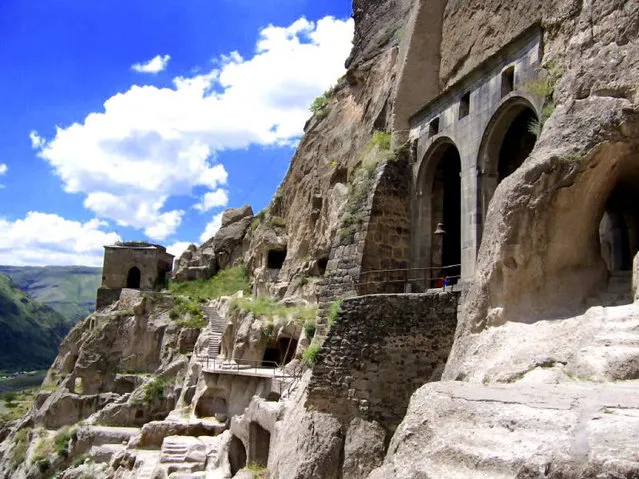
Vardzia Cave Monastery

Vardzia is a cave monastery site in southern Georgia, excavated from the slopes of the Erusheti Mountain on the left bank of the Mtkvari River, thirty kilometres from Aspindza. The main period of construction was the second half of the twelfth century. The caves stretch along the cliff for some five hundred metres and in up to nineteen tiers. The Church of the Dormition, dating to the 1180s during the golden age of Tamar and Rustaveli, has an important series of wall paintings. The site was largely abandoned after the Ottoman takeover in the sixteenth century. Now part of a state heritage reserve, the extended area of Vardzia-Khertvisi has been submitted for future inscription on the UNESCO World Heritage List
Details
04 Sep 2013 10:53:00
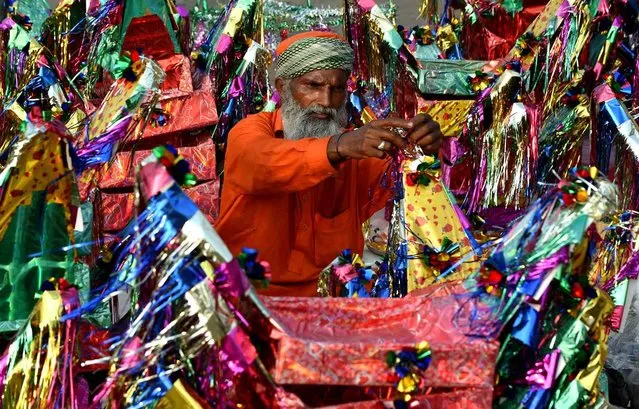
In this photograph taken on September 22, 2016, a Pakistani devotee decorates symbolic paper boats, an offering to Muslim saint Abdulqadir Jilani as a way of giving thanks after their desire to give birth to a son was fulfilled, before dropping it into the water during an annual ceremony on the banks of the River Ravi in Lahore. The ceremony commemorates a centuries-old tale that Muslim saint Abdulqadir Jilani raised a sunken ship carrying a wedding party, at the pleading of the groom's mother, saving all the occupants. (Photo by Arif Ali/AFP Photo)

In this photograph taken on September 22, 2016, a Pakistani devotee decorates symbolic paper boats, an offering to Muslim saint Abdulqadir Jilani as a way of giving thanks after their desire to give birth to a son was fulfilled, before dropping it into the water during an annual ceremony on the banks of the River Ravi in Lahore. The ceremony commemorates a centuries-old tale that Muslim saint Abdulqadir Jilani raised a sunken ship carrying a wedding party, at the pleading of the groom's mother, saving all the occupants. (Photo by Arif Ali/AFP Photo)
Details
06 Oct 2016 09:19:00
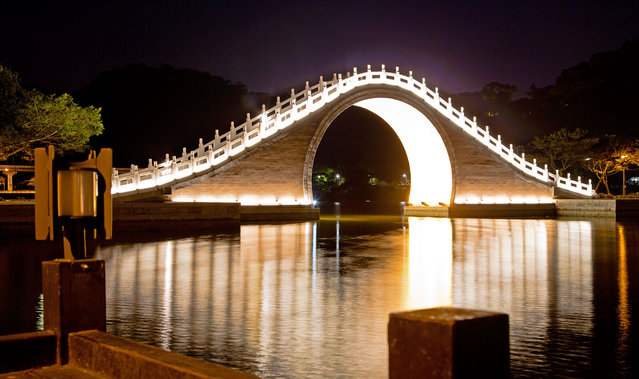
Jade Belt Bridge In Chine

The Jade Belt Bridge, also known as the Camel's Back Bridge, is an 18th-century pedestrian Moon bridge located on the grounds of the Summer Palace in Beijing, China. It is famous for its distinctive tall thin single arch.
Details
05 Sep 2014 09:46:00
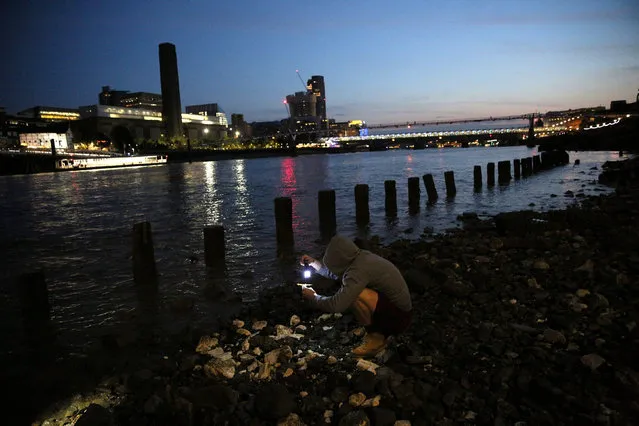
A mudlark uses a torch to look for items on the bank of the River Thames in London, Britain June 06, 2016. Mudlarking is believed to trace its origins to the 18th and 19th century, when scavengers searched the Thames' shores for items to sell. These days, history and archaeology fans are the ones hoping to find old relics such as coins, ceramics, artifacts or everyday items from across centuries. They wait for the low tide and then scour specific areas of exposed shores. "If you're in a field you could be out all day long, with the river you're restricted to about two or three hours," mudlark Nick Stevens said. While many just use the naked eye for their searches, others rely on metal detectors for which a permit from the Port of London Authority is needed. Digging also requires consent. (Photo by Neil Hall/Reuters)

A mudlark uses a torch to look for items on the bank of the River Thames in London, Britain June 06, 2016. Mudlarking is believed to trace its origins to the 18th and 19th century, when scavengers searched the Thames' shores for items to sell. These days, history and archaeology fans are the ones hoping to find old relics such as coins, ceramics, artifacts or everyday items from across centuries. their finds with the Portable Antiquities Scheme. Any item over 300 years old must be recorded. (Photo by Neil Hall/Reuters)
Details
27 Aug 2016 10:43:00
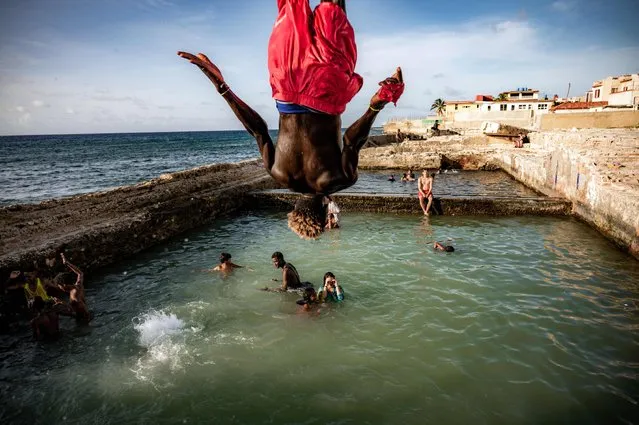
Cubans swim in a natural swimming pool off the coast of Havana on August 4, 2023. With the current hot summer, Havana residents have rushed to the dilapidated natural pools on the coast of their city, built by wealthy families in the first half of the last century. (Photo by Yamil Lage/AFP Photo)

Cubans swim in a natural swimming pool off the coast of Havana on August 4, 2023. With the current hot summer, Havana residents have rushed to the dilapidated natural pools on the coast of their city, built by wealthy families in the first half of the last century. (Photo by Yamil Lage/AFP Photo)
Details
22 Aug 2023 03:36:00