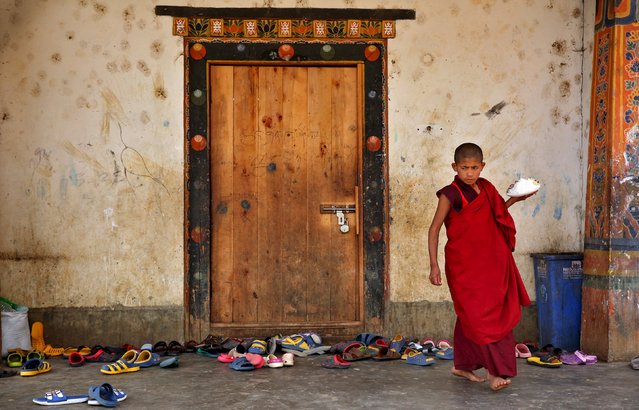
A young monk takes his food from the dining hall at Changangkha Lhakhang temple in Thimphu, Bhutan, April 13, 2016. (Photo by Cathal McNaughton/Reuters)
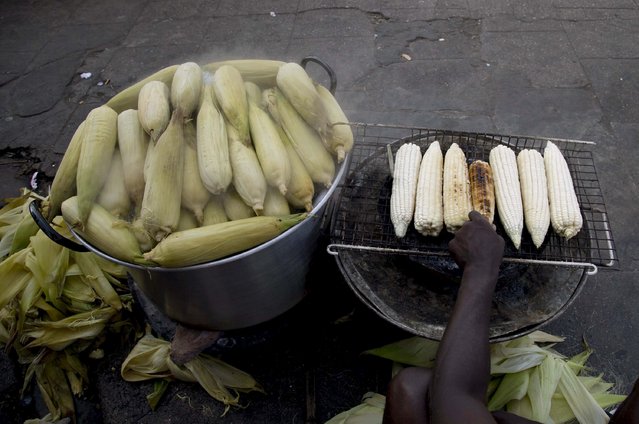
A trader sells mealies to commuter in Durban, South Africa, April19, 2016, as food prices continue to rise due to drought conditions. (Photo by Rogan Ward/Reuters)
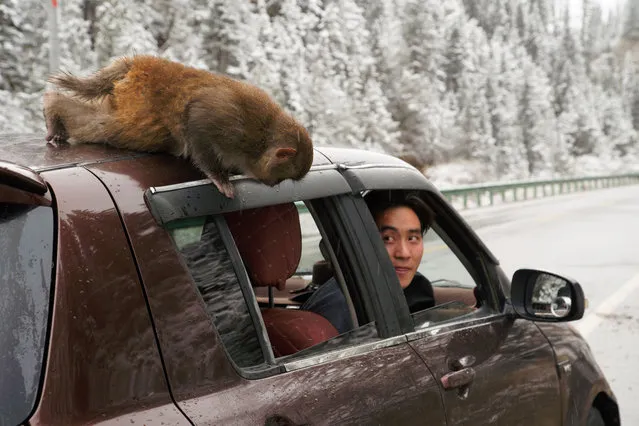
A herd of wild monkeys ask for food from passing vehicles along a mountain road after a snowfall on October 20, 2020 in Luhuo County, Sichuan Province of China. (Photo by Jin Shujie/VCG via Getty Images)
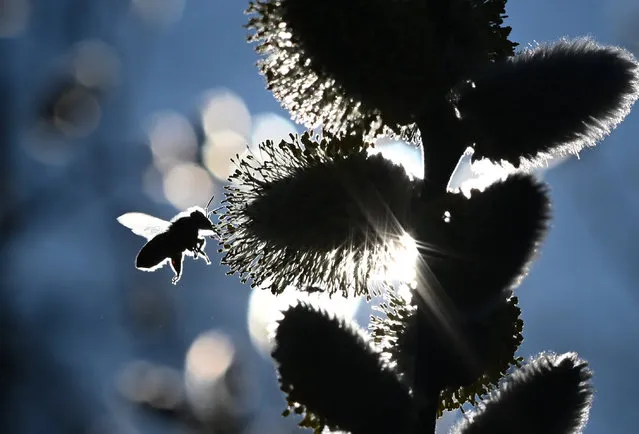
A bee approaching the flowers of a willow in Otzberg, Germany on February 28, 2021. Willow catkins are a protected species and one of the first sources of food for insects in early spring. (Photo by Arne Dedert/DPA)
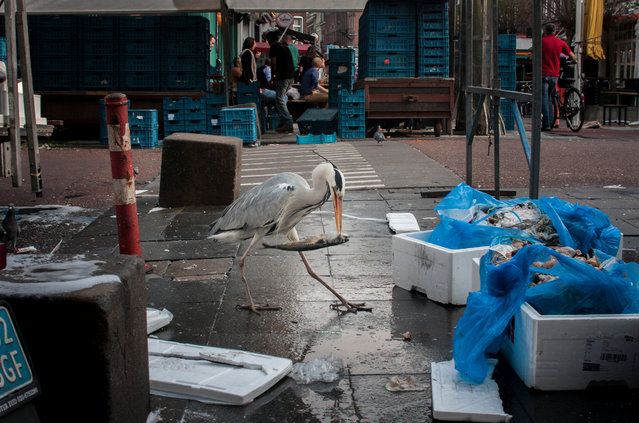
Over the years a large population of grey herons have made an unlikely home in urban Amsterdam. Julie Hrudova documents how the birds integrate into city life. Here: Hundreds of herons come to the city during winter to find food and shelter. (Photo by by Julie Hrudova/The Guardian)
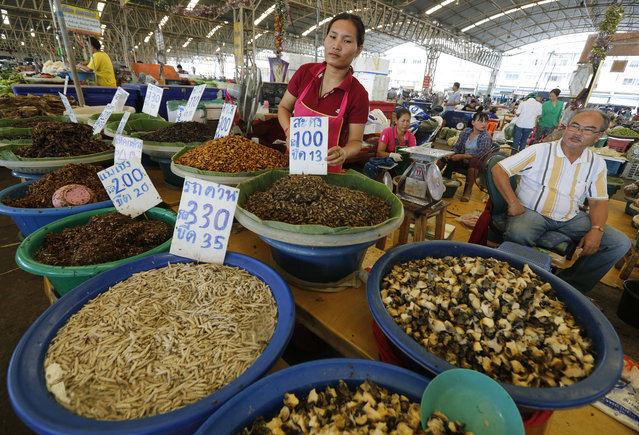
Thai vendors stand next to edible insects for sale at Talad Thai market in Pathum Thani province on the outskirts of Bangkok, Thailand, 15 July 2013. Insects have long been on the menu in Thailand, but academics and the United Nation's Food and Agriculture Organization (FAO) officials are hoping they will become a more common global source of protein and nutrients to meet the need for growing world food requirements in the future. (Photo by Narong Sangnak/EPA)
A visitor takes a selfie with “The Breach” by Leandro Erlich, during a photo call for Kew Gardens' forthcoming “Food Forever” exhibition, examining the fragile future of food and the impact of our day-to-day eating habits on the planet, at the Royal Botanic Gardens, in Kew, Richmond, Surrey on Thursday, June 16, 2022. (Photo by Dominic Lipinski/PA Images via Getty Images)