Loading...
Done
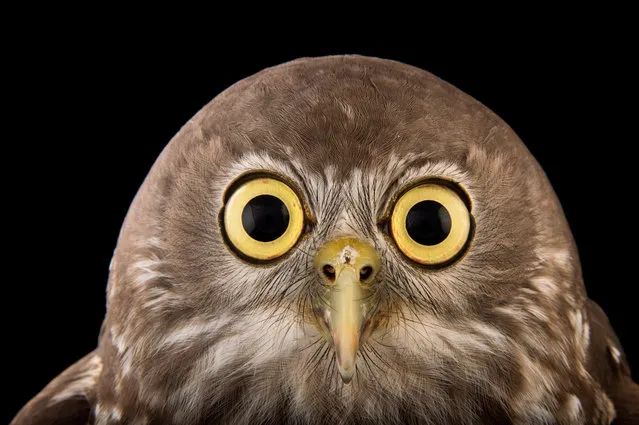
The National Geographic Photo Ark is a travelling exhibition of photographer Joel Sartore’s quest to create a photo archive of biodiversity around the world. So far, Sartore has captured studio portraits of more than 6,000 species – a number that he hopes to double. On 1 July, the ark will open at Melbourne zoo – the first time it has been exhibited in the southern hemisphere. More than 50 portraits will be on display, including many of Australian endangered animals being protected by programs at the zoo itself. These captions have been edited from text supplied by Melbourne zoo. Here: Barking owl. So-named because its call sounds like a barking dog, these birds are native to Australia, Indonesia and Papua New Guinea. In Victoria they are listed as an endangered species, and in 2003 there were estimated to be fewer than 50 breeding pairs. The main threat to the species in Victoria is loss of habitat, especially large trees with hollows in which they can nest and on which many of their prey depend. Apart from a bark, they may utter a chilling scream when they feel threatened. (Photo by Joel Sartore/National Geographic Photo Ark/The Guardian)

The National Geographic Photo Ark is a travelling exhibition of photographer Joel Sartore’s quest to create a photo archive of biodiversity around the world. So far, Sartore has captured studio portraits of more than 6,000 species – a number that he hopes to double. On 1 July, the ark will open at Melbourne zoo – the first time it has been exhibited in the southern hemisphere. More than 50 portraits will be on display, including many of Australian endangered animals being protected by programs at the zoo itself. These captions have been edited from text supplied by Melbourne zoo. Here: Barking owl. (Photo by Joel Sartore/National Geographic Photo Ark/The Guardian)
Details
01 Jul 2017 07:45:00
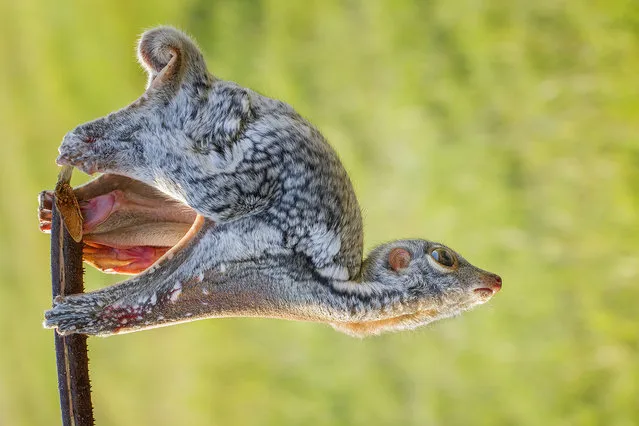
“Warming up”. This photo I capture in the early afternoon, the animal species of lemurs fly. Photo location: Sambas, West Kalimantan, Indonesia. (Photo and caption by Hendy Mp/National Geographic Photo Contest)

“Warming up”. This photo I capture in the early afternoon, the animal species of lemurs fly. Photo location: Sambas, West Kalimantan, Indonesia. (Photo and caption by Hendy Mp/National Geographic Photo Contest)
Details
03 Oct 2014 11:52:00
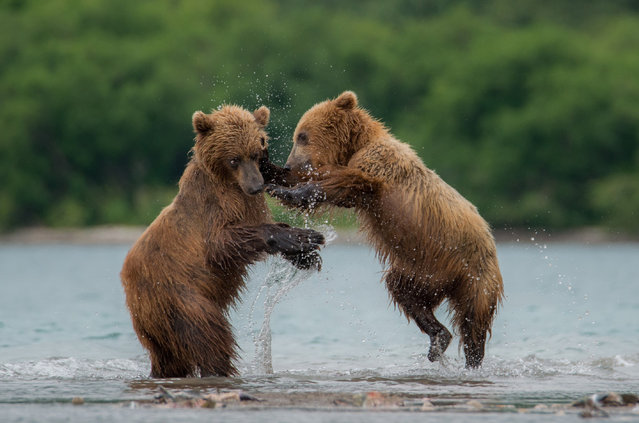
Kamchatka brown bears at Kurile Lake in Kamchatka peninsula’s volcanic terrain, Russia on August, 2017. Kamchatka brown bears are generally not dangerous to humans, and only 1% of encounters result in attack. (Photo by Igor Ivanko/Anadolu Agency/Getty Images)

Kamchatka brown bears at Kurile Lake in Kamchatka peninsula’s volcanic terrain, Russia on August, 2017. Kamchatka brown bears are generally not dangerous to humans, and only 1% of encounters result in attack. (Photo by Igor Ivanko/Anadolu Agency/Getty Images)
Details
03 Sep 2017 07:17:00
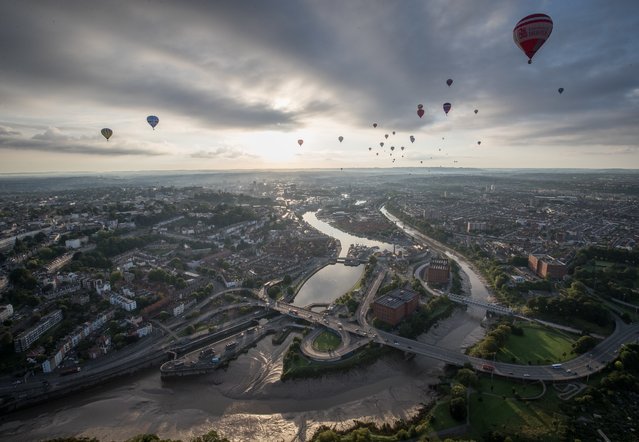
Hot air balloons take to the skies as they participate in the mass assent at sunrise on the second day of the Bristol International Balloon Fiesta on August 11, 2017 in Bristol, England. More than 130 balloons have gathered for the four day event, now in its 39th year and now one of Europe's largest annual hot air balloon events, being hosted in the city that is seen by many as the home of modern ballooning. (Photo by Matt Cardy/Getty Images)

Hot air balloons take to the skies as they participate in the mass assent at sunrise on the second day of the Bristol International Balloon Fiesta on August 11, 2017 in Bristol, England. More than 130 balloons have gathered for the four day event, now in its 39th year and now one of Europe's largest annual hot air balloon events, being hosted in the city that is seen by many as the home of modern ballooning. (Photo by Matt Cardy/Getty Images)
Details
14 Aug 2017 07:02:00
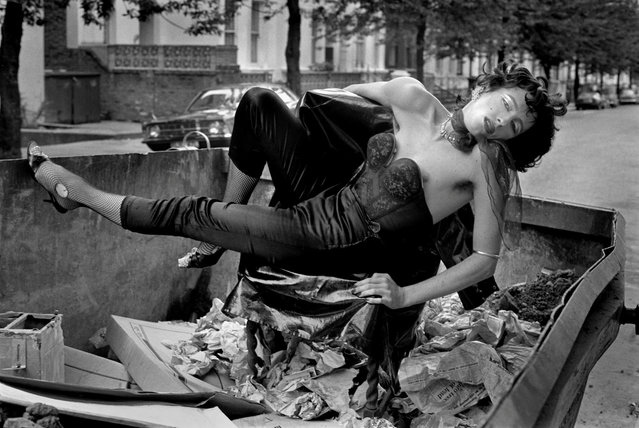
“A very delicate person, beneath the flamboyance”. Jasper, Ladbroke Grove, 1977. “In the 1970s, Australia was rather cut off. I’d always wanted to live abroad, so I moved to Rome and then London. I was an art historian, but started studying photography part-time. I was interested in the demi-monde culture and began mixing in all sorts of circles. Jasper was a rather wonderful character. He was from Sydney, but he was living downstairs from me in Ladbroke Grove, in a flat rented to some gay friends. It was fairly eclectic. Jasper was always playing around with clothes and makeup. If he was looking particularly wonderful, I might get out my lights and take a shot. Or he might put makeup on me. He wasn’t always in drag, but he was permanently in diva mode, dependably louche, funny and naughty. I think all that comes across in the image. He was actually a very delicate person, though, beneath the wit and flamboyance. Jasper floated through London all too briefly. His real name was Peter MacMahon, but to us he was only ever Jasper Havoc, an alter ego he’d created while part of a transvestite troupe called Sylvia and the Synthetics. They were legendary in Sydney gay culture. On this day, we’d been taking some pictures inside and had gone out into the streets to fool around some more. Jasper was wearing a corset and fishnets ensemble, with other bits and pieces, and we joked about him being trashy as he lay in the skip. We just took the shot for ourselves. It wasn’t done with any publication in mind, or anything else. This was way before the internet and people didn’t share images. If you dressed up, it was just for that moment”. (Photo by Jane England)

“A very delicate person, beneath the flamboyance”. Jasper, Ladbroke Grove, 1977. “In the 1970s, Australia was rather cut off. I’d always wanted to live abroad, so I moved to Rome and then London. I was an art historian, but started studying photography part-time. I was interested in the demi-monde culture and began mixing in all sorts of circles. Jasper was a rather wonderful character...”. (Photo by Jane England)
Details
26 Jun 2017 09:04:00
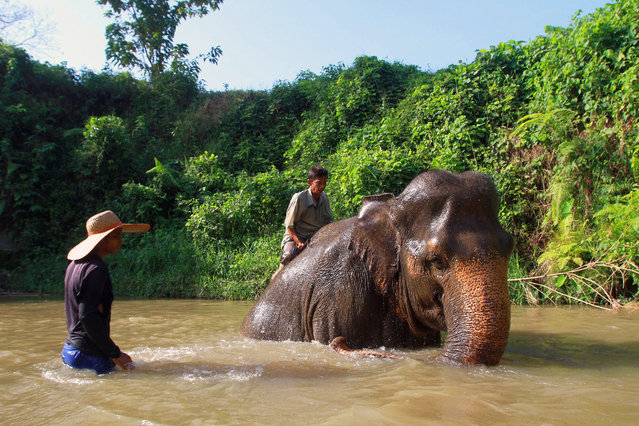
Indonesian mahouts clean their Sumatran elephant in a river near the zoo in Medan, North Sumatra, Indonesia, 12 December 2014. According media reports, the smallest of the Asian elephants, Sumatran elephant (Elephas maximus sumatrensis) is facing serious pressures arising from illegal logging and associated habitat loss and fragmentation in Indonesia. The population has come under increasing threat from rapid forest conversion to plantations. (Photo by Dedi Sahputra/EPA)

Indonesian mahouts clean their Sumatran elephant in a river near the zoo in Medan, North Sumatra, Indonesia, 12 December 2014. According media reports, the smallest of the Asian elephants, Sumatran elephant (Elephas maximus sumatrensis) is facing serious pressures arising from illegal logging and associated habitat loss and fragmentation in Indonesia. The population has come under increasing threat from rapid forest conversion to plantations. (Photo by Dedi Sahputra/EPA)
Details
13 Dec 2014 13:23:00
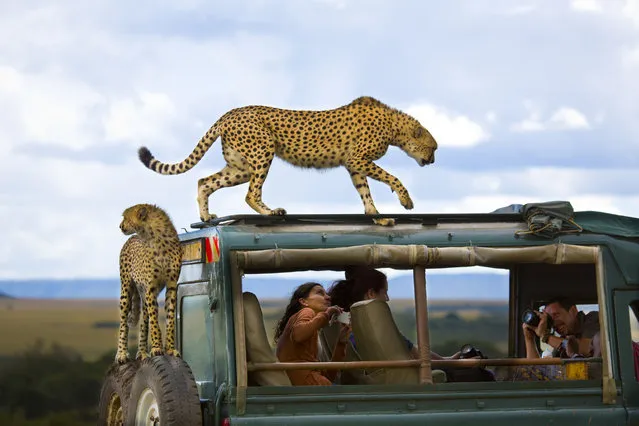
“Say cheese”. Cheetahs jumped on the vehicle of tourists in Masai Mara national park, Kenya. (Photo and caption by Yanai Bonneh/National Geographic Traveler Photo Contest)

“Say cheese”. Cheetahs jumped on the vehicle of tourists in Masai Mara national park, Kenya. (Photo and caption by Yanai Bonneh/National Geographic Traveler Photo Contest)

ATTENTION! All pictures are presented in high resolution. To see Hi-Res images – just TWICE click on any picture. In other words, click small picture – opens the BIG picture. Click BIG picture – opens VERY BIG picture.
Details
26 Jun 2013 06:33:00
Russian Foreign Ministry spokeswoman Maria Zakharova dances during the reception in honour of heads of the delegations at the Russia-ASEAN summit in Sochi, Russia, May 19, 2016. (Photo by Host photo agency via Reuters)

Russian Foreign Ministry spokeswoman Maria Zakharova dances during the reception in honour of heads of the delegations at the Russia-ASEAN summit in Sochi, Russia, May 19, 2016. (Photo by Host photo agency via Reuters)
Details
20 May 2016 13:16:00