Loading...
Done
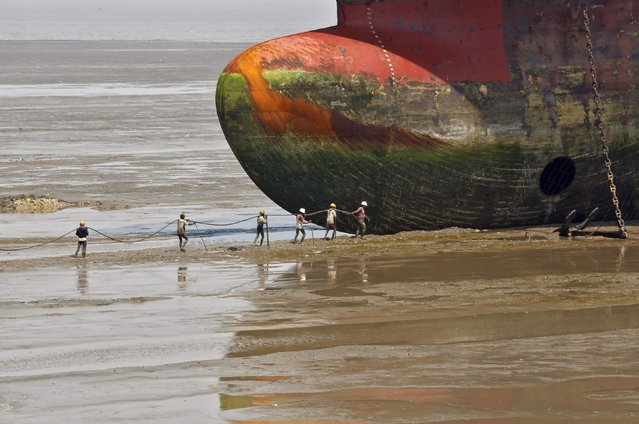
Workers carry a rope line to fasten a decommissioned ship at the Alang shipyard in the western Indian state of Gujarat, March 27, 2015. The European Union plans to impose strict new rules on how companies scrap old tankers and cruise liners, run aground and dismantled on beaches in South Asia. (Photo by Amit Dave/Reuters)

Workers carry a rope line to fasten a decommissioned ship at the Alang shipyard in the western Indian state of Gujarat, March 27, 2015. The European Union plans to impose strict new rules on how companies scrap old tankers and cruise liners, run aground and dismantled on beaches in South Asia. However the practice in India, Bangladesh and Pakistan, hazardous for humans and the environment, will still be hard to stop. European, Turkish and Chinese recyclers are set to benefit from the revamped standards. Depending on raw material prices, ship owners can make up to $500 per tonne of steel from an Indian yard, compared with $300 in China and just $150 in Europe. (Photo by Amit Dave/Reuters)
Details
01 Apr 2015 11:40:00
CGAP Photo Contest – South Asia Regional Winner: Bricks Worker, Bangladesh. A private enterprise worker is working at a brick field. These small businesses are creating new job opportunities for many poor people. (Photo by Moksumul Haque)

The shoemaker in Turkey, the potato seller in Vietnam, and the weaver in Bolivia are among the billions of low-income entrepreneurs who make the world go round. They are also the type of people who can benefit significantly from microfinance. Every year, the Consultative Group To Assist The Poor (or CGAP) hosts a photo contest asking entrants to submit photos based around the idea of microfinance.The purpose of the contest is to give amateur and professional photographers a chance to show the different ways that poor households manage their financial lives and make their lives better through financial inclusion. Photo: South Asia Regional Winner – “Bricks Worker”, Bangladesh. A private enterprise worker is working at a brick field. These small businesses are creating new job opportunities for many poor people. (Photo by Moksumul Haque)
Details
14 Aug 2014 10:58:00
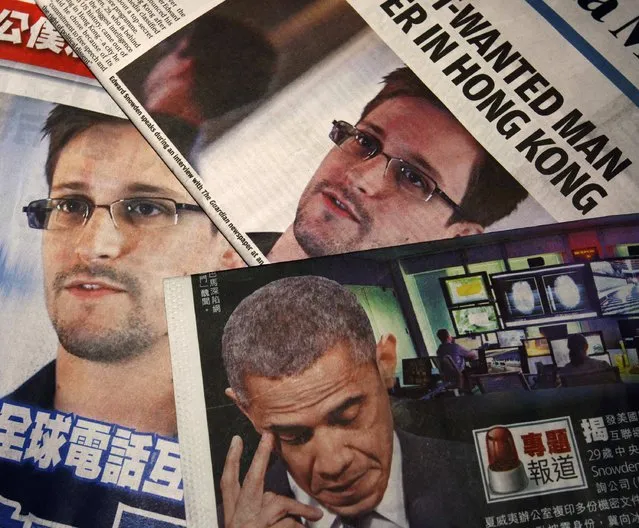
Photos of Edward Snowden, a contractor at the National Security Agency (NSA), and U.S. President Barack Obama are printed on the front pages of local English and Chinese newspapers in Hong Kong in this illustration photo June 11, 2013. Snowden, who leaked details of top-secret U.S. surveillance programs, dropped out of sight in Hong Kong on Monday ahead of a likely push by the U.S. government to have him sent back to the United States to face charges. (Photo by Bobby Yip/Reuters)

Photos of Edward Snowden, a contractor at the National Security Agency (NSA), and U.S. President Barack Obama are printed on the front pages of local English and Chinese newspapers in Hong Kong in this illustration photo June 11, 2013. Snowden, who leaked details of top-secret U.S. surveillance programs, dropped out of sight in Hong Kong on Monday ahead of a likely push by the U.S. government to have him sent back to the United States to face charges. (Photo by Bobby Yip/Reuters)
Details
20 Jun 2013 10:56:00
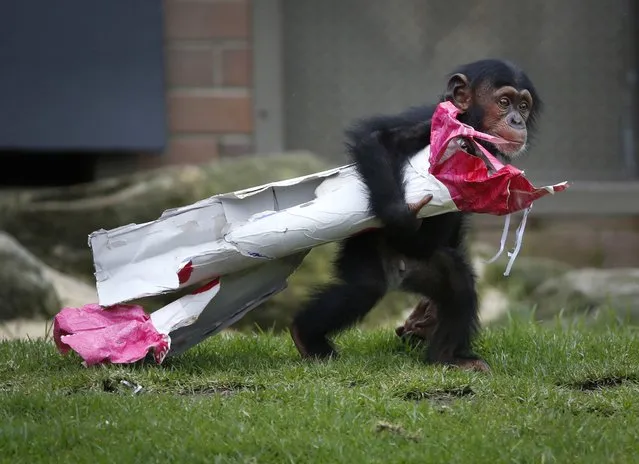
A 13-month-old chimp named Fumo carries a “Christmas present” of food treats in wrapping paper under his arm during a Christmas-themed feeding time at Sydney's Taronga Park Zoo, December 9, 2014. Fumo, meaning “chief” or “spear” in Swahili, is one of the latest additions to the zoo's successful primate breeding program. (Photo by Jason Reed/Reuters)

A 13-month-old chimp named Fumo carries a “Christmas present” of food treats in wrapping paper under his arm during a Christmas-themed feeding time at Sydney's Taronga Park Zoo, December 9, 2014. Fumo, meaning “chief” or “spear” in Swahili, is one of the latest additions to the zoo's successful primate breeding program. (Photo by Jason Reed/Reuters)
Details
09 Dec 2014 09:32:00
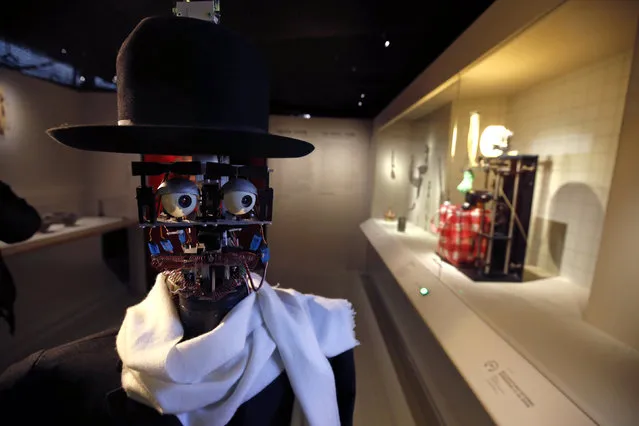
The Berenson robot strolls among visitors during the exhibition “Persona : Oddly Human” at the Quai Branly museum in Paris, France, February 23, 2016. The Berenson robot, developed in France in 2011, is the brainchild of anthropologist Denis Vidal and robotics engineer Philippe Gaussier. Its programming allows it to record reactions of museum visitors to certain pieces of art and then use the data to develop its own unique taste, which allows “Berenson” to judge whether or not it likes a certain work of art within an exhibition. (Photo by Philippe Wojazer/Reuters)

The Berenson robot strolls among visitors during the exhibition “Persona : Oddly Human” at the Quai Branly museum in Paris, France, February 23, 2016. The Berenson robot, developed in France in 2011, is the brainchild of anthropologist Denis Vidal and robotics engineer Philippe Gaussier. Its programming allows it to record reactions of museum visitors to certain pieces of art and then use the data to develop its own unique taste, which allows “Berenson” to judge whether or not it likes a certain work of art within an exhibition. (Photo by Philippe Wojazer/Reuters)
Details
25 Feb 2016 12:26:00
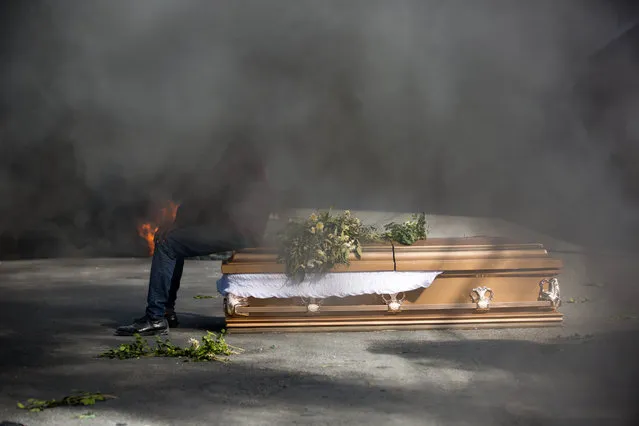
A demonstrator sits on the coffin containing the body of a protester who was killed during previous protests in Port-au-Prince, Haiti, Monday, March 4, 2019. Protesters are angry about skyrocketing inflation and the government's failure to prosecute embezzlement from a multi-billion Venezuelan program that sent discounted oil to Haiti. (Photo by Dieu Nalio Chery/AP Photo)

A demonstrator sits on the coffin containing the body of a protester who was killed during previous protests in Port-au-Prince, Haiti, Monday, March 4, 2019. Protesters are angry about skyrocketing inflation and the government's failure to prosecute embezzlement from a multi-billion Venezuelan program that sent discounted oil to Haiti. (Photo by Dieu Nalio Chery/AP Photo)
Details
13 Mar 2019 00:01:00
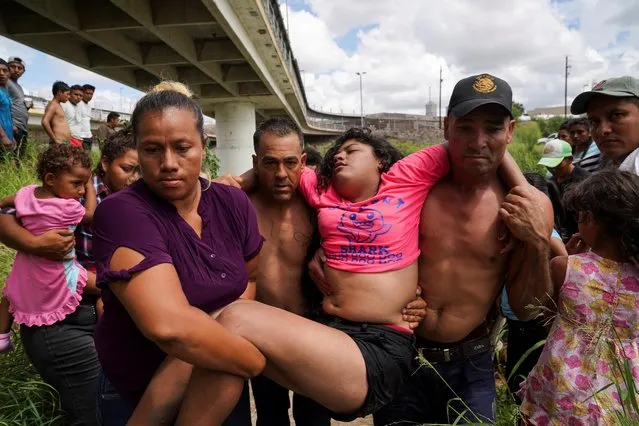
Brenda, a Honduran girl who is seeking asylum in the U.S., is carried from the Rio Grande in distress, where she had been bathing across the river from a Brownsville, Texas U.S. Customs and Border Protection tent facility as immigration hearings were being held by video teleconference, in Matamoros, Mexico September 12, 2019. Most of the people living in an encampment near the Gateway International Bridge have been sent back under the “Remain in Mexico” program, officially named Migrant Protection Protocols (MPP). (Photo by Veronica G. Cardenas/Reuters)

Brenda, a Honduran girl who is seeking asylum in the U.S., is carried from the Rio Grande in distress, where she had been bathing across the river from a Brownsville, Texas U.S. Customs and Border Protection tent facility as immigration hearings were being held by video teleconference, in Matamoros, Mexico September 12, 2019. Most of the people living in an encampment near the Gateway International Bridge have been sent back under the “Remain in Mexico” program, officially named Migrant Protection Protocols (MPP). (Photo by Veronica G. Cardenas/Reuters)
Details
15 Sep 2019 00:07:00
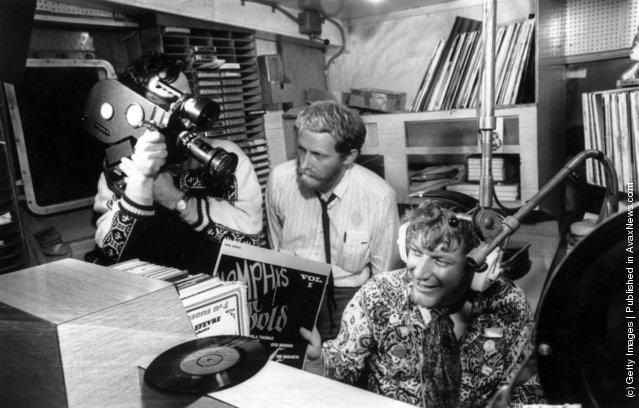
The World in Action team making a program about the pirate radio ship Caroline, filmed by Paddy Searle, and produced by Mike Hodges. The DJ being filmed is Robbie Dale, and Hodges is standing behind him

“«Pirate radio» in the UK first became widespread in the early 1960s when pop music stations such as Radio Caroline and Radio London started to broadcast on medium wave to the UK from offshore ships or disused sea forts. At the time these stations were not illegal because they were broadcasting from international waters. The stations were set up by entrepreneurs and music enthusiasts to meet the growing demand for pop and rock music, which was not catered for by the legal BBC Radio services”. – Wikipedia

Photo: The “World in Action” team making a program about the pirate radio ship Caroline, filmed by Paddy Searle, and produced by Mike Hodges. The DJ being filmed is Robbie Dale, and Hodges is standing behind him. (Photo by James Jackson/Evening Standard/Getty Images). 6th September 1967
Details
09 Sep 2011 08:54:00