Loading...
Done
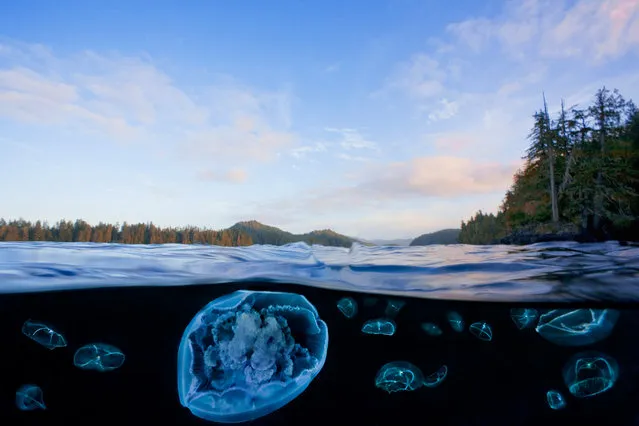
Moon jellyfish and cross jellies. (Photo by David Hall)

David Hall’s photographs of scenery and creatures off the coast of Canada in the Pacific Northwest portray serenity under the water, which belie the extreme challenges he faces to get his images. For each shoot, Hall wears a dry suit, a neoprene body suit that covers all of his body but his head and traps air inside to keep him warm. Water temperature in Canada’s British Columbia typically ranges between 45 and 50 degrees Fahrenheit. Photo: Moon jellyfish and cross jellies. (Photo by David Hall)
Details
16 Sep 2014 12:57:00
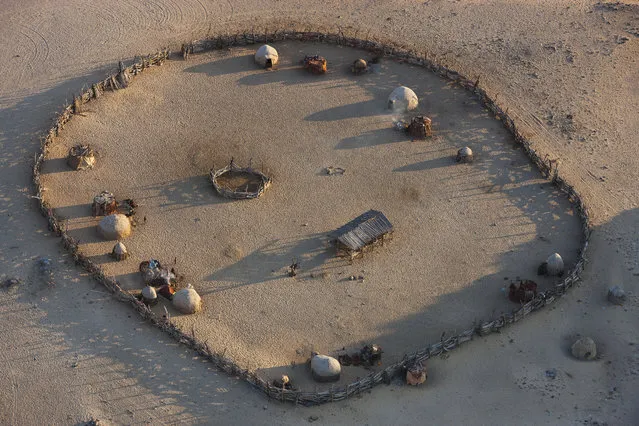
An aerial view of a livestock enclosure of the Himba people, in October, 2014, in the Namib Desert, Namibia. (Photo by Theo Allofs/Barcroft Media)

An aerial view of a livestock enclosure of the Himba people, in October, 2014, in the Namib Desert, Namibia. A photographer has captured a bird's eye view of the stunning Namib Desert from a paraglider. Theo Allofs travels the world taking stunning pictures of untouched landscapes from a unique perspective. Soaring 300 metres above ground, Theo shot the yellow sand dunes, dry red river beds and remote townships in Namibia. (Photo by Theo Allofs/Barcroft Media)
Details
24 Apr 2015 11:06:00
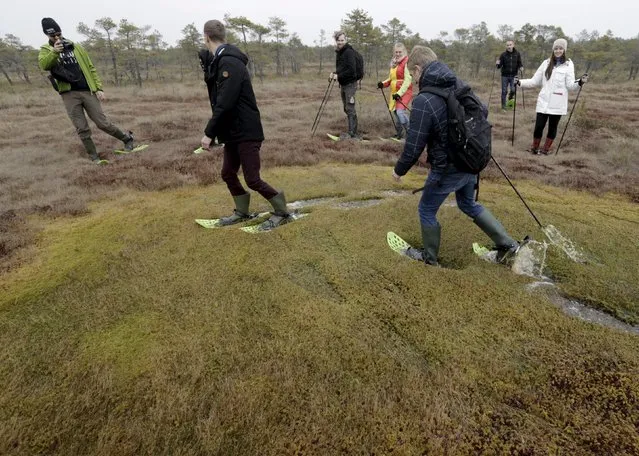
People use snowshoes during a tour of the Great Kemeri Bog, Latvia, October 17, 2015. (Photo by Ints Kalnins/Reuters)

People use snowshoes during a tour of the Great Kemeri Bog, Latvia, October 17, 2015. The Kemeri bog is more than 8,000 years old and is one of the largest dry moss swamps in the Baltics. A more than decade-long joint restoration of the bog by the European Union and the Latvian government helped the bog recover its high moss marshes, damp black alder forests, floodplain meadows and seaside lakes – features now considered rare in Europe due to industrialisation. (Photo by Ints Kalnins/Reuters)
Details
20 Oct 2015 08:03:00
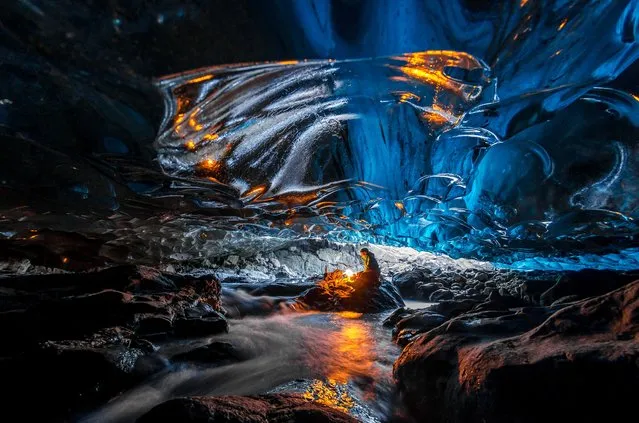
Stunning images have revealed ice-cool British tourists chilling out inside Europe’s largest glacier – despite being at risk of flooding. The spectacular collection of images show the explorers braving the freezing temperatures to climb, photograph and even abseil down the inside of the icy cliff sides. Another image shows one visitor on his knees appearing to pray next to a water fall of melted ice. Other glistening shots show an adventurer trying to keep warm by a fire whose flames dance beautifully against the glossy roof. More shots show the caves sparkling like crystal with one ice formation appearing to resemble bubble wrap. In one picture, a brave tourist stands at the edge of a river flowing through the centre of the frosty caves. (Photo by Einar Runar Sigurdsson/Mediadrumworld.com)

Stunning images have revealed ice-cool British tourists chilling out inside Europe’s largest glacier – despite being at risk of flooding. The spectacular collection of images show the explorers braving the freezing temperatures to climb, photograph and even abseil down the inside of the icy cliff sides. Another image shows one visitor on his knees appearing to pray next to a water fall of melted ice. Other glistening shots show an adventurer trying to keep warm by a fire whose flames dance beautifully against the glossy roof. (Photo by Einar Runar Sigurdsson/Mediadrumworld.com)
Details
03 Dec 2016 11:36:00
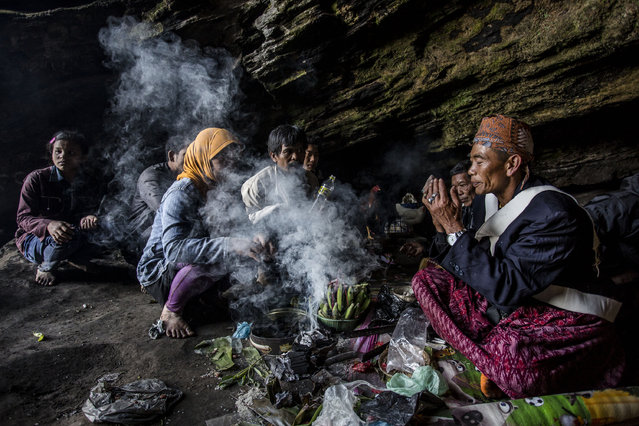
A Tenggerese shaman praying for worshippers at Widodaren cave during the Tenggerese Hindu Yadnya Kasada festival on July 31, 2015 in Probolinggo, East Java, Indonesia. The festival is the main festival of the Tenggerese people and lasts about a month. On the fourteenth day, the Tenggerese make the journey to Mount Bromo to make offerings of rice, fruits, vegetables, flowers and livestock to the mountain gods by throwing them into the volcano's caldera. (Photo by Ulet Ifansasti/Getty Images)

A Tenggerese shaman praying for worshippers at Widodaren cave during the Tenggerese Hindu Yadnya Kasada festival on July 31, 2015 in Probolinggo, East Java, Indonesia. The festival is the main festival of the Tenggerese people and lasts about a month. On the fourteenth day, the Tenggerese make the journey to Mount Bromo to make offerings of rice, fruits, vegetables, flowers and livestock to the mountain gods by throwing them into the volcano's caldera. The origin of the festival lies in the 15th century when a princess named Roro Anteng started the principality of Tengger with her husband Joko Seger, and the childless couple asked the mountain Gods for help in bearing children. The legend says the Gods granted them 24 children but on the provision that the 25th must be tossed into the volcano in sacrifice. The 25th child, Kesuma, was finally sacrificed in this way after initial refusal, and the tradition of throwing sacrifices into the caldera to appease the mountain Gods continues today. (Photo by Ulet Ifansasti/Getty Images)
Details
01 Aug 2015 12:07:00
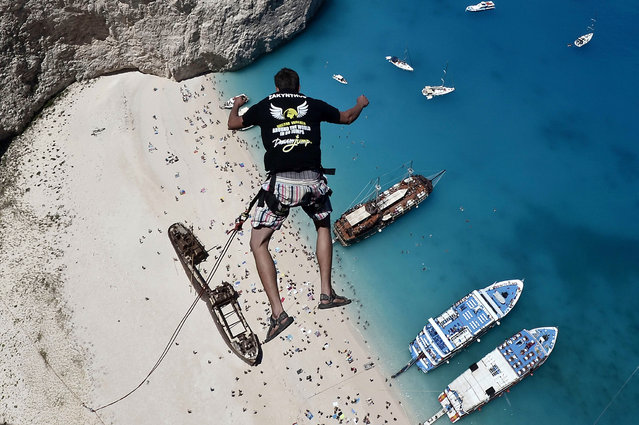
Lukas Michul, a member of the “dream walker” group jumps from atop the rugged rocks overlooking the azure waters of Navagio beach, one of the Greece's most renowned leisure spots on the popular tourist island of Zakynthos on June 23, 2014. (Photo by Louisa Gouliamaki/AFP Photo)

Lukas Michul, a member of the “dream walker” group jumps from atop the rugged rocks overlooking the azure waters of Navagio beach, one of the Greece's most renowned leisure spots on the popular tourist island of Zakynthos on June 23, 2014. This is rope jumping – part diving, part rock climbing, with a touch of engineering. The aim of the project is to dream jump in 80 places with most ravishing nature and architecture all over the world .They plan to stage their next leaps at a cave complex in Croatia, a French viaduct, skyscrapers in Las Vegas and Johannesburg, and the Grand Canyon. (Photo by Louisa Gouliamaki/AFP Photo)
Details
01 Sep 2014 10:38:00
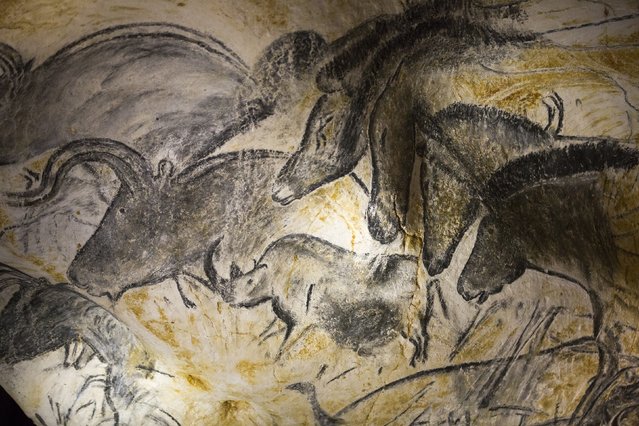
A replica of pre-historic drawings showing horses, rhinoceros and aurochs is seen on a wall during a press visit at the site of the Cavern of Pont-d'Arc project in Vallon Pont d'Arc April 8, 2015. (Photo by Robert Pratta/Reuters)

A replica of pre-historic drawings showing horses, rhinoceros and aurochs is seen on a wall during a press visit at the site of the Cavern of Pont-d'Arc project in Vallon Pont d'Arc April 8, 2015. The Cavern of Pont-d'Arc project is a replica of the pre-historic Decorated Cave of Pont-d'Arc known as Grotte Chauvet, in Vallon Pont-d'Arc in the Ardeche region, containing the world's earliest known art which was recently named a UNESCO World Heritage site. The facsimile cavern, which condenses some 8000m² of the original site into 3000m², will display faithful reproductions of paintings and engravings and will be inaugurated on April 10 and will open to the public on April 25. (Photo by Robert Pratta/Reuters)
Details
09 Apr 2015 14:23:00
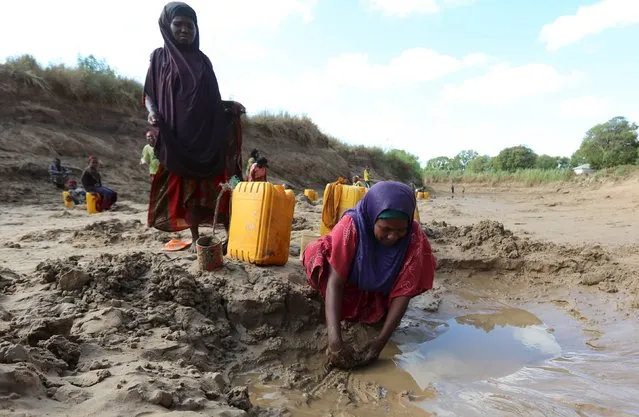
People collect water from shallow wells dug along the Shabelle River bed, which is dry due to drought in Somalia's Shabelle region, March 19, 2016. The cabinet ministers of the federal republic of Somalia have held on Thursday their weekly meeting in Mogadishu and discussed on the drought situation in parts of the country and its humanitarian consequences. Chaired by the acting PM and justice minister Abdullah Ahmed Jama (Ilka-Jir), the cabinet noted with deep concern the the prevailing situation in Somalia, with one of the worst ever drought in two decades. (Photo by Feisal Omar/Reuters)

People collect water from shallow wells dug along the Shabelle River bed, which is dry due to drought in Somalia's Shabelle region, March 19, 2016. The cabinet ministers of the federal republic of Somalia have held on Thursday their weekly meeting in Mogadishu and discussed on the drought situation in parts of the country and its humanitarian consequences. Chaired by the acting PM and justice minister Abdullah Ahmed Jama (Ilka-Jir), the cabinet noted with deep concern the the prevailing situation in Somalia, with one of the worst ever drought in two decades. (Photo by Feisal Omar/Reuters)
Details
20 Mar 2016 11:38:00