Loading...
Done
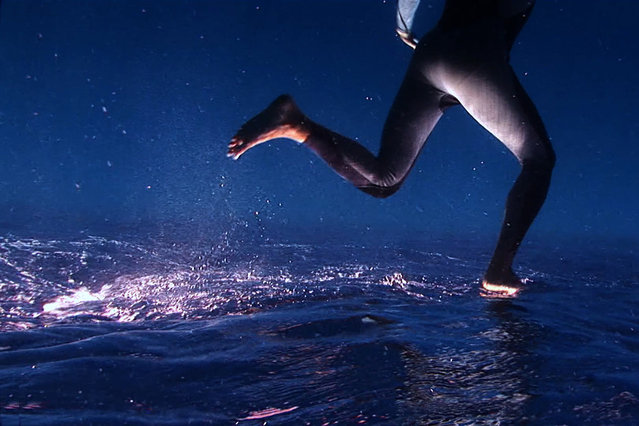
A freediver uses weights, yoga and camera tricks to create the illusion of walking underwater for a film which took three years to shoot and was completed in 2013 in El Hierro, Canary Islands. Like a scene from a Hollywood science-fiction movie, this trick footage shows a man apparently walking on water. The underwater film was shot by biologist Armiche Ramos and brothers Armando and Francisco del Rosario, who used their expertise in freediving to create the illusion. (Photo by Ocean Brothers/Barcroft Media/ABACAPress)

A freediver uses weights, yoga and camera tricks to create the illusion of walking underwater for a film which took three years to shoot and was completed in 2013 in El Hierro, Canary Islands. Like a scene from a Hollywood science-fiction movie, this trick footage shows a man apparently walking on water. The underwater film was shot by biologist Armiche Ramos and brothers Armando and Francisco del Rosario, who used their expertise in freediving to create the illusion. No computer graphics were involved in the production, with the team relying solely on their own skills – and a few hidden secrets. (Photo by Ocean Brothers/Barcroft Media/ABACAPress)
Details
25 Nov 2014 11:05:00
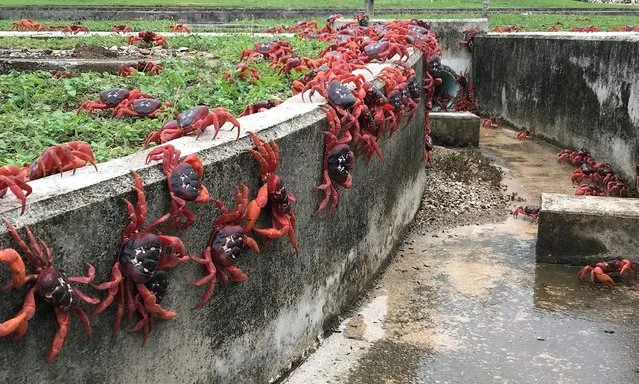
In this handout image provided by Parks Australia, thousands of red crabs are seen walking in a drain on November 23, 2021 in Christmas Island. The annual migration of red crabs begins with first rains of the wet season on Christmas Island, usually around October or November. Millions of the red crabs make their way across the island to the ocean to mate and spawn. (Photo by Parks Australia via Getty Images)

In this handout image provided by Parks Australia, thousands of red crabs are seen walking in a drain on November 23, 2021 in Christmas Island. The annual migration of red crabs begins with first rains of the wet season on Christmas Island, usually around October or November. Millions of the red crabs make their way across the island to the ocean to mate and spawn. (Photo by Parks Australia via Getty Images)
Details
13 Jul 2022 05:39:00
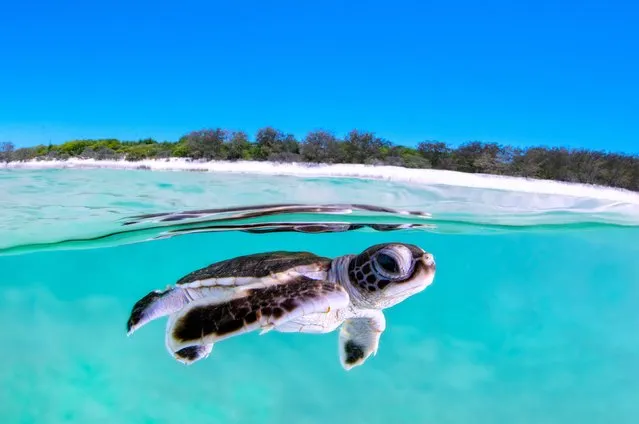
A baby turtle's perilous first moments are captured as it takes to the sea for the first time on Heron Island in Queensland, Australia in July 2022. Predators such as sharks, birds, and pollution mean that approximately only one out of every 1000 turtles that hatch make it to adulthood, with some not even reaching open ocean. Amateur photographer (Photo by Hannah Mitchell/Solent News & Photo Agency)

A baby turtle's perilous first moments are captured as it takes to the sea for the first time on Heron Island in Queensland, Australia in July 2022. Predators such as sharks, birds, and pollution mean that approximately only one out of every 1000 turtles that hatch make it to adulthood, with some not even reaching open ocean. Amateur photographer (Photo by Hannah Mitchell/Solent News & Photo Agency)
Details
06 Oct 2023 04:29:00
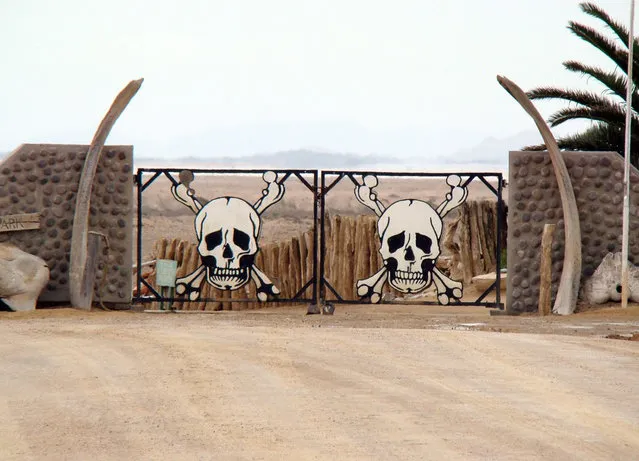
The Skeleton Coast, Namibia

The Skeleton Coast is the northern part of the Atlantic Ocean coast of Namibia and south of Angola from the Kunene River south to the Swakop River, although the name is sometimes used to describe the entire Namib Desert coast. The Bushmen of the Namibian interior called the region "The Land God Made in Anger", while Portuguese sailors once referred to it as "The Gates of Hell".
Details
23 Feb 2014 09:27:00
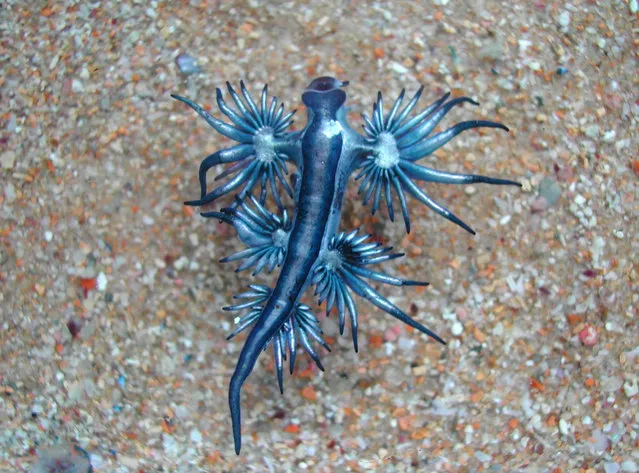
Blue Dragon

Glaucus atlanticus (common names sea swallow, blue glaucus, blue sea slug and blue ocean slug) is a species of small-sized blue sea slug, a pelagic aeolid nudibranch, a marine gastropod mollusk in the family Glaucidae. This is the only species in the genus Glaucus, but is closely related to Glaucilla marginata, which sometimes is included in Glaucus.
Details
12 Sep 2012 08:21:00
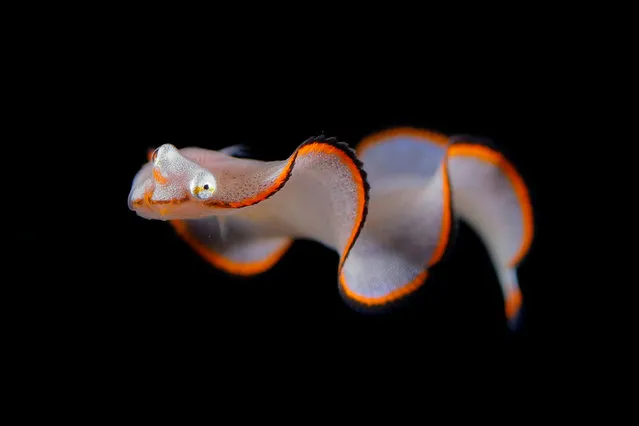
Batesian mimicry by a Soleichthys fish larva. (Photo by Ryo Minemizu/The Guardian)

Ryo Minemizu, one of Japan’s emerging stars in the field of marine life photography and the 2017 winner of the Nikkei National Geographic photography prize, captures the beauty and complexity of plankton that drift in our planet’s oceans and other bodies of water in meticulous detail. Here: Batesian mimicry by a Soleichthys fish larva. (Photo by Ryo Minemizu/The Guardian)
Details
21 Aug 2018 00:05:00
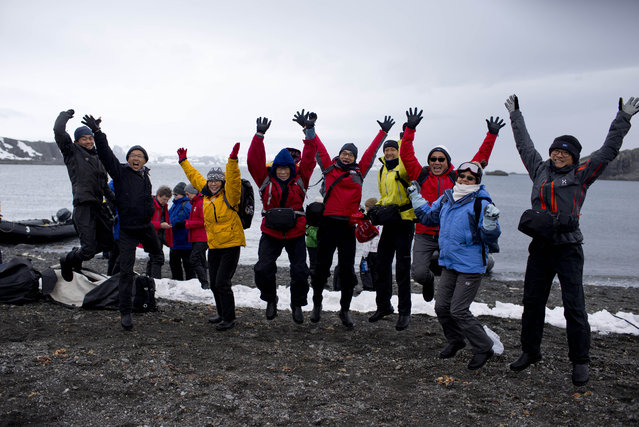
In this February 2, 2015 photo, tourists jump as they pose for a picture, after disembarking from the Ocean Nova cruise ship, on King George Island, Antarctica. This tourist season, which runs November through March, more than 37,000 visitors are expected to walk on the coldest continent on Earth, about 10 percent more than the year before. (Photo by Natacha Pisarenko/AP Photo)

In this February 2, 2015 photo, tourists jump as they pose for a picture, after disembarking from the Ocean Nova cruise ship, on King George Island, Antarctica. This tourist season, which runs November through March, more than 37,000 visitors are expected to walk on the coldest continent on Earth, about 10 percent more than the year before. (Photo by Natacha Pisarenko/AP Photo)
Details
22 Mar 2015 11:31:00
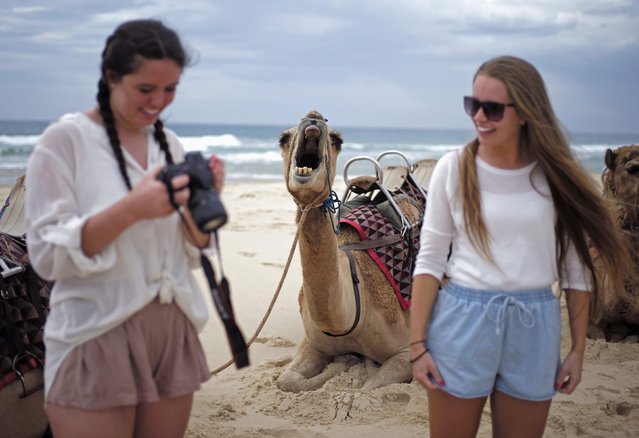
A camel yawns as a tourist checks images on her camera following a ride on a camel safari alongside the Pacific Ocean on Lighthouse Beach, north of Sydney, December 4, 2014. For 25 years camel rides on this beach have given visitors to Australia's holiday coast a rare experience available only in a handful of locations in the country. (Photo by Jason Reed/Reuters)

A camel yawns as a tourist checks images on her camera following a ride on a camel safari alongside the Pacific Ocean on Lighthouse Beach, north of Sydney, December 4, 2014. For 25 years camel rides on this beach have given visitors to Australia's holiday coast a rare experience available only in a handful of locations in the country. Australia's long history with the “ships of the desert” goes back to the 1800s when they were imported from Afghanistan and India for use as transportation across Australia's vast deserts before being released into the wild following their replacement by motorised transport. (Photo by Jason Reed/Reuters)
Details
06 Dec 2014 12:48:00