Loading...
Done
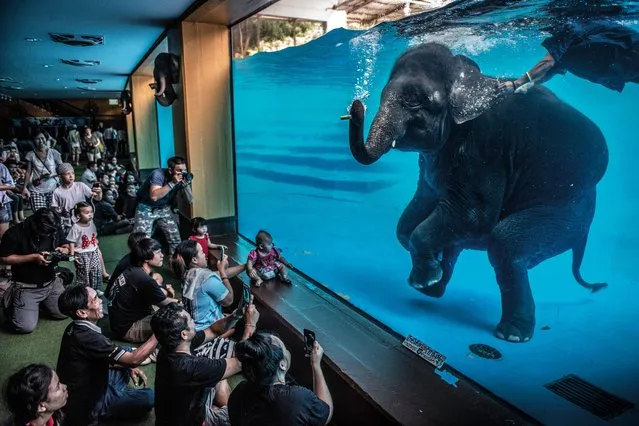
Winner, photojournalism. Elephant in the room, by Adam Oswell, Australia Zoo. Visitors watch a young elephant performing underwater. Oswell was disturbed by this scene, and organisations concerned with the welfare of captive elephants say performances like this encourage unnatural behaviour. In Thailand, there are now more elephants in captivity than in the wild. With the Covid pandemic causing tourism to collapse, elephant sanctuaries are becoming overwhelmed with animals that can no longer be looked after by their owners. (Photo by Adam Oswell/Wildlife Photographer of the Year 2021)

Winner, photojournalism. Elephant in the room, by Adam Oswell, Australia Zoo. Visitors watch a young elephant performing underwater. Oswell was disturbed by this scene, and organisations concerned with the welfare of captive elephants say performances like this encourage unnatural behaviour. In Thailand, there are now more elephants in captivity than in the wild. With the Covid pandemic causing tourism to collapse, elephant sanctuaries are becoming overwhelmed with animals that can no longer be looked after by their owners. (Photo by Adam Oswell/Wildlife Photographer of the Year 2021)
Details
30 Oct 2021 08:40:00
People watch police destroy confiscated illegal firecrackers in Shenyang, Liaoning province, China, January 29, 2016. (Photo by Reuters/Stringer)

People watch police destroy confiscated illegal firecrackers in Shenyang, Liaoning province, China, January 29, 2016. (Photo by Reuters/Stringer)
Details
31 Jan 2016 09:40:00
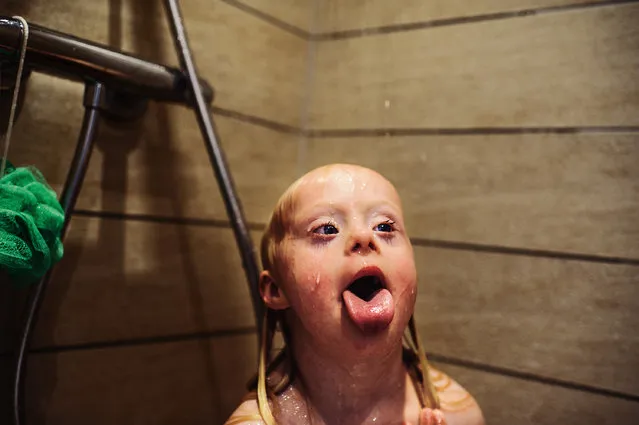
“One in Eight Hundred” by Mario Wezel, from Germany, is the winner of the “People” category. The title refers to the odds given to Martin and Karina at their prenatal screening before their daughter, Emmy, was born. The five-year-old from Denmark has Down's Syndrome. (Photo by Mario Wezel/Sony World Photography Awards)

“One in Eight Hundred” by Mario Wezel, from Germany, is the winner of the “People” category. The title refers to the odds given to Martin and Karina at their prenatal screening before their daughter, Emmy, was born. The five-year-old from Denmark has Down's Syndrome. (Photo by Mario Wezel/Sony World Photography Awards)
Details
02 May 2014 10:53:00
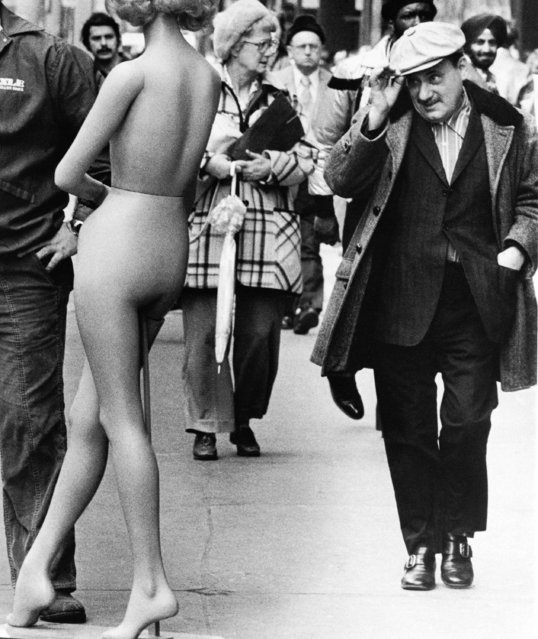
A hint of Spring Fever is evidenced by this passerby tipping his hat to a store fixture mannequin on a State St. sidewalk in downtown Chicago on March 23, 1978. The mannequin was awaiting pickup to be transported. (Photo by AP Photo)

A hint of Spring Fever is evidenced by this passerby tipping his hat to a store fixture mannequin on a State St. sidewalk in downtown Chicago on March 23, 1978. The mannequin was awaiting pickup to be transported. (Photo by AP Photo)
Details
04 Apr 2018 00:03:00
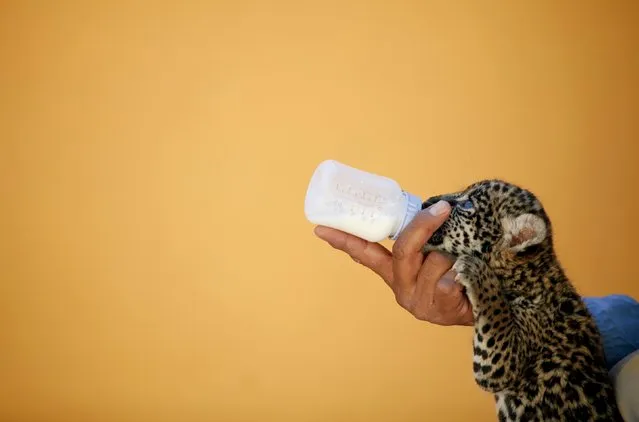
A keeper feeds a four-week-old jaguar while presenting it to the media, at a zoo in Ciudad Juarez, Mexico, October 14, 2015. (Photo by Jose Luis Gonzalez/Reuters)

A keeper feeds a four-week-old jaguar while presenting it to the media, at a zoo in Ciudad Juarez, Mexico, October 14, 2015. (Photo by Jose Luis Gonzalez/Reuters)
Details
19 Oct 2015 08:03:00
Ammunition airlift into besieged Khe Sanh, Operation Pegasus, April 1968. (Photo by Larry Burrows/AP Photo)

Ammunition airlift into besieged Khe Sanh, Operation Pegasus, April 1968. (Photo by Larry Burrows/AP Photo)
Details
22 May 2018 00:01:00
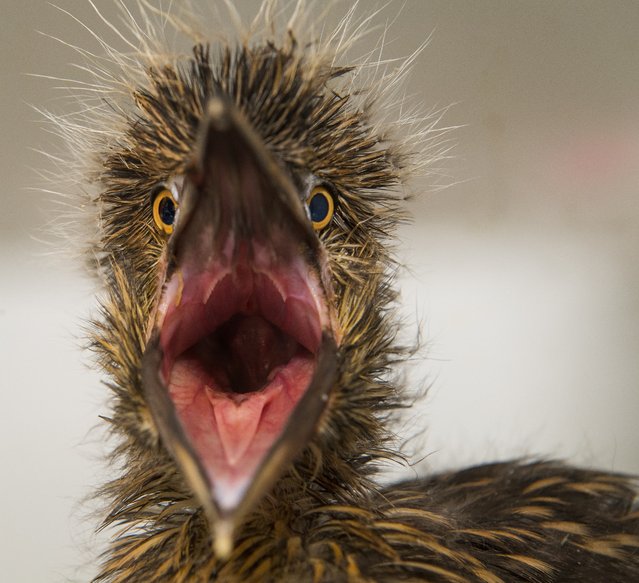
A baby Black-crowned Night Heron squawks in its incubator while being cared for at City Wildlife rescue and rehabilitation center in Washington, DC on May 31, 2017. The heron is one of several that have been brought to CW by the staff at The National Zoo over the past few years. The heron is a native bird and has made an established rookery inside the zoo grounds over a hundred years ago.  Every year at this time, some of the chicks get pushed or fall out of the nest and require human care.  Because the birds are native and not part of the Smithsonian collection, they partnered with CW to rehabilitate the herons for re-release back to the flock inside Zoo. They're reintroduced back to their flock so that they can migrate together in the Fall. The Black-crowned heron usually migrates from the DC area down to southeast North Carolina, some going as far as Jacksonville, FL in winter. The Black-crowned heron is the species of greatest conservation need in the District of Columbia because their numbers are in such rapid decline due to habitat loss. (Photo Linda Davidson/The Washington Post)

A baby Black-crowned Night Heron squawks in its incubator while being cared for at City Wildlife rescue and rehabilitation center in Washington, DC on May 31, 2017. The heron is one of several that have been brought to CW by the staff at The National Zoo over the past few years. (Photo Linda Davidson/The Washington Post)
Details
04 Jun 2017 08:04:00
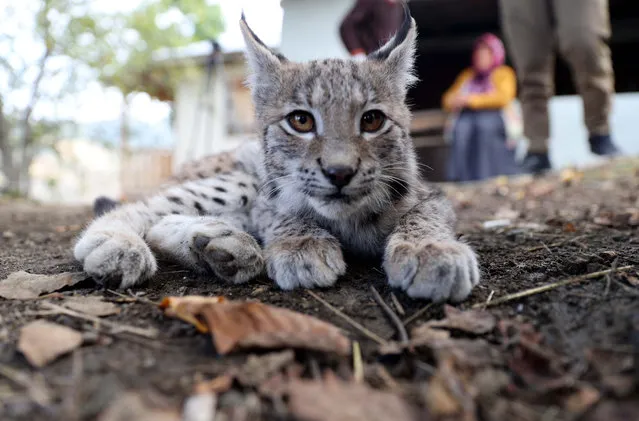
A lynx cub that followed a villager in the forest, is fed by a mother and her son for 2 days at the Koyulhisar district of Sivas, Turkiye on October 4, 2023. After 2 days, the lynx cub was taken under protection by the Sivas Department of Nature Conservation and National Parks teams. (Photo by Serhat Zafer/Anadolu Agency via Getty Images)

A lynx cub that followed a villager in the forest, is fed by a mother and her son for 2 days at the Koyulhisar district of Sivas, Turkiye on October 4, 2023. After 2 days, the lynx cub was taken under protection by the Sivas Department of Nature Conservation and National Parks teams. (Photo by Serhat Zafer/Anadolu Agency via Getty Images)
Details
22 Oct 2023 00:55:00