Loading...
Done
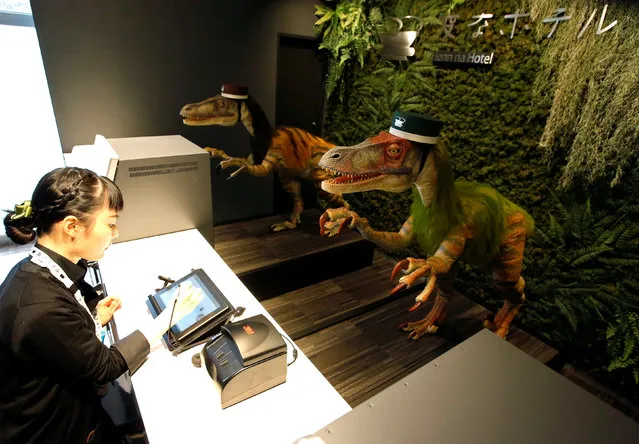
Dinosaur robots acting as receptionist greet a hotel employee demonstrating how to check-in to the hotel during a press preview for the newly-opening Henn na Hotel Maihama Tokyo Bay in Urayasu, east of Tokyo, Japan March 15, 2017. The reception desk is handled by robots that speak Japanese, English, Chinese and Korean, as well as porter robots that help guests carry luggage to their rooms. Tasks such as window-cleaning and vacuuming are also handled by robots. Japan's second robot-run hotel Henn na Hotel (“strange hotel” in Japanese) opened on March 15, 2017 as the robot-staffed hotel near Tokyo, operating company H.I.S. Co. said. (Photo by Issei Kato/Reuters)

Dinosaur robots acting as receptionist greet a hotel employee demonstrating how to check-in to the hotel during a press preview for the newly-opening Henn na Hotel Maihama Tokyo Bay in Urayasu, east of Tokyo, Japan March 15, 2017. The reception desk is handled by robots that speak Japanese, English, Chinese and Korean, as well as porter robots that help guests carry luggage to their rooms. Tasks such as window-cleaning and vacuuming are also handled by robots. Japan's second robot-run hotel Henn na Hotel (“strange hotel” in Japanese) opened on March 15, 2017 as the robot-staffed hotel near Tokyo, operating company H.I.S. Co. said. (Photo by Issei Kato/Reuters)
Details
16 Mar 2017 09:54:00
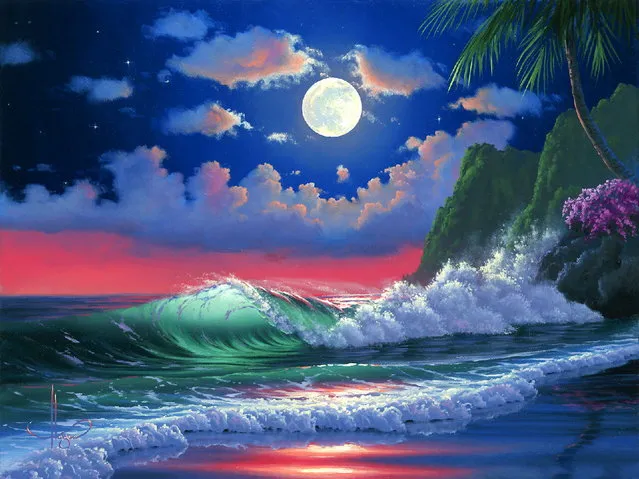
Amazing World By Al Hogue

Light is the sole reason why life exists. It provides us with warmth; it allows us to see; it nourishes all the living things on this planet. Many painters, especially the masters of Old Renaissance Period, have recognized the importance of light and its intimate connection with nature and life itself. In their paintings they gave tribute to light, giving the impression that their paintings had a light source hidden within them. Al Hogue, the artist who created the paintings that you see before you, has studied their techniques for many years. As time went by, light permeated not only his paintings by also his life, becoming his sole philosophy.
Details
06 Mar 2015 06:03:00
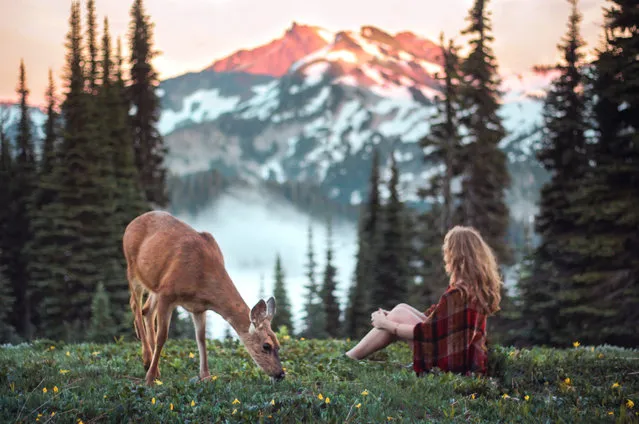
Photography By Elizabeth Gadd

The pictures made by Elizabeth Gadd are so beautiful, tranquil, and mesmerizing, that they wash over your soul in a wave of sadness. The same sadness that you feel when hearing a wonderful piece of music. The same sadness that enters your soul when you worry to death about your loved one, but everything turns out to be just fine. These aren’t just pictures… The pieces of art that Elizabeth, a 21-year-old self-taught photographer makes, are windows into fairytales; portals into other dimensions. Works so surreal, that it makes you wonder if the scenes that you are seeing were actually shot on this planet; that they are not figments of Beth’s imagination. (Photo by Elizabeth Gadd)
Details
25 Nov 2014 10:56:00
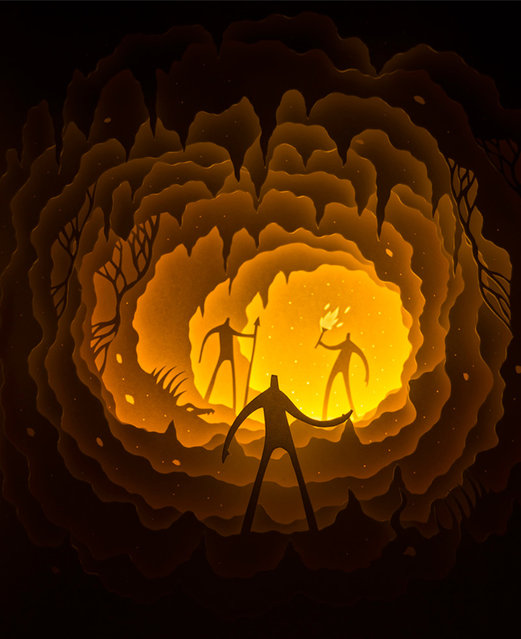
Illuminated Cut Paper Light Boxes By Hari And Deepti

Illuminated Cut Paper Light Boxes by Hari & DeeptiDeepti Nair and Harikrishnan Panicker (known collectively as Hari & Deepti) are an artist couple who create paper cut light boxes. Each diorama is made from layers of cut watercolor paper placed inside a shadow box and is lit from behind with flexible LED light strips. The small visual narratives depicted in each work often play off aspects of light including stars, flames, fireflies, and planets.
Details
17 Jun 2014 12:07:00
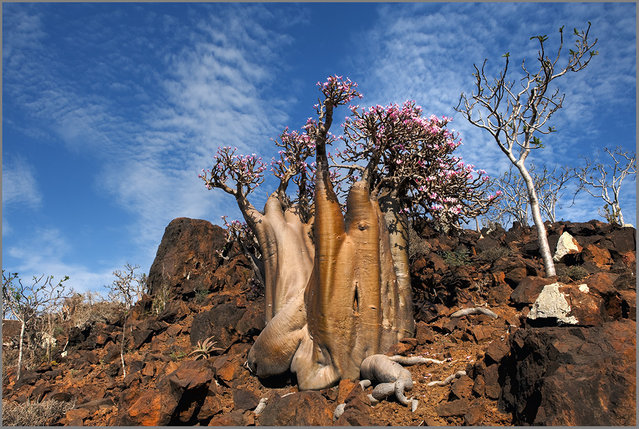
The Wonder Land of Socotra, Yemen

The largest island, also called Socotra, is about 95% of the landmass of the archipelago. It lies some 240 kilometres (150 mi) east of the Horn of Africa and 380 kilometres (240 mi) south of the Arabian Peninsula. The island is very isolated and through the process of speciation, a third of its plant life is found nowhere else on the planet. It has been described as the most alien-looking place on Earth. The island measures 132 kilometres (82 mi) in length and 49.7 kilometres (30.9 mi) in width.
Details
25 Sep 2013 09:11:00
Employees conduct a final check to fix any cavities in the seams of balls inside the soccer ball factory that produces official match balls for the 2014 World Cup in Brazil, in Sialkot, Punjab province May 16, 2014. (Photo by Sara Farid/Reuters)

Employees conduct a final check to fix any cavities in the seams of balls inside the soccer ball factory that produces official match balls for the 2014 World Cup in Brazil, in Sialkot, Punjab province May 16, 2014. It was when he felt the roar of the crowd at the 2006 World Cup in Germany that Pakistani factory owner Khawaja Akhtar first dreamt up a goal of his own: to manufacture the ball for the biggest soccer tournament on the planet. Last year he finally got his chance – but only 33 days to make it happen. (Photo by Sara Farid/Reuters)
Details
26 May 2014 13:59:00
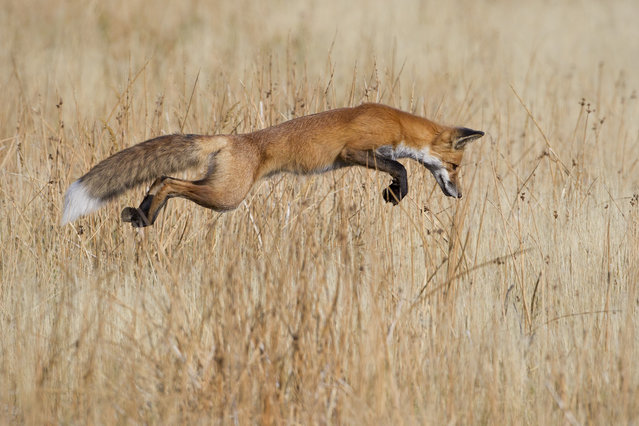
Canada: “Lucky pounce”. (Photo by Connor Stefanison/Wildlife Photographer of the Year 2013)

The winners of The London’s Natural History Museum's prestigious Wildlife Photographer of the Year for 2013 have finally been unveiled. Selected from almost 43,000 entries from 96 countries, the winners offer a glimpse of the stunning array of natural beauty on our planet. Photo: Canada: “Lucky pounce”. “Anticipating the pounce – that was the hardest part”, says Connor, who had come to Yellowstone National Park, Wyoming, USA, in search of wildlife as much as the spectacular landscape. He had found this fox, his first ever, on his last day in the park. It was so absorbed in hunting that Connor had plenty of time to get out of the car and settle behind a rock. It quartered the grassland, back and forth, and then started staring intently at a patch of ground, giving Connor just enough warning of the action to come. When it sprung up, Connor got his shot. And when it landed, the fox got his mouse. (Photo by Connor Stefanison/Wildlife Photographer of the Year 2013)
Details
17 Oct 2013 08:12:00
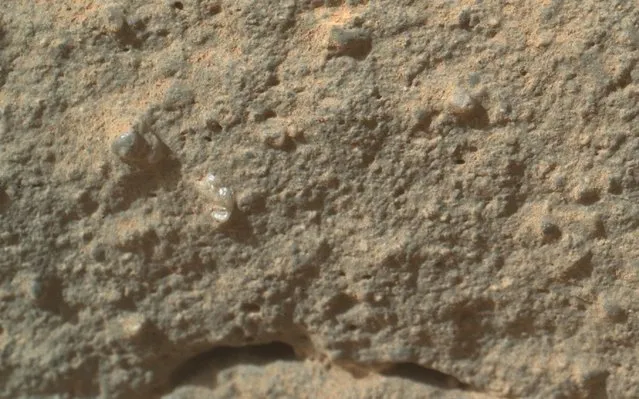
Scientists say that a “Martian flower”, seen here in an image from the Curiosity rover's Mars Hand Lens Imager, is a 2-millimeter-wide grain or pebble that's embedded in the surrounding rock. Another, darker-colored mineral grain can be seen above and to the left. (Photo by NASA)

“The scientists behind NASA's $2.5 billion Curiosity rover mission on Mars on Tuesday explained the nature of a tiny, gleaming "flower" embedded in Red Planet rock, and revealed where they'll be using the SUV-sized robot's drill for the first time”. – Alan Boyle via NBCNews.com

Photo: Scientists say that a “Martian flower”, seen here in an image from the Curiosity rover's Mars Hand Lens Imager, is a 2-millimeter-wide grain or pebble that's embedded in the surrounding rock. Another, darker-colored mineral grain can be seen above and to the left. (Photo by NASA)
Details
16 Jan 2013 11:12:00