Loading...
Done
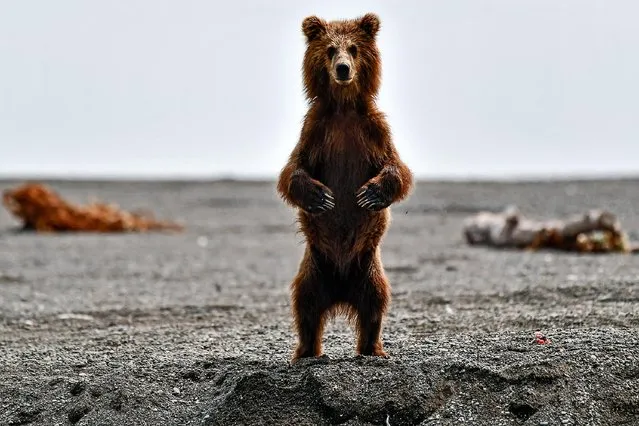
A brown bear cub by the Khailyulya River in north-east Kamchatka, Russia on July 24, 2021. (Photo by Yuri Smityuk/TASS)

A brown bear cub by the Khailyulya River in north-east Kamchatka, Russia on July 24, 2021. (Photo by Yuri Smityuk/TASS)
Details
08 Aug 2021 05:17:00
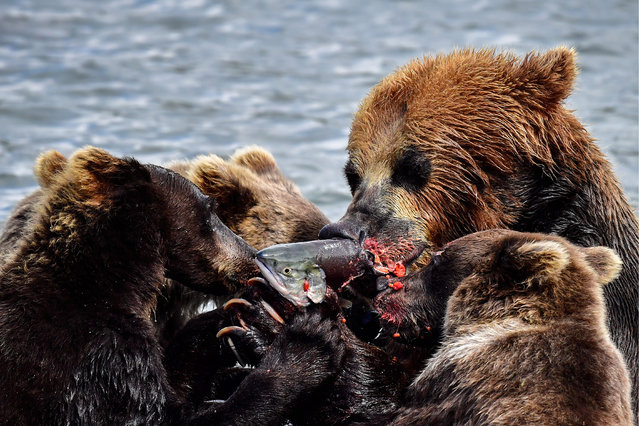
A female brown bear with cubs fishing on Lake Kronotskoye as part of the South Kamchatka, Russia on Sanctuary, August 13, 2017. (Photo by TASS/Barcroft Images)

A female brown bear with cubs fishing on Lake Kronotskoye as part of the South Kamchatka, Russia on Sanctuary, August 13, 2017. (Photo by TASS/Barcroft Images)
Details
20 Aug 2017 08:15:00
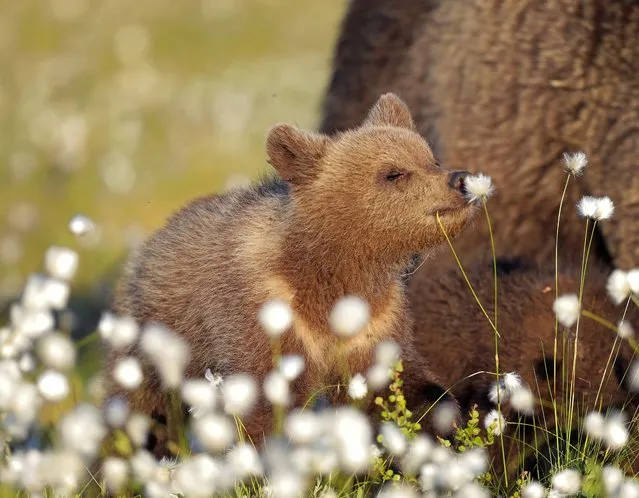
“Romantic”. A brown bear in Martinselkonen, Finland. (Photo by Valtteri Mulkahainen/Comedy Wildlife Photography Awards)

“Romantic”. A brown bear in Martinselkonen, Finland. (Photo by Valtteri Mulkahainen/Comedy Wildlife Photography Awards)
Details
22 Oct 2022 04:44:00
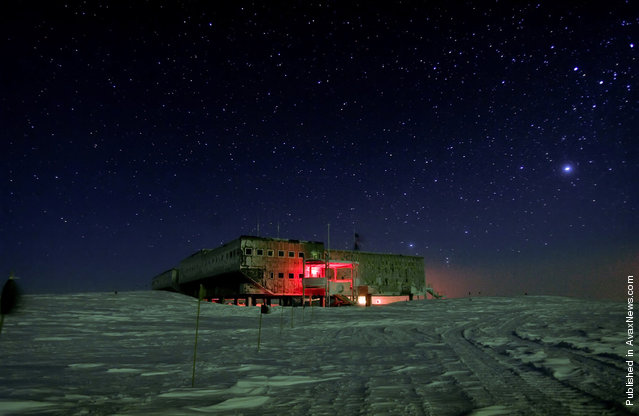
Amundsen-Scott South Pole Station experiences months of darkness. The sun dips below the horizon on March 21, after which follows several weeks of twilight before complete darkness results

Amundsen-Scott South Pole Station experiences months of darkness. The sun dips below the horizon on March 21, after which follows several weeks of twilight before complete darkness results. Photo taken on June 25, 2009. (National Science Foundation/Jeremy Johnson)
Details
08 Apr 2012 13:07:00
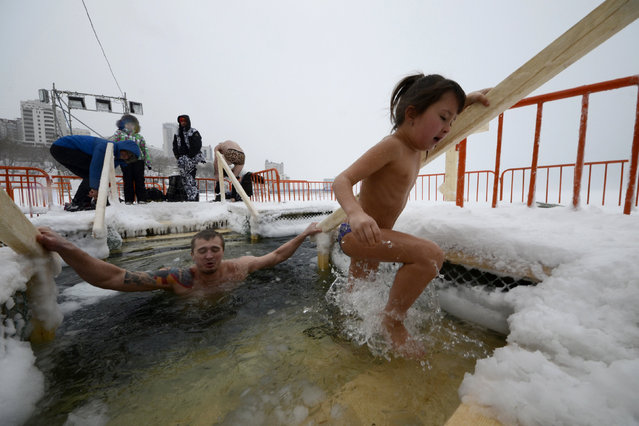
A man and a girl take a dip in icy waters during celebrations for the Orthodox Epiphany in the Sea of Japan in the far eastern city of Vladivostok, Russia, January 19, 2016. (Photo by Yuri Maltsev/Reuters)

A man and a girl take a dip in icy waters during celebrations for the Orthodox Epiphany in the Sea of Japan in the far eastern city of Vladivostok, Russia, January 19, 2016. Orthodox believers mark Epiphany on January 19 by immersing themselves in icy waters regardless of the weather. (Photo by Yuri Maltsev/Reuters)
Details
21 Jan 2016 08:04:00
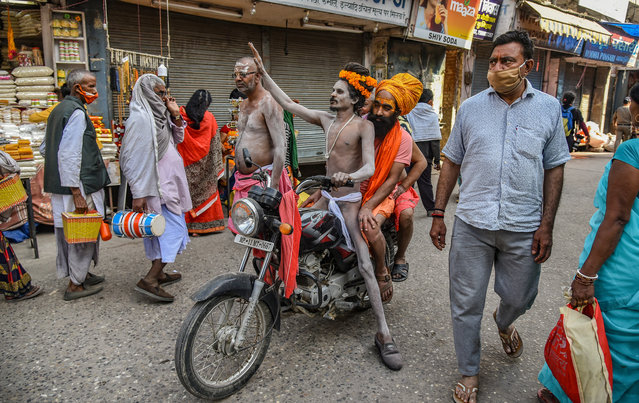
Indian holy men, or Naga Sadhu, ride a motorbike on their way to take a holy dip in the Ganges River during the Kumbh Mela at Haridwar, Uttarakhand, India, 14 April 2021. Thousands of pilgrims gather for the mass Hindu pilgrimage which occurs every twelve years and rotates among four locations. (Photo by Idrees Mohammed/EPA/EFE)

Indian holy men, or Naga Sadhu, ride a motorbike on their way to take a holy dip in the Ganges River during the Kumbh Mela at Haridwar, Uttarakhand, India, 14 April 2021. Thousands of pilgrims gather for the mass Hindu pilgrimage which occurs every twelve years and rotates among four locations. (Photo by Idrees Mohammed/EPA/EFE)
Details
16 Apr 2021 09:41:00
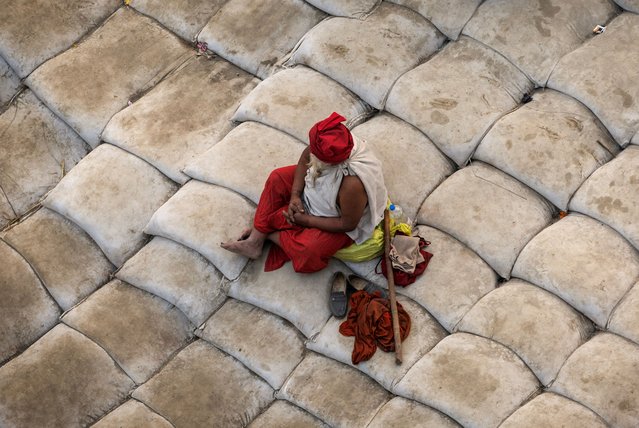
A Sadhu or a Hindu holy man sits on the banks before taking a holy dip at Sangam, the confluence of the Ganges and Yamuna rivers with the mythical, invisible Saraswati river, during the “Maha Kumbh Mela”, or the Great Pitcher Festival, in Prayagraj, India, on January 13, 2025. (Photo by Adnan Abidi/Reuters)

A Sadhu or a Hindu holy man sits on the banks before taking a holy dip at Sangam, the confluence of the Ganges and Yamuna rivers with the mythical, invisible Saraswati river, during the “Maha Kumbh Mela”, or the Great Pitcher Festival, in Prayagraj, India, on January 13, 2025. (Photo by Adnan Abidi/Reuters)
Details
10 Feb 2025 04:54:00
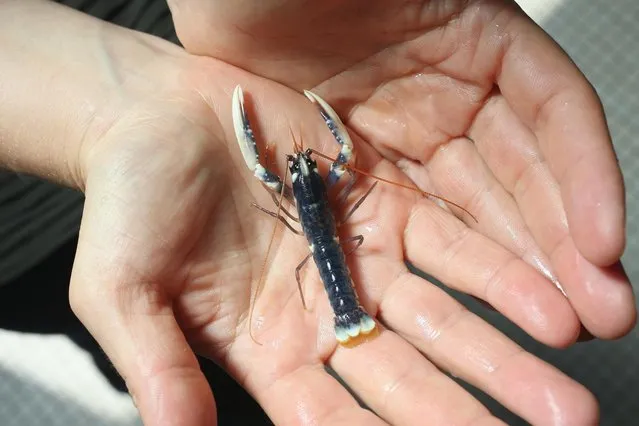
Isabel Schmalenbach, an environmental scientist with the Helgoland Biological Institute (Biologische Anstalt Helgoland), part of the Alfred Wegener Institute for Polar and Marine Research, holds a one-year old baby European lobster (Homarus gammarus) raised at the institute on August 3, 2013 on Helgoland Island, Germany. (Photo by Sean Gallup/Getty Images)

Isabel Schmalenbach, an environmental scientist with the Helgoland Biological Institute (Biologische Anstalt Helgoland), part of the Alfred Wegener Institute for Polar and Marine Research, holds a one-year old baby European lobster (Homarus gammarus) raised at the institute on August 3, 2013 on Helgoland Island, Germany. Later in the day Schmalenbach and her colleagues released a total of 415 one-year old lobsters into the North Sea as part of an effort to repopulate the lobster population around Helgoland (also called Heligoland). In the 19th century local fishermen caught up to 80,000 lobsters a year in the surrounding waters, combined with the heavy allied bombing of the island during and after World War II, as well as other environmental factors, decimated the lobster population. (Photo by Sean Gallup)
Details
05 Aug 2013 08:39:00