Loading...
Done
Bird Nest By Sharon Beals Part2

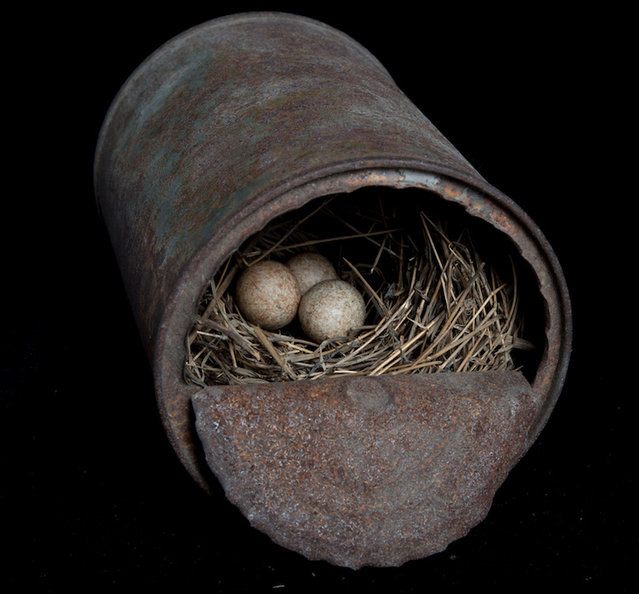
Sharon Beals is a San Francisco based photographer who has photographed nest and eggs specimens collected over the last two centuries at The California Academy of Sciences, The Museum of Vertebrate Zoology, and The Western Foundation of Vertebrate Zoology. While few nests are collected today, these nests and eggs are used for research, providing important information about their builder’s habitats, DNA, diseases and other survival issues.
Details
21 Aug 2013 11:34:00


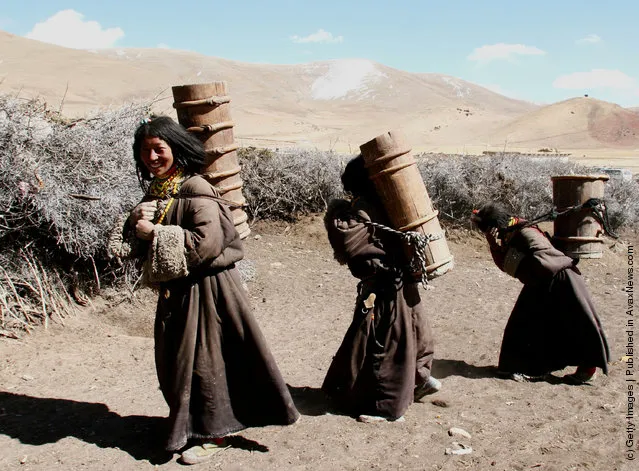
Kangba women carry barrels to fetch water at a village on April 10, 2005 in Zuogong County of Tibet, China. Kangba people began to fetch water with the traditional barrels hundreds of years ago. Kangba people are one of the Tibetan tribes living in Kangba Region, a juncture area of Sichuan and Yunnan Provinces and the Tibet Autonomous Region. Kangba people are famous for their beauty, toughness and straightforwardness. (Photo by China Photos/Getty Images)
Details
31 Mar 2011 10:31:00


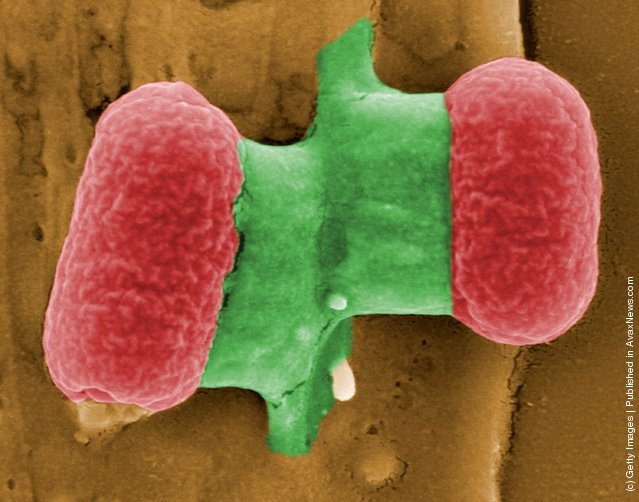
In this handout photo provided by the Helmholtz Center for Research on Infectious Diseases an EHEC bacteria is visible on May 30, 2011 in Berlin, Germany. German health authorities have attributed at least 14 deaths within the last two weeks to an outbreak of enterohemorrhagic E. coli, also known as the EHEC bacteria. (Photo Courtesay Manfred Rohde, Helmholtz-Zentrum fuer Infektionsforschung (HZI)/Getty Images)
Details
31 May 2011 06:43:00
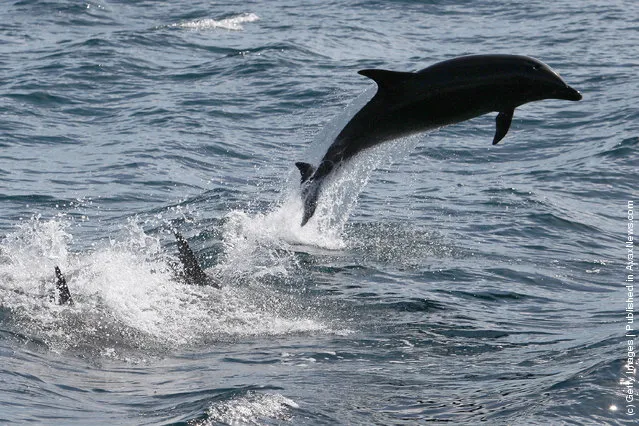
Bottlenose dolphins

Bottlenose dolphins leap off the Southern California coast on January 30, 2012 near Dana Point, California. A coalition that includes Native American tribes, Earthjustice and the Natural Resources Defense Council is on the National Marine Fisheries Service for more protection for dolphins, whales, and other migrating marine animals from the use of sonar in training by the US Navy on the West Coast. (Photo by David McNew/Getty Images)
Details
31 Jan 2012 10:23:00
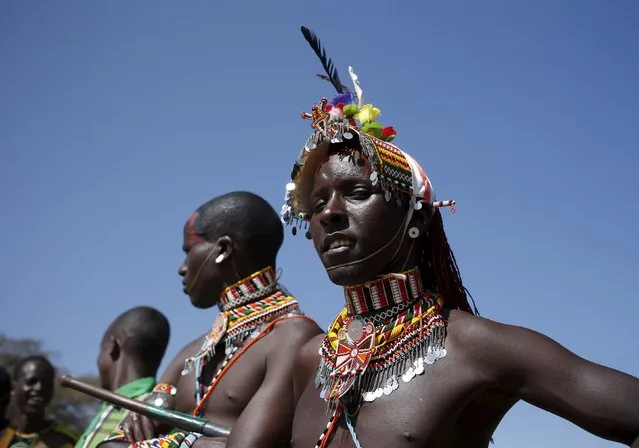
Samburu tribesmen stand during the Maralal Camel Derby, Kenya, August 15, 2015. (Photo by Goran Tomasevic/Reuters)

Samburu tribesmen stand during the Maralal Camel Derby, Kenya, August 15, 2015. Maralal, a small, arid town about an eight-hour drive north of the Kenyan capital Nairobi, holds an annual camel festival, bringing together members of the Samburu, Turkana and Pokot semi-nomadic cattle-herding tribes. (Photo by Goran Tomasevic/Reuters)
Details
20 Aug 2015 13:37:00
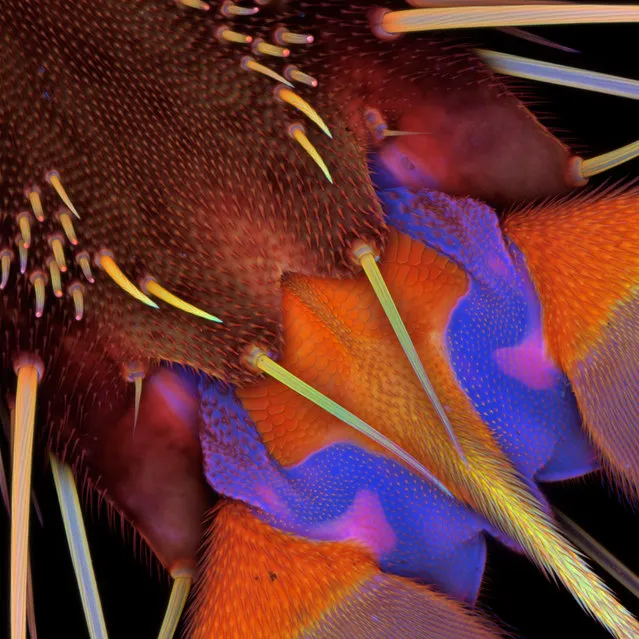
Pretarsus of the third leg of a female drone fly (Eristalis tenax), ventral view, by Dr. Jan Michels, Institute of Zoology, Christian-Albrechts-University of Kiel, Germany. (Photo by Olympus BioScapes)

“Microscope images forge an extraordinary bond between science and art, said Hidenao Tsuchiya, Olympus America's Vice President and General Manager for the Scientific Equipment Group. We founded this competition to focus on the fascinating stories coming out of today's life science research laboratories. The thousands of images that people have shared with the competition over the years reflect some of the most exciting work going on in research today – work that can help shed light on the living universe and ultimately save lives. We look at BioScapes and these beautiful images as sources of education and inspiration to us and the world”. – OlympusBioScapes

Photo: Pretarsus of the third leg of a female drone fly (Eristalis tenax), ventral view, by Dr. Jan Michels, Institute of Zoology, Christian-Albrechts-University of Kiel, Germany. (Photo by Olympus BioScapes)
Details
29 Jul 2012 09:20:00
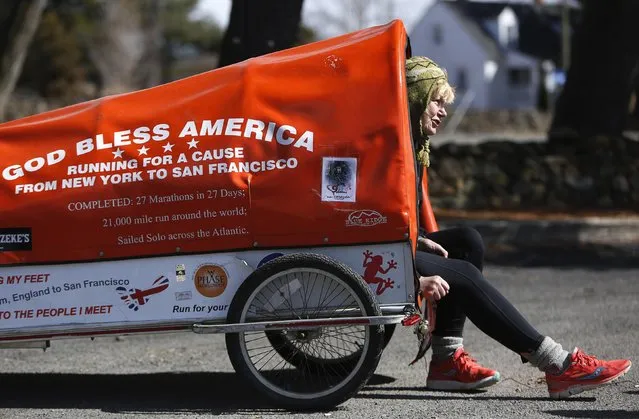
Sixty-eight year old cross-country runner Rosie Swale-Pope is interviewed while sitting in her cart, “The Icebird”, in Upperville, Virginia March 13, 2015. Swale-Pope, who is from Great Britain and once ran an unsupported 20,000 mile run around the globe,  is currently running across the United States from New York City to San Francisco in support of cancer research. (Photo by Gary Cameron/Reuters)

Sixty-eight year old cross-country runner Rosie Swale-Pope is interviewed while sitting in her cart, “The Icebird”, in Upperville, Virginia March 13, 2015. Swale-Pope, who is from Great Britain and once ran an unsupported 20,000 mile run around the globe, is currently running across the United States from New York City to San Francisco in support of cancer research. (Photo by Gary Cameron/Reuters)
Details
18 Mar 2015 11:05:00
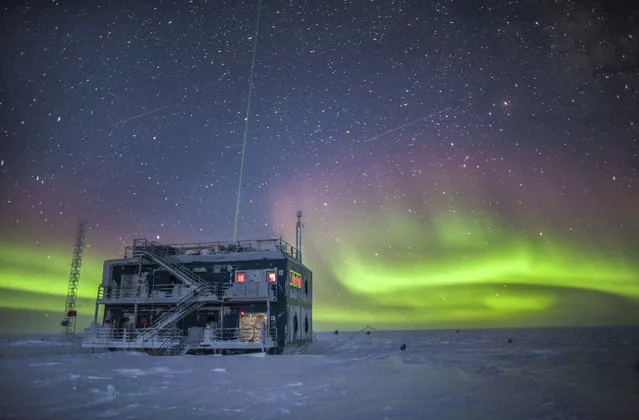
This undated photo provided by NOAA in May 2018 shows aurora australis near the South Pole Atmospheric Research Observatory in Antarctica. When a hole in the ozone formed over Antarctica, countries around the world in 1987 agreed to phase out several types of ozone-depleting chemicals called chlorofluorocarbons (CFCs). Production was banned, emissions fell and the hole shriveled. But according to a study released on Wednesday, May 16, 2018, scientists say since 2013, there’s more of a banned CFC going into the atmosphere. (Photo by Patrick Cullis/NOAA via AP Photo)

This undated photo provided by NOAA in May 2018 shows aurora australis near the South Pole Atmospheric Research Observatory in Antarctica. When a hole in the ozone formed over Antarctica, countries around the world in 1987 agreed to phase out several types of ozone-depleting chemicals called chlorofluorocarbons (CFCs). Production was banned, emissions fell and the hole shriveled. But according to a study released on Wednesday, May 16, 2018, scientists say since 2013, there’s more of a banned CFC going into the atmosphere. (Photo by Patrick Cullis/NOAA via AP Photo)
Details
15 Aug 2018 00:05:00