Loading...
Done
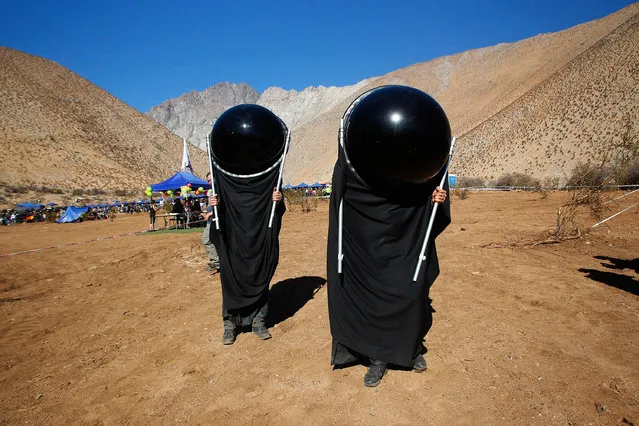
Chileans watch the sky with special suits prior to a total solar eclipse on July 2, 2019 in Paiguano, Chile. Around 25,0000 tourists arrived to Paiguano, a small town of around 1,000 inhabitants in the Elqui Valley, 650 km away Santiago. This is the only Earth's total solar eclipse of 2019 and the first one since 2017. From this point, the sun will fully disappear for around two minutes. It is best visible from a stripe in the South Pacific, Chile and Argentina. (Photo by Marcelo Hernandez/Getty Images)

Chileans watch the sky with special suits prior to a total solar eclipse on July 2, 2019 in Paiguano, Chile. Around 25,0000 tourists arrived to Paiguano, a small town of around 1,000 inhabitants in the Elqui Valley, 650 km away Santiago. This is the only Earth's total solar eclipse of 2019 and the first one since 2017. From this point, the sun will fully disappear for around two minutes. It is best visible from a stripe in the South Pacific, Chile and Argentina. (Photo by Marcelo Hernandez/Getty Images)
Details
04 Jul 2019 00:05:00
An Iraqi woman and foreigners use  pair of compact discs as a filter to watch the partial solar eclipse in war-torn Baghdad, 29 March 2006. Without access to proper equipment to protect their eyes from the sun's rays, eclipse watchers in Iraq used makeshift filters.  The moon blotted out the sun over northwest Africa early Wednesday, turning day into night in a total solar eclipse as it swept a shadowy path from the outer tip of Brazil to the steppes of Mongolia. (Photo by Hassan Ammar/AFP Photo)

An Iraqi woman and foreigners use pair of compact discs as a filter to watch the partial solar eclipse in war-torn Baghdad, 29 March 2006. Without access to proper equipment to protect their eyes from the sun's rays, eclipse watchers in Iraq used makeshift filters. The moon blotted out the sun over northwest Africa early Wednesday, turning day into night in a total solar eclipse as it swept a shadowy path from the outer tip of Brazil to the steppes of Mongolia. (Photo by Hassan Ammar/AFP Photo)
Details
25 Jul 2017 09:31:00
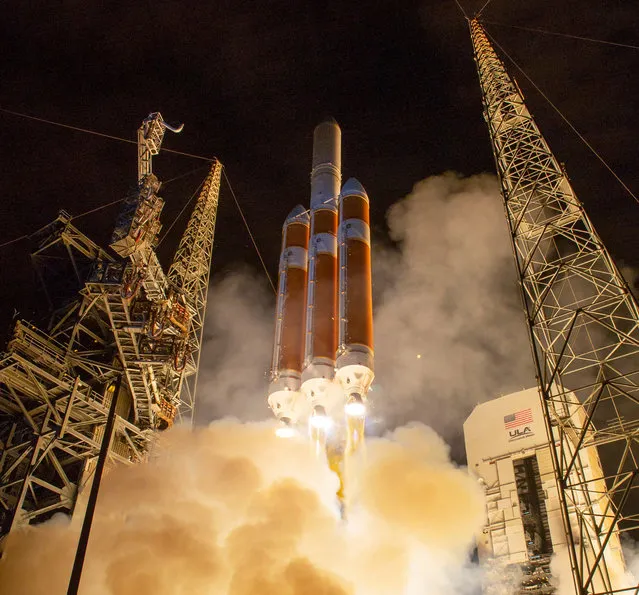
A handout photo made available by the NASA shows the United Launch Alliance Delta IV Heavy rocket launches NASA's Parker Solar Probe to touch the Sun, from Launch Complex 37 at Cape Canaveral Air Force Station, Florida, USA, 12 August 2018. Parker Solar Probe is humanity’s first-ever mission into a part of the Sun’s atmosphere called the corona. Here it will directly explore solar processes that are key to understanding and forecasting space weather events that can impact life on Earth. (Photo by Bill Ingalls/EPA-EFE/NASA)

A handout photo made available by the NASA shows the United Launch Alliance Delta IV Heavy rocket launches NASA's Parker Solar Probe to touch the Sun, from Launch Complex 37 at Cape Canaveral Air Force Station, Florida, USA, 12 August 2018. Parker Solar Probe is humanity’s first-ever mission into a part of the Sun’s atmosphere called the corona. Here it will directly explore solar processes that are key to understanding and forecasting space weather events that can impact life on Earth. (Photo by Bill Ingalls/EPA-EFE/NASA)
Details
13 Aug 2018 07:26:00
Festival goers participate in a dance class on embracing kinetic intimacy in the dance shala a the Oregon Eclipse Festival, August 20, 2017, at Big Summit Prairie ranch in Oregon' s Ochoco National Forest near the city of Mitchell ahead of the total solar eclipse on August 21, 2017. (Photo by Robyn Beck/AFP Photo)

Festival goers participate in a dance class on embracing kinetic intimacy in the dance shala a the Oregon Eclipse Festival, August 20, 2017, at Big Summit Prairie ranch in Oregon' s Ochoco National Forest near the city of Mitchell ahead of the total solar eclipse on August 21, 2017. (Photo by Robyn Beck/AFP Photo)
Details
22 Aug 2017 08:08:00
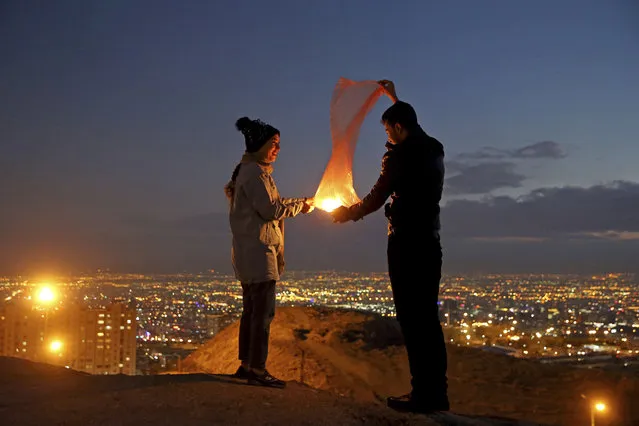
A couple lights a lantern during a celebration, known as “Chaharshanbe Souri”, or Wednesday Feast, marking the eve of the last Wednesday of the solar Persian year, Tuesday, March 19, 2019, in Tehran, Iran. (Photo by Ebrahim Noroozi/AP Photo)

A couple lights a lantern during a celebration, known as “Chaharshanbe Souri”, or Wednesday Feast, marking the eve of the last Wednesday of the solar Persian year, Tuesday, March 19, 2019, in Tehran, Iran. Iran's many woes briefly went up in smoke on Tuesday as Iranians observed a nearly 4,000-year-old Persian tradition known as the Festival of Fire. (Photo by Ebrahim Noroozi/AP Photo)
Details
21 Mar 2019 00:03:00
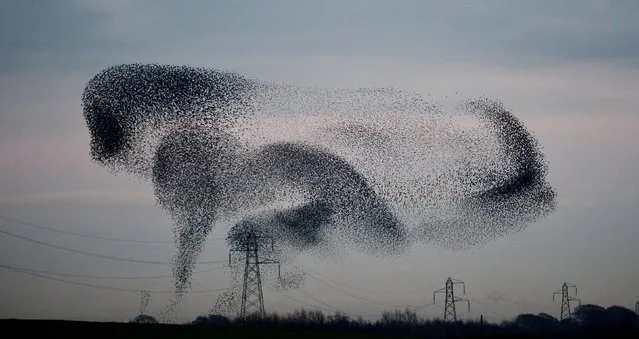
A murmuration of starlings above the  the small village of Rigg, near Gretna, in the Scottish Borders, on November 25, 2013. The weight of the resting birds on power lines caused some power localised power outages in the village. Still one of the commonest of garden birds, its decline elsewhere puts it on the Red List of endangered species. (Photo by Owen Humphreys/PA Wire)

A murmuration of starlings above the the small village of Rigg, near Gretna, in the Scottish Borders, on November 25, 2013. The weight of the resting birds on power lines caused some power localised power outages in the village. Still one of the commonest of garden birds, its decline elsewhere puts it on the Red List of endangered species. (Photo by Owen Humphreys/PA Wire)
Details
27 Nov 2013 11:00:00
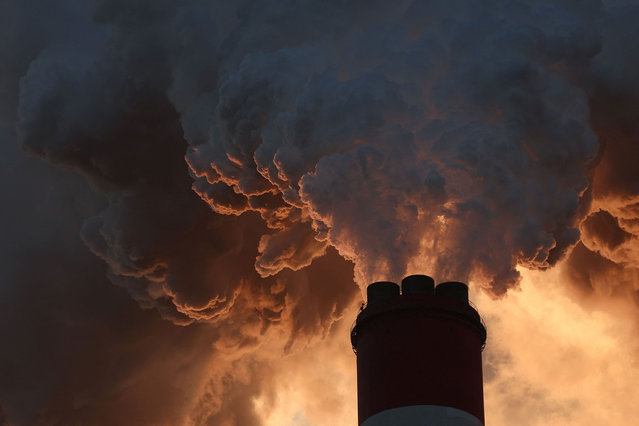
Smoke and steam billow from Belchatow Power Station, Europe's largest coal-fired power plant powered by lignite, operated by Polish utility PGE, in Rogowiec, Poland on November 22, 2023. (Photo by Kacper Pempel/Reuters)

Smoke and steam billow from Belchatow Power Station, Europe's largest coal-fired power plant powered by lignite, operated by Polish utility PGE, in Rogowiec, Poland on November 22, 2023. (Photo by Kacper Pempel/Reuters)
Details
01 Jun 2024 04:51:00
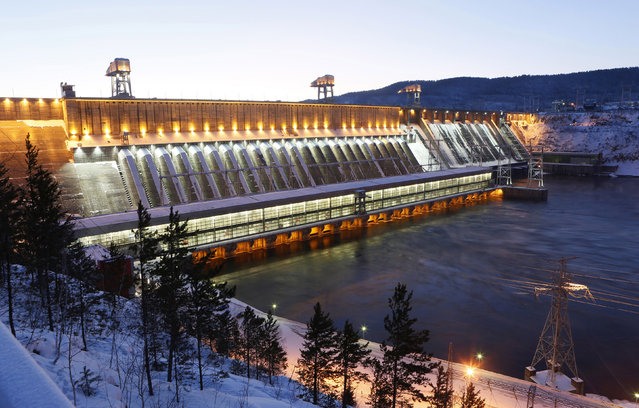
A general view shows the Krasnoyarsk hydro-electric power station on the Yenisei River near the Siberian city of Krasnoyarsk, Russia, January 13, 2016. The power plant, owned by EuroSibEnergo company, part of En+ Group, with a generating capacity of 6,000 megawatt (MW), has a ferro-concrete dam 124-metres high and 1065-metres long and is the second largest Russian hydroelectric power station. About 85% of the energy generated is intended for the Rusal Krasnoyarsk aluminium smelter, according to representatives of the power station. (Photo by Ilya Naymushin/Reuters)

A general view shows the Krasnoyarsk hydro-electric power station on the Yenisei River near the Siberian city of Krasnoyarsk, Russia, January 13, 2016. The power plant, owned by EuroSibEnergo company, part of En+ Group, with a generating capacity of 6,000 megawatt (MW), has a ferro-concrete dam 124-metres high and 1065-metres long and is the second largest Russian hydroelectric power station. About 85% of the energy generated is intended for the Rusal Krasnoyarsk aluminium smelter, according to representatives of the power station. (Photo by Ilya Naymushin/Reuters)
Details
16 Jan 2016 08:03:00