Loading...
Done


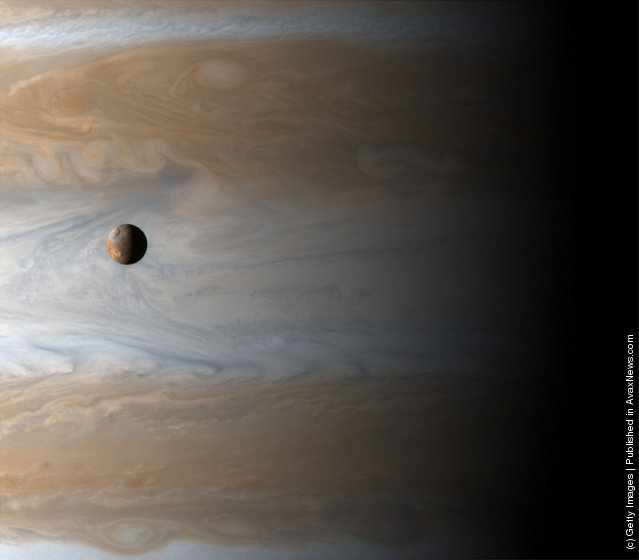
Gliding past the planet Jupiter, the Cassini spacecraft captures this awe inspiring view of active Io, Jupiter's third largest satellite, with the largest gas giant as a backdrop, offering a stunning demonstration of the ruling planet's relative size, April 20, 2001. The Cassini spacecraft itself was about 10 million kilometers from Jupiter when recording the image data. (Photo courtesy of NASA/Newsmakers)
Details
23 Mar 2011 10:32:00


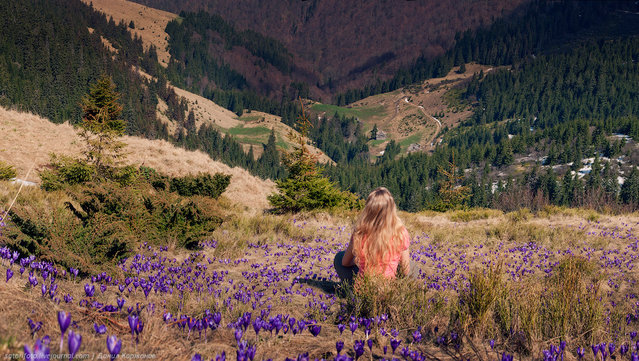
Photos by Daniel Korjonov
Details
30 May 2012 03:43:00
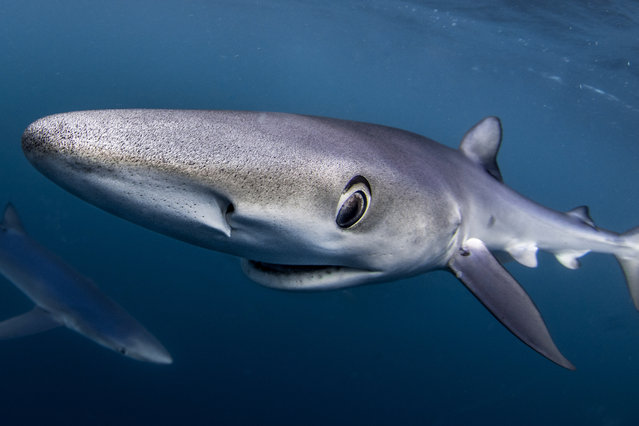
The rarely seen blue sharks photographed by Saeed Rashid in British waters. (Photo by Saeed Rashid/Caters News)

The rarely seen blue sharks photographed by Saeed Rashid in British waters. Elusive blue sharks have recently been spotted off the south coast of England, having moved to the UKs warmer waters to hunt. The carnivorous sharks have been lurking off the coast of the popular British holiday destination, Penzance, in Cornwall. (Photo by Saeed Rashid/Caters News)
Details
12 Oct 2016 10:48:00
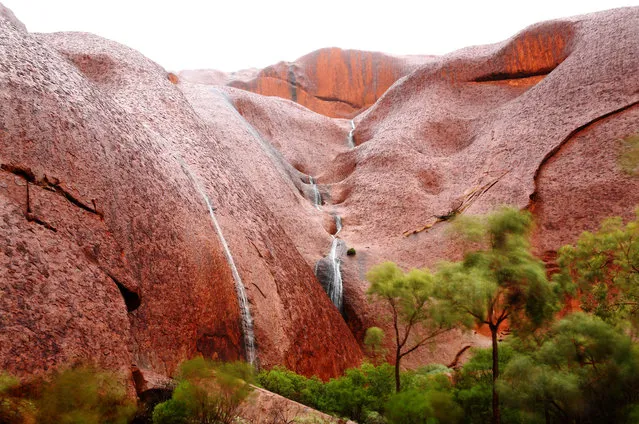
A general view of Uluru is seen as it rains on November 28, 2013 in Uluru-Kata Tjuta National Park, Australia. Uluru/ Ayers Rock is a large sandstone formation situated in central Australia approximately 335km from Alice Springs. The site and its surrounding area is scared to the Anangu people, the Indigenous people of this area and is visited by over 250,000 people each year.  (Photo by Mark Kolbe/Getty Images)

A general view of Uluru is seen as it rains on November 28, 2013 in Uluru-Kata Tjuta National Park, Australia. Uluru/ Ayers Rock is a large sandstone formation situated in central Australia approximately 335km from Alice Springs. The site and its surrounding area is scared to the Anangu people, the Indigenous people of this area and is visited by over 250,000 people each year. (Photo by Mark Kolbe/Getty Images)
Details
30 Jan 2014 13:27:00
A mechanic assembles a BMW C evolution electric maxi-scooter at the BMW Berlin motorcycle plant February 23, 2015. The storage capacity of the BMW C evolution's high-voltage 8 kWh battery provides a range of up to 100 kilometres and a maximum speed of 120 km/h. (Photo by Fabrizio Bensch/Reuters)

A mechanic assembles a BMW C evolution electric maxi-scooter at the BMW Berlin motorcycle plant February 23, 2015. The storage capacity of the BMW C evolution's high-voltage 8 kWh battery provides a range of up to 100 kilometres and a maximum speed of 120 km/h. (Photo by Fabrizio Bensch/Reuters)
Details
25 Feb 2015 08:38:00
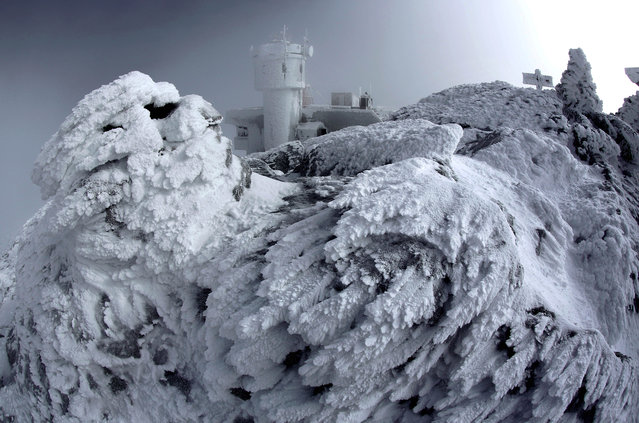
In this Tuesday, March 10, 2015 photo, rime ice covers rocks on the summit of Mount Washington in New Hampshire. Rime ice occurs when freezing fog hits stationary objects in frigid conditions. (Photo by Robert F. Bukaty/AP Photo)

In this Tuesday, March 10, 2015 photo, rime ice covers rocks on the summit of Mount Washington in New Hampshire. Rime ice occurs when freezing fog hits stationary objects in frigid conditions. (Photo by Robert F. Bukaty/AP Photo)
Details
17 Mar 2015 12:54:00
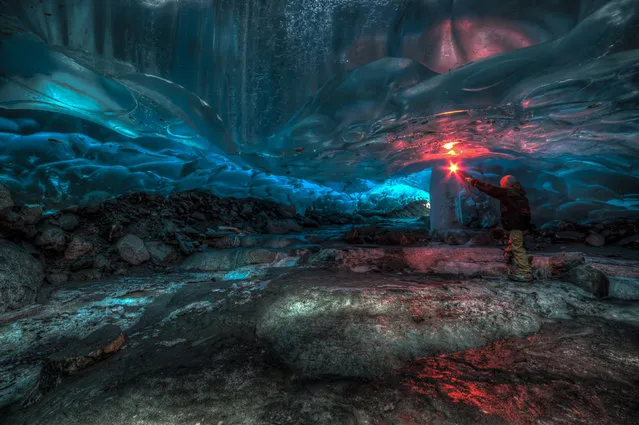
A friend of Ron Gile holding up a red road flare inside the amazing Alaskan ice cave. (Photo by Ron Gile/Caters News)

This photographer is walking on thin ice after taking stunning photographs inside an Alaskan ice cave that could collapse at any moment. With it's dazzling turquoise walls and and huge open spaces, it's hard to imagine that this incredible frozen cavern was only formed at the beginning of 2012. But despite it's seemingly mystical allure, the fascinating natural phenomena is at risk of collapsing in on itself without warning. (Photo by Ron Gile/Caters News)
Details
06 Oct 2014 08:44:00
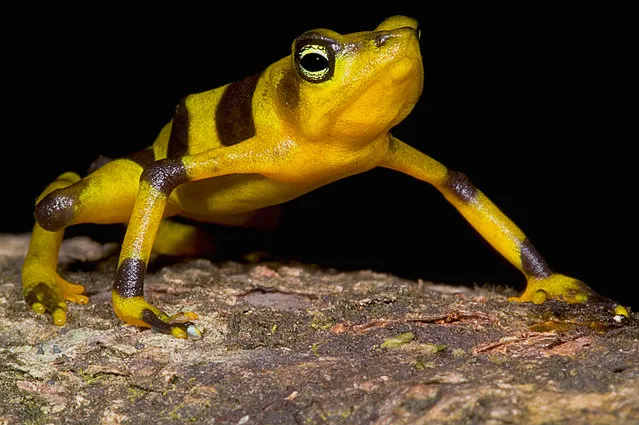
The golden harlequin toad has vanished from the wild, and only a small number live on in captivity. A fungus caused them, and many other amphibians, to die out in their home in Central America. (Photo by Danté Fenolio/The Guardian/Johns Hopkins University Press)

Wildlife photographer Danté Fenolio has headed into areas untouched by sunlight – deep seas, caves and underground – and found creatures that are exploding with colour. Here: The golden harlequin toad has vanished from the wild, and only a small number live on in captivity. A fungus caused them, and many other amphibians, to die out in their home in Central America. (Photo by Danté Fenolio/The Guardian/Johns Hopkins University Press)
Details
20 Jun 2016 12:19:00