Loading...
Done
A man assists two young hostages who managed to escape from the school building after special forces entered the school in Beslan, North Ossetia, Friday 03 September 2004. Streams of hostages fled the besieged school in Beslan in southern Russia Friday amid intensive shooting and a series of powerful explosions that signalled a bloody end to the three-day stand-off with terrorists. (Photo by Yuri Kochetkov/EPA)

On September 1, 2004, Chechen militants stormed an elementary school in the town of Beslan in the Russian republic of North Ossetia. They took 1,100 teachers, children, and their relatives hostage, demanding the withdrawal of federal forces from Chechnya as a condition for their release. On September 3, 2004, Russian security forces stormed the building, resulting in a battle in which more than 330 hostages died, including 186 children. Here: A man assists two young hostages who managed to escape from the school building after special forces entered the school in Beslan, North Ossetia, Friday 03 September 2004. (Photo by Yuri Kochetkov/EPA)
Details
25 Sep 2017 06:41:00
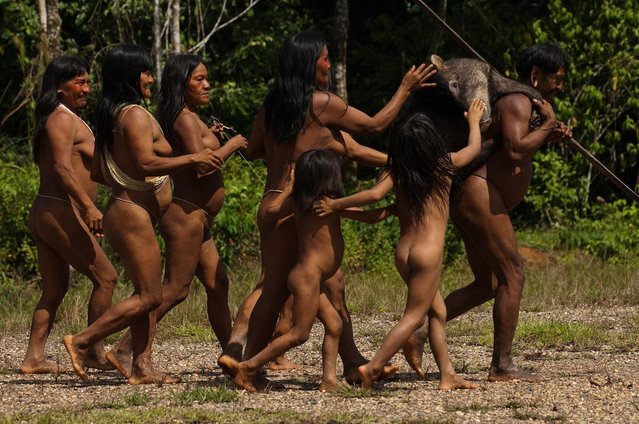
Spectacular images offering insight into the lives of the Huaorani people in the Ecuadorian Amazon have been revealed showing how they use traditional methods to hunt monkeys for food. The stunning pictures were taken by conservation photographer Pete Oxford from Torquay, Devon in the Ecuadorian Amazon. “The Huaorani Indians are a forest people highly in tune with their environment. Many are now totally acculturated since the 1950s by missionaries”, said Pete. “Today they face radical change to their culture to the proximity of oil exploration within their territory and the Yasuni National Park and Biosphere Reserve, they are vastly changed. Some still live very traditionally and for this shoot, through my Huaorani friend, a direct relative of those photographed he wanted to depict them as close to their original culture as possible. They still largely hunt with blow pipes and spears eating a lot of monkeys and peccaries”. The Huaorani are also known as the Waorani, Waodani or the Waos and are native Amerindians. Their lands are located between the Curaray and Napo rivers and speak the Huaorani language. Pete says that during his visit he was welcomed into the group and hopes that ancient cultures can be saved. Here: The tribe were seen celebrating after a hunter returned to camp with a wild pig. (Photo by Pete Oxford/Mediadrumworld.com)

Spectacular images offering insight into the lives of the Huaorani people in the Ecuadorian Amazon have been revealed showing how they use traditional methods to hunt monkeys for food. The stunning pictures were taken by conservation photographer Pete Oxford from Torquay, Devon in the Ecuadorian Amazon. Here: The tribe were seen celebrating after a hunter returned to camp with a wild pig. (Photo by Pete Oxford/Mediadrumworld.com)
Details
20 Jan 2017 07:58:00
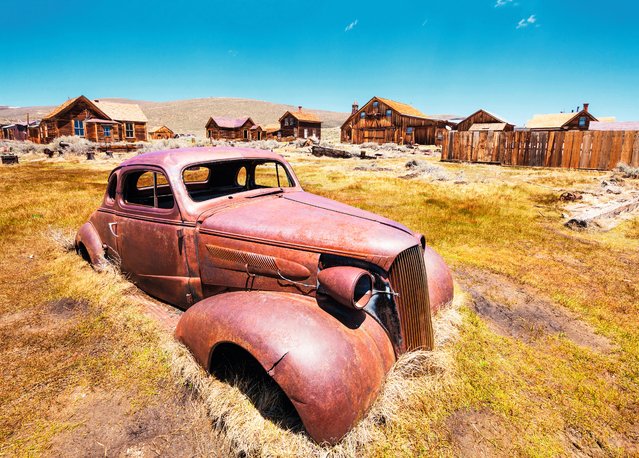
Bodie, Mono County, California. Gold was discovered at Bodie in 1859 (just after the initial California gold rush) and it went from mining camp to boomtown. Its decline began in 1880, when word spread of new boomtowns elsewhere. The Standard Consolidated Mine closed in 1913, and four years later the Bodie Railway was abandoned. By 1940 the population was down to 40. Today, Bodie is maintained in a state of arrested decay as a visitor attraction. (Photo by Alamy Stock Photo)

Kieron Connolly’s new book of photographs of more than 100 once-busy and often elegant buildings gives an idea of how the world might look if humankind disappeared. Here: Bodie, Mono County, California. Gold was discovered at Bodie in 1859 (just after the initial California gold rush) and it went from mining camp to boomtown. Its decline began in 1880, when word spread of new boomtowns elsewhere. The Standard Consolidated Mine closed in 1913, and four years later the Bodie Railway was abandoned. By 1940 the population was down to 40. Today, Bodie is maintained in a state of arrested decay as a visitor attraction. (Photo by Alamy Stock Photo)
Details
07 Sep 2016 09:50:00
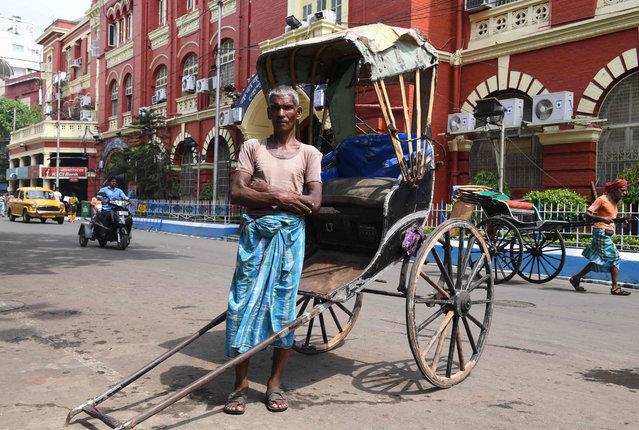
Mohammad Ashgar, 65, an Indian rickshaw puller, poses for a photograph next to his rickshaw in Kolkata on April 21, 2018. A mainstay of 19 th century transportation options, the hand- pulled rickshaw survives in India only in Kolkata after being outlawed elsewhere. The local puller's union puts the number of pullers in the city at 3,000. The union has resisted all previous attempts to ban their livelihood, previously organising mass protests of their members against moves to stamp out the practice. (Photo by Dibyangshu Sarkar/AFP Photo)

Ahead of May Day, AFP' s video and photo teams spoke to men and women around the globe whose jobs are becoming increasingly rare, particularly as technology transforms societies. Here: Mohammad Ashgar, 65, an Indian rickshaw puller, poses for a photograph next to his rickshaw in Kolkata on April 21, 2018. (Photo by Dibyangshu Sarkar/AFP Photo)
Details
02 May 2018 00:01:00
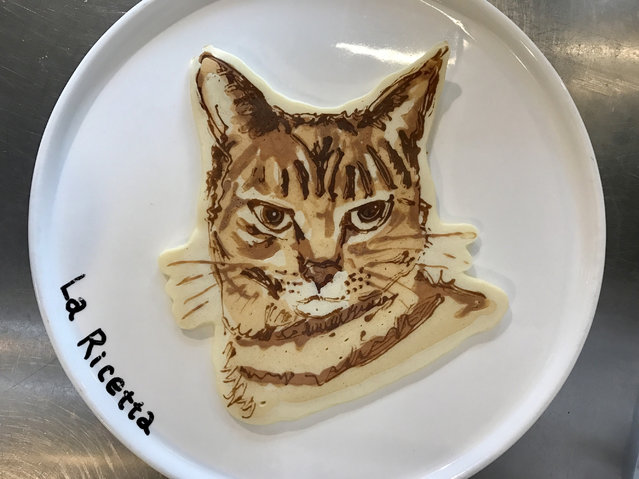
A pancake that looks like a cat, in Zama City, Japan. (Photo by Keisuke Inagaki/Barcroft Images)

As pancake day has creped up on us once again, a Japanese chef has combined our favourite things; cute animals and sugar. Keisuke Inagaki has been a chef at his restaurant La Ricetta in Zama City, Japan, for the last 18 years. He rose to Instagram fame from his Pokemon and anime pancake art, and the time around heis created a lifelike animal series. The 46-year-old chef began making pancakes in 2011 to raise spirits after the devastating nuclear disaster in Fukushima, Japan. Here: A pancake that looks like a cat, in Zama City, Japan. (Photo by Keisuke Inagaki/Barcroft Images)
Details
02 Mar 2017 00:03:00
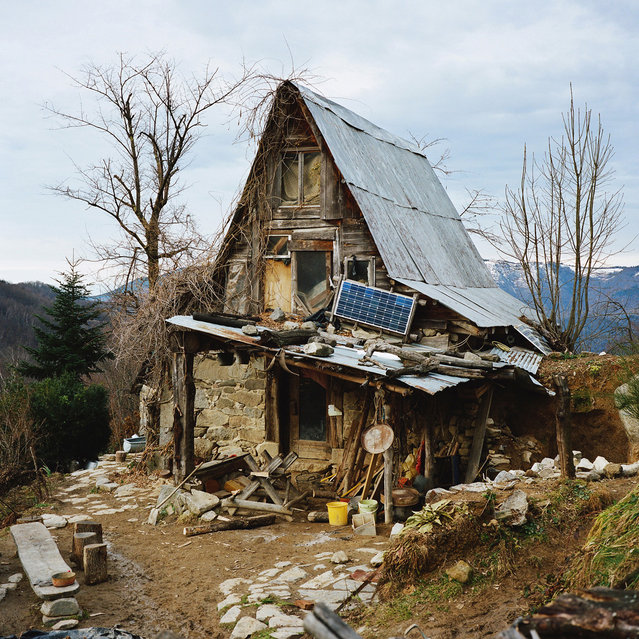
This property in the French Pyrenees is owned by a German man, who moved with his family here 25 years ago. He has since renovated the shack to be a completely self-sufficient house. There are no electrical appliances, but the solar panel powers small lights in the house. (Photo by Antoine Bruy)

Back in 2010, French photographer Antoine Bruy began hitchhiking around Europe without any fixed route. Along his travels, he met people who had entirely abandoned city life in favour of an isolated country existence they found more fulfilling. Bruy began seeking out people who lived off-the-grid. After three years on the road, staying in makeshift houses and on community farms, he has released Scrublands, a documentation of the lifestyle. While each living situation is different, Bruy found that all the people he met shared a common desire to escape the rat race and achieve a quieter life in harmony with nature. (Photo by Antoine Bruy)
Details
13 Aug 2014 09:45:00
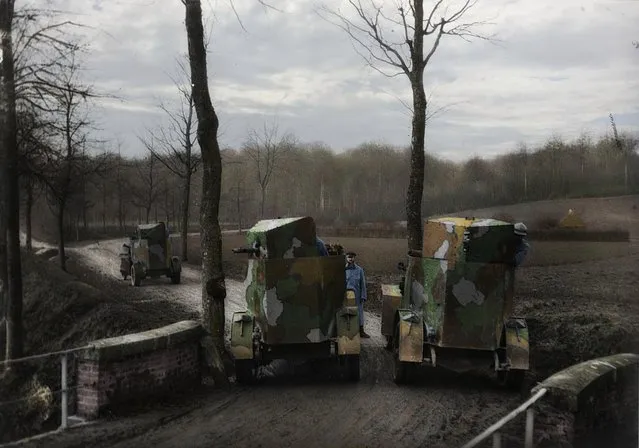
The expertly colourised shots were brought to life by French bank technician, Frédéric Duriez (51). The images were provided by the Valois collection which belongs to the BDIC. “By colourising these photos, I reduce the time that separates us today from this conflict”, said Frédéric. “A black and white photo does not attract the attention of young people, if you colour it, then people will look at it with curiosity. After this, we see the greater the misery and distress of these French fighters”. The total number of casualties in WW1 was more that 38 million. By the end of the war, over eight-million men had been called up to fight in the French army. France suffered 4.2 million casualties during the war with 1.3 million people dead. Here: Car cannon sections in firing position, Auxi-le-Château. (Photo by Frédéric Duriez/BDIC/Mediadrumworld.com)

The expertly colourised shots were brought to life by French bank technician, Frédéric Duriez (51). The images were provided by the Valois collection which belongs to the BDIC. “By colourising these photos, I reduce the time that separates us today from this conflict”, said Frédéric. Here: Car cannon sections in firing position, Auxi-le-Château. (Photo by Frédéric Duriez/BDIC/Mediadrumworld.com)
Details
03 May 2017 08:41:00
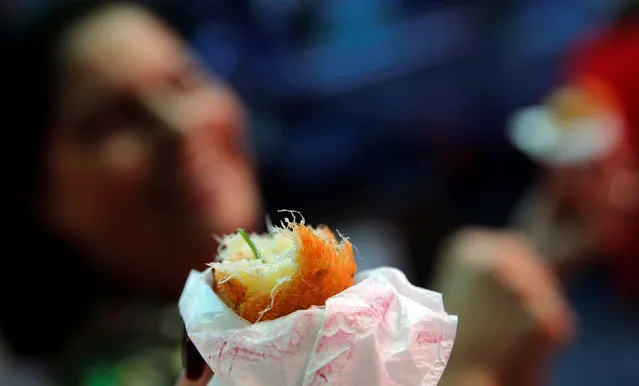
A view of traditional bolinhos de bacalhau (fried codfish balls) in Rio de Janeiro, Brazil, May 7, 2016. (Photo by Sergio Moraes/Reuters)

If the most popular foods of Rio de Janeiro have one thing in common, it is their informality. You can find fine restaurants in the city, but they do not set Rio apart from other places. What does set it apart, and what invariably brings its residents, known as "Cariocas," together is the unpretentious food they eat in bright, loud, crowded bars and restaurants, on busy street corners, or after a day at the beach. Here: A view of traditional bolinhos de bacalhau (fried codfish balls) in Rio de Janeiro, Brazil, May 7, 2016. (Photo by Sergio Moraes/Reuters)
Details
05 Aug 2016 13:20:00