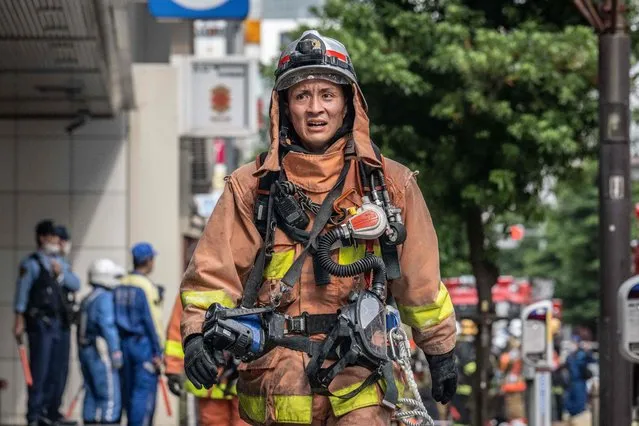
A firefighter works outside of a building where an explosion and a fire broke out in Shimbashi area of Tokyo on July 3, 2023. (Photo by Yuichi Yamazaki/AFP Photo)
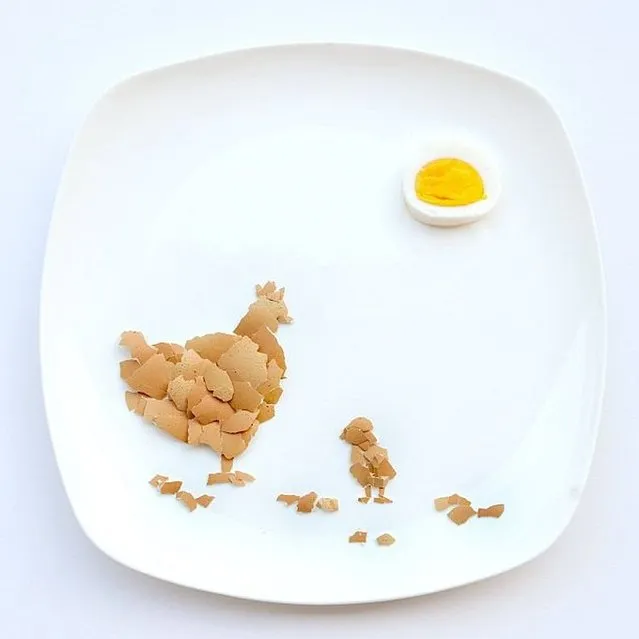
Hong Yi is a Malaysian architect and artist whose impressive portfolio includes work for Chicago’s Union Station, the Melbourne Hall of Music, and alternative medium portraits using coffee stains or tea bags. Her unorthodox approach to creation has led her to her most recent blog project. Over the course of 31 days, Hong Yi (who also goes by Red) will post art pieces made from food. So far, the pieces range from simpler ones of a watermelon sailboat to a complex recreation of Hokusai’s “The Great Wave.”
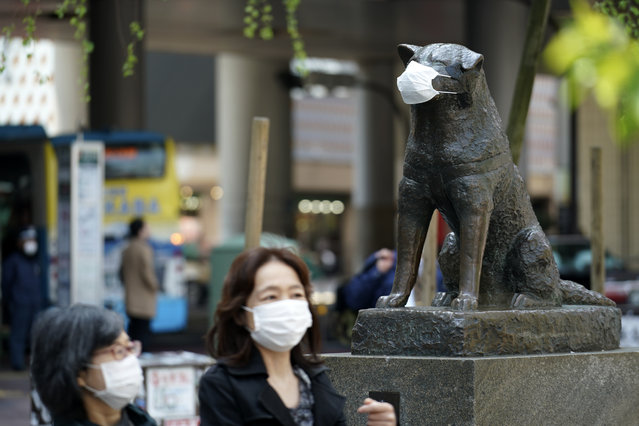
A statue of a Japanese Akita dog named “Hachiko” wearing a face mask is seen near Shibuya Station Wednesday, April 8, 2020, in Tokyo. Japanese Prime Minister Shinzo Abe declared a state of emergency on Tuesday for Tokyo and six other prefectures to ramp up defenses against the spread of the new coronavirus. Hachiko has waited for his owner University of Tokyo Prof. Eizaburo Ueno at the same place by the station every afternoon, expecting him to return home for nearly 11 years even after Ueno's death at work. (Photo by Eugene Hoshiko/AP Photo)
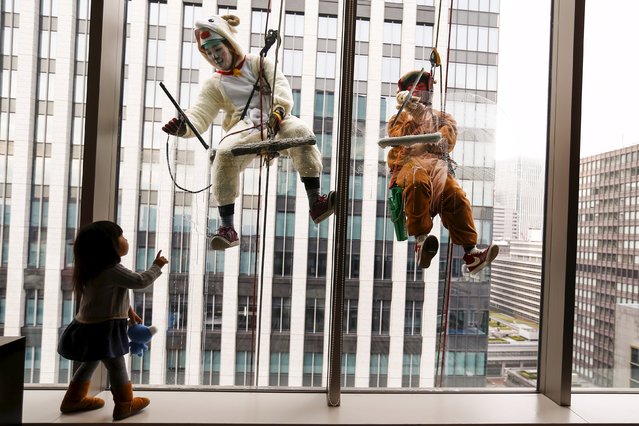
A child looks at window cleaners work while dressed in sheep (C) and monkey costumes, denoting animal signs of the Chinese zodiac calendar, during an event marking the upcoming end of the year at a hotel in Tokyo, Japan, December 21, 2015. According to the zodiac calendar, 2015 is the year of the sheep and 2016 is the year of the monkey. (Photo by Thomas Peter/Reuters)
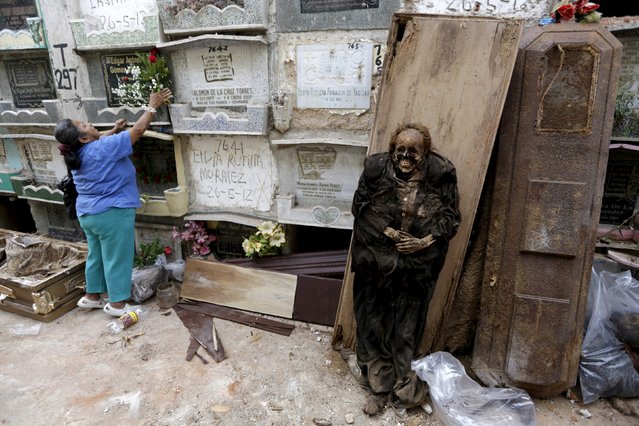
A woman (L) places flowers at a grave next to a mummified body during exhumation works at the General Cemetery in Guatemala City, April 15, 2015. If a lease on a grave has expired or not been paid, grave cleaners will break open the crypts to remove and rebury the bodies. Any remains that have not been claimed are packed into plastic bags, labeled and stored in mass graves. Bodies that have been stored in the upper crypt are exposed to dry and sunny conditions which means they do not decompose and instead become mummified. (Photo by Jorge Dan Lopez/Reuters)
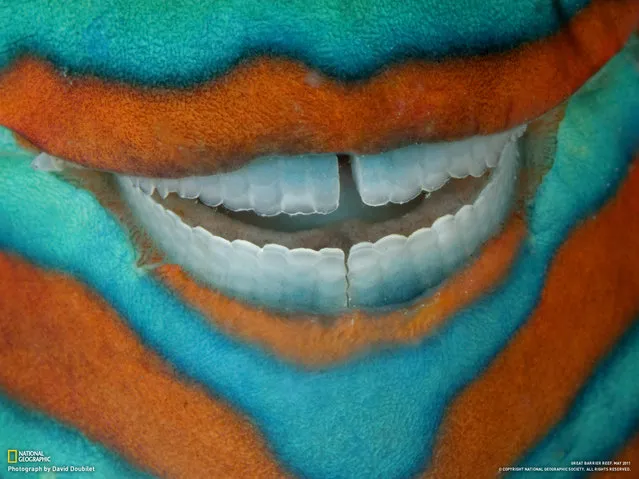
“David Doubilet (born 28 November 1946) is a well known underwater photographer known primarily for his work published in National Geographic Magazine. He was born in New York and started taking photos underwater at the young age of 12. He started with a Brownie Hawkeye in a rubber anesthesiologist's bag to keep the water out of the camera. During his summer holidays, he spent his time along the New Jersey coast. He later worked as a diver and photographer for the Sandy Hook Marine Laboratories in New Jersey. He also spent much time in the Caribbean. While a dive instructor in the Bahamas he found his motivation to capture the beauty of the sea and everything in it”. – Wikipedia. (Photo by David Doubilet/National Geographic)
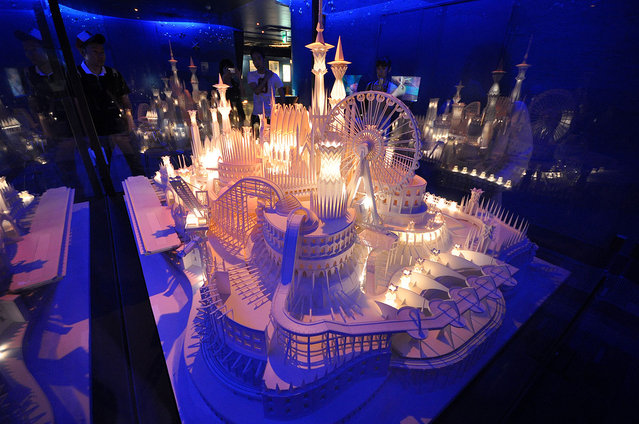
A paper craft art installation by Wataru Itou, a young student of a major art university in Tokyo. The installation is hand made over four years of hard work, complete with electrical lights and a moving train, all made of paper! Clearly, this man must have created one of the most stunning examples of Paper Craft in the world. The exhibition where this masterpiece was exposed was entiteled A Castle On the Ocean. It was exhibited at Umihotaru, a place which in itself is a major attraction: a service area in the middle of the ocean, right between Tokyo City and Chiba Prefecture.
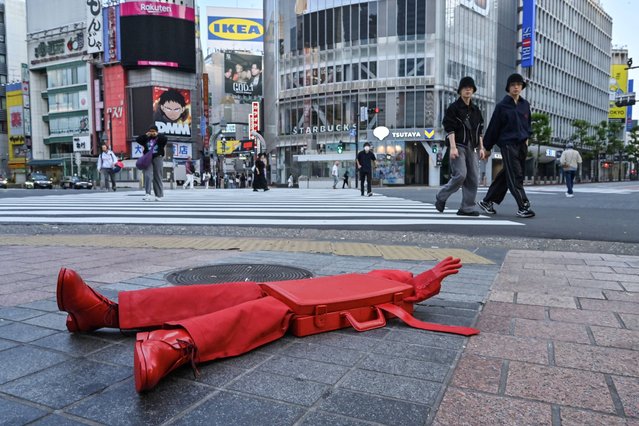
Pedestrians walk past an art installation by French street artist James Colomina called the “The Briefcase” (bottom) at Shibuya Crossing in the Shibuya district of central Tokyo on May 20, 2025. The display shows a red briefcase – a symbol of work and conformity – with arms, legs and a tie poking out on the ground to illustrate a “salaryman” who has lost his identity, swallowed by his daily routine. (Photo by Richard A. Brooks/AFP Photo)