Loading...
Done
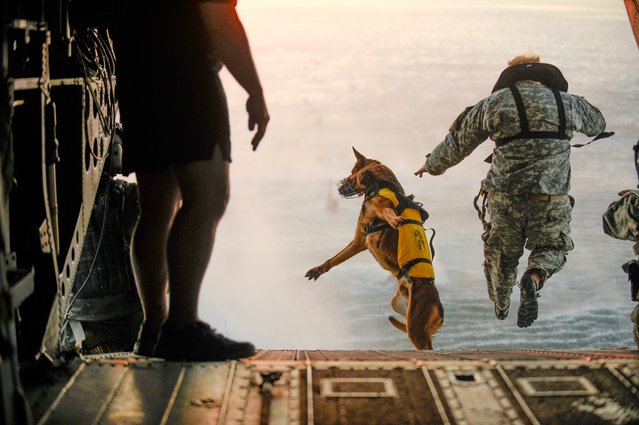
A U.S. Army soldier with the 10th Special Forces Group and his military working dog jump off the ramp of a CH-47 Chinook helicopter from the 160th Special Operations Aviation Regiment during water training over the Gulf of Mexico as part of exercise Emerald Warrior 2011 on March 1, 2011. (Photo by Tech. Sgt. Manuel J. Martinez/U.S. Air Force)

A U.S. Army soldier with the 10th Special Forces Group and his military working dog jump off the ramp of a CH-47 Chinook helicopter from the 160th Special Operations Aviation Regiment during water training over the Gulf of Mexico as part of exercise Emerald Warrior 2011 on March 1, 2011. (Photo by Tech. Sgt. Manuel J. Martinez/U.S. Air Force)
Details
05 Mar 2016 11:52:00
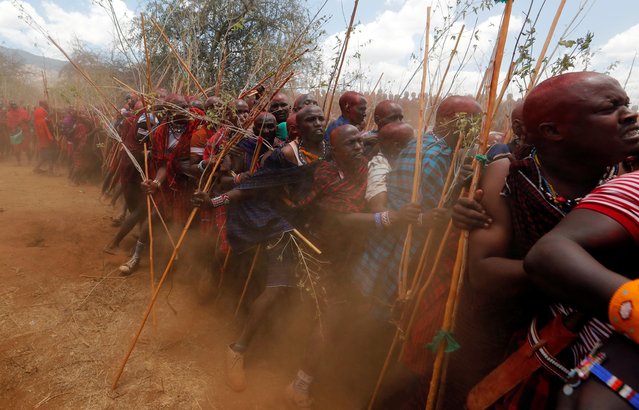
Maasai men of Matapato jostle to parade as they attend the Olng'esherr (meat-eating) passage ceremony to unite two age-sets; the older Ilpaamu and the younger Ilaitete into senior elderhood as the final rite of passage, in Maparasha hills of Kajiado, Kenya on September 23, 2020. Thousands of Maasai men clad in red and purple shawls and with their heads coated in red ochre gathered this week for a ceremony that transforms them from Moran (warriors) to Mzee (elders). (Photo by Thomas Mukoya/Reuters)

Maasai men of Matapato jostle to parade as they attend the Olng'esherr (meat-eating) passage ceremony to unite two age-sets; the older Ilpaamu and the younger Ilaitete into senior elderhood as the final rite of passage, in Maparasha hills of Kajiado, Kenya on September 23, 2020. Thousands of Maasai men clad in red and purple shawls and with their heads coated in red ochre gathered this week for a ceremony that transforms them from Moran (warriors) to Mzee (elders). (Photo by Thomas Mukoya/Reuters)
Details
29 Sep 2020 00:01:00
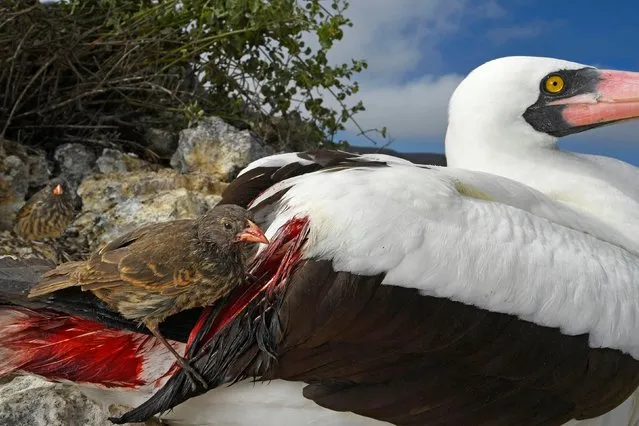
Bloodthirsty by Thomas P Peschak, Germany/South Africa — winner, Behaviour: birds. When rations run short on Wolf Island, in the remote northern Galápagos, the sharp-beaked ground finches become vampires. Their sitting targets are Nazca boobies and other large birds. The finches rely on a scant diet of seeds and insects, which regularly dries up, so they drink blood to survive. ‘I’ve seen more than half a dozen finches drinking from a single Nazca booby,’ says Tom. Rather than leave their nests the boobies tolerate the vampires, and the blood loss doesn’t seem to cause permanent harm. (Photo by Thomas P Peschak/2018 Wildlife Photographer of the Year)

Bloodthirsty by Thomas P. Peschak, Germany/South Africa — winner, Behaviour: birds. When rations run short on Wolf Island, in the remote northern Galápagos, the sharp-beaked ground finches become vampires. Their sitting targets are Nazca boobies and other large birds. The finches rely on a scant diet of seeds and insects, which regularly dries up, so they drink blood to survive. ‘I’ve seen more than half a dozen finches drinking from a single Nazca booby,’ says Tom. Rather than leave their nests the boobies tolerate the vampires, and the blood loss doesn’t seem to cause permanent harm. (Photo by Thomas P. Peschak/2018 Wildlife Photographer of the Year)
Details
19 Oct 2018 00:05:00
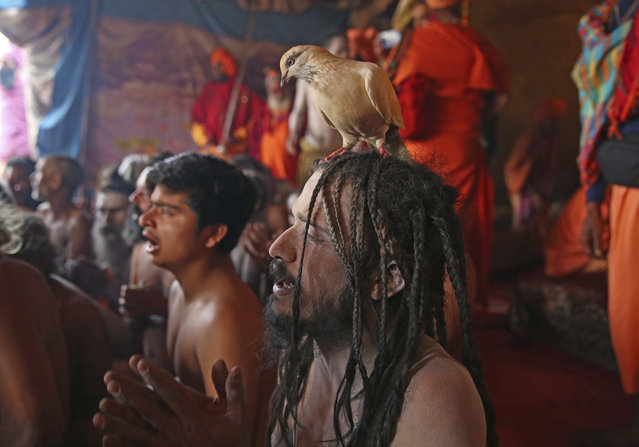
In this January 27, 2019, photo, Hindu holy men of monastic order Juna Akhara participate in a ritual before becoming Naga Sadhus or naked holy men at Sangam, the confluence of three holy rivers during the Kumbh Mela or pitcher festival in Prayagraj Uttar Pradesh state, India. At every Kumbh, including this year's, thousands of devotees were initiated into the reclusive sect of the Naga Sadhus, naked, ash-smeared cannabis-smoking Hindu warriors and onetime-armed defenders of the faith who for centuries have lived as ascetics in jungles and caves. (Photo by Rajesh Kumar Singh/AP Photo)

In this January 27, 2019, photo, Hindu holy men of monastic order Juna Akhara participate in a ritual before becoming Naga Sadhus or naked holy men at Sangam, the confluence of three holy rivers during the Kumbh Mela or pitcher festival in Prayagraj Uttar Pradesh state, India. At every Kumbh, including this year's, thousands of devotees were initiated into the reclusive sect of the Naga Sadhus, naked, ash-smeared cannabis-smoking Hindu warriors and onetime-armed defenders of the faith who for centuries have lived as ascetics in jungles and caves. (Photo by Rajesh Kumar Singh/AP Photo)
Details
18 Feb 2019 00:05:00
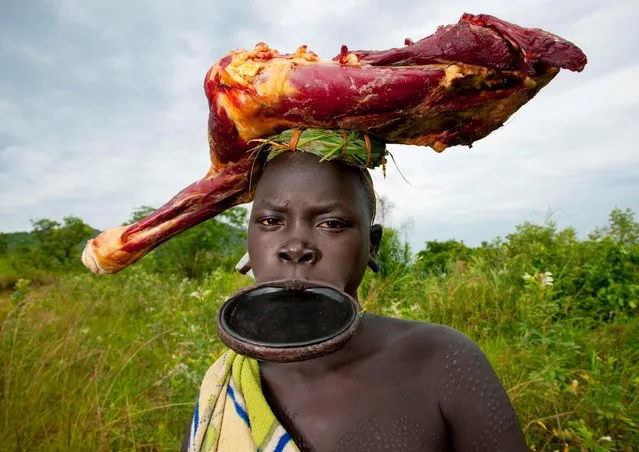
A tribeswoman sporting a huge lip plate and wearing a skinned animal carcass on her head. (Photo by Eric Lafforgue/Exclusivepix Media)

Warriors from the Suri tribe in Ethiopia still stage the savage “Donga” battles – even after many fighters have been died from their injuries. Donga stick fights take place after the harvests, the Surmas count days owing to knots on a long stem of grass or jags on the trunk of a tree dedicated to that specific use. Here: A tribeswoman sporting a huge lip plate and wearing a skinned animal carcass on her head. (Photo by Eric Lafforgue/Exclusivepix Media)
Details
22 Apr 2017 09:30:00
Sikh devotee take part in Nagar Keertan procession on the occasion of Guru Gobind Singh birth anniversary in Allahabad, India on December 29, 2016. (Photo by Prabhat Kumar Verma/Pacific Press via ZUMA Wire/Rex Features/Shutterstock)

Sikh devotee take part in Nagar Keertan procession on the occasion of Guru Gobind Singh birth anniversary in Allahabad, India on December 29, 2016. Guru Gobind Singh, born Gobind Rai (1666 – 1708), was the 10th Sikh Guru, a spiritual master, warrior, poet and philosopher. When his father, Guru Tegh Bahadur, was beheaded for refusing to convert to Islam, Guru Gobind Singh was formally installed as the leader of the Sikhs at age nine, becoming the last of the living Sikh Gurus. (Photo by Prabhat Kumar Verma/Pacific Press via ZUMA Wire/Rex Features/Shutterstock)
Details
31 Dec 2016 10:27:00
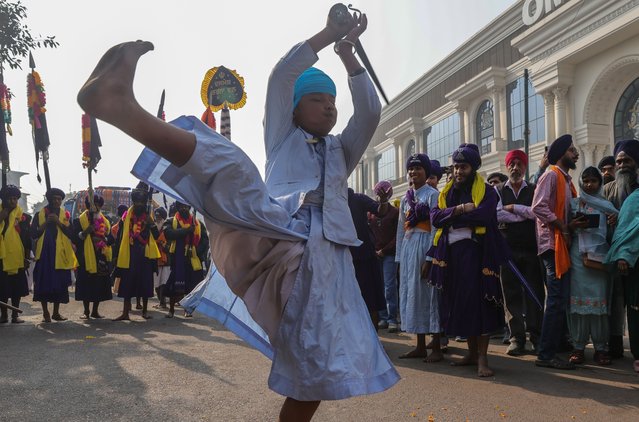
A Nihang Sikh, belonging to the Sikh warrior clan, performs Gatka, a form of Sikh martial arts, during a religious procession marking the 350th martyrdom anniversary of Guru Tegh Bahadur Ji in New Delhi, India, 25 November 2025. The procession commemorates the martyrdom of the 9th Sikh Guru, Sri Guru Tegh Bahadur Ji, who was executed in 1675 AD for refusing to convert to Islam on the orders of Mughal Emperor Aurangzeb. The event is observed at Gurudwara Sis Ganj in Delhi. Guru Tegh Bahadur, the youngest of the five sons of Guru Hargobind, was born in Amritsar in 1621. (Photo by Rajat Gupta/EPA)

A Nihang Sikh, belonging to the Sikh warrior clan, performs Gatka, a form of Sikh martial arts, during a religious procession marking the 350th martyrdom anniversary of Guru Tegh Bahadur Ji in New Delhi, India, 25 November 2025. The procession commemorates the martyrdom of the 9th Sikh Guru, Sri Guru Tegh Bahadur Ji, who was executed in 1675 AD for refusing to convert to Islam on the orders of Mughal Emperor Aurangzeb. The event is observed at Gurudwara Sis Ganj in Delhi. Guru Tegh Bahadur, the youngest of the five sons of Guru Hargobind, was born in Amritsar in 1621. (Photo by Rajat Gupta/EPA)
Details
06 Dec 2025 03:16:00
Giant's Causeway

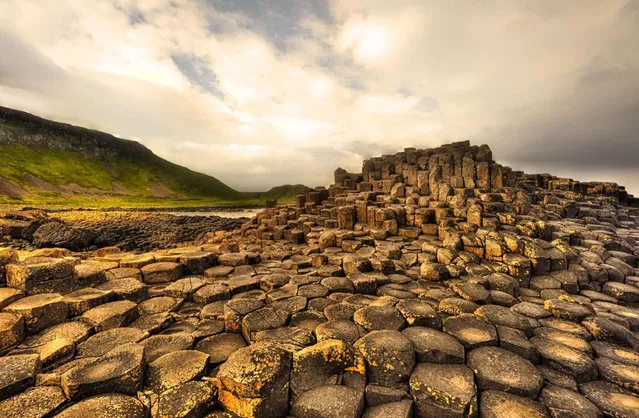
Legend has it that the Irish warrior Fionn mac Cumhaill (Finn McCool) built the causeway to walk to Scotland to fight his Scottish counterpart Benandonner. One version of the legend tells that Fionn fell asleep before he got to Scotland. When he did not arrive, the much larger Benandonner crossed the bridge looking for him. To protect Fionn, his wife Oonagh laid a blanket over him so he could pretend that he was actually their baby son. In a variation, Fionn fled after seeing Benandonner's great bulk, and asked his wife to disguise him as the baby. In both versions, when Benandonner saw the size of the 'infant', he assumed the alleged father, Fionn, must be gigantic indeed. Therefore, Benandonner fled home in terror, ripping up the Causeway in case he was followed by Fionn.
Details
11 May 2015 10:45:00