Loading...
Done
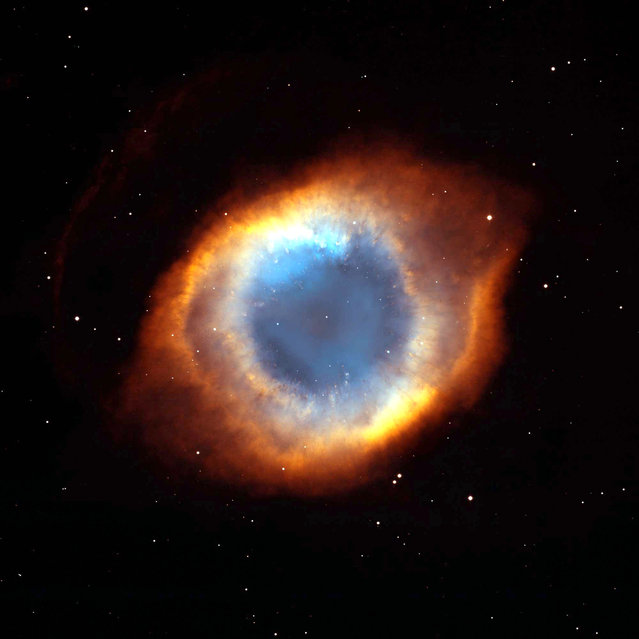
A coil-shaped Helix Nebula showing a fine web of filamentary “bicycle-spoke” features embedded in the colorful red and blue ring of gas. At 650 light-years away, the Helix is one of the nearest planetary nebulae to Earth. A planetary nebula is the glowing gas around a dying, Sun-like star. (Photo by Reuters/NASA)

A coil-shaped Helix Nebula showing a fine web of filamentary “bicycle-spoke” features embedded in the colorful red and blue ring of gas. At 650 light-years away, the Helix is one of the nearest planetary nebulae to Earth. A planetary nebula is the glowing gas around a dying, Sun-like star. (Photo by Reuters/NASA)
Details
22 Oct 2014 14:01:00
A model of the New Horizons spacecraft is seen at a live television program on NASA television celebrating the spacecraft's closest proximity to Pluto, at Johns Hopkins University Applied Physics Laboratory, site of the mission operations center, in Laurel, Maryland, USA, 14 July 2015. (Photo by Michael Reynolds/EPA)

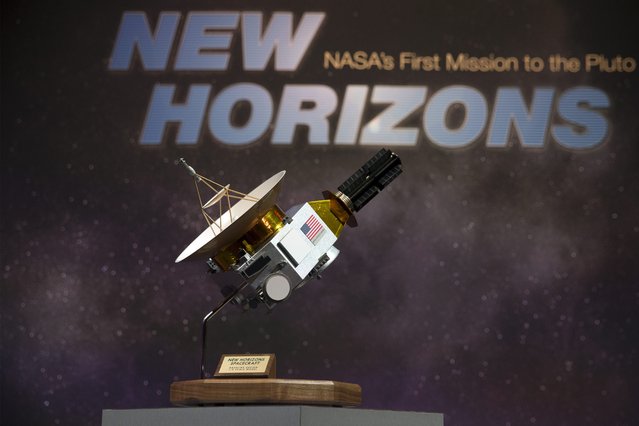
A model of the New Horizons spacecraft is seen at a live television program on NASA television celebrating the spacecraft's closest proximity to Pluto, at Johns Hopkins University Applied Physics Laboratory, site of the mission operations center, in Laurel, Maryland, USA, 14 July 2015. At approximately 7:49 am ET (11:49 am GMT), 14 July, New Horizons was scheduled to be as close to Pluto as the spacecraft will get; about 7,800 miles (12,500 kilometers) above the surface, following a journey of more than nine years and three billion miles. This is the first mission to the Pluto System and the Kuiper Belt. (Photo by Michael Reynolds/EPA)
Details
15 Jul 2015 10:08:00
A small section of the expanding remains of the Veil Nebula, a massive star that exploded about 8,000 years ago. The entire nebula is 110 light-years across, covering six full moons on the sky as seen from Earth, and resides about 2,100 light-years away in the constellation Cygnus, the Swan. (Photo by Reuters/NASA/ESA/Hubble)

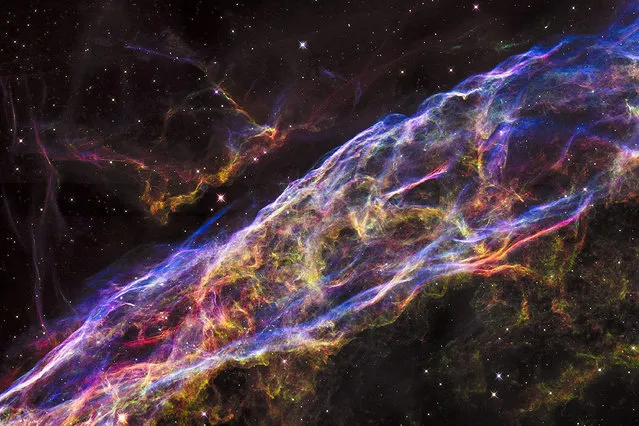
A small section of the expanding remains of the Veil Nebula, a massive star that exploded about 8,000 years ago. The entire nebula is 110 light-years across, covering six full moons on the sky as seen from Earth, and resides about 2,100 light-years away in the constellation Cygnus, the Swan. (Photo by Reuters/NASA/ESA/Hubble)
Details
29 Feb 2016 11:30:00
A pro-Russian activist aims a pistol at supporters of the Kiev government during clashes in the streets of Odessa May 2, 2014. Police said a man was shot dead in clashes between a crowd backing Kiev and pro-Russian activists in the largely Russian-speaking southern port of Odessa, which lies west of Crimea, annexed by Moscow in March. (Photo by Yevgeny Volokin/Reuters)

A pro-Russian activist aims a pistol at supporters of the Kiev government during clashes in the streets of Odessa May 2, 2014. Police said a man was shot dead in clashes between a crowd backing Kiev and pro-Russian activists in the largely Russian-speaking southern port of Odessa, which lies west of Crimea, annexed by Moscow in March. (Photo by Yevgeny Volokin/Reuters)
Details
03 May 2014 11:30:00
Mary McHugh mourns her slain fiance Sgt. James Regan at Section 60 of the Arlington National Cemetery

Mary McHugh mourns her slain fiance Sgt. James Regan at “Section 60” of the Arlington National Cemetery May 27, 2007. Regan, a US Army Ranger, was killed by an IED explosion in Iraq. (Photo by John Moore/Getty Images)
Details
22 Oct 2011 09:44:00
Vertical Garden - By Patrick Blanc in Madrid, Spain

Green building also known as green construction or sustainable building is the practice of creating structures and using processes that are environmentally responsible and resource-efficient.
Details
20 Apr 2014 10:08:00
Physiotherapist Uses Pig To Offer Emotional Therapy

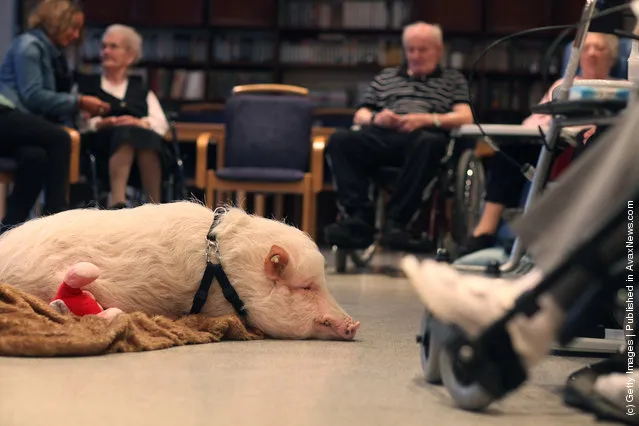
Pig Felix of physiotherapist Daan Vermeulen lies amid elderly people in a senior care facility on April 12, 2011 in Gelsenkirchen, Germany. (Photo by Ralph Orlowski/Getty Images)
Details
30 Nov 2011 12:52:00
Take me away, deer, Russia. The Nenet people of Arctic Russia use reindeer and sledges as a prime mode of transport. The animals’ navigational ability means that in severe conditions they are sometimes the only hope of survival. (Photo by Kamil Nureev/Smithsonian Photo Contest)

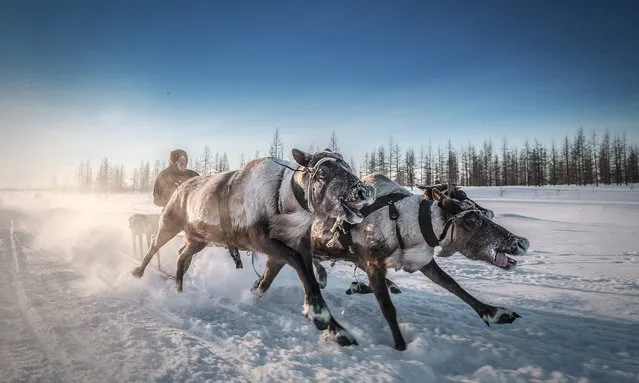
Take me away, deer, Russia. The Nenet people of Arctic Russia use reindeer and sledges as a prime mode of transport. The animals’ navigational ability means that in severe conditions they are sometimes the only hope of survival. (Photo by Kamil Nureev/Smithsonian Photo Contest)
Details
06 Mar 2017 00:05:00