Loading...
Done
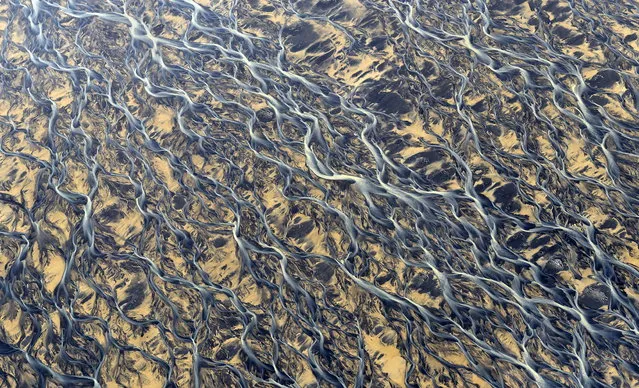
These pictures look like an artist has painted abstract patterns on canvas – but in fact they are natural rivers captured on camera. The spectacular rivers in Iceland's central highlands and southern parts originate from glaciers, which is why the water is a milky colour. (Photo by Andrey Ermolaev/Solent News)

These picture look like an artist has painted abstract patterns on canvas – but in fact they are natural rivers captured on camera. The spectacular rivers in Iceland's central highlands and southern parts originate from glaciers, which is why the water is a milky colour. They are shallow rivers and the water spreads quickly over a flat and sandy surface, creating random and beautiful patterns. Photographer Andrey Ermolaev from Moscow, Russia, flew 500ft above the unique sight in a small plane. (Photo by Andrey Ermolaev/Solent News)
Details
05 May 2014 10:57:00
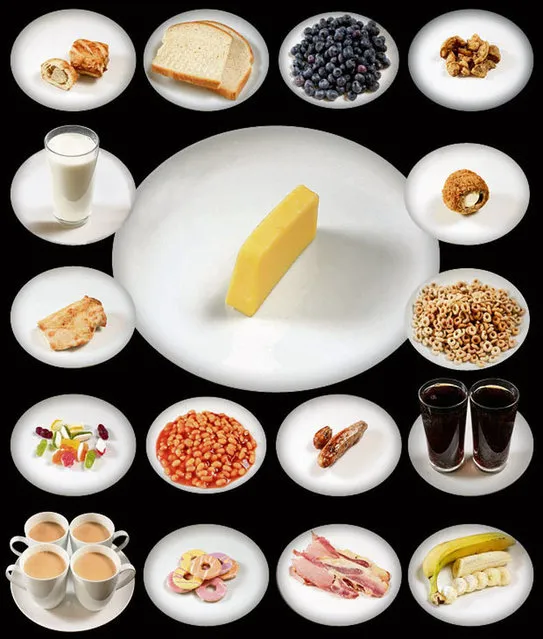
What 200 Calories Looks Like In Different Foods Part 3

Some foods have significantly more Calories than others but what does the difference actually look like. Each of the photographs below represents 200 Calories of the particular type of food; the images are sorted from low to high calorie density. When you consider that an entire plate of broccoli contains the same number of Calories as a small spoonful of peanut butter, you might think twice the next time you decide what to eat. According to the U.S. Department of Agriculture, the average adult needs to consume about 2000 – 2500 Calories to maintain their weight. In other words, you have a fixed amount of Calories to "spend" each day; based on the following pictures, which would you eat?


See Also: Ppart 1 _ Part 2
Details
02 Aug 2014 09:53:00
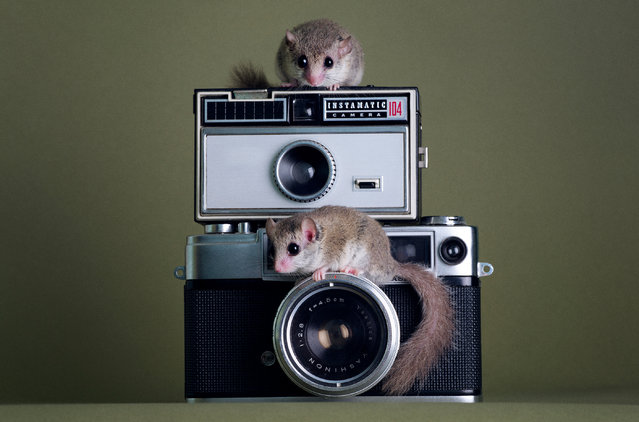
“The most difficult aspect of this shoot was to get each African pygmy dormouse – also known as micro squirrels – on to a separate camera. Once in place, they needed to remain still long enough to get them both in the frame and looking at me. Often solitary, they naturally wanted to move away”. (Photo by David Yeo/Leica Studio Mayfair/The Guardian)

David Yeo’s photography places naturally small species alongside animals that have been selectively bred to be tiny and cute. Here: “The most difficult aspect of this shoot was to get each African pygmy dormouse – also known as micro squirrels – on to a separate camera. Once in place, they needed to remain still long enough to get them both in the frame and looking at me. Often solitary, they naturally wanted to move away”. (Photo by David Yeo/Leica Studio Mayfair/The Guardian)
Details
24 Oct 2017 08:20:00
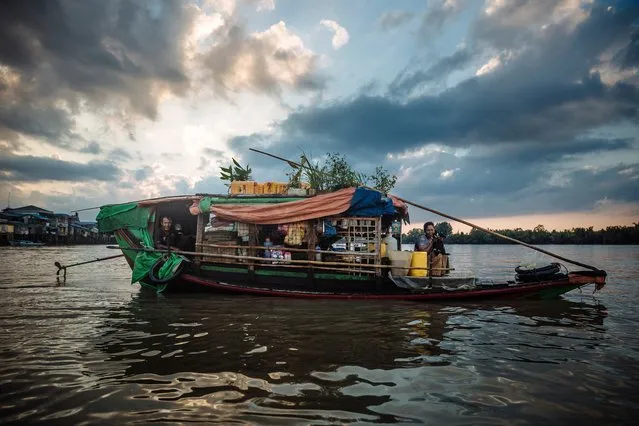
Tin and Naing win live on a small boat which they sail throughout the Delta region in Myanmar. The former gardeners once had a home on land but it was destroyed when a powerful cyclone ravaged the area in 2008. Since then, the couple have not been able to afford to rebuild their home, so they live on the boat from which they sell fish paste to make a living. (Photo by Muse Mohammed/IOM)

The ferocity of crises worldwide is forcing a record number of people to flee their homes, seeking some form of safety within their own country or across international borders. There are 65.3 million displaced people worldwide, including 21.3 million refugees. Most have lost their homes to armed conflict or natural disasters but other factors, such as extreme poverty and climate change, also drive displacement. The International Organisation for Migration commissioned photojournalist Muse Mohammed to document the plight of the displaced. (Photo by Muse Mohammed/IOM)
Details
02 Jan 2017 12:04:00
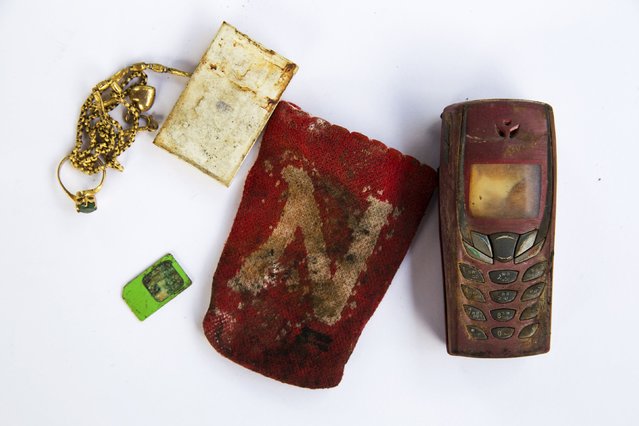
Personal possessions of 2004 tsunami victims are arranged to be photographed outside a police station in Takua Pa, in Phang Nga province December 19, 2014. (Photo by Damir Sagolj/Reuters)

Personal possessions of 2004 tsunami victims are arranged to be photographed outside a police station in Takua Pa, in Phang Nga province December 19, 2014. Thai police opened a shipping container filled with documents and possessions of victims of the 2004 Indian Ocean Tsunami after being asked by Reuters for permission to film its contents. The three metre by 12 metre container was handed over to Thai police in 2011 and contains hundreds of plastic police evidence bags – each one holding the precious items found on the body of a victim. (Photo by Damir Sagolj/Reuters)
Details
24 Dec 2014 13:44:00
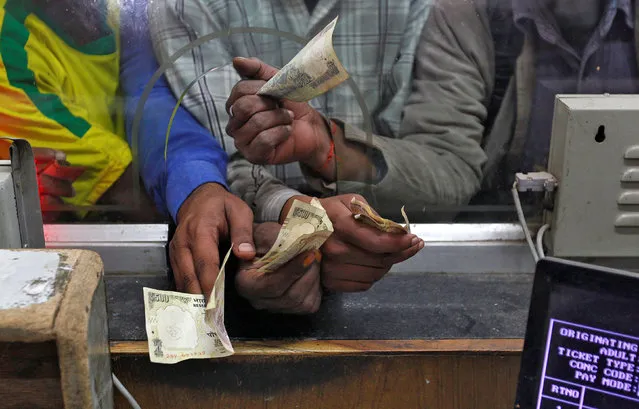
Passengers hold 500 (bottom) rupee banknotes to buy train tickets at a railway booking counter in Allahabad, India, November 9, 2016. (Photo by Jitendra Prakash/Reuters)

Passengers hold 500 (bottom) rupee banknotes to buy train tickets at a railway booking counter in Allahabad, India, November 9, 2016. People are queuing up outside banks across India to exchange 500 and 1,000 rupee notes after they were withdrawn as part of anti-corruption measures. Indians will be able to exchange their old notes, which stopped being legal tender at midnight on Tuesday, for new ones at banks until 30 December. The surprise move is part of a government crackdown on corruption and illegal cash holdings. Banks were shut on Wednesday to allow them enough time to stock new notes. There are also limits on cash withdrawals from ATMs. The BBC's Yogita Limaye in Mumbai says there have been chaotic scenes outside many banks. (Photo by Danish Siddiqui/Reuters)
Details
10 Nov 2016 12:10:00
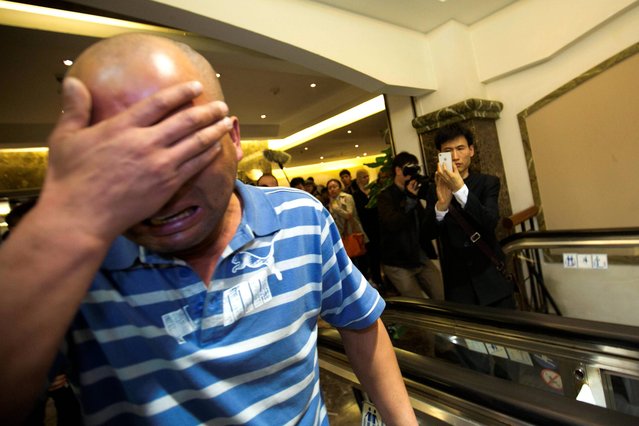
A relative of a Chinese passenger aboard the Malaysia Airlines MH370, covers his face after being told the latest update in Beijing, China, Monday, March 24, 2014. (Photo by Ng Han Guan/AP Photo)

A relative of a Chinese passenger aboard the Malaysia Airlines MH370, covers his face after being told the latest update in Beijing, China, Monday, March 24, 2014. A new analysis of satellite data indicates the missing Malaysia Airlines plane crashed into a remote corner of the Indian Ocean, Malaysian Prime Minister Najib Razak said Monday. The news is a major breakthrough in the unprecedented two-week struggle to find out what happened to Flight 370, which disappeared shortly after takeoff from Kuala Lumpur to Beijing with 239 passengers and crew aboard on March 8. (Photo by Ng Han Guan/AP Photo)
Details
25 Mar 2014 08:26:00
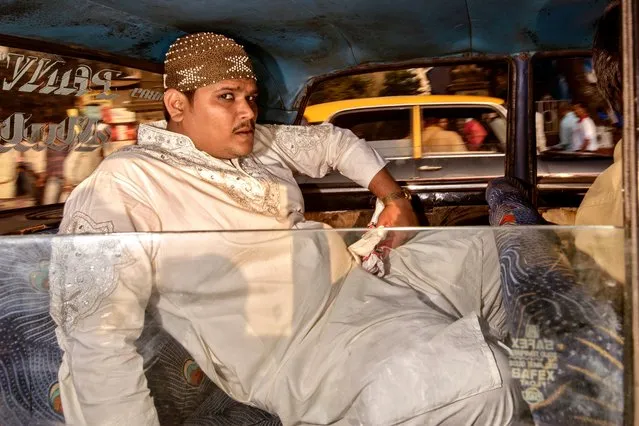
“I’m not scared of breaking the fourth wall”, Wallace has said of the photos where the subject is clearly aware of him taking the shot. “If they are looking at you in a photograph most photographers will think, oh, that’s not a good image. (But) people like to be involved and in the picture. You can see what they are thinking, see them talking”. (Photo by Dougie Wallace/The Guardian)

In Dougie Wallace’s photos of Mumbai taxis, the chatter, yelling, and constant horns of the city are almost audible. A selection of his images is on show at Gayfield Creative Spaces, Edinburgh, as part of the Retina photography festival until 30 July. For four years, the Glasgow-born Wallace focused his photos on one kind of taxi in particular: the Premier Padmini, a 1960s workhorse painted in black and yellow. Locally known as “Kaali-Peeli”, there were once more than 60,000 of them in the Indian city. But thanks to laws restricting pollution, the cars now are fast disappearing from Mumbai’s streets. (Photo by Dougie Wallace/The Guardian)
Details
13 Jul 2016 13:50:00