Loading...
Done
This picture taken on May 23, 2017 shows visitors posing for photos along a path at an Indonesian hamlet dubbed “the rainbow village” in Semarang, central Java, that has become an internet sensation and attracting hordes of visitors. (Photo by Suryo Wibowo/AFP Photo)

This picture taken on May 23, 2017 shows visitors posing for photos along a path at an Indonesian hamlet dubbed “the rainbow village” in Semarang, central Java, that has become an internet sensation and attracting hordes of visitors. (Photo by Suryo Wibowo/AFP Photo)
Details
03 Jun 2017 06:26:00
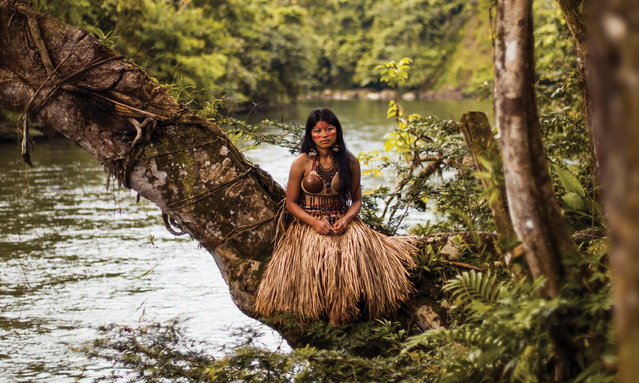
Ecuador: “More and more tribes of Amazonia are starting to adopt modern clothes for everyday life. But they are still keeping their traditional clothes for important events. I photographed this young woman in her wedding outfit”. (Photo by Mihaela Noroc/The Guardian)

Photographer Mihaela Noroc travelled the world from Ethiopia to the US and from Guatemala to France in search of natural and authentic beauty. She introduces some of the inspiring women she met on her journey. Here: Ecuador. “More and more tribes of Amazonia are starting to adopt modern clothes for everyday life. But they are still keeping their traditional clothes for important events. I photographed this young woman in her wedding outfit”. (Photo by Mihaela Noroc/The Guardian)
Details
27 Sep 2017 08:29:00
A Pomeranian dog sits in a rolling pet carrier in Hong Kong, China on September 4, 2019. (Photo by Kai Pfaffenbach/Reuters)

A Pomeranian dog sits in a rolling pet carrier in Hong Kong, China on September 4, 2019. (Photo by Kai Pfaffenbach/Reuters)
Details
06 Sep 2019 00:03:00
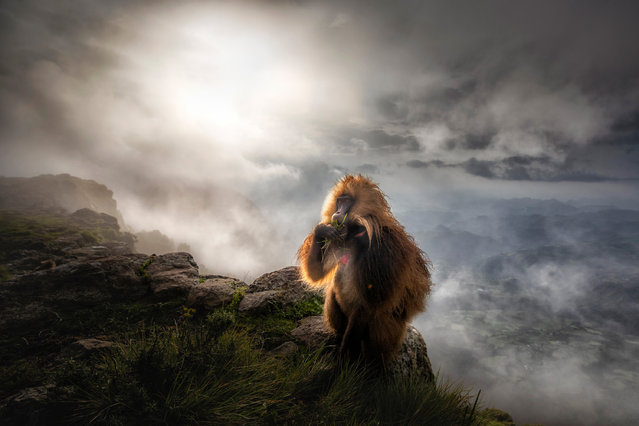
Highly commended, mammals: Gelada after the storm – Marco Gaiotti (Italy). “Gelada baboons are the only monkey species in the world that feed on grasses. They are native to the tableland of Ethiopia. Every morning large family groups wander from their sleeping places in the steep rock face, up to 1,000 metres high, to the feeding grounds at the tablelands. This image clearly depicts their feeding strategy: they pull out bunches of grass, sort the stalks and then lift them to their mouth. This shot was taken towards the end of the rainy season after a heavy storm”. (Photo by Marco Gaiotti/2019 GDT European Wildlife Photographer of the Year)

Highly commended, mammals: Gelada after the storm – Marco Gaiotti (Italy). “Gelada baboons are the only monkey species in the world that feed on grasses. They are native to the tableland of Ethiopia. Every morning large family groups wander from their sleeping places in the steep rock face, up to 1,000 metres high, to the feeding grounds at the tablelands. This image clearly depicts their feeding strategy: they pull out bunches of grass, sort the stalks and then lift them to their mouth. This shot was taken towards the end of the rainy season after a heavy storm”. (Photo by Marco Gaiotti/2019 GDT European Wildlife Photographer of the Year)
Details
31 Oct 2019 00:03:00
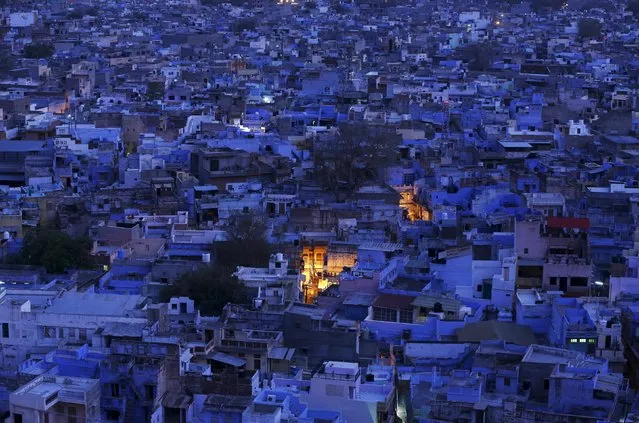
A general view of the residential area is pictured during dusk at Jodhpur in Rajasthan, April 5, 2015. Jodhpur, also known as the blue city in the desert Indian state of Rajasthan, which residents say originally, was used to show where the highest caste of priestly Hindus live, who wanted to set them apart from the rest of the population. Later the rest of the population followed suit. Another reason for the city to be blue is to keep the buildings cool during the summers, local residents said. (Photo by Adnan Abidi/Reuters)

A general view of the residential area is pictured during dusk at Jodhpur in Rajasthan, April 5, 2015. Jodhpur, also known as the blue city in the desert Indian state of Rajasthan, which residents say originally, was used to show where the highest caste of priestly Hindus live, who wanted to set them apart from the rest of the population. Later the rest of the population followed suit. Another reason for the city to be blue is to keep the buildings cool during the summers, local residents said. (Photo by Adnan Abidi/Reuters)
Details
12 Apr 2015 08:27:00
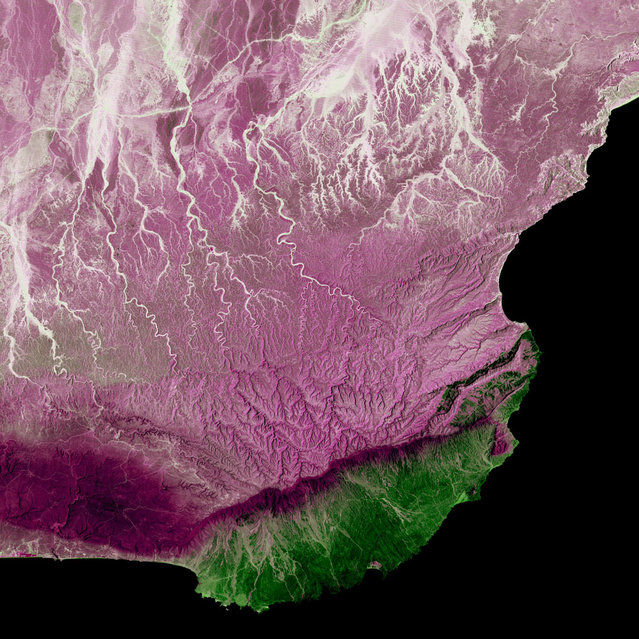
Dhofar Region, Oman. Much of Oman is desert, but the Arabian Sea coast in the Dhofar region represents a startling difference in climate. This coastal region catches the monsoon rains, or khareef, during the summer months. Drenching rains fall primarily on the mountainous ridge that separates the lush, fertile areas along the coast from the arid interior, recharging streams, waterfalls and springs that provide plentiful water supplies in the fertile lowlands for the remainder of the year. Image taken by Landsat 5 on April 2, 2005. (Photo by USGS/NASA)

Dhofar Region, Oman. Much of Oman is desert, but the Arabian Sea coast in the Dhofar region represents a startling difference in climate. This coastal region catches the monsoon rains, or khareef, during the summer months. Drenching rains fall primarily on the mountainous ridge that separates the lush, fertile areas along the coast from the arid interior, recharging streams, waterfalls and springs that provide plentiful water supplies in the fertile lowlands for the remainder of the year. Image taken by Landsat 5 on April 2, 2005. (Photo by USGS/NASA)
Details
25 Dec 2012 11:13:00
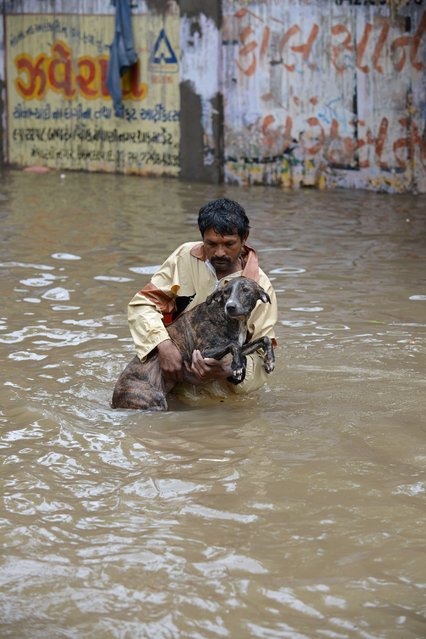
An Indian resident assists a dog as he wades through floodwaters in Ahmedabad on July 30, 2014. Rains lashed Ahmedabad and many regions of India's western Gujarat state, wth the Indian Metrological Department warning of heavy rains for the next 48 hours. (Photo by Sam Panthaky/AFP Photo)

An Indian resident assists a dog as he wades through floodwaters in Ahmedabad on July 30, 2014. Rains lashed Ahmedabad and many regions of India's western Gujarat state, wth the Indian Metrological Department warning of heavy rains for the next 48 hours. (Photo by Sam Panthaky/AFP Photo)
Details
31 Jul 2014 09:58:00
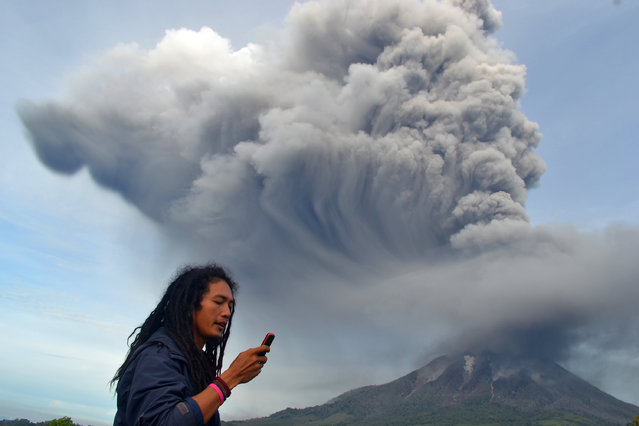
A man uses his mobile phone as Mount Sinabung continues to erupt, with hot smoke spewing from the volcano, in the Karo district on the north of Indonesia's Sumatra island on November 18, 2013. Officials said a week ago at more than 5,000 people had fled their homes since the volcano erupted early this month. (Photo by Sutanta Aditya/AFP Photo)

Starting in September, Indonesia's Mount Sinabung began erupting yet again. In the days that followed, ash and smoke were shot into the air multiple times. As a result, nearby towns turned gray from repeated blows by the volcano. Photo: A man uses his mobile phone as Mount Sinabung continues to erupt, with hot smoke spewing from the volcano, in the Karo district on the north of Indonesia's Sumatra island on November 18, 2013. Officials said a week ago at more than 5,000 people had fled their homes since the volcano erupted early this month. (Photo by Sutanta Aditya/AFP Photo)
Details
22 Nov 2013 08:08:00