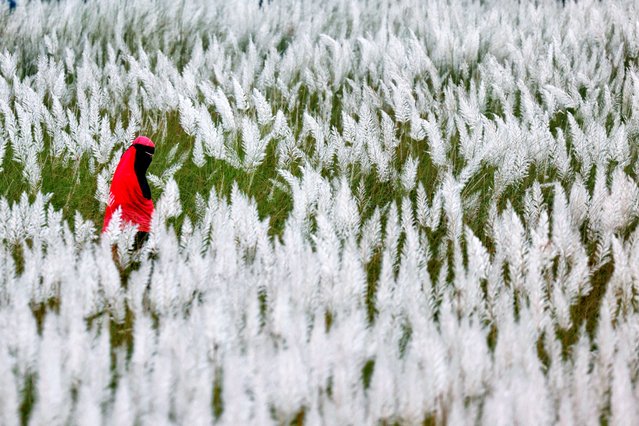
A woman wearing a burka, walks along a kans grass flower field, at Sarighat area in Dhaka, Bangladesh, on September 19, 2025. (Photo by Mohammad Ponir Hossain/Reuters)
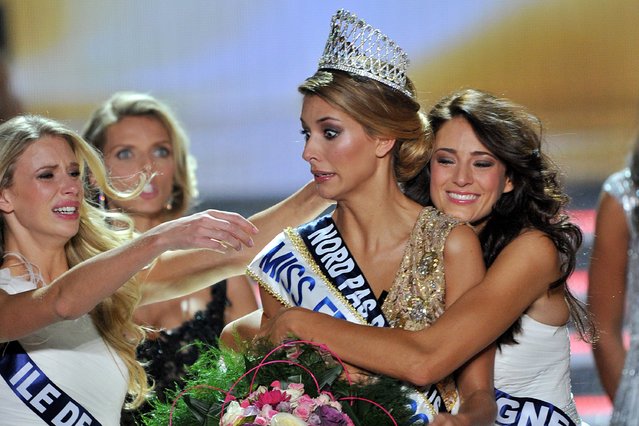
Miss Nord-Pas-de-Calais Camille Cerf (C) is congratulated by Miss Ile de France 2014 Margaux Savary (L) and Miss Auvergne 2014 Morgane Laporte after Cerf won the Miss France 2015 beauty contest on December 6, 2014 in Orleans. (Photo by Guillaume Souvant/AFP Photo)
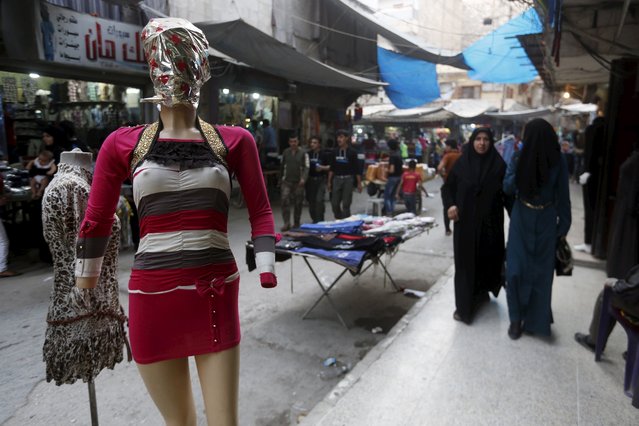
Women walk past a mannequin with a covered face as they shop ahead of the Muslim festival of Eid-al-Adha in Aleppo, Syria September 23, 2015. (Photo by Hamid Khatib/Reuters)
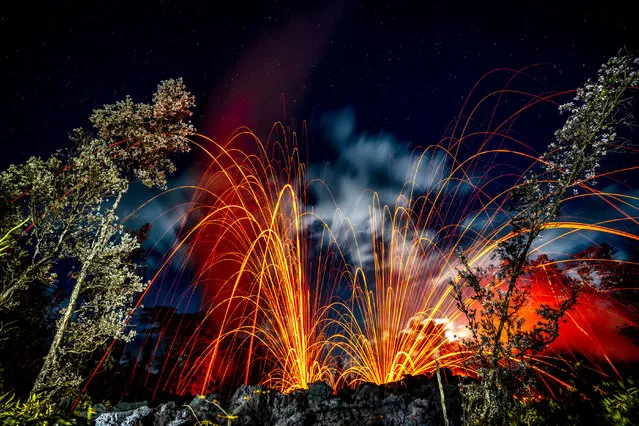
These beautiful images aim to show the more artistic side of Hawaii’s recent volcano eruption, highlighting the sheer power of Mother Nature and the act of creating new land. Photographer CJ Kale’s breathtaking works show the molten lava in its incredible vibrancy, whether it’s bursting from the ground in fireworks fashion or pouring into surrounding waters, causing steam to rise. (Photo by CJ Kale/Caters News Agency)
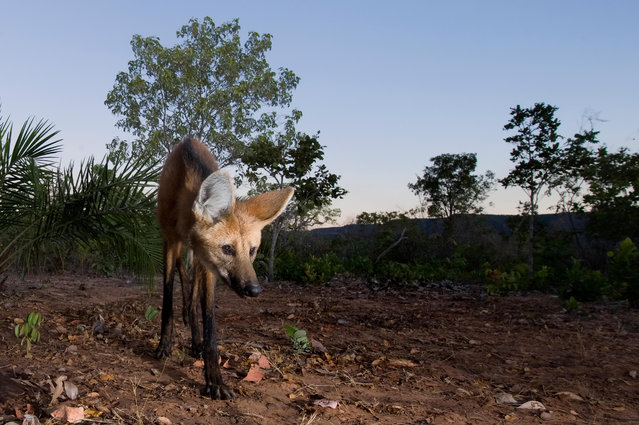
Global wildlife populations will decline by 67% by 2020 unless urgent action is taken to reduce human impact on species and ecosystems, warns the biennial Living Planet Index report from WWF (World Wide Fund for Nature) and ZSL (Zoological Society of London). From elephants to eels, here are some of the wildlife populations most affected by human activity. Here: The maned wolf is among the large mammals in the Brazilian Cerrado that are threatened by the increasing conversion of grasslands into farmland for grazing and growing crops. (Photo by Ben Cranke/Nature Picture Library/Alamy Stock Photo)
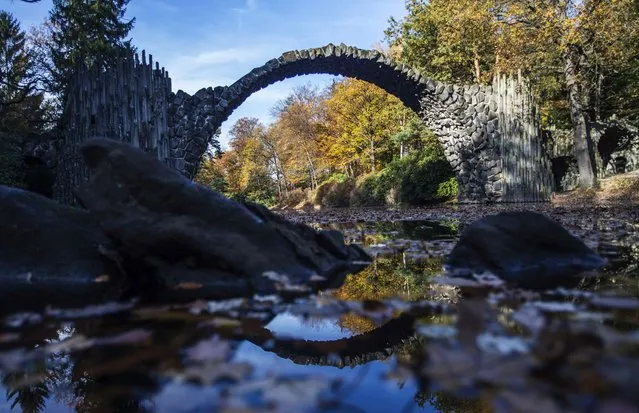
The Bridge “Rakotzbrücke” is pictured against trees in autumn colours in the the eastern German town of Kromlau November 4, 2014. (Photo by Hannibal Hanschke/Reuters)
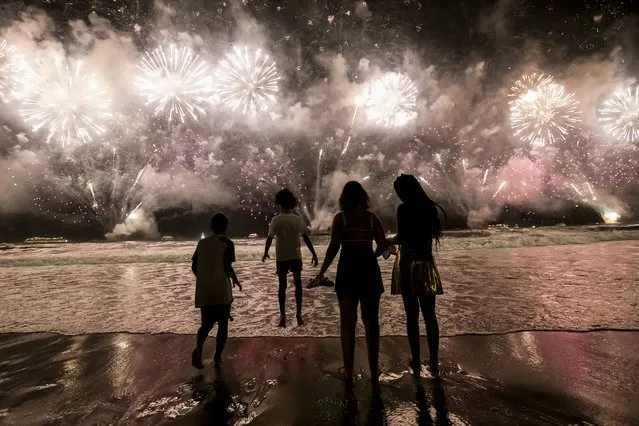
People celebrate the start of the New Year as fireworks illuminate Copacabana Beach in Rio de Janeiro, Brazil, early Monday, January 1, 2024. (Photo by Bruna Prado/AP Photo)