Loading...
Done
Afghan Dog Fighting

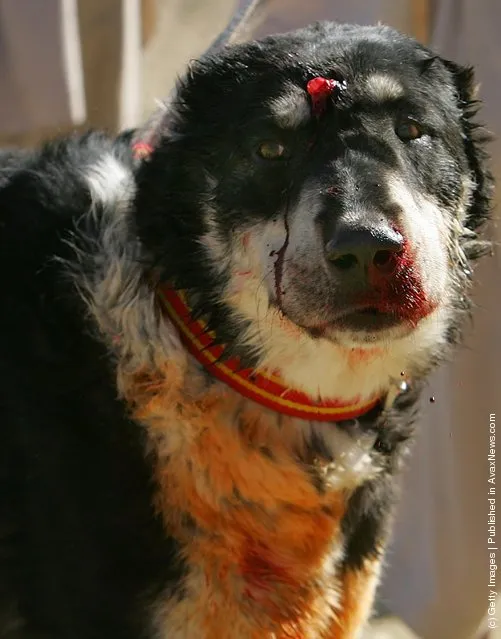
“Dog fighting is a form of blood sport in which game dogs are made to fight, sometimes to the death. It is illegal in most developed countries. Dog fighting is used for entertainment and may also generate revenue from stud fees, admission fees and gambling”. – Wikipedia

Photo: A bloody Afghan dog is bleeding with many wounds after he lost a dog fight November 24, 2006 in Kabul, Afghanistan. While the Afghan government is trying to ban the violent use of dogs for fighting, the unofficial sport remains a regular weekly event. Afghan dog fighting is popular among Afghan men who gamble on the dogs making upwards of 15,000 Afghanie (300 USD). (Photo by Paula Bronstein/Getty Images)
Details
07 Aug 2011 11:47:00
A dog sits on its bed at My Second Home, a newly opened luxury pet resort and spa, in Dubai, April 24, 2015. (Photo by Ahmed Jadallah/Reuters)

Dubai is now home to what has been billed as the world’s largest indoor dog park, complete with customised luxury suites, 24/7 webcams, flat screen TVs and orthopedic mattresses. Launched during Easter at Dubai Investment Park, My Second Home already has many takers with 40 of its 200 residential luxury rooms booked for summer. Here: a dog sits on its bed at My Second Home, a newly opened luxury pet resort and spa, in Dubai, April 24, 2015. (Photo by Ahmed Jadallah/Reuters)
Details
26 Apr 2015 09:44:00
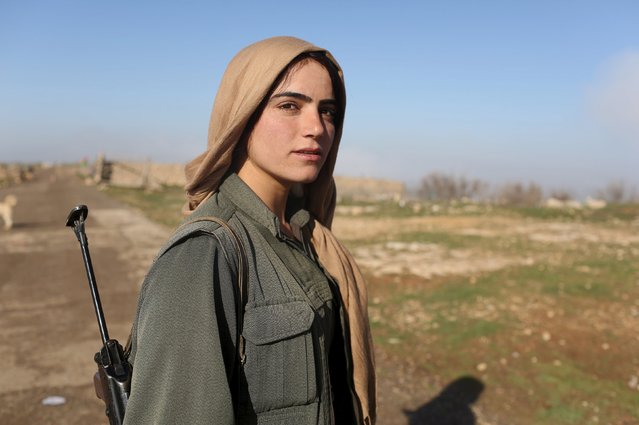
A female Kurdistan Workers Party (PKK) fighter stands near a security position in Sinjar, March 13, 2015. (Photo by Asmaa Waguih /Reuters)

A female Kurdistan Workers Party (PKK) fighter stands near a security position in Sinjar, March 13, 2015. Women fighters at a Kurdistan Workers Party (PKK) base on Mount Sinjar in northwest Iraq, just like their male counterparts, have to be ready for action at any time. Smoke from the front line, marking their battle against Islamic State, which launched an assault on northern Iraq last summer, is visible from the base. Many of the women have cut links with their families back home; the fighters come from all corners of the Kurdish region. (Photo by Asmaa Waguih /Reuters)
Details
02 May 2015 14:44:00
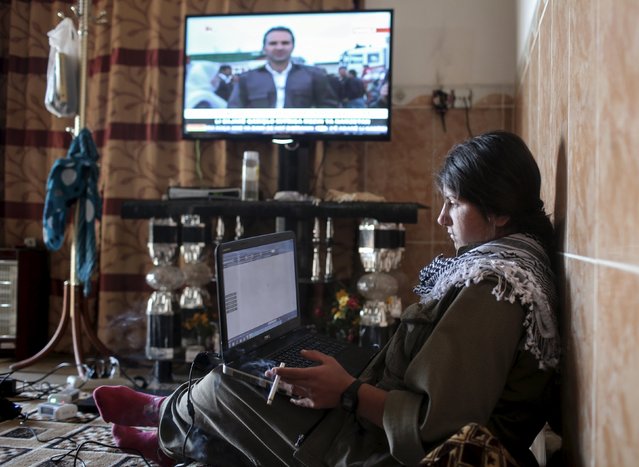
A female Kurdistan Workers Party (PKK) fighter works on her laptop while watching a Kurdish TV station at a base in the Sinjar mountains, March 11, 2015. (Photo by Asmaa Waguih/Reuters)

A female Kurdistan Workers Party (PKK) fighter works on her laptop while watching a Kurdish TV station at a base in the Sinjar mountains, March 11, 2015. Women fighters at a Kurdistan Workers Party (PKK) base on Mount Sinjar in northwest Iraq, just like their male counterparts, have to be ready for action at any time. Smoke from the front line, marking their battle against Islamic State, which launched an assault on northern Iraq last summer, is visible from the base. Many of the women have cut links with their families back home; the fighters come from all corners of the Kurdish region. (Photo by Asmaa Waguih/Reuters)
Details
04 May 2015 09:44:00
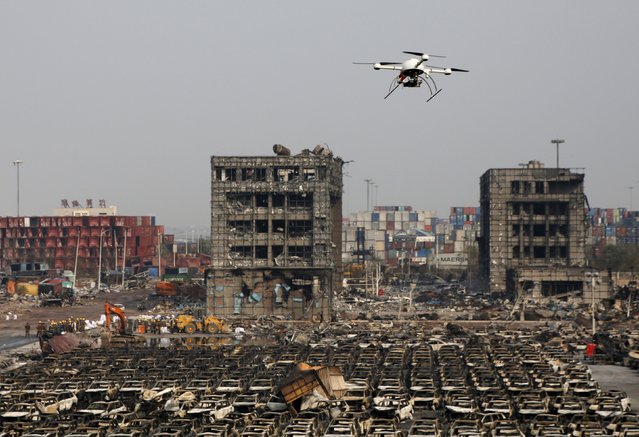
A drone operated by paramilitary police flies over the site of last week's explosions at Binhai new district in Tianjin, China, August 17, 2015. (Photo by Kim Kyung-Hoon/Reuters)

A drone operated by paramilitary police flies over the site of last week's explosions at Binhai new district in Tianjin, China, August 17, 2015. Many operations have resumed at China's Tianjin port, trade sources said, after explosions last week that killed more than 100 people and disrupted business at what is an important oil, gas and bulk import harbor for Asia's biggest economy. The explosions on August 12 led to the disruption of all chemical and oil tanker discharges at the port, and imports of iron ore were also affected. (Photo by Kim Kyung-Hoon/Reuters)
Details
18 Aug 2015 14:32:00
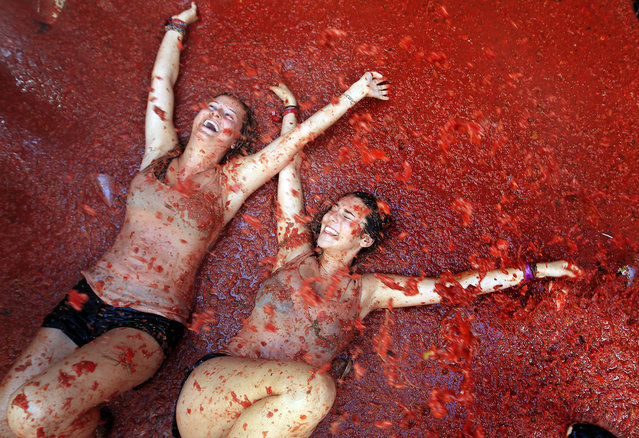
Two woman lie in a puddle of squashed tomatoes during the annual “Tomatina” tomato fight fiesta, in the village of Bunol, 50 kilometers outside Valencia, Spain, Wednesday, August 26, 2015. The streets of an eastern Spanish town are awash with red pulp as thousands of people pelt each other with tomatoes in the annual "Tomatina" battle that has become a major tourist attraction. (Photo by Alberto Saiz/AP Photo)

Two woman lie in a puddle of squashed tomatoes during the annual “Tomatina” tomato fight fiesta, in the village of Bunol, 50 kilometers outside Valencia, Spain, Wednesday, August 26, 2015. The streets of an eastern Spanish town are awash with red pulp as thousands of people pelt each other with tomatoes in the annual "Tomatina" battle that has become a major tourist attraction. At the annual fiesta in Bunol on Wednesday, trucks dumped 150 tons of ripe tomatoes for some 22,000 participants, many from abroad to throw during the hour-long morning festivities. (Photo by Alberto Saiz/AP Photo)
Details
27 Aug 2015 11:51:00
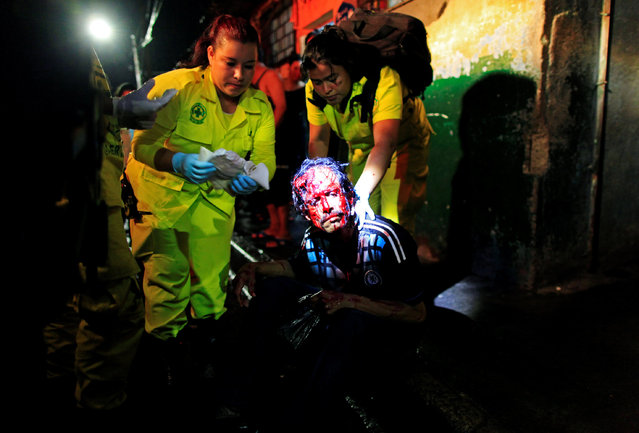
Comandos de Salvamento rescuers Maria Martinez (L) and Ana Chichilla attend to a wounded homeless man in San Salvador, El Salvador July 16, 2016. The man was attacked with a machete by suspected gang members. (Photo by Jose Cabezas/Reuters)

Comandos de Salvamento rescuers Maria Martinez (L) and Ana Chichilla attend to a wounded homeless man in San Salvador, El Salvador July 16, 2016. The man was attacked with a machete by suspected gang members. In 2015, El Salvador registered a record 103 homicides per 100,000 habitants, making it one of the most dangerous countries in the world outside a war zone. But for many young people who have few chances to distance themselves from rivalries between so-called maras in their schools and neighbourhoods, a civil-society organisation called the Comandos de Salvamento, or Rescue Corps, has been a refuge. (Photo by Jose Cabezas/Reuters)
Details
16 Nov 2016 11:10:00
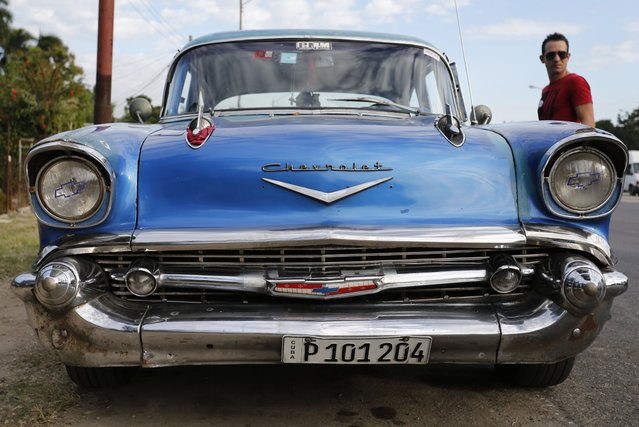
In this December 19, 2014 photo, a man stands beside his 1957 Chevrolet Bel-Air car in Havana, Cuba.  U.S. car sales have been banned in Cuba since 1959. Cubans have been have been forced to patch together Fords, Chevrolets and Chryslers that date back to before Fidel Castro's revolution which can make it appear like the country is stuck in a 1950s time warp. (Photo by Desmond Boylan/AP Photo)

In this December 19, 2014 photo, a man stands beside his 1957 Chevrolet Bel-Air car in Havana, Cuba. U.S. car sales have been banned in Cuba since 1959. Cubans have been have been forced to patch together Fords, Chevrolets and Chryslers that date back to before Fidel Castro's revolution which can make it appear like the country is stuck in a 1950s time warp. Since the Communist economic system isn't likely to change soon, many of those cars will have to stay on the road for years. (Photo by Desmond Boylan/AP Photo)
Details
26 Dec 2014 15:35:00