Loading...
Done
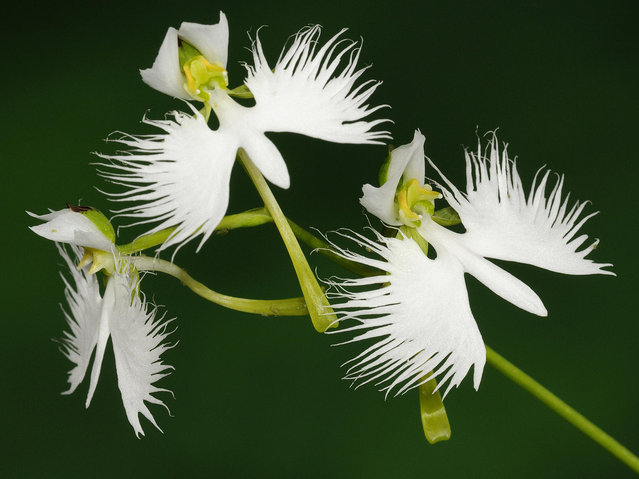
The White Egret Flower - Habenaria Radiata

The close-up of the Pecteilis radiata is very reminiscent of a beautiful white bird soaring in the skies. This is probably the reason why people have started calling this flower the White Egret Flower. Truly, the resemblance of this flower to an egret flying through heavens is staggering. It is too bad that these flowers are so small. Otherwise, they would make for a stunning bouquet. However, who wouldn’t want to receive such a precious flower as a gift; a flower which can be used as a symbol for beauty, good intentions, and the purity of soul. (Photo by AngiBudd)
Details
08 Aug 2015 11:55:00
The Unforbidden Cyclist By Thomas Yang

Image patterning has existed for hundreds of years; however, before Thomas Yang no one has ever thought of putting paint on the bicycle wheels and using it as a patterning tool to create very interesting-looking pictures. Being an avid cyclist and an artist, Thomas Yang has decided to combine the two, creating the 100copies. The name of this project not only alludes to the fact that only one hundred copies of those pictures were going to be made, but also to the fact that the pictures themselves consist of hundreds of repeating shapes. And even though the project is called 100copies, no two pictures are alike due to the nature of their creation, making them truly unique. (Photo by Thomas Yang)
Details
11 Nov 2014 12:00:00
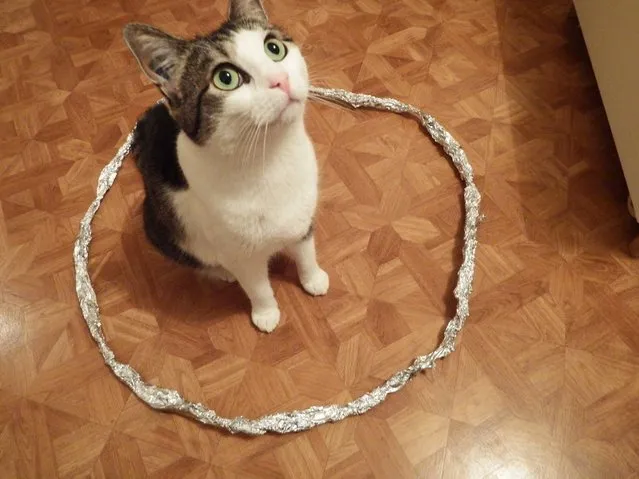
New Internet Sensation - Cat Circles

Residents of Reddit have found a strange phenomenon. If you make a circle on the floor with anything from tinfoil to scotch tape, the house cat would simply love to sit right in the middle of it. Is it a fake, or do cats actually like sitting in circles on the floor? We cannot answer this question until we test it out ourselves. However, one thing is for sure – cats are curious and adorable creatures that never cease to amaze us. So, if you own a cat, try this experiment yourself, and see if your cat likes to sit in an imaginary circle on the floor.
Details
14 Nov 2014 14:10:00
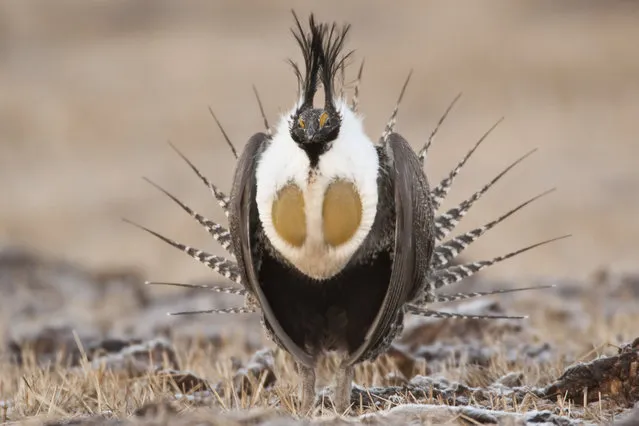
Greater Sage-Grouse

The Greater Sage-Grouse is certainly a formidable-looking bird. Being the largest grouse in North America and having tail feathers, which look like giant spikes, make for a ferocious sight. These birds are well known for their complicated courtship rituals, in which the males perform a special “strutting display” to attract the females. Another distinct feature of the Greater Sage-Grouse is two large yellow throat sacs (gular sacs), which are inflated by the males during the courtship display. Unlike pelicans, whose gular sacs are used to store fish while hunting, the throat sacks of the Greater Sage-Grouse are merely for display.
Details
21 Nov 2014 12:25:00
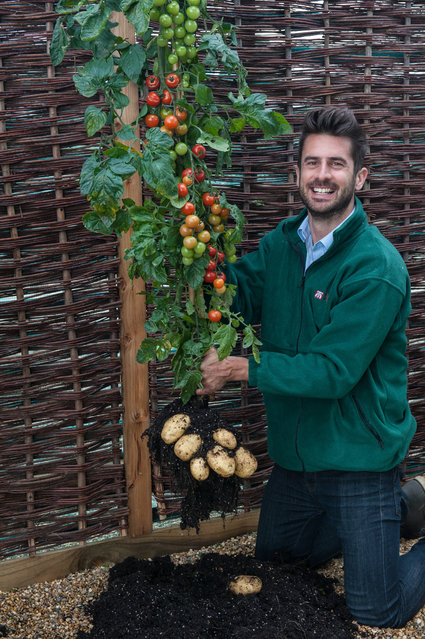
TomTato Plant Grows Both Tomatoes And Potatoes

Nowadays, crossbreeding and gene splicing are creating things that would never have occurred in nature. Thanks to gene splicing, modern man can witness mice that glow in the dark, goats that produce milk which is then used to make bulletproof vests, and even cows that produce milk that is almost identical to human breast milk. One of the latest feats of human genius is the creation of Thompson and Morgan. By combining the genes of tomatoes and potatoes they were able to create a “TomTato”, which is essentially a plant that grows tomatoes and potatoes at the same time. With creations such as this, the world’s hunger problem may be resolved in a few decades.
Details
12 Dec 2014 12:43:00
European Land-Robot Trial (ELROB), Military robot, teleMAX

The land-robot “teleMAX” of German company telerob stands next to soldiers during a trial at the German army base on May 18, 2010 in Hammelburg, Germany. ELROB provides an overview of the current state of affairs in European unmanned system technology and to evaluate commercial off-the-shelf products for military use. It is to show what is feasible in robotics, to support technological developments in Europe, and to find solutions for the current military challenges. (Photo by Ralph Orlowski/Getty Images)
Details
16 Aug 2011 11:47:00
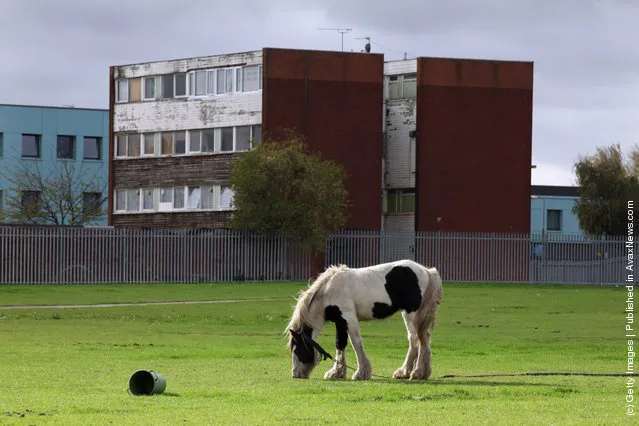
A pet horse

A pet horse tethered on land known as “The Cracker” in Tipton that may be seized by bailiffs on October 10, 2011 in Dudley, England. Horse lovers in Tipton are battling the local council over the tradition of keeping their horses tethered on public land near their homes. Locals say tradition that has been in existence for generations and believe it stems from the age of the canal when many local men used their horses to tow canal barges along the industrial Black Country canals. After a spate of horses running free Sandwell Council are now enforcing the law and impounding tethered horses. Locals are planning their next protest with a horse drive to the council headquarters to try and save their traditions. (Photo by Christopher Furlong/Getty Images)
Details
14 Oct 2011 09:10:00
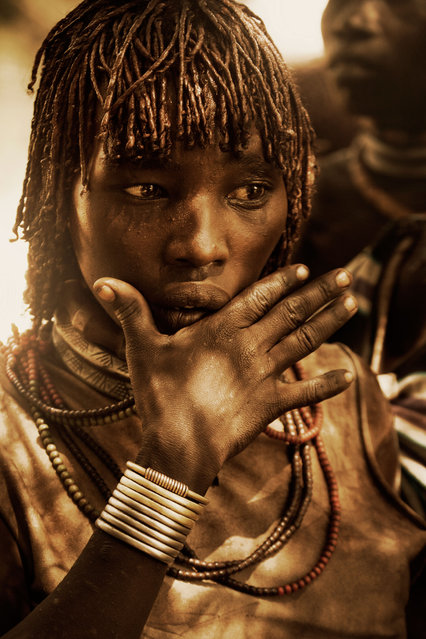
The Hamar people traditionally use red ocher clay to braid the hair of their women. (Photo by Diego Arroyo)

During his time in Ethiopia, New York-based art director and photographer Diego Arroyo spent time with the Hamar, Mursi, Dassanech, and Arbore Tribes. They, along with several others tribes, make up the 200,000 people situated in Africa’s Great Rift Valley. The people of the Omo Valley are still primarily herders and farmers, living an isolated and simple life. While they have yet to be truly touched by globalization, they could soon disappear. Their way of life is being threatened by a massive hydroelectric dam. (Photo by Diego Arroyo)
Details
13 Aug 2014 10:00:00