Loading...
Done
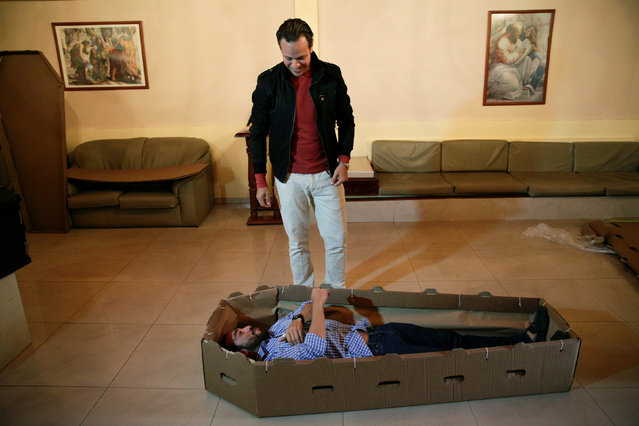
Elio Angulo (bottom C) lies inside a cardboard coffin next to Alejandro Blanchard as they introduce their product to potential customers at a mortuary in Valencia, in the state of Carabobo, Venezuela August 25, 2016. (Photo by Marco Bello/Reuters)

Elio Angulo (bottom C) lies inside a cardboard coffin next to Alejandro Blanchard as they introduce their product to potential customers at a mortuary in Valencia, in the state of Carabobo, Venezuela August 25, 2016. When Venezuelan entrepreneurs Alejandro Blanchard and Elio Angulo decided to create cardboard coffins, they were looking for an ecological selling point to compete against classic wood and brass caskets. Three years on, with the oil-rich country mired in deep economic crisis, their “bio-coffins” are becoming a viable option because of high prices for wooden coffins and shortages of brass ones. (Photo by Marco Bello/Reuters)
Details
27 Aug 2016 11:18:00
A sun bear is offered chocolate by a visitor in its enclosure at a zoo in Bandung on January 18, 2017. Animal rights activists on January 18 demanded the closure of an Indonesian zoo after skeletal sun bears were pictured begging for food from visitors and eating their own dung. (Photo by Timur Matahari/AFP Photo)

A sun bear is offered chocolate by a visitor in its enclosure at a zoo in Bandung on January 18, 2017. Animal rights activists on January 18 demanded the closure of an Indonesian zoo after skeletal sun bears were pictured begging for food from visitors and eating their own dung. (Photo by Timur Matahari/AFP Photo)
Details
20 Jan 2017 08:16:00
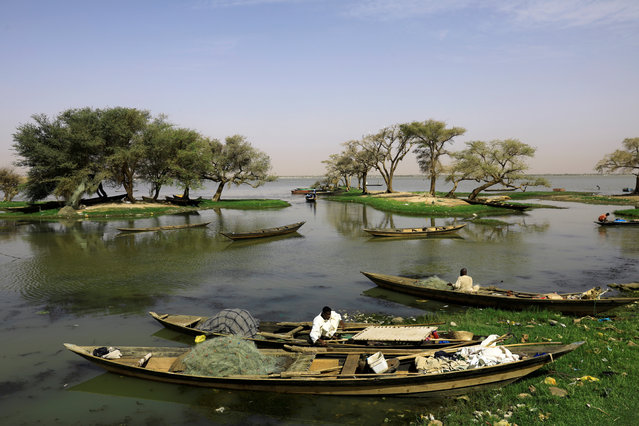
Sudanese fishermen check their boats and nets before they row through the waters of Nile River near Jebel Aulia, Sudan, May 3, 2019. (Photo by Umit Bektas/Reuters)

Sudanese fishermen check their boats and nets before they row through the waters of Nile River near Jebel Aulia, Sudan, May 3, 2019. (Photo by Umit Bektas/Reuters)
Details
07 May 2019 00:05:00
Residents observe a police officer take up position during an operation at the Mare slums complex in Rio de Janeiro March 25, 2014. (Photo by Ricardo Moraes/Reuters)

Residents observe a police officer take up position during an operation at the Mare slums complex in Rio de Janeiro March 25, 2014. The federal troops have taken control of security operations in Mare slums complex to help quell a surge in violent crime following attacks by drug traffickers on police posts in three slums on the north side of the city, government officials said. (Photo by Ricardo Moraes/Reuters)
Details
09 Apr 2014 09:22:00
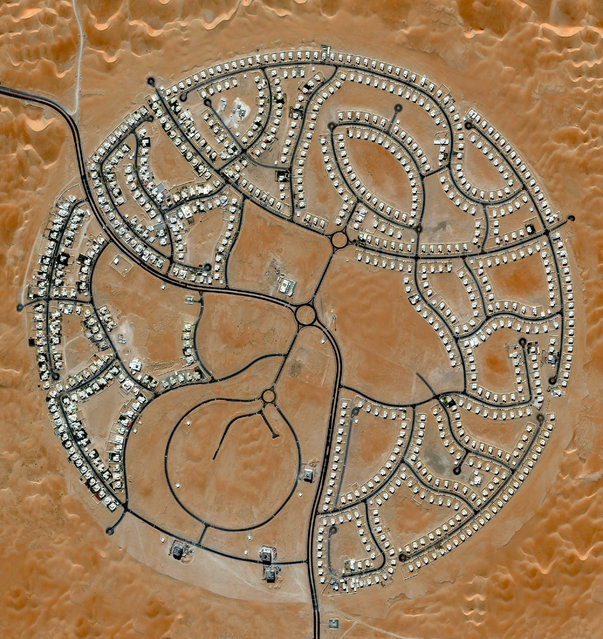
The villas of Marabe Al Dhafra in Abu Dhabi, United Arab Emirates are home to approximately 2,000 people. Located in one of the hottest regions of the world, the record high temperature here is 49.2C° (120.6F°). (Photo by Benjamin Grant/Penguin Random House)

The villas of Marabe Al Dhafra in Abu Dhabi, United Arab Emirates are home to approximately 2,000 people. Located in one of the hottest regions of the world, the record high temperature here is 49.2C° (120.6F°). (Photo by Benjamin Grant/Penguin Random House)
Details
21 Sep 2016 10:04:00
Festival goers having fun at the Balaton Sound music festival in Zamardi next to the Lake of Balaton, 110 km (68 miles) west of Budapest, July 6, 2017. (Photo by Zsolt Furesz)

Festival goers having fun at the Balaton Sound music festival in Zamardi next to the Lake of Balaton, 110 km (68 miles) west of Budapest, July 6, 2017. (Photo by Zsolt Furesz)
Details
07 Jul 2017 07:39:00
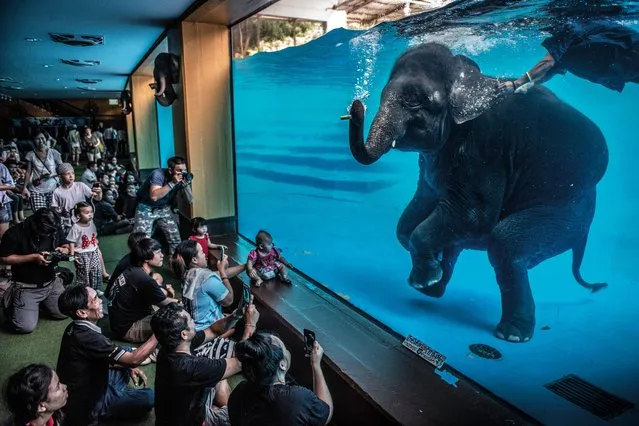
Winner, photojournalism. Elephant in the room, by Adam Oswell, Australia Zoo. Visitors watch a young elephant performing underwater. Oswell was disturbed by this scene, and organisations concerned with the welfare of captive elephants say performances like this encourage unnatural behaviour. In Thailand, there are now more elephants in captivity than in the wild. With the Covid pandemic causing tourism to collapse, elephant sanctuaries are becoming overwhelmed with animals that can no longer be looked after by their owners. (Photo by Adam Oswell/Wildlife Photographer of the Year 2021)

Winner, photojournalism. Elephant in the room, by Adam Oswell, Australia Zoo. Visitors watch a young elephant performing underwater. Oswell was disturbed by this scene, and organisations concerned with the welfare of captive elephants say performances like this encourage unnatural behaviour. In Thailand, there are now more elephants in captivity than in the wild. With the Covid pandemic causing tourism to collapse, elephant sanctuaries are becoming overwhelmed with animals that can no longer be looked after by their owners. (Photo by Adam Oswell/Wildlife Photographer of the Year 2021)
Details
30 Oct 2021 08:40:00
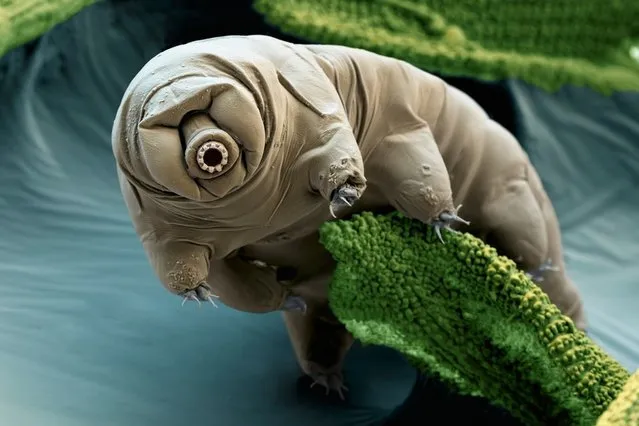
Tardigrades (commonly known as waterbears or moss piglets). (Photo by SPL/East News)

“Tardigrades (commonly known as waterbears or moss piglets) are small, water-dwelling, segmented animals with eight legs. Tardigrades were first discovered in 1773 by Johann August Ephraim Goeze, who called them kleiner Wasserbär, meaning “little water bear” in German. The name Tardigrada means “slow walker” and was given by Lazzaro Spallanzani in 1777. The name water bear comes from the way they walk, reminiscent of a bear's gait. The biggest adults may reach a body length of 1.5 millimetres (0.059 in), the smallest below 0.1 mm. Freshly hatched tardigrades may be smaller than 0.05 mm”. – Wikipedia. Photo: Tardigrades. (Photo by SPL/East News)
Details
26 Sep 2012 09:55:00