Loading...
Done
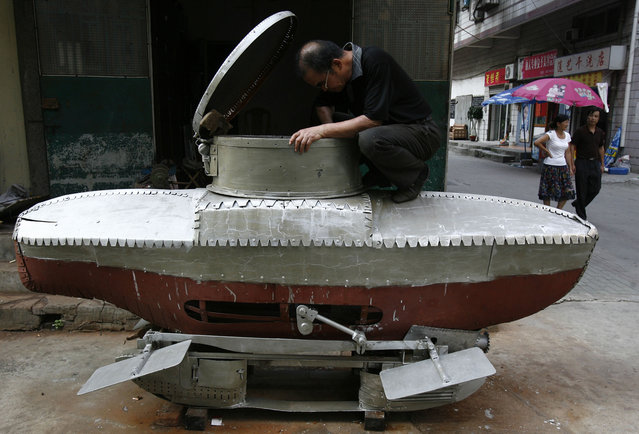
Li Yuming, a local farmer who is interested in scientific invention, works on his unfinished miniature submarine “Xiaguang V” on the outskirts of Wuhan, capital of central China's Hubei province August 24, 2007. “Xiaguang V”, which is 3-metre long, 1.2-metre in height, has a maximum diving depth of 20 metres, and can hold two adults and one child at the same time. The submarine will be used for tour after safety test, local media said. (Photo by Reuters/Stringer)

Li Yuming, a local farmer who is interested in scientific invention, works on his unfinished miniature submarine “Xiaguang V” on the outskirts of Wuhan, capital of central China's Hubei province August 24, 2007. “Xiaguang V”, which is 3-metre long, 1.2-metre in height, has a maximum diving depth of 20 metres, and can hold two adults and one child at the same time. The submarine will be used for tour after safety test, local media said. (Photo by Reuters/Stringer)
Details
09 Sep 2013 10:44:00
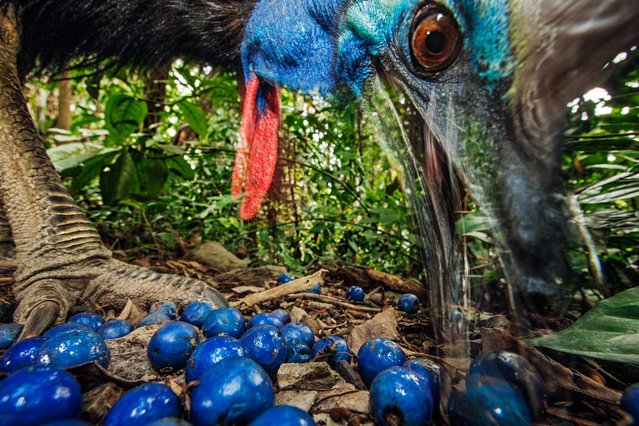
“Cassowaries are large, flightless birds related to emus and (more distantly) to ostriches, rheas, and kiwis”, writes Olivia Judson in the September issue of National Geographic magazine. (Photo by Christian Ziegler/National Geographic)

“Cassowaries are large, flightless birds related to emus and (more distantly) to ostriches, rheas, and kiwis”, writes Olivia Judson in the September issue of National Geographic magazine. How large? People-size: Adult males stand well over five foot five and top 110 pounds. Females are even taller, and can weigh more than 160 pounds. Dangerous when roused, they’re shy and peaceable when left alone. But even birds this big and tough are prey to habitat loss. The dense New Guinea and Australia rain forests where they live have dwindled. Today cassowaries might number 1,500 to 2,000. And because they help shape those same forests – by moving seeds from one place to another – “if they vanish”, Judson writes, “the structure of the forest would gradually change” too. (Photo by Christian Ziegler/National Geographic)
Details
06 Jan 2014 12:21:00
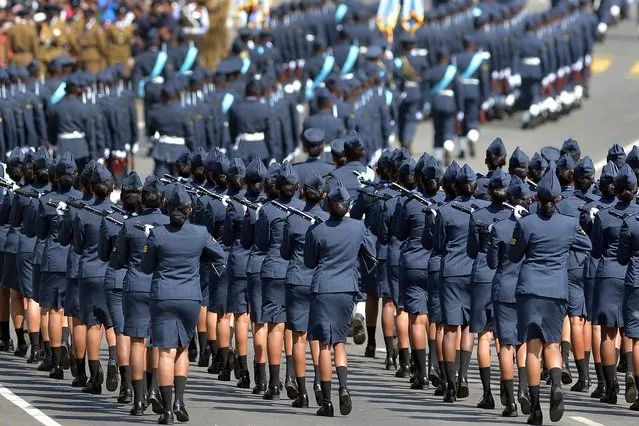
Sri Lankan military personnel march during the country's 66th Independence Day celebrations in the central town of Kegalle, about 40 kms from the capital Colombo on February 4, 2014. Sri Lanka cemmemorates its independence from British rule on February 4, 1948. (Photo by Ishara S. Kodikara/AFP Photo)

Sri Lankan military personnel march during the country's 66th Independence Day celebrations in the central town of Kegalle, about 40 kms from the capital Colombo on February 4, 2014. Sri Lanka cemmemorates its independence from British rule on February 4, 1948. (Photo by Ishara S. Kodikara/AFP Photo)
Details
08 Feb 2014 15:19:00
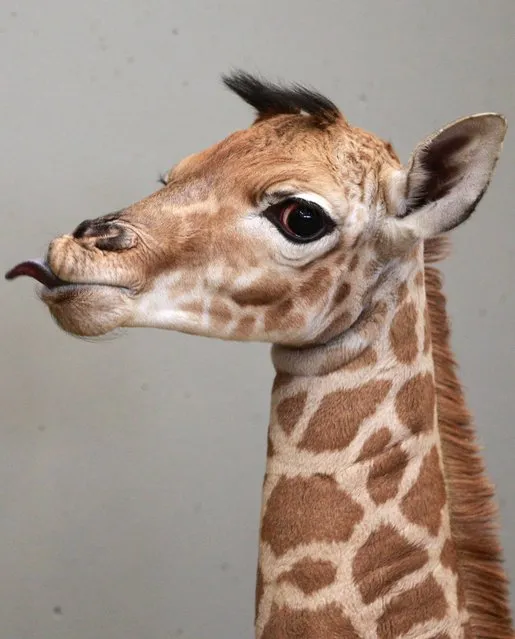
A newborn baby giraffe shows its tongue at the Planckendael zoo in Mechelen, 25 kilometers North of Brussels, Tuesday, February 18, 2014. The calf was born on Valentines day, February 14, and has a heart shaped spot on the hip. (Photo by Yves Logghe/AP Photo)

A newborn baby giraffe shows its tongue at the Planckendael zoo in Mechelen, 25 kilometers North of Brussels, Tuesday, February 18, 2014. The calf was born on Valentines day, February 14, and has a heart shaped spot on the hip. (Photo by Yves Logghe/AP Photo)
Details
22 Feb 2014 13:36:00
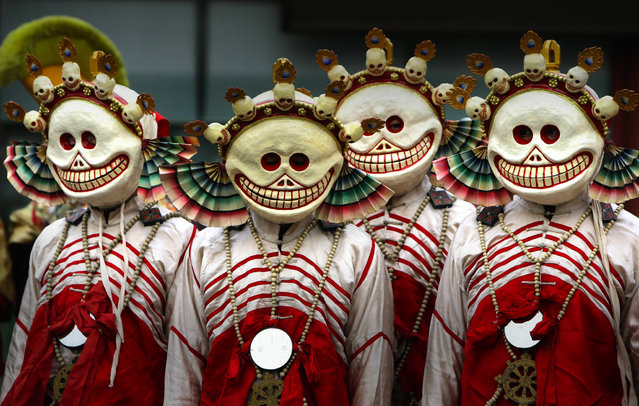
Monks dressed as Tibetan Buddhism characters attend a religious ceremony, known as “Da Gui” or beating ghost, to celebrate the upcoming Tibetan New Year which starts on March 1 at Yonghegong Lama Temple, in Beijing February 28, 2014. This Tibetan ceremony is held annually at the end of the first lunar month with mask dancing to expel ghosts, according to a press release. (Photo by Jason Lee/Reuters)

Monks dressed as Tibetan Buddhism characters attend a religious ceremony, known as “Da Gui” or beating ghost, to celebrate the upcoming Tibetan New Year which starts on March 1 at Yonghegong Lama Temple, in Beijing February 28, 2014. This Tibetan ceremony is held annually at the end of the first lunar month with mask dancing to expel ghosts, according to a press release. (Photo by Jason Lee/Reuters)
Details
01 Mar 2014 13:07:00
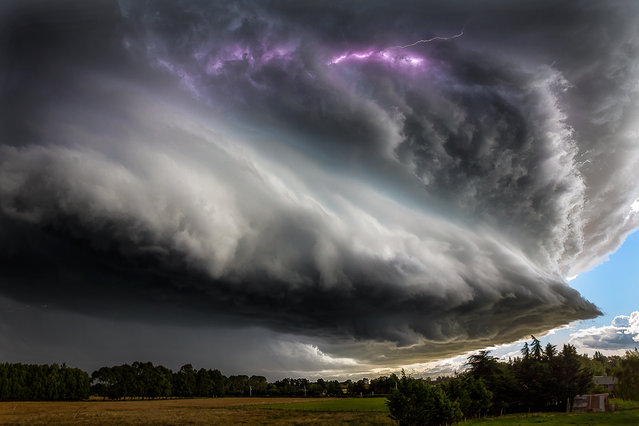
“Thunderstruck”. Summer stom. A super cell formed off the coast of New Zealand, intensified and swept across Christchurch and North Canterbury, February 23, 2014. Photo location: Christchurch, New Zealand. (Photo and caption by David Hardy/National Geographic Photo Contest)

“Thunderstruck”. Summer stom. A super cell formed off the coast of New Zealand, intensified and swept across Christchurch and North Canterbury, February 23, 2014. Photo location: Christchurch, New Zealand. (Photo and caption by David Hardy/National Geographic Photo Contest)
Details
15 Apr 2014 11:46:00
Animal rights activists covered with fake blood sit on the floor during a protest against the use of animals in research to mark World Day for Animals in Laboratories in central Madrid April 24, 2014. The sign reads, “How many rabbits do your shampoo kill?”. (Photo by Andrea Comas/Reuters)

Animal rights activists covered with fake blood sit on the floor during a protest against the use of animals in research to mark World Day for Animals in Laboratories in central Madrid April 24, 2014. The sign reads, “How many rabbits do your shampoo kill?”. (Photo by Andrea Comas/Reuters)
Details
26 Apr 2014 11:44:00
A country music fan cools off in the wind on the second day of the Stagecoach country music festival in Indio, California April 26, 2014. (Photo by Mike Blake/Reuters)

A country music fan cools off in the wind on the second day of the Stagecoach country music festival in Indio, California April 26, 2014. (Photo by Mike Blake/Reuters)
Details
03 May 2014 15:35:00