Loading...
Done
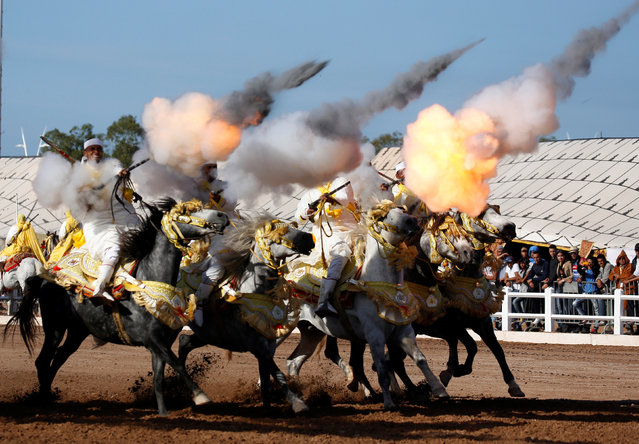
Horse riders perform with guns during the El-Jadida International Horse Show in El-Jadida, south of Casablanca, Morocco, October 15, 2016. (Photo by Youssef Boudlal/Reuters)

Horse riders perform with guns during the El-Jadida International Horse Show in El-Jadida, south of Casablanca, Morocco, October 15, 2016. (Photo by Youssef Boudlal/Reuters)
Details
16 Oct 2016 11:31:00
A Saudi woman shops for Ramadan decorations to mark the beginning of the Holy Month of Ramadan in a local market in Riyadh, Saudi Arabia on March 22, 2023. (Photo by Ahmed Yosri/Reuters)

A Saudi woman shops for Ramadan decorations to mark the beginning of the Holy Month of Ramadan in a local market in Riyadh, Saudi Arabia on March 22, 2023. (Photo by Ahmed Yosri/Reuters)
Details
24 Mar 2023 03:42:00
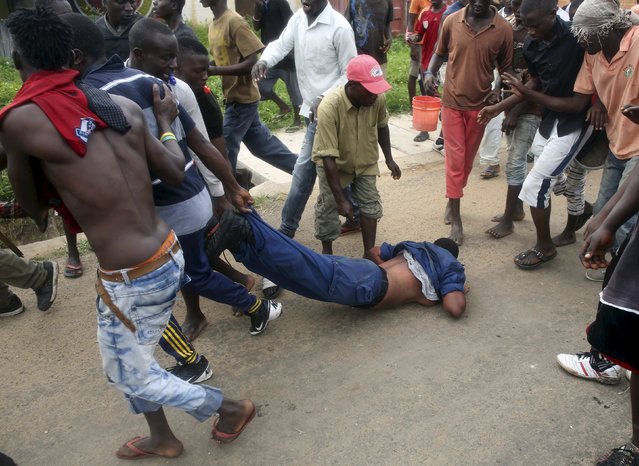
Protesters drag a female police officer accused of shooting a protester in the Buterere neighbourhood of Bujumbura, Burundi, May 12, 2015. (Photo by Goran Tomasevic/Reuters)

From house breaking in Johannesburg to hippos on the loose in Tbilisi to rioters attacking a policewoman in Burundi, Reuters photographers tell the story behind some of the most iconic pictures of the year. Here: Protesters drag a female police officer accused of shooting a protester in the Buterere neighbourhood of Bujumbura, Burundi, May 12, 2015. Goran Tomasevic: Protesters started throwing stones at a group of police, who then started to run away. The policewoman in the photo, Medikintos Inabeza, 33, got left behind and then some protesters started to push her, saying that she had shot a female protestor in the stomach with an AK47 rifle. I didn't see anything of that. There were 5 or 10 protesters pushing the policewoman at first, then others came and joined in. Up to 20 or 30 protesters were surrounding her at one point. The protesters kicked and beat her very badly; I also saw a couple of knives. I thought they were going to kill her... (Photo by Goran Tomasevic/Reuters)
Details
11 Dec 2015 08:06:00
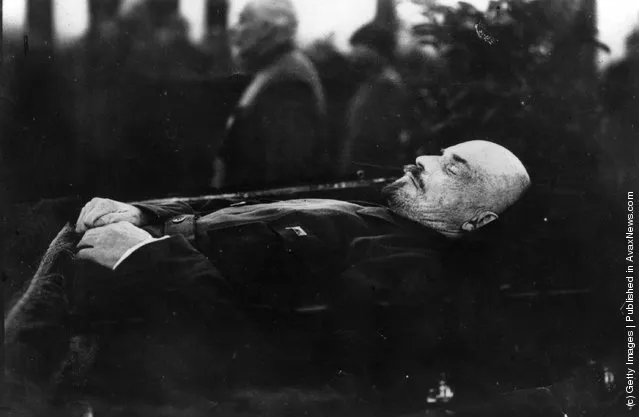
1924:  Vladimir Ilyich Lenin lying in state in the Kremlin

Photo: Vladimir Ilyich Lenin (1870 – 1924) lying in state in the Kremlin. (Photo by Hulton Archive/Getty Images). 1924

Important! For the same article in Russian language click here.

Something quite intriguing is happening within Russian-speaking internet during the last few – should you type a fully academic inquiry (at least, according to Russian academic requirements) in national search engines for "Lenin's mausoleum" – the first thing you get (even in top 10 searches) is website pages talking about black magic and occult. Website authors view this construction differently, but unconditionally agree on one thing: the mausoleum of the "leader of the world proletariat” – the essence of a magical artifact, a sort of “energy vampire”. It was built with a certain purpose: to drain the energy out of miserable Soviet citizens on one hand; and to poison the anthroposphere of one-sixth part of the earth with its vibes (the exact territory that was occupied by the former Soviet Union), depriving the Russian people of will to resist on the other hand. Complete nonsense? No doubt. Nevertheless, an intriguing one. Well, probably because some oddities do exist in mausoleum's history. These oddities are the thing we are going to discuss this time. First, let me refresh you memory on the subject.
Details
16 Oct 2011 11:27:00
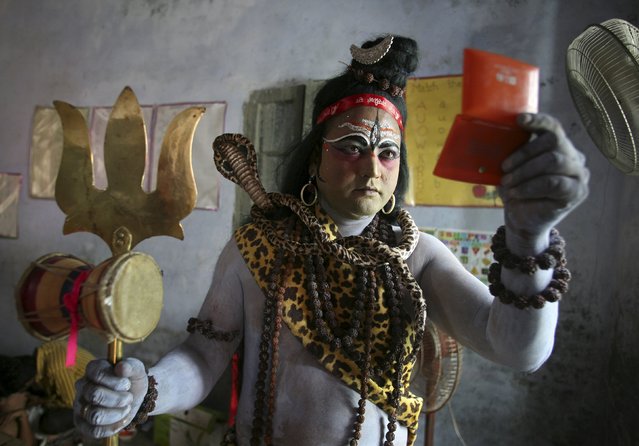
A man dressed as Hindu Lord Shiva looks into the mirror as he gets ready to take part in a religious procession on the eve of Janmashtami festival in Amritsar, India, September 4, 2015. The festival, which marks the birth anniversary of Lord Krishna, will be celebrated across India on Saturday. (Photo by Munish Sharma/Reuters)

A man dressed as Hindu Lord Shiva looks into the mirror as he gets ready to take part in a religious procession on the eve of Janmashtami festival in Amritsar, India, September 4, 2015. The festival, which marks the birth anniversary of Lord Krishna, will be celebrated across India on Saturday. (Photo by Munish Sharma/Reuters)
Details
06 Sep 2015 12:53:00
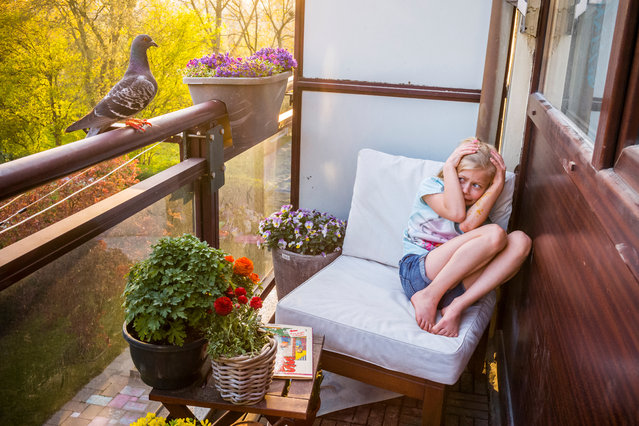
Nature – first prize, stories. Pandemic Pigeons – A Love Story. The photographer’s daughter, Merel, cowers after Dollie flies past and perches on the balcony before entering the house in Vlaardingen in the Netherlands on 6 April 2020. “She’s still frightened when Dollie suddenly lands on the balcony railing. I hide my smile behind the camera, as I try to comfort her by saying they won’t hurt you. “I thought he was going to attack me”, she replies. As the nesting pigeons keep coming back to our place, slowly my girls have started to appreciate them – perhaps not as much as I do, but it’s a start”. (Photo by Jasper Doest/World Press Photo 2021)

Nature – first prize, stories. Pandemic Pigeons – A Love Story. The photographer’s daughter, Merel, cowers after Dollie flies past and perches on the balcony before entering the house in Vlaardingen in the Netherlands on 6 April 2020. “She’s still frightened when Dollie suddenly lands on the balcony railing. I hide my smile behind the camera, as I try to comfort her by saying they won’t hurt you. “I thought he was going to attack me”, she replies. As the nesting pigeons keep coming back to our place, slowly my girls have started to appreciate them – perhaps not as much as I do, but it’s a start”. (Photo by Jasper Doest/World Press Photo 2021)
Details
17 Apr 2021 09:30:00
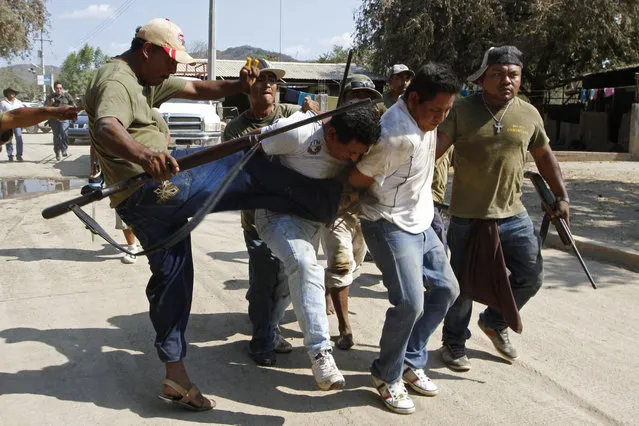
In this April 4, 2014 file photo, a community policeman kicks a man who they alledge participated in an ambush against them near the town of La Concepcion, Mexico. The vigilante force was set-up by affected communities opposed to the construction of the La Parota hydroelectric dam. Two vigilantes were injured and one died. (Photo by Bernandino Hernandez/AP Photo)

In this April 4, 2014 file photo, a community policeman kicks a man who they alledge participated in an ambush against them near the town of La Concepcion, Mexico. The vigilante force was set-up by affected communities opposed to the construction of the La Parota hydroelectric dam. Two vigilantes were injured and one died. (Photo by Bernandino Hernandez/AP Photo)
Details
16 Dec 2014 12:40:00
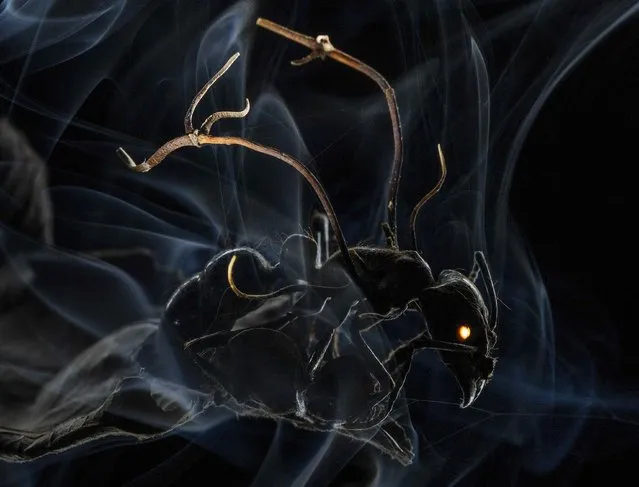
Anand Varma, a U.S. photographer working for the National Geographic, won the First Prize in the Nature Category, Stories, of the 2015 World Press Photo contest with his series of pictures, which includes this one of spores of a fungus landing on an ant, penetrating its exoskeleton and entering its brain, compelling the host to leave its normal habitat on the forest floor and scale a nearby tree, in this picture taken January 22, 2014 and released by the World Press Photo on February 12, 2015. (Photo by Anand Varma/Reuters/National Geographic/World Press Photo)

Anand Varma, a U.S. photographer working for the National Geographic, won the First Prize in the Nature Category, Stories, of the 2015 World Press Photo contest with his series of pictures, which includes this one of spores of a fungus landing on an ant, penetrating its exoskeleton and entering its brain, compelling the host to leave its normal habitat on the forest floor and scale a nearby tree, in this picture taken January 22, 2014 and released by the World Press Photo on February 12, 2015. (Photo by Anand Varma/Reuters/National Geographic/World Press Photo)
Details
15 Feb 2015 15:21:00