Loading...
Done
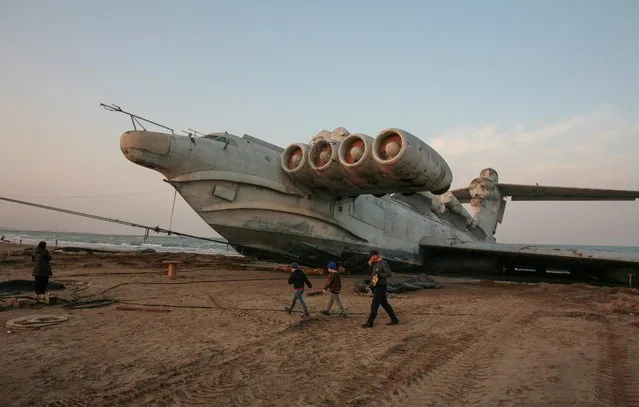
A view shows a Lun-class Soviet-made ekranoplan, which is a naval craft and a ground-effect vehicle, on the Caspian Sea coastline in Derbent in the Republic of Dagestan, Russia on November 3, 2020. (Photo by Kazbek Basayev/Reuters)

A view shows a Lun-class Soviet-made ekranoplan, which is a naval craft and a ground-effect vehicle, on the Caspian Sea coastline in Derbent in the Republic of Dagestan, Russia on November 3, 2020. (Photo by Kazbek Basayev/Reuters)
Details
17 Mar 2021 10:21:00
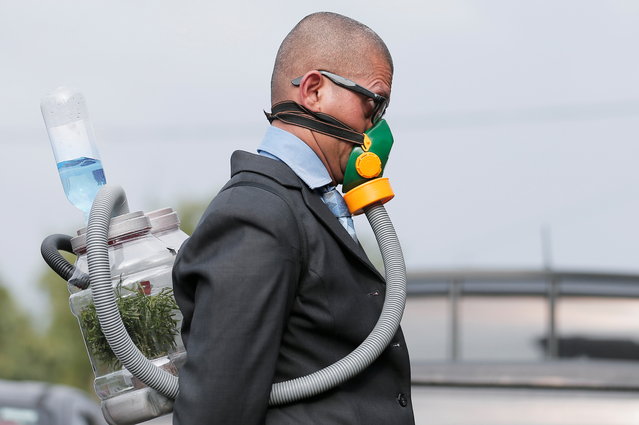
A climate activist wears an oxygen mask to demonstrate the possibility of pumping oxygen from a tree in a bottle in the future, during a protest against the government's deforestation practices of Sri Lanka's main wildlife forests for developments in Colombo, Sri Lanka on March 22, 2021. (Photo by Dinuka Liyanawatte/Reuters)

A climate activist wears an oxygen mask to demonstrate the possibility of pumping oxygen from a tree in a bottle in the future, during a protest against the government's deforestation practices of Sri Lanka's main wildlife forests for developments in Colombo, Sri Lanka on March 22, 2021. (Photo by Dinuka Liyanawatte/Reuters)
Details
23 Mar 2021 09:22:00
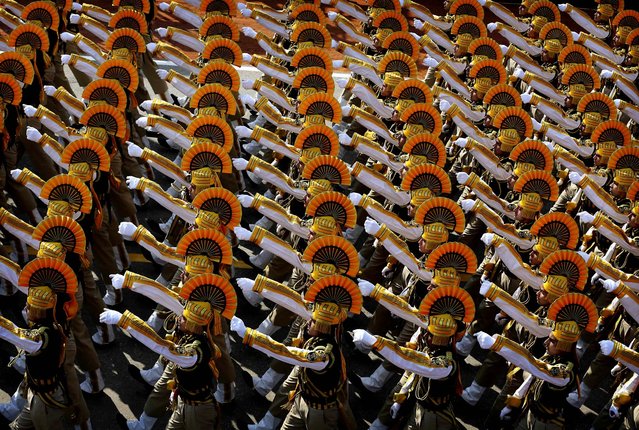
Indian paramilitary forces march during the annual Republic Day parade on Rajpath in New Delh, January 26, 2013. Republic Day commemorates the 1950 adoption of India's constitution. (Photo by Kevin Frayer/Associated Press)

Indian paramilitary forces march during the annual Republic Day parade on Rajpath in New Delh, January 26, 2013. Republic Day commemorates the 1950 adoption of India's constitution. (Photo by Kevin Frayer/Associated Press)
Details
27 Jan 2013 13:35:00
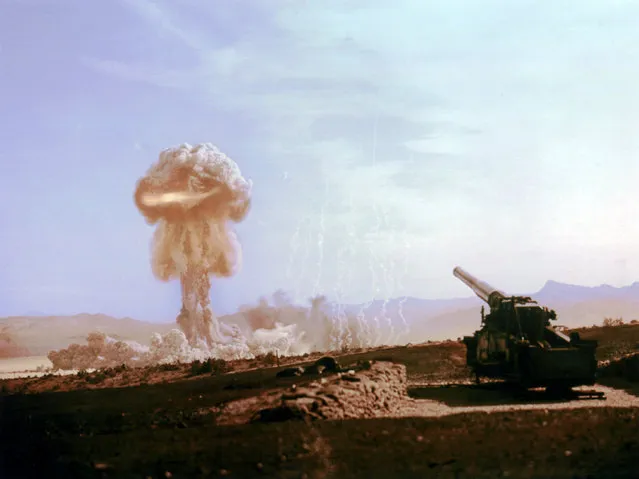
Atomic Annie at work during the Upshot-Knothole test series, 1953. (Photo by Los Alamos National Laboratory/US Army)

“A fter the former Soviet Union conducted its first nuclear test in August 1949, the US reevaluated its postwar defense policies. With the US monopoly on atomic weapons broken, military and political leaders chose to diversify the American stockpile by developing thermonuclear and tactical nuclear weapons. One of the more interesting concepts to come out of this period was atomic artillery, which was successfully tested at the Nevada Proving Grounds (now the Nevada Test Site) in May 1953”. – Alan Carr. Photo: Atomic Annie at work during the Upshot-Knothole test series, 1953. (Photo by Los Alamos National Laboratory/US Army)
Details
11 Mar 2013 11:43:00
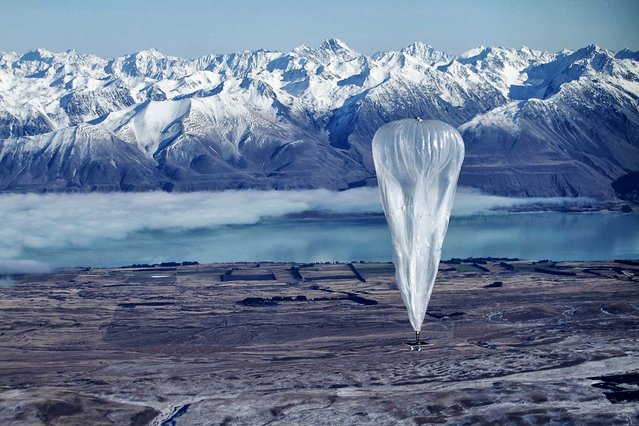
A Google balloon sails through the air with the Southern Alps mountains in the background, in Tekapo, New Zealand. (Photo by Jon Shenk/Associated Press)

“Google is launching balloons into near space to provide internet access to buildings below on the ground. About 30 of the superpressure balloons are being launched from New Zealand from where they will drift around the world on a controlled path. Attached equipment will offer 3G-like speeds to 50 testers in the country”. – BBC News. Photo: A Google balloon sails through the air with the Southern Alps mountains in the background, in Tekapo, New Zealand. (Photo by Jon Shenk/Associated Press)
Details
16 Jun 2013 10:54:00


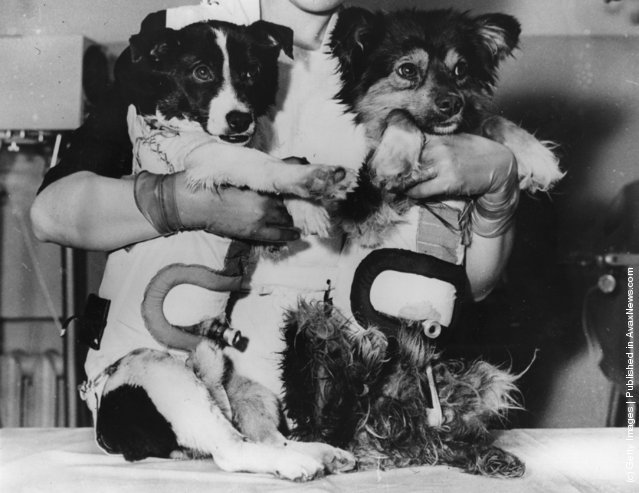
Two dogs sent into outer space by the Soviet Union after their safe return to earth. They spent 22 days in orbit. (Photo by Central Press/Getty Images). 22nd March 1966
Details
12 Apr 2011 09:39:00


Winner of the Sandow bodybuilding competition, Mr. Murray. (Photo by Reinhold Thiele/Thiele/Getty Images). Circa 1905
Details
27 Jul 2011 12:35:00
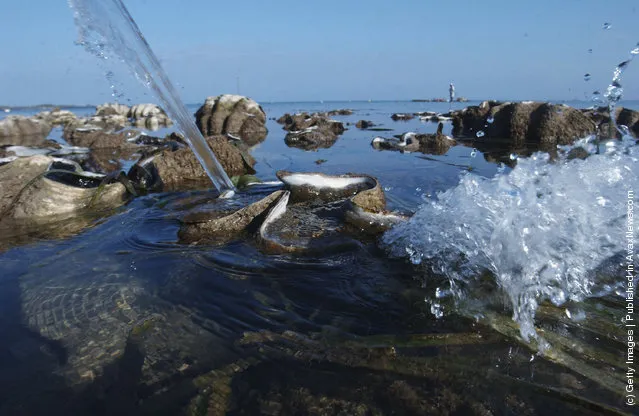
Tridacna Gigas, or Giant Clams

“The giant clam, Tridacna gigas (known as pā’ua in Cook Islands Māori), is the largest living bivalve mollusc. T. gigas is one of the most endangered clam species. It was mentioned as early as 1825 in scientific reports. One of a number of large clam species native to the shallow coral reefs of the South Pacific and Indian oceans, they can weigh more than 200 kilograms (440 lb) measure as much as 120 cm (47 in) across, and have an average lifespan in the wild of 100 years or more”. – Wikipedia

Photo: Tridacna Gigas, or Giant Clams spew water as a traditional fisherman passes by a small sanctuary on January 23, 2004 near Bolinao in the Northern Philippines. The clams, prime builders for coral reefs and providing shelter for spawning fish and other marine life, are exposed by low tides in the sanctuary. Overfishing and pollution throughout the country are not only threatening food security, but are also starting to choke one of the few working clam sanctuaries in the world. (Photo by David Greedy/Getty Images)

Details
01 Oct 2011 13:10:00