Loading...
Done
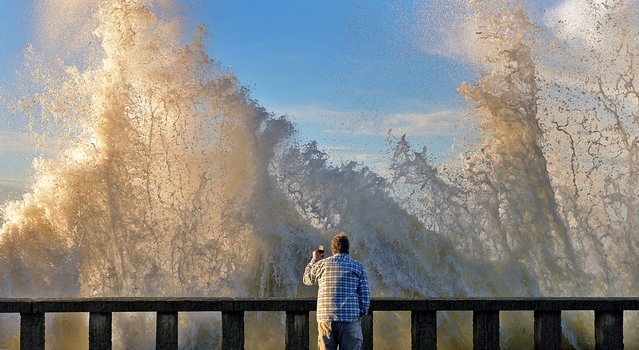
A man watches as high surf crashes into the wall and spills onto Channel Drive in Montecito, Calif., January 7, 2016. Bacteria levels can increase significantly during and after rainstorms as contaminants in the runoff enter the ocean via storm drains, creeks and rivers. (Photo by Mike Eliason/AP Photo)

A man watches as high surf crashes into the wall and spills onto Channel Drive in Montecito, Calif., January 7, 2016. Bacteria levels can increase significantly during and after rainstorms as contaminants in the runoff enter the ocean via storm drains, creeks and rivers. (Photo by Mike Eliason/AP Photo)
Details
08 Jan 2016 09:49:00
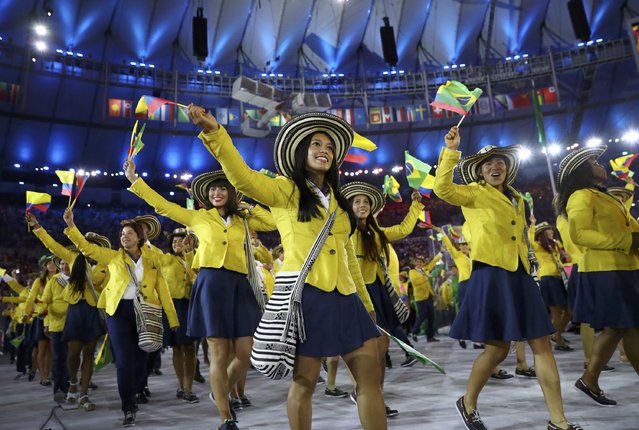
2016 Rio Olympics, Opening ceremony, Maracana, Rio de Janeiro, Brazil on August 5, 2016. Athletes of Colombia take part in the opening ceremony. (Photo by Kai Pfaffenbach/Reuters)

2016 Rio Olympics, Opening ceremony, Maracana, Rio de Janeiro, Brazil on August 5, 2016. Athletes of Colombia take part in the opening ceremony. (Photo by Kai Pfaffenbach/Reuters)
Details
06 Aug 2016 13:28:00
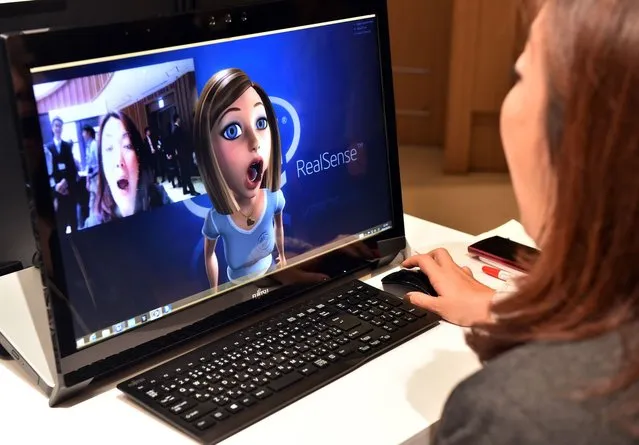
Japan's computer giant Fujitsu employee displays the world's first personal computer with Intel's RealSense 3D camera “FMV Esprimo” in Tokyo on October 9, 2014. The new desktop PC with 23-inch LCD display can make avatars which mimic the user's look and motion for chatting on the Internet. (Photo by Yoshikazu Tsuno/AFP Photo)

Japan's computer giant Fujitsu employee displays the world's first personal computer with Intel's RealSense 3D camera “FMV Esprimo” in Tokyo on October 9, 2014. The new desktop PC with 23-inch LCD display can make avatars which mimic the user's look and motion for chatting on the Internet. (Photo by Yoshikazu Tsuno/AFP Photo)
Details
11 Oct 2014 13:12:00
“Cassowaries are large, flightless birds related to emus and (more distantly) to ostriches, rheas, and kiwis”, writes Olivia Judson in the September issue of National Geographic magazine. (Photo by Christian Ziegler/National Geographic)

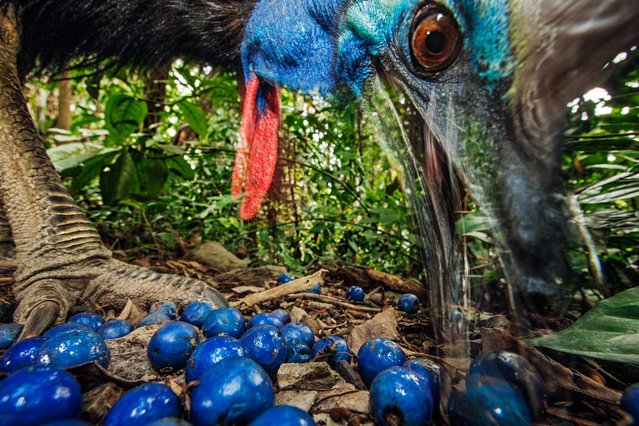
“Cassowaries are large, flightless birds related to emus and (more distantly) to ostriches, rheas, and kiwis”, writes Olivia Judson in the September issue of National Geographic magazine. How large? People-size: Adult males stand well over five foot five and top 110 pounds. Females are even taller, and can weigh more than 160 pounds. Dangerous when roused, they’re shy and peaceable when left alone. But even birds this big and tough are prey to habitat loss. The dense New Guinea and Australia rain forests where they live have dwindled. Today cassowaries might number 1,500 to 2,000. And because they help shape those same forests – by moving seeds from one place to another – “if they vanish”, Judson writes, “the structure of the forest would gradually change” too. (Photo by Christian Ziegler/National Geographic)

Details
06 Jan 2014 12:21:00
A man walks next to a section of the wall separating Mexico and the United States, on the outskirts of Ciudad Juarez, Mexico, November 12, 2016. (Photo by Jose Luis Gonzalez/Reuters)

A man walks next to a section of the wall separating Mexico and the United States, on the outskirts of Ciudad Juarez, Mexico, November 12, 2016. (Photo by Jose Luis Gonzalez/Reuters)
Details
14 Nov 2016 09:46:00
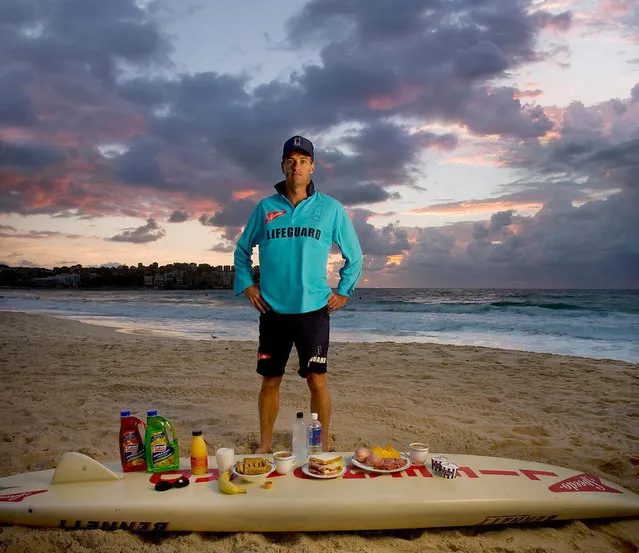
What the World Eats By Peter Menzel And Faith D'Aluisio Part 2

A stunning photographic collection featuring portraits of people from 30 countries and the food they eat in one day. In this fascinating study of people and their diets, 80 profiles are organized by the total number of calories each person puts away in a day. Featuring a Japanese sumo wrestler, a Massai herdswoman, world-renowned Spanish chef Ferran Adria, an American competitive eater, and more, these compulsively readable personal stories also include demographic particulars, including age, activity level, height, and weight. Essays from Harvard primatologist Richard Wrangham, journalist Michael Pollan, and others discuss the implications of our modern diets for our health and for the planet. This compelling blend of photography and investigative reportage expands our understanding of the complex relationships among individuals, culture, and food.
Details
02 May 2014 09:20:00
Russia's synchronised swimming duet Aleksandr Maltsev (L) and Darina Valitova compete in the Mixed Duet Technical preliminary during the synchronised swimming competition at the 2015 FINA World Championships in Kazan on July 25, 2015. (Photo by Christophe Simon/AFP Photo)

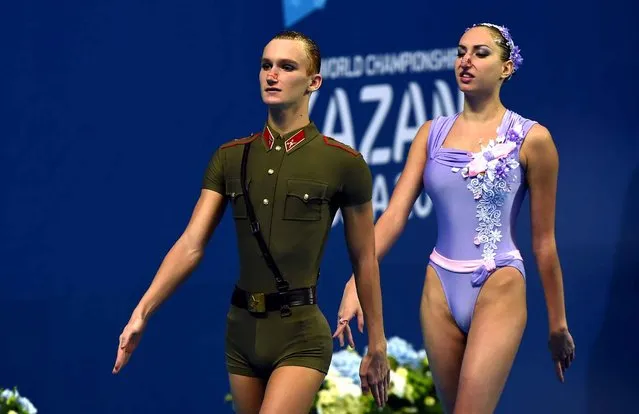
Russia's synchronised swimming duet Aleksandr Maltsev (L) and Darina Valitova compete in the Mixed Duet Technical preliminary during the synchronised swimming competition at the 2015 FINA World Championships in Kazan on July 25, 2015. (Photo by Christophe Simon/AFP Photo)
Details
25 Jul 2015 13:06:00
Aeronautics and Space engineer at France's Compagnie Maritime d'Expertises, or Comex, Arnaud Prost (C) meets with a jogger as he tests on the ground the “Gandolfi 2” underwater training suit for spacewalk, on January 20, 2016 in the calanques region (rocky inlets) of Marseille. The underwater training suit “Gandolfi 2”, developed with the European Space Agency (ESA), is designed for training astronauts underwater to simulate space gravity for the astronaut's extravehicular activities (EVAs). (Photo by Boris Horvat/AFP Photo)

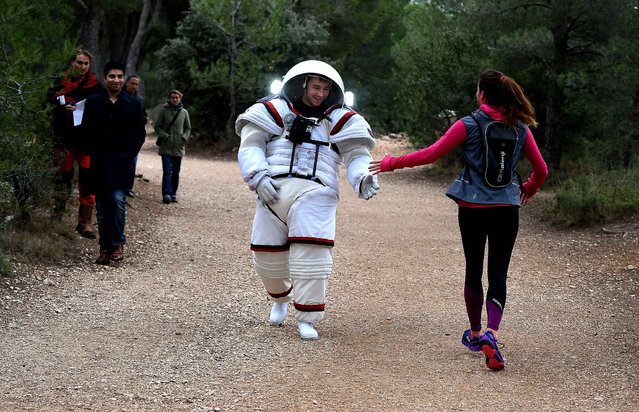
Aeronautics and Space engineer at France's Compagnie Maritime d'Expertises, or Comex, Arnaud Prost (C) meets with a jogger as he tests on the ground the “Gandolfi 2” underwater training suit for spacewalk, on January 20, 2016 in the calanques region (rocky inlets) of Marseille. The underwater training suit “Gandolfi 2”, developed with the European Space Agency (ESA), is designed for training astronauts underwater to simulate space gravity for the astronaut's extravehicular activities (EVAs). (Photo by Boris Horvat/AFP Photo)
Details
23 Jan 2016 13:41:00