Loading...
Done
Tridacna Gigas, or Giant Clams

“The giant clam, Tridacna gigas (known as pā’ua in Cook Islands Māori), is the largest living bivalve mollusc. T. gigas is one of the most endangered clam species. It was mentioned as early as 1825 in scientific reports. One of a number of large clam species native to the shallow coral reefs of the South Pacific and Indian oceans, they can weigh more than 200 kilograms (440 lb) measure as much as 120 cm (47 in) across, and have an average lifespan in the wild of 100 years or more”. – Wikipedia

Photo: Tridacna Gigas, or Giant Clams spew water as a traditional fisherman passes by a small sanctuary on January 23, 2004 near Bolinao in the Northern Philippines. The clams, prime builders for coral reefs and providing shelter for spawning fish and other marine life, are exposed by low tides in the sanctuary. Overfishing and pollution throughout the country are not only threatening food security, but are also starting to choke one of the few working clam sanctuaries in the world. (Photo by David Greedy/Getty Images)
Details
01 Oct 2011 13:10:00
Moonlight illuminates sandstone buttes in the Valley of the Gods in the proposed Bear Ears National Monument near Mexican Hat, Utah, USA, 12 November 2016. (Photo by Jim Lo Scalzo/EPA)

Moonlight illuminates sandstone buttes in the Valley of the Gods in the proposed Bear Ears National Monument near Mexican Hat, Utah, USA, 12 November 2016. In October 2015, a coalition of five Indian nations, including the Hopi, Ute, and Navajo, formally proposed the monument, attempting to preserve the parcel's 100,000 archeological sites from ongoing looting and grave robbing. Less than two months before handing over the White House to President Elect Trump, President Obama must decide if it's worth the political capital to designate Bear Ears a national monument. (Photo by Jim Lo Scalzo/EPA)
Details
07 Dec 2016 11:53:00
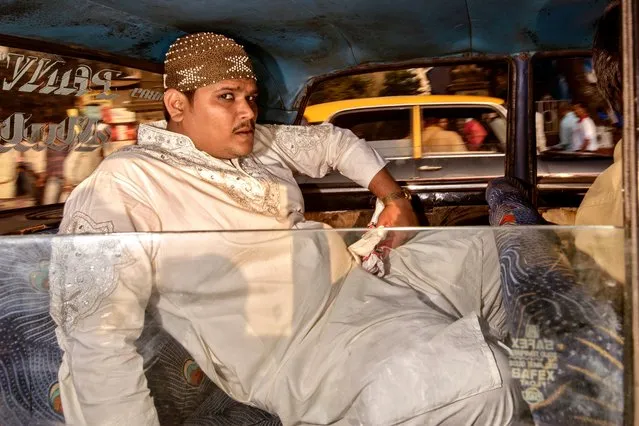
“I’m not scared of breaking the fourth wall”, Wallace has said of the photos where the subject is clearly aware of him taking the shot. “If they are looking at you in a photograph most photographers will think, oh, that’s not a good image. (But) people like to be involved and in the picture. You can see what they are thinking, see them talking”. (Photo by Dougie Wallace/The Guardian)

In Dougie Wallace’s photos of Mumbai taxis, the chatter, yelling, and constant horns of the city are almost audible. A selection of his images is on show at Gayfield Creative Spaces, Edinburgh, as part of the Retina photography festival until 30 July. For four years, the Glasgow-born Wallace focused his photos on one kind of taxi in particular: the Premier Padmini, a 1960s workhorse painted in black and yellow. Locally known as “Kaali-Peeli”, there were once more than 60,000 of them in the Indian city. But thanks to laws restricting pollution, the cars now are fast disappearing from Mumbai’s streets. (Photo by Dougie Wallace/The Guardian)
Details
13 Jul 2016 13:50:00
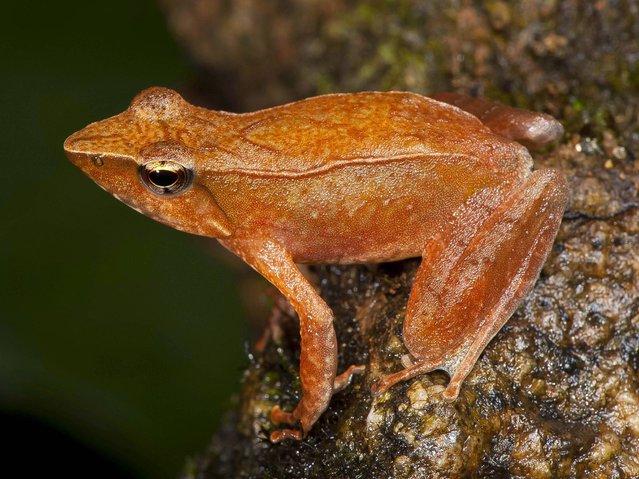
Orange dancing frog discovered by a team headed by University of Delhi professor Sathyabhama Das Biju in the jungle mountains of southern India. (Photo by Satyabhama Das Biju/AP Photo)

This undated photograph shows one of the 14 new species of so-called dancing frogs discovered by a team headed by University of Delhi professor Sathyabhama Das Biju in the jungle mountains of southern India. The study listing the new species brings the number of known Indian dancing frogs to 24 and attempts the first near-complete taxonomic sampling of the single-genus family found exclusively in southern India's lush mountain range called the Western Ghats, which stretches 1,600 kilometers (990 miles) from the west state of Maharashtra down to the country's southern tip. (Photo by Satyabhama Das Biju/AP Photo)
Details
09 May 2014 08:50:00
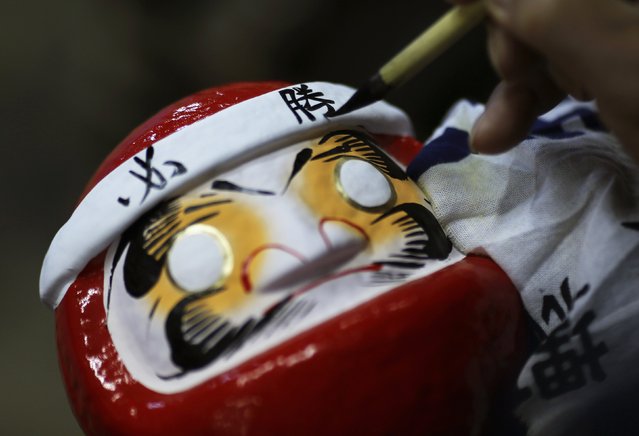
Japanese craftsman Sumikazu Nakata writes the Chinese character of “victory”, which is a part of the phrase “Certain victory”, as he adds the final touches on a Daruma doll, which is believed to bring good luck, at his studio “Daimonya” in Takasaki, northwest of Tokyo November 23, 2014. (Photo by Yuya Shino/Reuters)

Japanese craftsman Sumikazu Nakata writes the Chinese character of “victory”, which is a part of the phrase “Certain victory”, as he adds the final touches on a Daruma doll, which is believed to bring good luck, at his studio “Daimonya” in Takasaki, northwest of Tokyo November 23, 2014. Daruma dolls, representing the Indian priest Bodhidharma, the founder of Zen Buddhism in China, is used to bring luck. It is also a favorite item of election candidates where they traditionally paint only one eye on the doll when they start their campaign and paint the other eye if they win in the election. (Photo by Yuya Shino/Reuters)
Details
24 Nov 2014 13:39:00
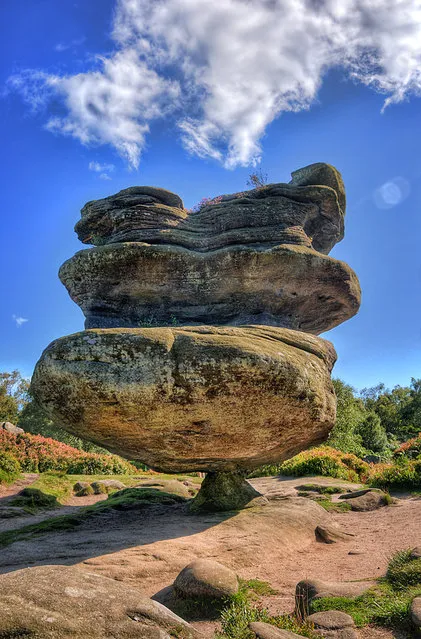
Brimham rocks, Nidderdale North Yorkshire, England

“A balancing rock, also called balanced rock or precarious boulder, is a naturally occurring geological formation featuring a large rock or boulder, sometimes of substantial size, resting on other rocks, bedrock or on glacial till. Some formations known by this name only appear to be balancing but are in fact firmly connected to a base rock by a pedestal or stem”. – Wikipedia

Photo: “The Brimham Rocks are balancing rock formations located on Brimham Moor in North Yorkshire, England. The rocks stand at a height of nearly 30 metres in an area owned by the National Trust which is part of the Nidderdale Area of Outstanding Natural Beauty”. – Wikipedia. (Photo by Tee Time Tony)
Details
06 May 2012 11:45:00
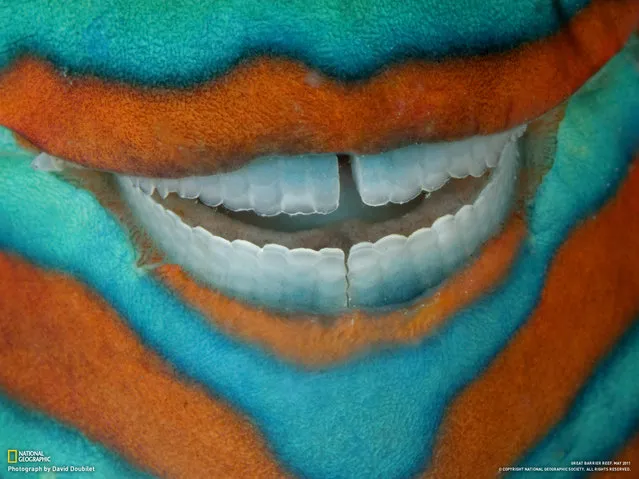
Photographers: David Doubilet

“David Doubilet (born 28 November 1946) is a well known underwater photographer known primarily for his work published in National Geographic Magazine. He was born in New York and started taking photos underwater at the young age of 12. He started with a Brownie Hawkeye in a rubber anesthesiologist's bag to keep the water out of the camera. During his summer holidays, he spent his time along the New Jersey coast. He later worked as a diver and photographer for the Sandy Hook Marine Laboratories in New Jersey. He also spent much time in the Caribbean. While a dive instructor in the Bahamas he found his motivation to capture the beauty of the sea and everything in it”. – Wikipedia. (Photo by David Doubilet/National Geographic)
Details
16 May 2012 12:21:00
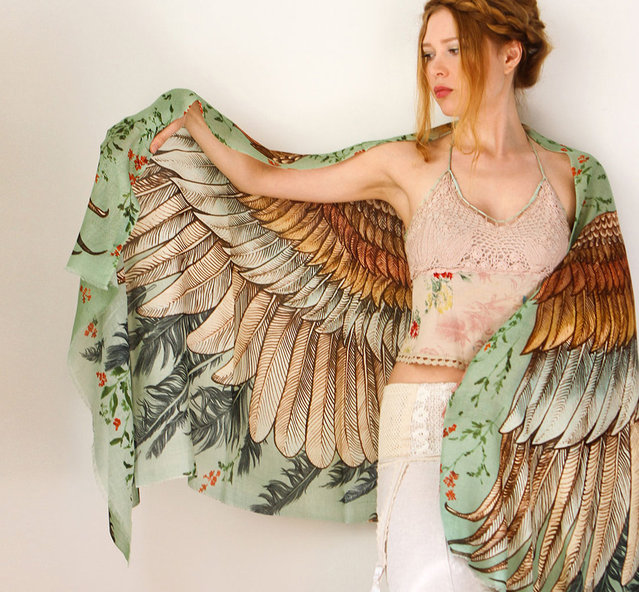
Shovava Wing Scarves By Roza Khamitova

Roza Khamitova was born into a family of artists in Kazakhstan. After finishing design school in Manhattan, New York, she was working in fashion industry for about 8 years. As a visual artist Roza had always drawn most of her inspiration from the natural world around her in the mountains of Kazakhstan. In 2011 she launched Shovava, her personal line of women’s clothing based on her hand drawn paintings and prints of the animals, plants and patterns found in nature. Roza was enchanted by the beauty of wings, its structure and symbolism. First, she sketches big wide-spread wings on paper with a light pencil, adds black ink to create a three-dimensional feel and fills with stunning watercolors.
Details
06 Dec 2015 10:42:00