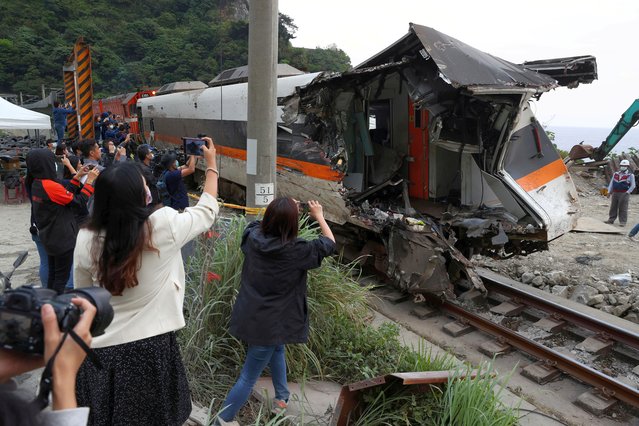
Members of the media document a damaged train carriage extracted from a tunnel after the deadly train derailment north of Hualien, Taiwan on April 6, 2021. (Photo by Ann Wang/Reuters)
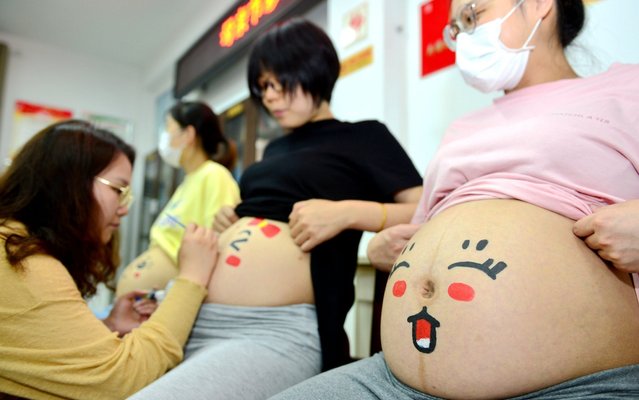
Mothers-to-be show their belly paintings in Hefei, east China's Anhui province on May 8, 2020. (Photo by Rex Features/Shutterstock/China Stringer Network)
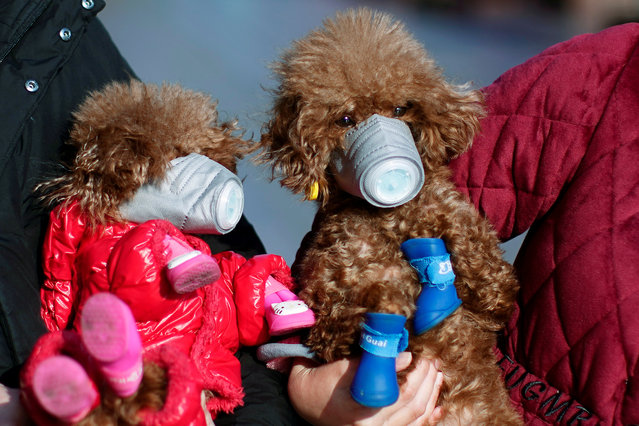
Dogs wearing masks are seen at a main shopping area, in downtown Shanghai, China, as the country is hit by an outbreak of a new coronavirus, February 16, 2020. (Photo by Aly Song/Reuters)
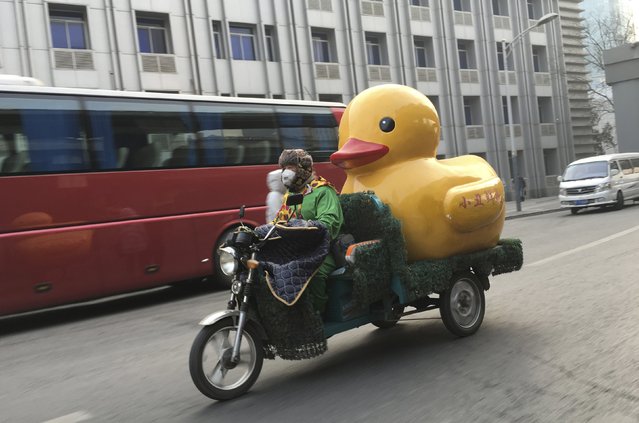
A man wearing a mask and dressed in a clown costume rides an electric tricycle while carrying a container in the shape of a rubber duck amid heavy smog in Beijing, China, December 29, 2015. (Photo by Jason Lee/Reuters)
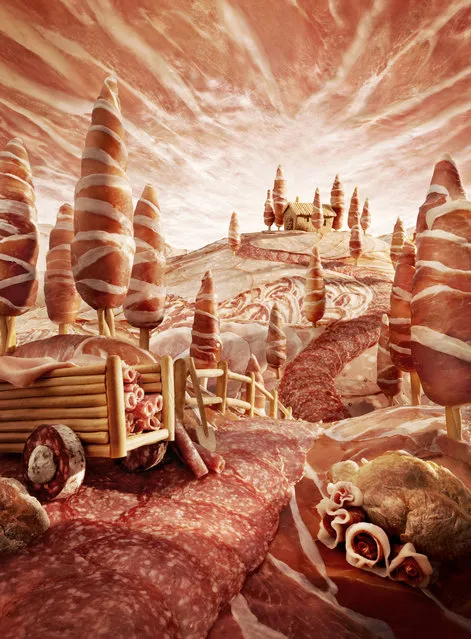
At first glance, you may think you’re just gazing upon serene sunsets, breathtaking landscapes and peaceful coves of distant lands. It’s not until you realise the settings are made entirely from food that you can feast your eyes over the magnificence of Carl Warner’s “foodscapes”. Photo: “Salami Tuscany”. (Photo by Carl Warner)
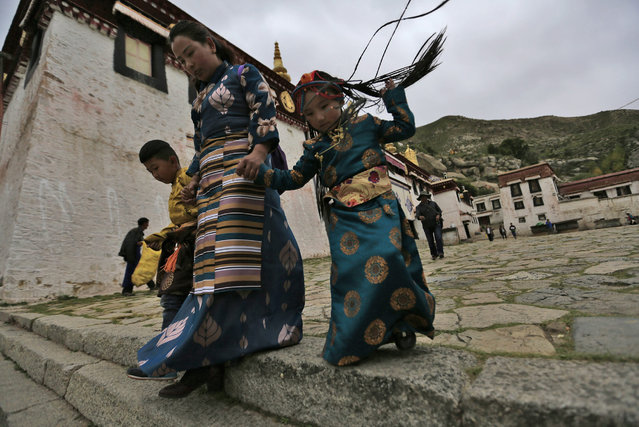
Tibetan pilgrims walk outside the Sera Monastery in Lhasa, Tibet Autonomous Region, China, 11 September 2016. Sera Monastery is known as one of the “great three” Gelug university monasteries of Tibet founded in 1419. (Photo by How Hwee Young/EPA)
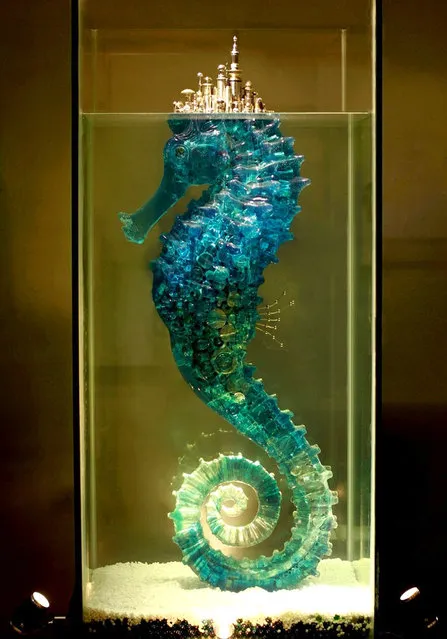
Hu Shaoming is a fantastic artist from China, who has learnt Fine Arts at Guangzhou Academy. The most complex sculpture of all his works is a mechanical seahorse, constructed from many tiny details. The whole composition consists of two complete opposites, including the top part of the seahorse`s head that looks like a golden town, and the bottom which resembles an amazing blue creature. An important problem is reflected in such an idea; it shows how a man forces the nature into submission. The contrast in the opposition of the human buildings and conquered Mother Nature suggests the thought of keeping our natural environment safe.