Loading...
Done
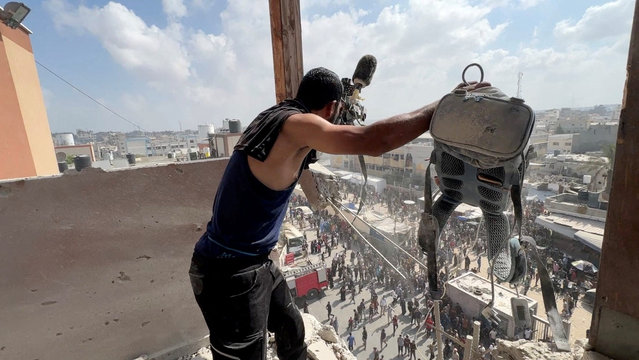
A man reacts as he holds the equipment used by Palestinian cameraman Hussam al-Masri, who was a contractor for Reuters, at the site where he was killed along with other journalists and people in Israeli strikes on Nasser hospital, in Khan Younis in the southern Gaza Strip, in this still image taken from a video shot by Reuters contractor Hatem Khaled, who was wounded shortly afterwards in another strike while he was filming the site on August 25, 2025. (Photo by Hatem Khaled/Reuters)

A man reacts as he holds the equipment used by Palestinian cameraman Hussam al-Masri, who was a contractor for Reuters, at the site where he was killed along with other journalists and people in Israeli strikes on Nasser hospital, in Khan Younis in the southern Gaza Strip, in this still image taken from a video shot by Reuters contractor Hatem Khaled, who was wounded shortly afterwards in another strike while he was filming the site on August 25, 2025. (Photo by Hatem Khaled/Reuters)
Details
19 Sep 2025 02:56:00
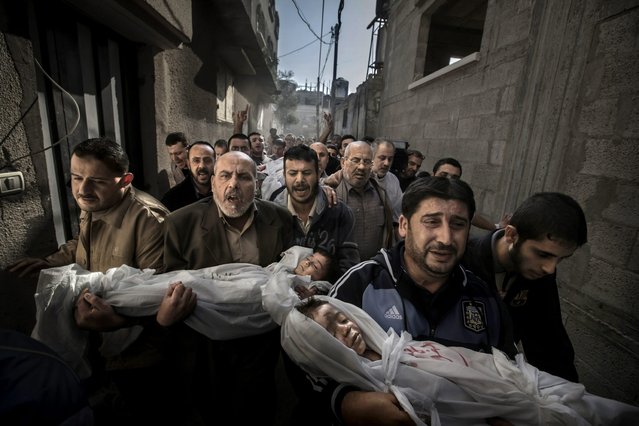
In this photo provided on Friday Feb. 15, 2013 by World Press Photo, the 2013 World Press Photo of the year by Paul Hansen, Sweden, for Dagens Nyheter, shows two-year-old Suhaib Hijazi and her three-year-old brother Muhammad who were killed when their house was destroyed by an Israeli missile strike. (Photo by Paul Hansen/Dagens Nyheter/AP Photo)

Swedish photographer Paul Hansen won the 2012 World Press Photo award Friday for newspaper Dagens Nyheter with a picture of two Palestinian children killed in an Israeli missile strike being carried to their funeral.

Photo: In this photo provided on Friday February 15, 2013 by World Press Photo, the 2013 World Press Photo of the year by Paul Hansen, Sweden, for Dagens Nyheter, shows two-year-old Suhaib Hijazi and her three-year-old brother Muhammad who were killed when their house was destroyed by an Israeli missile strike. Their father, Fouad, was also killed and their mother was put in intensive care. Fouad's brothers carry his children to the mosque for the burial ceremony as his body is carried behind on a stretcher in Gaza City, Palestinian Territories, November 20, 2012. (Photo by Paul Hansen/Dagens Nyheter/AP Photo)
Details
16 Feb 2013 12:17:00
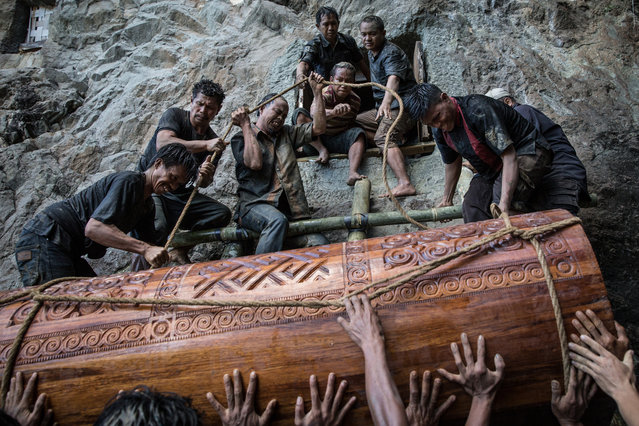
It is said that Torajans are people who “live to die”. For this Indonesian ethnic group, funerals are such extravagant events that they sometimes attract tourists. Families can postpone burials years (and the deceased are considered sick and hosted at home until the funeral) until the family can raise enough money and gather as many relatives as possible. And then it’s a jubilant multiday social event with a parade, dances and animal sacrifices. Agung Parameswara photographed these funerary practices when he traveled to South Sulawesi province, where the Torajans live. But often, their funeral isn’t the last time the dead are seen. In August, crypts are opened, coffins are slid back out and bodies delicately unsheathed. This tender ritual is known as Ma’Nene, which is customarily performed every few years. (Photo by Agung Parameswara/The Washington Post)

It is said that Torajans are people who “live to die”. For this Indonesian ethnic group, funerals are such extravagant events that they sometimes attract tourists. Families can postpone burials years (and the deceased are considered sick and hosted at home until the funeral) until the family can raise enough money and gather as many relatives as possible. And then it’s a jubilant multiday social event with a parade, dances and animal sacrifices. Agung Parameswara photographed these funerary practices when he traveled to South Sulawesi province, where the Torajans live. (Photo by Agung Parameswara/The Washington Post)
Details
06 Oct 2016 09:15:00
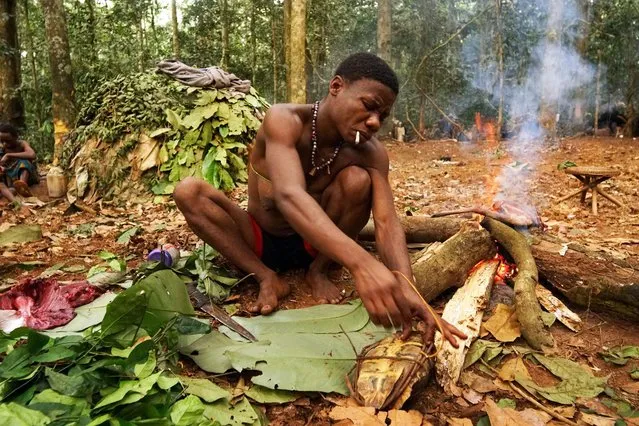
Baka pygmies in their forest home preparing food in, Sangha Forest, Central African Republic, February 2016. (Photo by Susan Schulman/Barcroft Images)

Baka pygmies in their forest home preparing food in, Sangha Forest, Central African Republic, February 2016. Here, in their forest home, traditional life continues in the face of multiplying challenges ranging from poachers, to ill health. Deep in the rainforests of central Africa lives one of the world’s most mysterious tribes. (Photo by Susan Schulman/Barcroft Images)
Details
18 Feb 2017 00:01:00
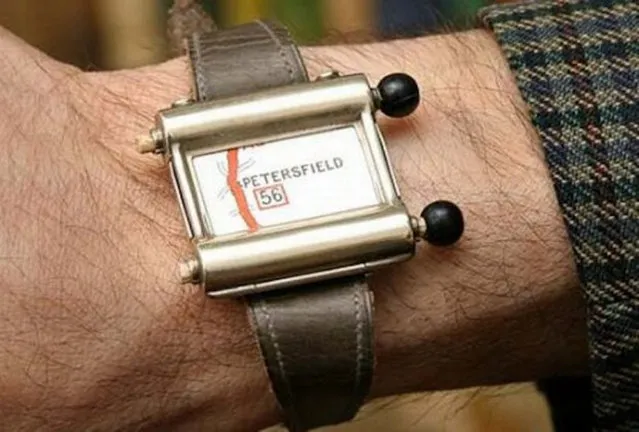
Plus Fours Routefinder - Worlds First Navigation System

Invented in 1920′s this could be world’s first navigation system. No satellites or digital screens were used in the making of this portable navigation system. Called Plus Fours Routefinder, this little invention was designed to be worn on your wrist, and the “maps” were printed on little wooden rollers which you would turn manually as you drove along.
Details
19 Mar 2014 15:14:00
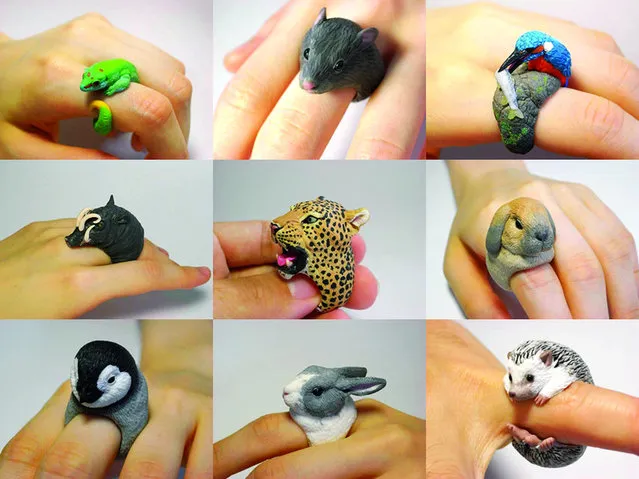
Animal Cling Rings By Jiro Miura

These Animal Cling Rings are by Japanese artist Jiro Miura, working under brand name Count Blue. Miura creates these exquisitely detailed animal rings as well as figurines; his designs have also been used to create mass produced phone plugs and rings. It's a lucky artist who sees his work become so popular.
Details
03 Apr 2014 11:34:00
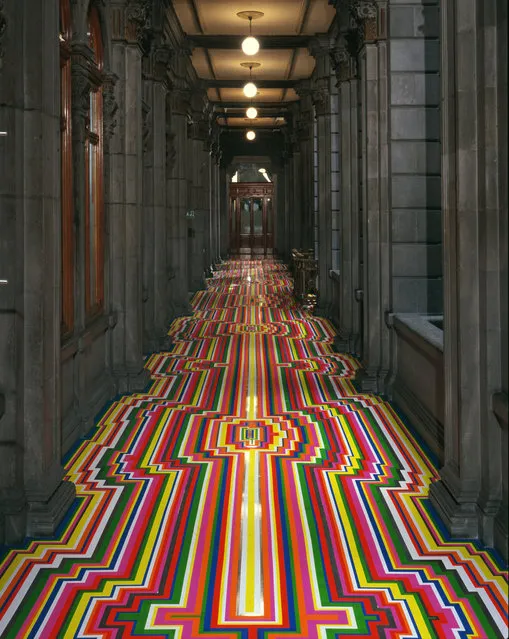
Colorful Strips By Colorful Strips

lasgow-based artist Jim Lambie can transform any space into a visual delight with his geometric tape designs. Using everyday vinyl tape, he creates angles and lines of contrasting colors that suggest movement and optical illusions. He can convert a once empty and quiet room into a space filled with energy. As viewers enter a converted space, they instantly have a visual interaction with the artwork.
Details
08 Apr 2014 14:16:00
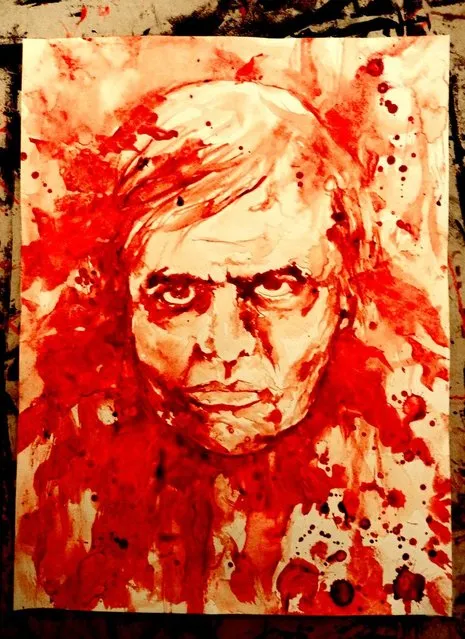
Blood Paintings By Maxime Taccardi

Maxime Taccardi is an artist who is most notable for his unusual method – creating his pieces using his own blood. He studied art in collage, his thesis focusing on the monstrosity and what is considered abnormal by society. Currently he is a middle school art teacher, but plans to continue furthering his creative career. His catalogue of work is varied, including painting, drawing, filmmaking and music.
Details
28 May 2014 09:21:00