Loading...
Done
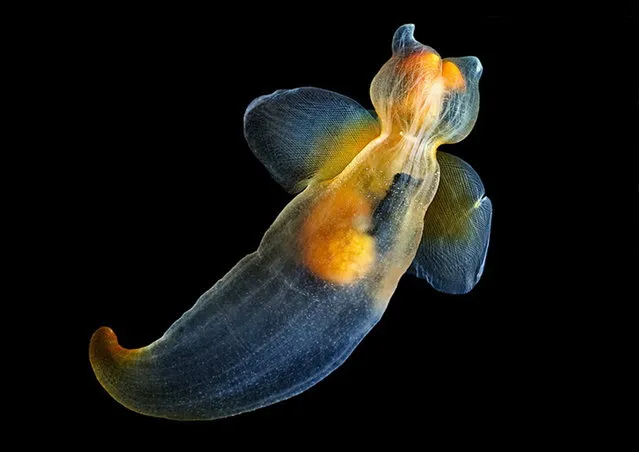
Underwater Photography By Alexander Semenov

In 2007, I graduated from Lomonosov’s Moscow State University in the department of Zoology. I specialized in the study of invertebrate animals, with an emphasis on squid brains. Soon after, I began working at the White Sea Biological Station (WSBS) as a senior laborer. WSBS has a dive station, which is great for all sorts of underwater scientific needs, and after 4 years working there, I became chief of our diving team. I now organize all WSBS underwater projects and dive by myself with a great pleasure and always with a camera.
Details
05 Feb 2013 15:28:00
Taylor's sister, who works in an animal rescue center, found this baby jackdaw who was in need of a little extra love and attention before being released into the wild

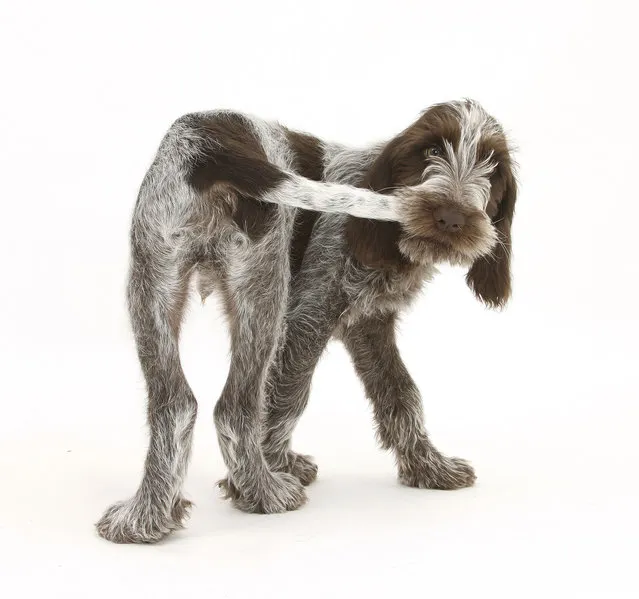
Mark Taylor may not have any training as a photographer, but that doesn’t stop him from taking amazing animal photos. From his studio in Southeast England, Taylor has made a big business out of photographing man’s best friends, following in the footsteps of his late mother, Jane Burton. Most of the animals he works with are babies, who are more comfortable in front of the camera than older animals.

Photo: Taylor often uses animals that belonged to friends of his late mother, including this Italian Spinone puppy chewing his tail. Baby animals make ideal subjects, as the older dogs and cats get, the warier they are of spending time in a studio. And his trick for getting this small subject to pose? Dog treats, of course. (Photo by Mark Taylor/Rex Features)
Details
27 Apr 2012 13:45:00
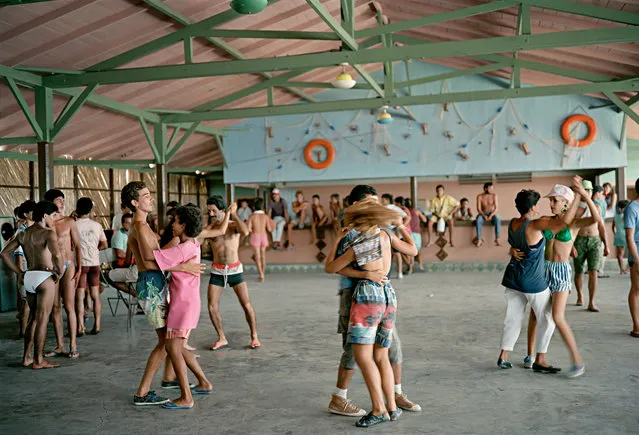
Giovan set out to capture the people’s resilience, during what Fidel Castro, with typical hyperbole, called the “special period”. (Photo by Tria Giovan/The Guardian)

As an American in 1990s Cuba, Tria Giovan risked being branded a traitor. But the photographer continued to visit and, from the dance hall to the hair salon, she captured the resilient spirit of the Cuban people. The 120 images in Tria Giovan’s “The Cuba Archive” are from the period in the 90s when, as an American, travel to Cuba could have seen her branded a traitor, as the country was subject to a US trade embargo. Her trip required lots of planning – and patience. (Photo by Tria Giovan/The Guardian)
Details
21 Sep 2017 09:04:00
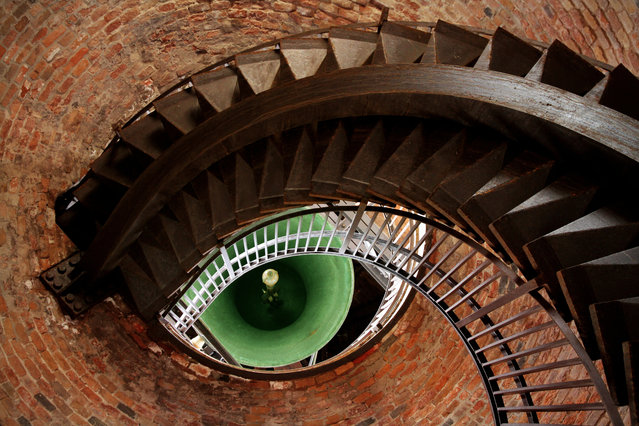
“Eye of the Tower” by Mehmet Yasa; Verona, Italy. “The staircase and the bell looks like an eye. Architecture can fascinate us in many ways”. (Photo by Mehmet Yasa/Art of Building Photography Awards 2017)

“Eye of the Tower” by Mehmet Yasa; Verona, Italy. “The staircase and the bell looks like an eye. Architecture can fascinate us in many ways”. (Photo by Mehmet Yasa/Art of Building Photography Awards 2017)
Details
12 Dec 2017 06:41:00
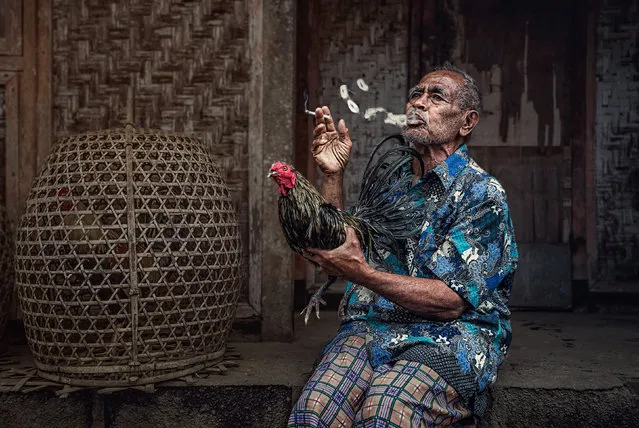
“A Balinese man shows off his pride and joy, a fighting cock, while on a cigarette break after a morning’s work in nearby fields”. (Photo by Coltrane Koh/The Guardian)

“A Balinese man shows off his pride and joy, a fighting cock, while on a cigarette break after a morning’s work in nearby fields”. (Photo by Coltrane Koh/The Guardian)
Details
05 Feb 2018 06:56:00
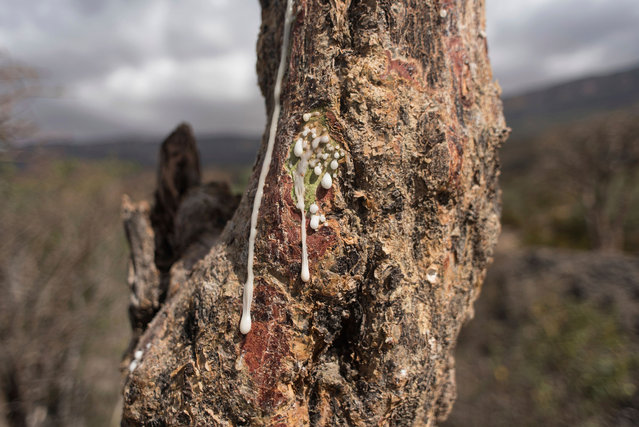
Sap runs out of a frankincense tree near Mader Moge, Somaliland, a breakaway region of Somalia on August 4, 2016. (Photo by Jason Patinkin/AP Photo)

Sap runs out of a frankincense tree near Mader Moge, Somaliland, a breakaway region of Somalia on August 4, 2016In a tradition dating to Biblical times, men rise at dawn in the rugged Cal Madow mountains of Somaliland in the Horn of Africa to scale rocky outcrops in search of the prized sap of wild frankincense trees. (Photo by Jason Patinkin/AP Photo)
Details
27 Dec 2016 08:06:00
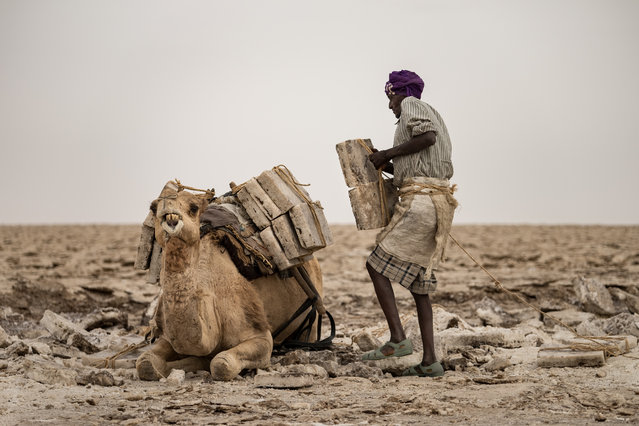
Dromedaries and donkeys are used to transport the salt. (Photo by Joel Santos/Barcroft Images)

Unforgiving temperatures of up to 60℃ (140℉) beat down on these saltminers on a daily basis. The mines, situated in the Afar Triangle in Ethiopia, stretch across 38,000 sq miles and at their lowest point are more than 300ft below sea level. Joel Santos travelled to capture the area’s dry, brutal beauty. Here: Dromedaries and donkeys are used to transport the salt. (Photo by Joel Santos/Barcroft Images)
Details
24 Aug 2016 11:31:00
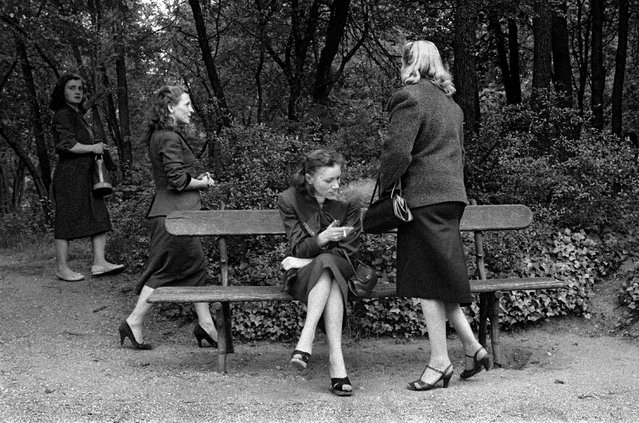
Horvat started out as a photojournalist. Meeting Henri Cartier-Bresson in 1951 proved to be a milestone in his career, leading to a two-year trip to Asia and exhibiting internationally, including in the 1955 show The Family of Man at New York's Museum of Modern Art. Here: Prostitutes, Bois de Boulogne, 1956. (Photo by Frank Horvat/The Guardian)

Born in 1958 in Abbazia, Italy, Frank Horvat is considered one of the founding fathers of French fashion photography. Frank Horvat: Storia di un Fotografo is on at Palazzo Chiablese Musei Reali, Turin, until 16 June. Here: Prostitutes, Bois de Boulogne, 1956. (Photo by Frank Horvat/The Guardian)
Details
01 Jun 2018 00:05:00