Loading...
Done
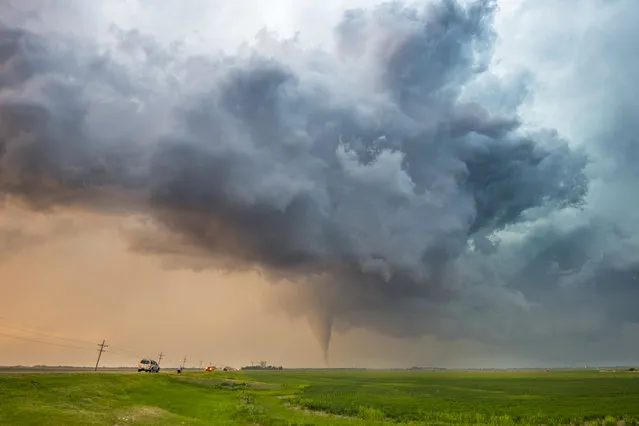
“The Sunsetter”. An EF-4 tornado rips through the open space of farmland near Rozel, Kansas. This tornado moves slowly but powerful towards the setting sun an gets its beautiful color right before sunset. Storm Chasers are spotting on the left side. Photo location: Rozel, Kansas. (Photo and caption by Dennis Oswald/National Geographic Photo Contest)

“The Sunsetter”. An EF-4 tornado rips through the open space of farmland near Rozel, Kansas. This tornado moves slowly but powerful towards the setting sun an gets its beautiful color right before sunset. Storm Chasers are spotting on the left side. Photo location: Rozel, Kansas. (Photo and caption by Dennis Oswald/National Geographic Photo Contest)

ATTENTION! All pictures are presented in high resolution. To see Hi-Res images – just TWICE click on any picture. In other words, click small picture – opens the BIG picture. Click BIG picture – opens VERY BIG picture.
Details
01 Dec 2013 11:03:00
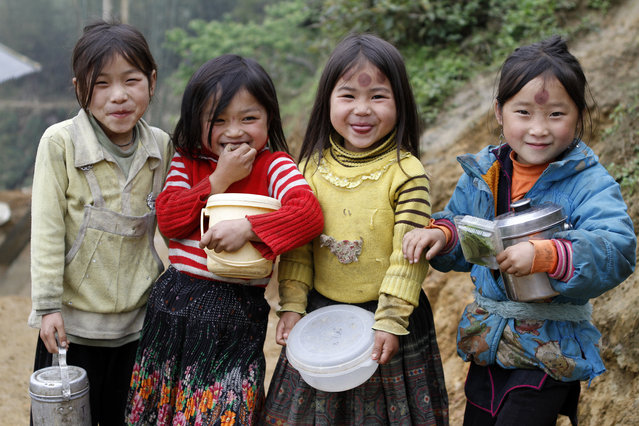
“Kids of Sapa”. Four little beautiful Hmong girls from Lao Chai Village, near Sapa, Vietnam. (Photo and caption by Felipe Hanower/National Geographic Traveler Photo Contest)

“Kids of Sapa”. Four little beautiful Hmong girls from Lao Chai Village, near Sapa, Vietnam. (Photo and caption by Felipe Hanower/National Geographic Traveler Photo Contest)
Details
15 Jul 2013 09:14:00
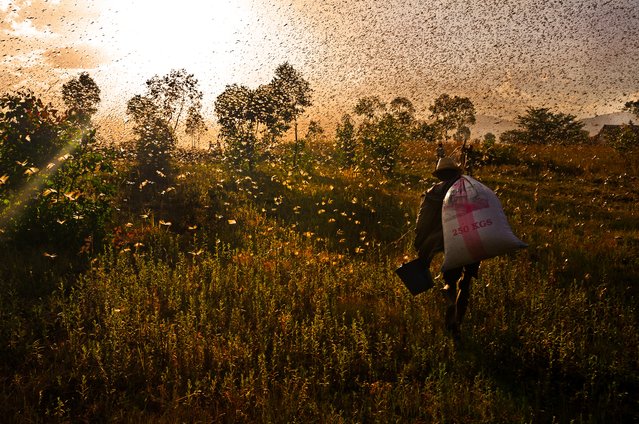
“Locusts & Men”. Oppression, interaction, collaboration. In the life cycle of nature nothing is lost, but the coexistence of different species is sometimes difficult. In Madagascar periodically returns the archaic antagonism between man and the migratory locust, in a circle of life where the two species are looking for space and food for their survival. Photo location: Madagascar, 2013. (Photo and caption by Michele Martinelli/National Geographic Photo Contest)

“Locusts & Men”. Oppression, interaction, collaboration. In the life cycle of nature nothing is lost, but the coexistence of different species is sometimes difficult. In Madagascar periodically returns the archaic antagonism between man and the migratory locust, in a circle of life where the two species are looking for space and food for their survival. At the end of the day a man walks home carrying on his shoulders the heavy bag which contains the locusts captured during the day. The insects provide nutritious meals for the man and his family. Photo location: Madagascar, 2013. (Photo and caption by Michele Martinelli/National Geographic Photo Contest)

ATTENTION! All pictures are presented in high resolution. To see Hi-Res images – just TWICE click on any picture. In other words, click small picture – opens the BIG picture. Click BIG picture – opens VERY BIG picture.
Details
03 Dec 2013 10:59:00
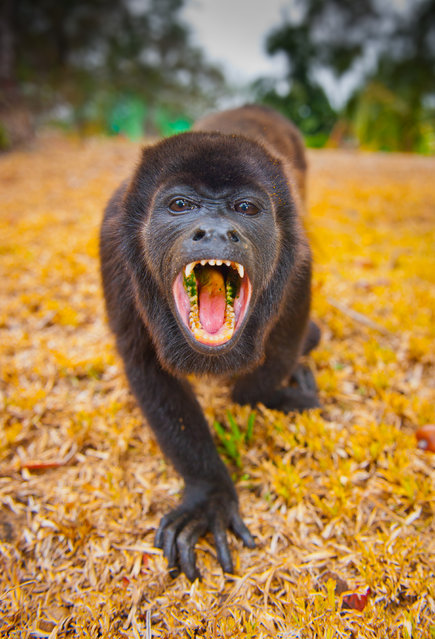
“Attacking Howler Monkey”. Due to a major tropical rainstorm my wife and I were forced to stay overnight in a Howler Monkey Rescue center in Panama. I used the time to explore the area and to take photos of the monkeys. Just after the rain finally stopped, I ran into this monkey that tried to mock attack me. I quickly took a couple of photos before retreating to a (more) safe distance. (Photo and caption by Christian Mueller-Planitz/National Geographic Traveler Photo Contest)

“Attacking Howler Monkey”. Due to a major tropical rainstorm my wife and I were forced to stay overnight in a Howler Monkey Rescue center in Panama. I used the time to explore the area and to take photos of the monkeys. Just after the rain finally stopped, I ran into this monkey that tried to mock attack me. I quickly took a couple of photos before retreating to a (more) safe distance. (Photo and caption by Christian Mueller-Planitz/National Geographic Traveler Photo Contest)

ATTENTION! All pictures are presented in high resolution. To see Hi-Res images – just TWICE click on any picture. In other words, click small picture – opens the BIG picture. Click BIG picture – opens VERY BIG picture.
Details
30 Jun 2013 12:25:00
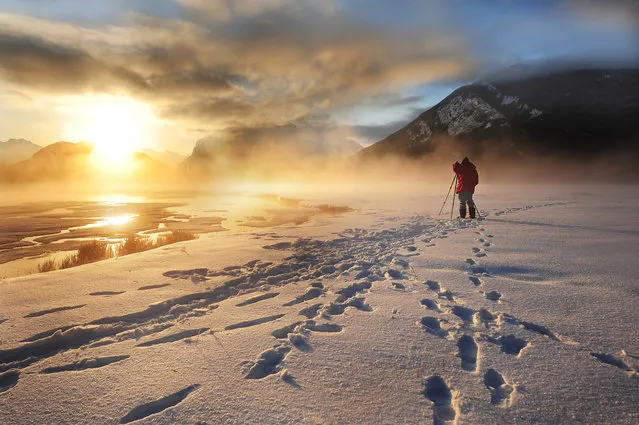
“Artist of the light”. While shooting sunrise in the Vermilion lakes area of Banff national park, Canada, I met a fellow photographer on the scene. Most of the time, we tried not to get in each other's way, however, just by accident, I snapped a picture with him in it working on his tripod settings, and it turned out to be a great photo compared to my sunrise shots. (Photo and caption by Victor Liu/National Geographic Traveler Photo Contest)

“Artist of the light”. While shooting sunrise in the Vermilion lakes area of Banff national park, Canada, I met a fellow photographer on the scene. Most of the time, we tried not to get in each other's way, however, just by accident, I snapped a picture with him in it working on his tripod settings, and it turned out to be a great photo compared to my sunrise shots. (Photo and caption by Victor Liu/National Geographic Traveler Photo Contest)

ATTENTION! All pictures are presented in high resolution. To see Hi-Res images – just TWICE click on any picture. In other words, click small picture – opens the BIG picture. Click BIG picture – opens VERY BIG picture.
Details
27 Jun 2013 13:11:00
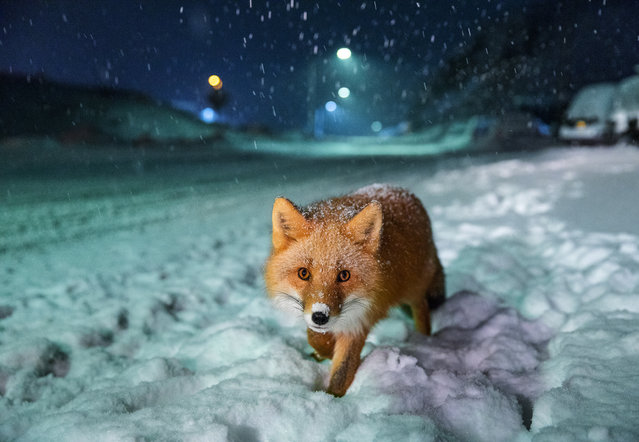
“Roadside Friend”. (Photo by Corey Arnold/Charles A. Harman Fine Art/The Guardian)

Corey Arnold is a fine art photographer and a commercial fisherman, working the stormy waters of the Bering Sea by Alaska. His latest work documents life in this remote wilderness, both at sea and on the shore, capturing trawlers, foxes, eagles and the grandeur of the scenery. “Aleutian Dreams” can be seen at Charles A Hartman Fine Art in Portland, Oregon, until 27 May. Here: “Roadside Friend”. (Photo by Corey Arnold/Charles A. Harman Fine Art/The Guardian)
Details
12 Apr 2017 09:51:00
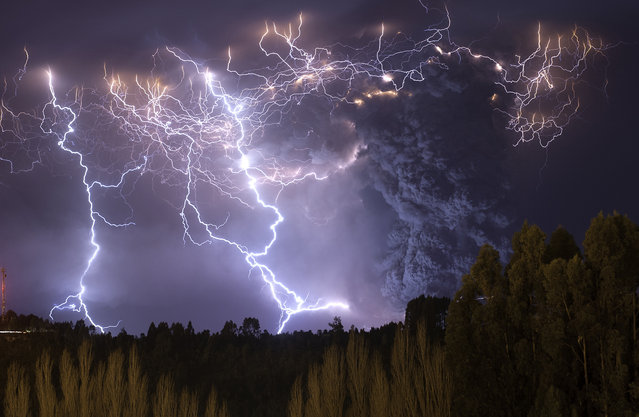
The eruption of Cordon Caulle began on June 4, 2011, located in the Region of Los Rios in Chile. For about 12 months, people and animals became accustomed to living with the daily fall of ash, which also caused problems in the air traffic in South America. The explosions and lightning during first days of the eruption could be seen from hundreds of miles around. This photograph was taken on the second night of eruption from the town of Lago Ranco. (Photo and caption by Francisco Negroni/National Geographic Traveler Photo Contest)

The eruption of Cordon Caulle began on June 4, 2011, located in the Region of Los Rios in Chile. For about 12 months, people and animals became accustomed to living with the daily fall of ash, which also caused problems in the air traffic in South America. The explosions and lightning during first days of the eruption could be seen from hundreds of miles around. This photograph was taken on the second night of eruption from the town of Lago Ranco. (Photo and caption by Francisco Negroni/National Geographic Traveler Photo Contest)

ATTENTION! All pictures are presented in high resolution. To see Hi-Res images – just TWICE click on any picture. In other words, click small picture – opens the BIG picture. Click BIG picture – opens VERY BIG picture.
Details
23 Jun 2013 11:24:00
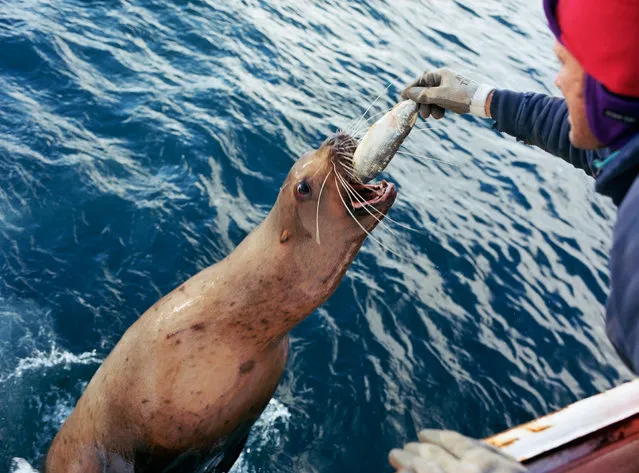
Before heading up to Alaska, the ship loads up with 3 months worth of food. Even so, it's hardly necessary. The ship's cook is constantly steaming fresh crab legs and seafood caught during the day. The hard labour of fishing requires a diet heavy in fat, protein, and omega-3s. Here, a sea lion gets a bite of the grub. (Photo by Corey Arnold)

In 2002 photographer Corey Arnold left behind a poor economy in San Francisco and headed up to Alaska to try his luck at his longtime passion of fishing. Arnold, who had worked summers during college on a salmon boat in Alaska, signed onto the f/v Rollo, a crabbing boat that fishes in the dangerous Bering Sea. While working long, strenuous hours on the Rollo, Arnold often stole away with the captain’s permission to grab his camera and photograph the crew and the ship. Arnold eventually put together “Fish Work: Bering Sea”, a documentation of his seven adventurous and dicey crab seasons aboard the Rollo. (Photo by Corey Arnold)
Details
20 Aug 2014 10:05:00