Loading...
Done
“Two Brothers”. We found about 20 lions eating a buffalo. When the male leaved the group we anticipated him to take photos. It is 8AM, light is perfect and the position too. The lion stops and looks down from the hill, another lion is coming up, it stiffens, I think that will be a fight, i'm tense, the camera is OK, the shots previously made perfect. Photo location: Masai Mara, Kenya. (Photo and caption by Massimo Mei/National Geographic Photo Contest)

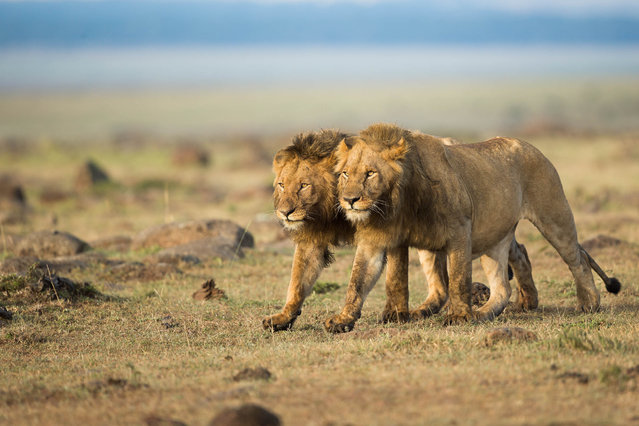
“Two Brothers”. We found about 20 lions eating a buffalo. When the male leaved the group we anticipated him to take photos. It is 8AM, light is perfect and the position too. The lion stops and looks down from the hill, another lion is coming up, it stiffens, I think that will be a fight, i'm tense, the camera is OK, the shots previously made perfect. The two meet, looking directly into their eyes, they sniff, rub against their heads, the tension drops, they start walking with the same step as when they were puppies, they are two brothers. Photo location: Masai Mara, Kenya. (Photo and caption by Massimo Mei/National Geographic Photo Contest)
Details
02 Jul 2014 09:45:00
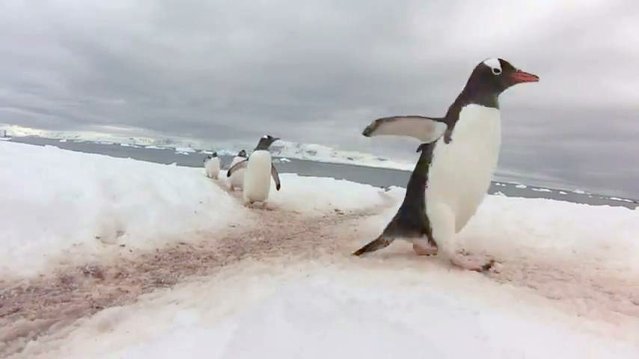
“Penguin Highway” in Antarctica by Melissa Brennan

“Penguin Highway” in Antarctica by Melissa Brennan (Video by Melissa Brennan). Very funny, I recommend to look! =)
Details
13 Feb 2013 18:11:00
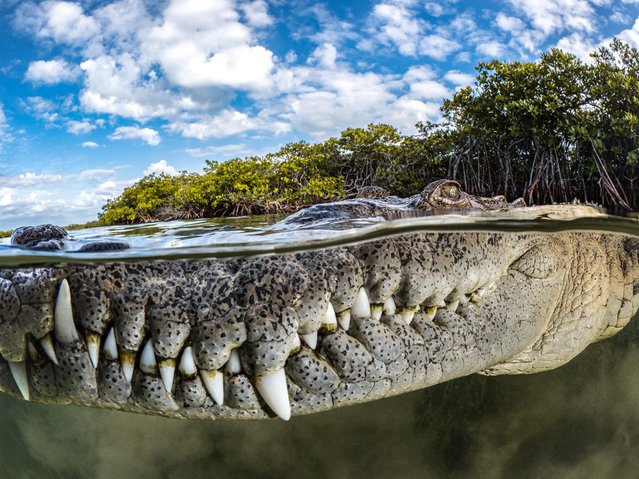
Guardian of the Mangroves – Overall Winner. Tanya Houppermans, Cuba. A curious American crocodile (Crocodylus acutus) swims right up to Tanya, at Gardens of the Queen (Jardines De La Reina), an archipelago off the coast of Cuba. It has been strictly protected since 1996, and is one of the most untouched marine ecosystems in the world. ‍ “The healthy population of American crocodiles is down to the pristine condition of the mangroves and I wanted to capture close ups of this gentle giant in its natural habitat. I hope this image can illustrate that protecting areas like this is so critical”. (Photo by Tanya Griffin Houppermans/Mangrove Photographer of the Year)

Guardian of the Mangroves – Overall Winner. Tanya Houppermans, Cuba. A curious American crocodile (Crocodylus acutus) swims right up to Tanya, at Gardens of the Queen (Jardines De La Reina), an archipelago off the coast of Cuba. It has been strictly protected since 1996, and is one of the most untouched marine ecosystems in the world. ‍ “The healthy population of American crocodiles is down to the pristine condition of the mangroves and I wanted to capture close ups of this gentle giant in its natural habitat. I hope this image can illustrate that protecting areas like this is so critical”. (Photo by Tanya Griffin Houppermans/Mangrove Photographer of the Year)
Details
05 Nov 2022 04:24:00
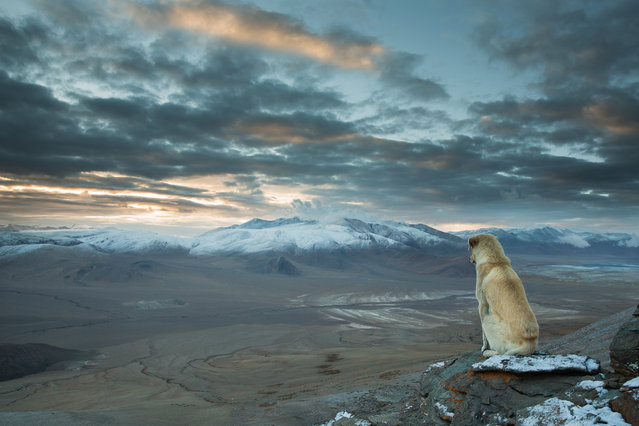
“Himalayan Dog”. This dog just appeared out of nowhere and followed us for an entire week during our trekking trip in the Himalayan outback. He always used to sleep in front of our tent and guarded us in the nights. When I decided to get up at 4 a.m. to climb the next 5000 m peak for sunrise he accompanied me as well. On the top he was sitting for the entire 30 minutes on this place looking straight into the countryside. Photo location: Ladakh, India. (Photo and caption by Sebastian Wahlhuetter/National Geographic Photo Contest)

“Himalayan Dog”. This dog just appeared out of nowhere and followed us for an entire week during our trekking trip in the Himalayan outback. He always used to sleep in front of our tent and guarded us in the nights. When I decided to get up at 4 a.m. to climb the next 5000 m peak for sunrise he accompanied me as well. On the top he was sitting for the entire 30 minutes on this place looking straight into the countryside. Photo location: Ladakh, India. (Photo and caption by Sebastian Wahlhuetter/National Geographic Photo Contest)
Details
01 Apr 2014 10:47:00
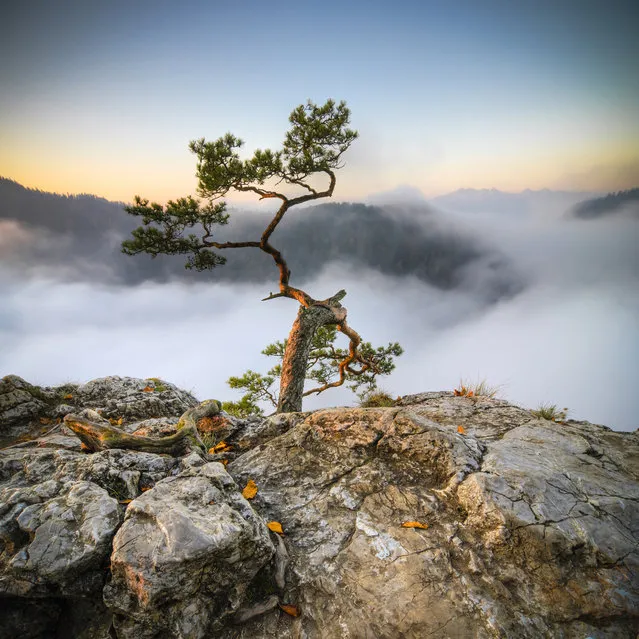
“Sokolica”. Sokolica, Poland. (Photo and caption by Marcin Kęsek/National Geographic Traveler Photo Contest)

“Sokolica”. Sokolica, Poland. (Photo and caption by Marcin Kęsek/National Geographic Traveler Photo Contest)

ATTENTION! All pictures are presented in high resolution. To see Hi-Res images – just TWICE click on any picture. In other words, click small picture – opens the BIG picture. Click BIG picture – opens VERY BIG picture.
Details
25 Jun 2013 09:13:00
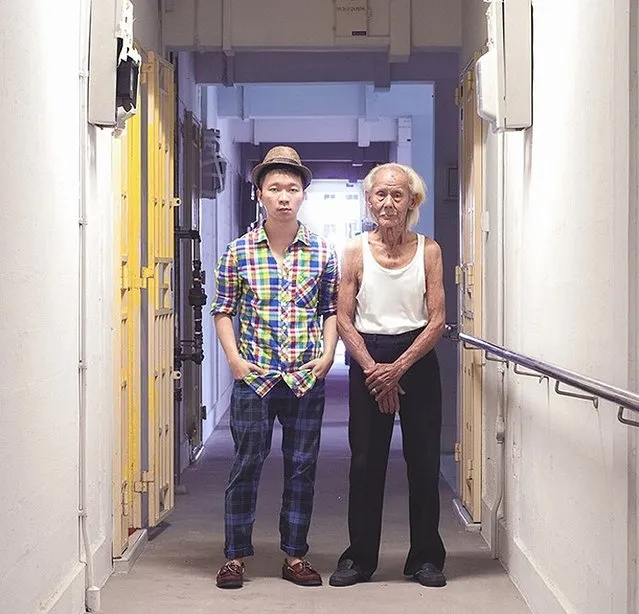
Spring - Autumn By Cue Qozop

People don’t realize how much our exterior can affect our mood. If we make ourselves smile, we might feel a little better, yet if we frown, we soon get the irresistible urge to listen to Blues and weep over the days long gone. The same goes for our clothing. Many people, especially the elderly, tend to dress in the same old rags, without ever feeling the need to change something about their appearance. However, as Cue Qozop clearly demonstrates in his Spring – Autumn photoset, clothes can completely alter the appearance and the mood of the wearer. Elderly people dressed in young people’s clothes look much younger and happier. They look as if they are full of vigor and are about to set out on an amazing adventure.
Details
09 Apr 2015 09:50:00
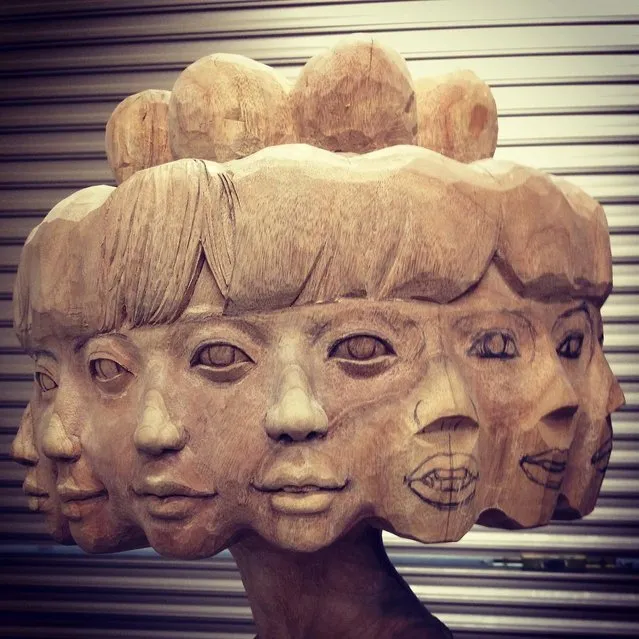
Sculpture By Yoshitoshi Kanemaki

There are many ways to interpret the creations of Yoshitoshi Kanemaki, whose works usually involve sculptures of people where two or more characters have merged into a single being. Possibly, Yoshitoshi Kanemaki is trying to express through his sculptures that everyone’s soul is multifaceted. Good emotions are mixed with the bad, love is mixed with hate, contempt with admiration. How often do you hear that a person loves someone deeply, while doing completely horrendous things, unable to see that he or she is destroying their object of love? Nevertheless, we should be thankful to the nature for all the different emotions that we are able to feel. Unlike animals, who only show simple forms of emotions, such as anger, happiness, and a few others, human soul is much deeper, allowing us to feel a full plethora of emotions. (Photo by Yoshitoshi Kanemaki)
Details
20 Nov 2014 12:26:00
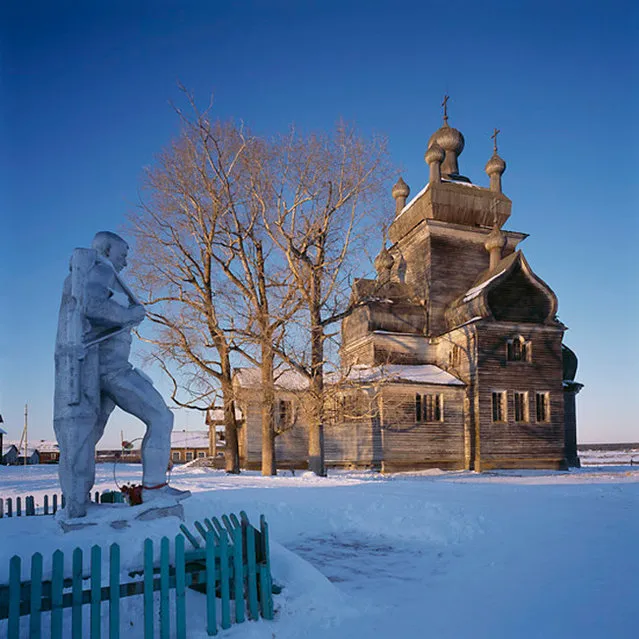
Wooden Churches - Travelling In The Russian North By Richard Davies Part 2

While communism, collectivism, worms, dry rot and casual looting failed to destroy the majestic wooden churches of Russia, it may be ordinary neglect that finally does them in. Dwindled now to several hundred remaining examples, these glories of vernacular architecture lie scattered amid the vastness of the world’s largest country. Just over a decade ago, Richard Davies, a British architectural photographer, struck out on a mission to record the fragile and poetic structures. Austerely beautiful and haunting, “Wooden Churches: Traveling in the Russian North” (White Sea Publishing; $132) is the result. Covering thousands of miles, Mr. Davies described how he and the writer Matilda Moreton tracked down the survivors from among the thousands of onion-domed structures built after Prince Vladimir converted to Christianity in 988.

See also: Wooden Churches Part1
Details
28 Nov 2013 12:13:00