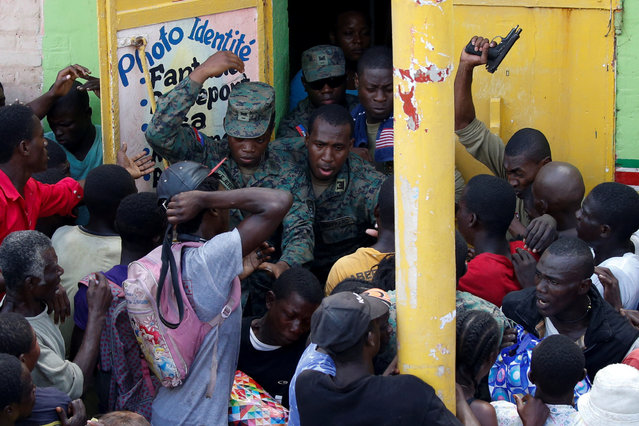
Haitian soldiers shoot in the air to try to control the crowd as they wait for food to be handed out after Hurricane Matthew hit Jeremie, Haiti, October 18, 2016. (Photo by Carlos Garcia Rawlins/Reuters)
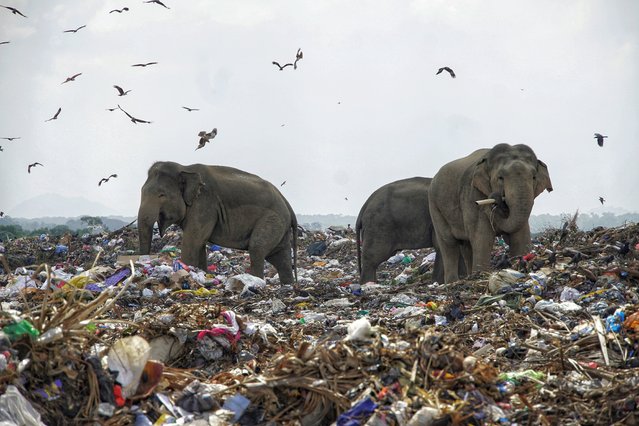
Elephants forage for food at a rubbish dump encroaching on their jungle habitat in Oluvil, Sri Lanka in September 2020. Examination of dead elephants has revealed undigested polythene and other plastic waste. (Photo by Tharmaplan Tilaxan/Cover Images)
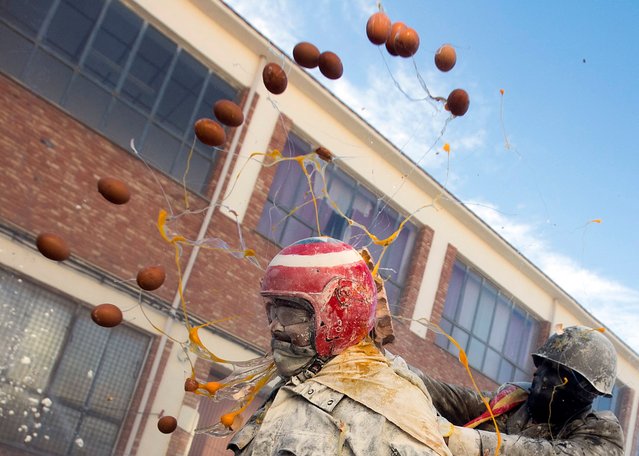
Revellers dressed in mock military garb take part in “Els Enfarinats” food-battle in the southeastern Spanish town of Ibi on December 28, 2022. (Photo by Jaime Reina/AFP Photo)
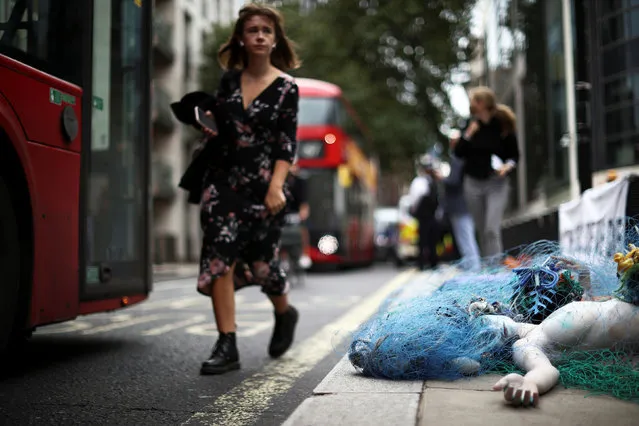
A person walks by an Ocean Rebellion activist taking part in a demonstration outside Department for Environment, Food and Rural Affairs (DEFRA) in London, Britain on September 15, 2021. (Photo by Hannah McKay/Reuters)
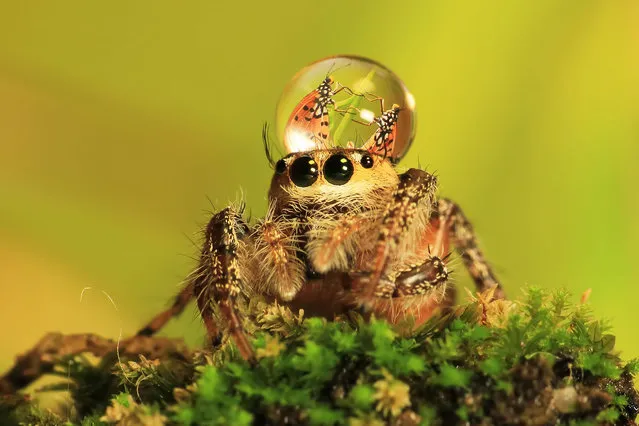
The amazing images, which show the balls of water reflecting an array of colours and even other insects, were snapped by photographer Uda Dennie in his garden. One of the massive droplets even stayed in shape for about a minute before the spider scurried off. Dennie, 33, from Batam Island, Indonesia, said: “I was really surprised to get such amazing pictures – it was really wonderful. I have a real passion for macro photography and after lots of trial and error I'm now able to produce good images – perseverance really paid off”. (Photo by Uda Dennie)
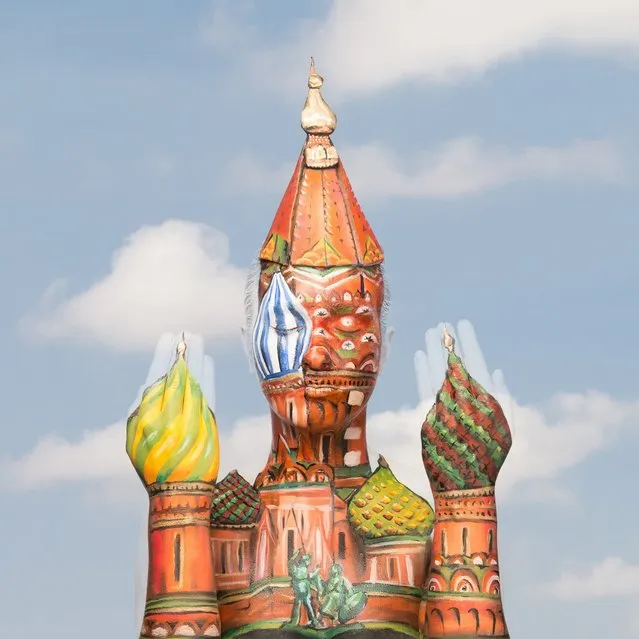
There is something frightening and at the same time appealing in the living sculptures of 27-year-old British artist Emma Fay. Body art in conjunction with the flexibility of acrobats and fantasy of the artist using water-based paints, a brush and sponge, is transformed into a beautiful work of art. It is not immediately possible to make out the human body in the picture. First you look at the landscape and suddenly begin to distinguish someone’s arm, or neck. Or you look into the eyes of an amazing bull, and it turns out that it is perfectly folded back. Lovely people, temples are and wonderful people-insects are.
The color, texture and shape of food has inspired a collection of artists and fashion designers to create clothing inspired by culinary creations. Hunger Pains Food Fashion is a project photographed by Ted Sabarese and created by a team of 15 designers led by Ami Goodheart. Two Project Runway alums, Daniel Feld and Wesley Nault, wove the artichoke dress shown above. The model stood for six hours while the duo crafted the dress leaf by leaf before the first photograph was taken.
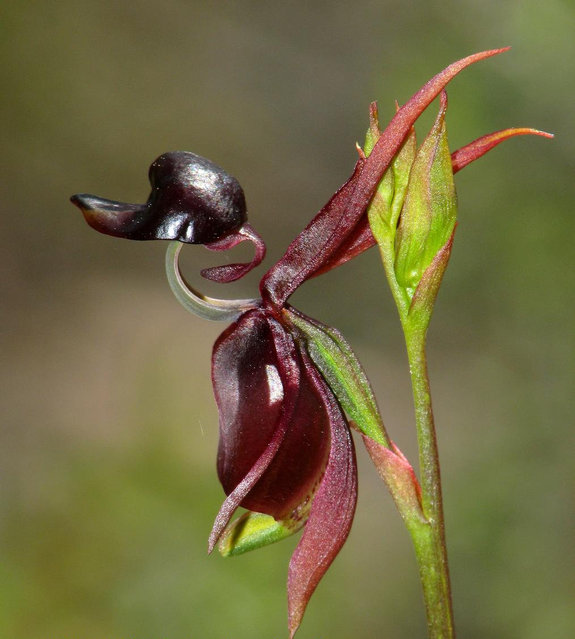
Caleana major, the Flying Duck Orchid is a small orchid found in eastern and southern Australia. This terrestrial plant features a remarkable flower, resembling a duck in flight. The flower is an attractant to insects, such as male sawflies which pollinate the flower in a process known as pseudocopulation. In 1986 this orchid was featured on an Australian postage stamp.