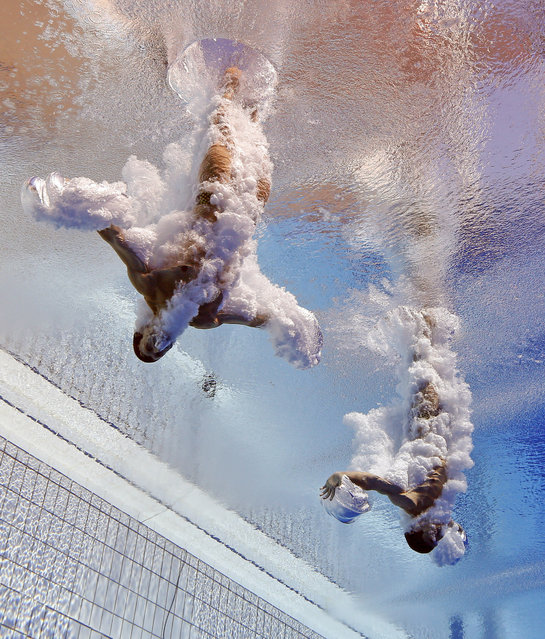
Patrick Hausding and Stephan Feck of Germany compete in the men's 3-meter synchro springboard preliminary competition at the FINA Swimming World Championships in Barcelona, Spain, Tuesday, July 23, 2013. (Photo by David J. Phillip/AP Photo)
“One talented photographer has managed to capture these jaw-dropping images that show off the beauty of the surf and the art hidden in the waves. Kenji Croman has a deep passion for bodyboarding and photography and was inspired to combine the two after growing up in Hawaii”. – Caters News. (Photo by Kenji Croman/Caters News)
Ngorongoro Crater (Tanzania). At 610m deep and 260 sq km, this is the largest unflooded caldera in the world. A blue-green vision from above it's a haven for engangered wildlife and Maasai livestock. The crater was formed three million years ago when a giant volcano, which could have been as high as Kilimanjaro, exploded and collapsed. The caldera formed the concentric fractures in the crust cracked down to a magma reservoir deep underground. (Photo by John Bryant/Getty Images)
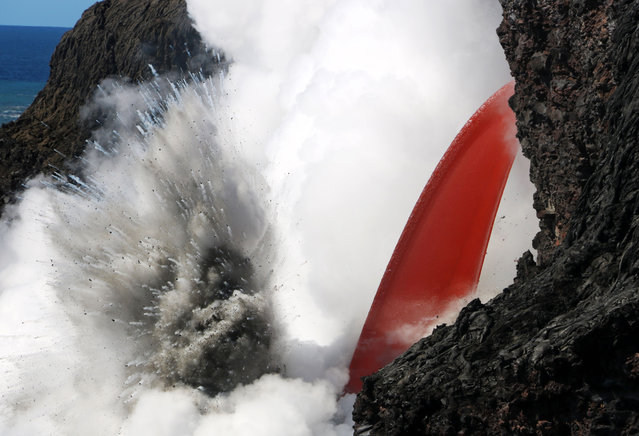
This image obtained January 31, 2017 from the US Geological Survey's Hawaiian Volcano Observatory showing a lava stream, pouring out of the lava tube on the sea cliff at the Kamokuna ocean entry from the Kilauea Volcano on January 29. (Photo by AFP Photo/USGS)
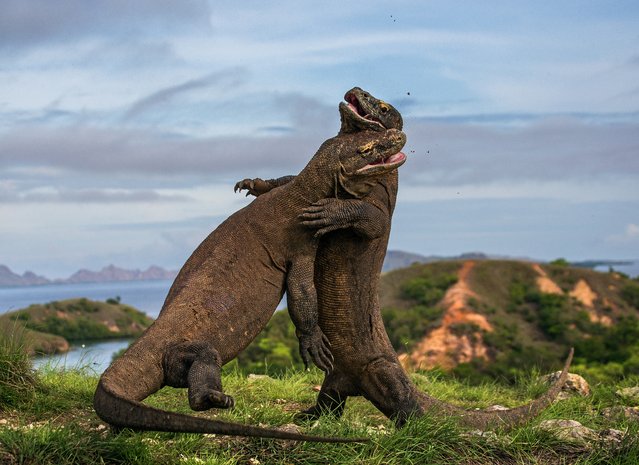
Komodo Judo by Andrey Gudkov. Finalist, Amphibians & Reptiles. Two large male Komodo dragons hissing angrily at each other in Indonesia’s Komodo national park. Komodo dragons can grow up to 8ft. (Photo by Andrey Gudkov/Wildlife Photographer of the Year 2015)
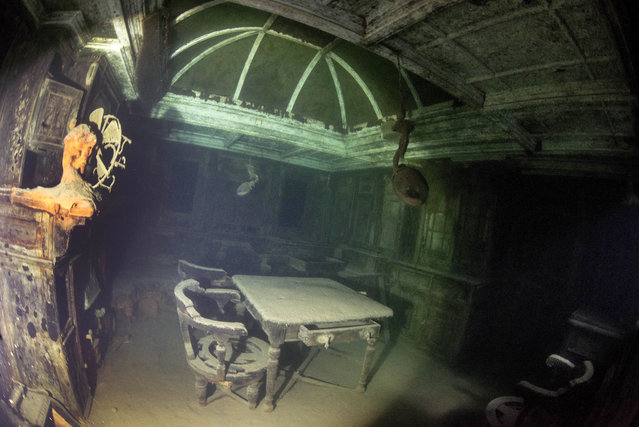
These stunning images reveal the remains of a more than century-old sunken ship that has been preserved beneath freezing Lake Superior. The ship looks almost exactly the same as it did the day it sunk beneath waves all those years ago. At 60 meters long (approximately 198 feet), the «Gunilda» sunk after it struck some rocks and was not saved. Now, these stunning images have been captured 107 years after the sinking when a small group of divers revisited the vessel. (Photo by Becky Kagan Schott/Caters News Agency)
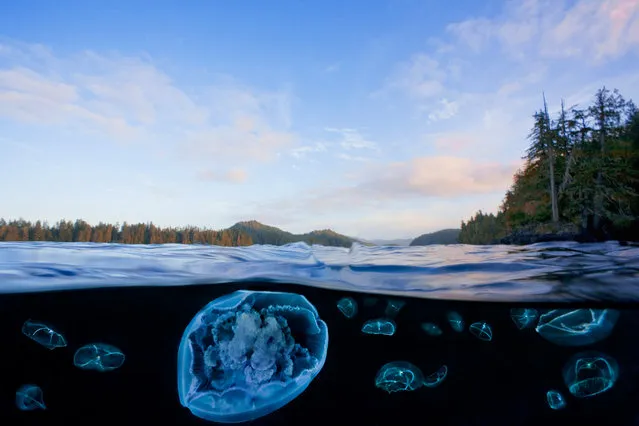
David Hall’s photographs of scenery and creatures off the coast of Canada in the Pacific Northwest portray serenity under the water, which belie the extreme challenges he faces to get his images. For each shoot, Hall wears a dry suit, a neoprene body suit that covers all of his body but his head and traps air inside to keep him warm. Water temperature in Canada’s British Columbia typically ranges between 45 and 50 degrees Fahrenheit. Photo: Moon jellyfish and cross jellies. (Photo by David Hall)