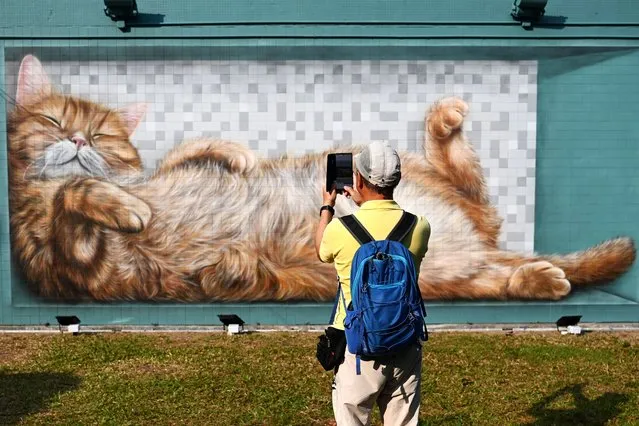
A mural depicting a resting cat by Russian street artist Vladi is photographed by a man outside a hotel in Hong Kong on November 27, 2023. (Photo by Peter Parks/AFP Photo)
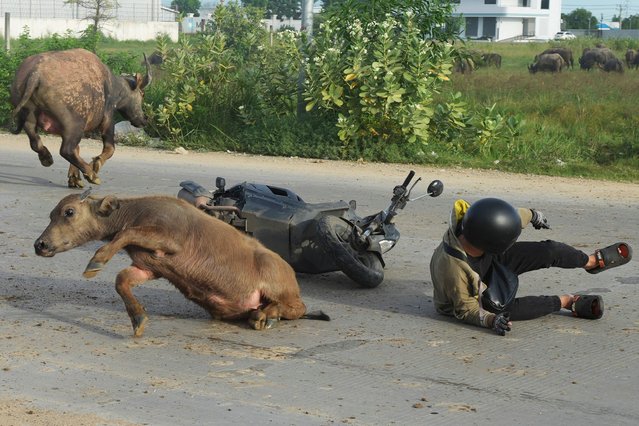
A man falls from his motorcycle after hitting a water buffalo on his way to work outside Phnom Penh, Cambodia, Friday, September 6, 2024. Cambodian animal owners have been warned to keep their animals, which often cause traffic accidents, leashed and could face prison time if relatives of those who die or are injured in such accidents initiate legal proceedings. (Photo by Heng Sinith/AP Photo)
Axed Love Island stars Alima, Emily and Megan all went braless in very daring outfits last night, after appearing on Aftersun in London on July 21, 2025. (Photo by James Curley/The Sun)
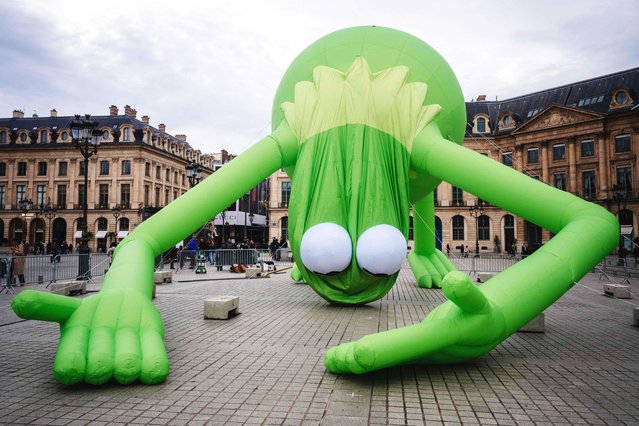
This photograph shows installing of the artwork of Venezuelan-US artist Alex Da Corte titled “Kermit the Frog, Even” at Place Vendome in Paris, on October 19, 2025, ahead of the official opening of the Art Basel contemporary and modern art market. (Photo by Dimitar Photo)
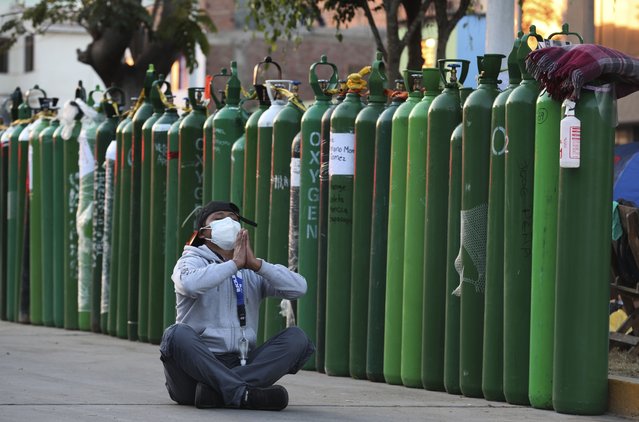
Alejandro Ccasa prays after waiting three days next to an empty oxygen tank for his uncle who has COVID-19 outside a refill shop where he is the first in line before it opens in Callao, Peru, early Tuesday, February 2, 2021. Ccasa said his family has one large tank and it gives about four hours of oxygen therapy. (Photo by Martin Mejia/AP Photo)
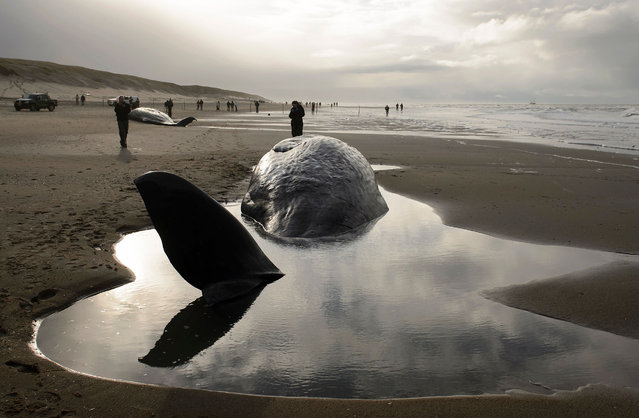
People stand near beached sperm whales on January 13, 2016, after they became stranded on the Dutch island of Texel the day before. Five sperm whales which became stranded on Texel have died, officials said January 13. Experts said the beached whales had already been badly injured and their chances of survival were poor. Volunteers tried to save them but called off their efforts late in the night because of bad weather and darkness, ANP news agency said. (Photo by Remko de Waal/AFP Photo/ANP)
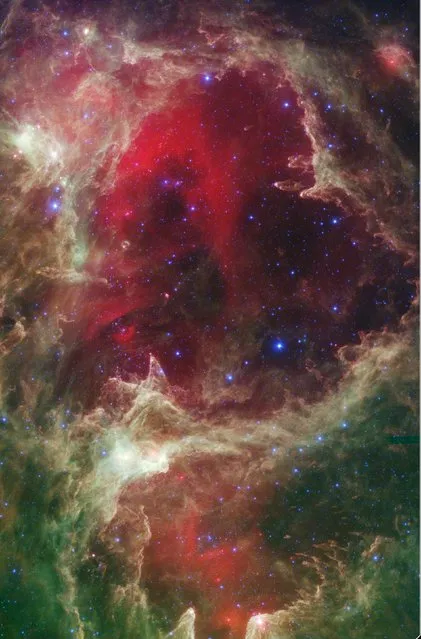
An infrared portrait from NASA's Spitzer Space Telescope which shows generations of stars is seen in this undated NASA handout image released February 14, 2013. In this wispy star-forming region, called W5, the oldest stars can be seen as blue dots in the centers of the two hollow cavities (other blue dots are background and foreground stars not associated with the region). Red shows heated dust that pervades the region's cavities, while green highlights dense clouds. (Photo by NASA/Reuters/JPL-Caltech/Harvard-Smithsonian/Handout)