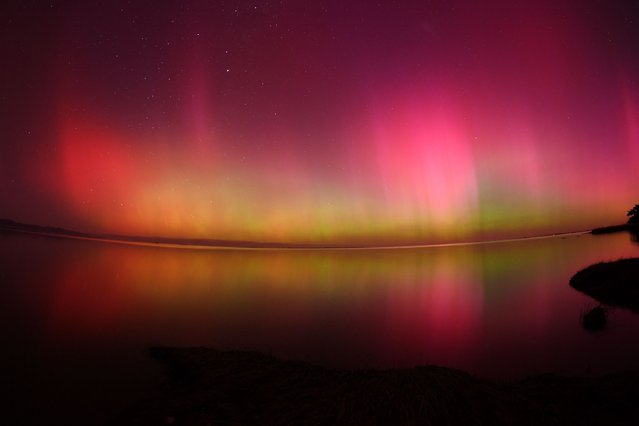
The Aurora Australis, also known as the Southern Lights, glow on the horizon over waters of Lake Ellesmere on the outskirts of Christchurch on May 11, 2024. (Photo by Sanka Vidanagama/AFP Photo)
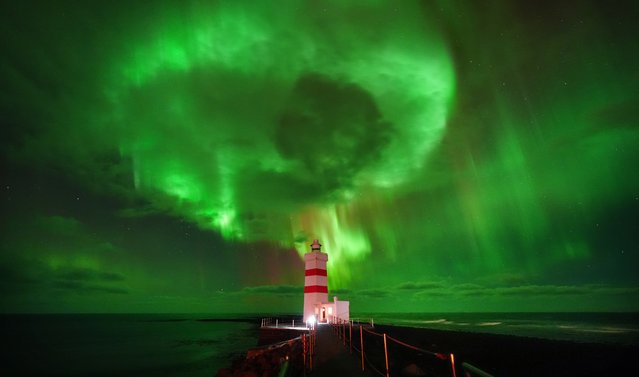
The aurora borealis, also known as the northern lights, visible above Old Gardur Lighthouse on the northern point of the Reykjanes peninsula in Iceland on Sunday, November 24, 2024. The lighthouse dates to 1897, and was one of the first built in Iceland. (Photo by Owen Humphreys/PA Images via Getty Images)
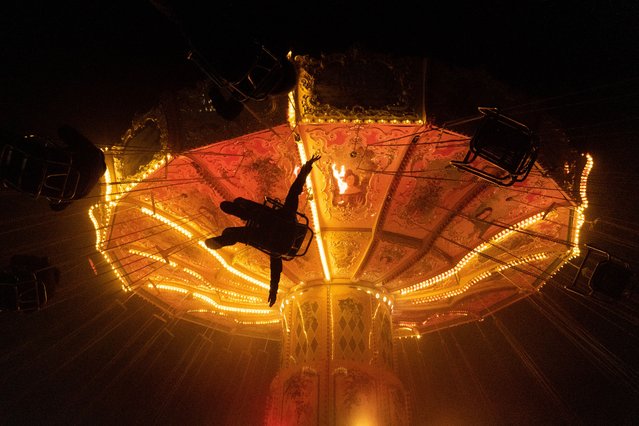
Visitors ride a swing attraction during the Hochheim Market in Hochheim, Germany on November 11, 2025. The traditional autumn fair has been held for more than 500 years. (Photo by Matias Basualdo/ZUMA Press Wire/Rex Features/Shutterstock)
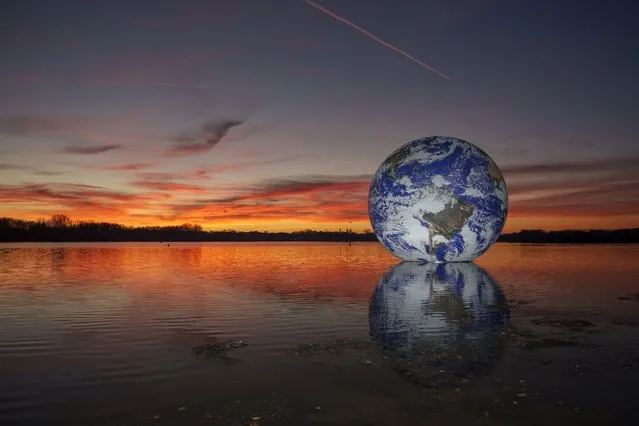
The sun sets behind artist Luke Jerram's “Floating Earth” at Pennington Flash on November 22, 2021 in Wigan, England. The floating Earth will hover over Pennington Flash for 10 days from November 19, as part of a celebration of Wigan and Leigh's watercourses and is the first time one of Jerram's globes has been floated on an open expanse of water. (Photo by Christopher Furlong/Getty Images)
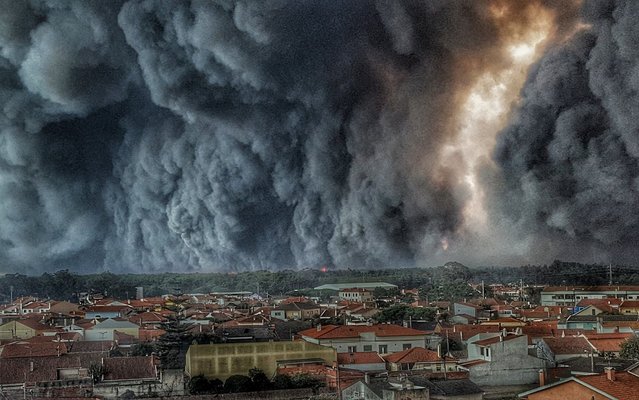
Fire over Vieira de Leiria, Portugal, on October 16, 2017 as a series of deadly wildfires broke out across Spain and Portugal as the approach of Hurricane Ophelia whipped up strong winds that fanned the flames. (Photo by Helio Madeiras/News Pictures)
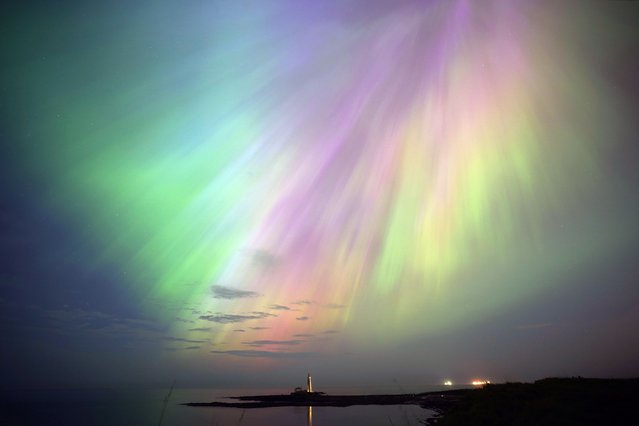
The aurora borealis, also known as the northern lights, glow in the sky over St Mary's Lighthouse in Whitley Bay on the North East coast, UK on Friday, May 10, 2024. (Photo by Owen Humphreys/PA Images via Getty Images)