Loading...
Done
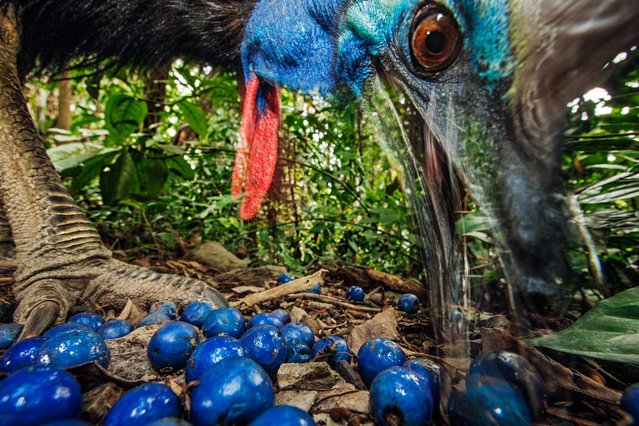
“Cassowaries are large, flightless birds related to emus and (more distantly) to ostriches, rheas, and kiwis”, writes Olivia Judson in the September issue of National Geographic magazine. (Photo by Christian Ziegler/National Geographic)

“Cassowaries are large, flightless birds related to emus and (more distantly) to ostriches, rheas, and kiwis”, writes Olivia Judson in the September issue of National Geographic magazine. How large? People-size: Adult males stand well over five foot five and top 110 pounds. Females are even taller, and can weigh more than 160 pounds. Dangerous when roused, they’re shy and peaceable when left alone. But even birds this big and tough are prey to habitat loss. The dense New Guinea and Australia rain forests where they live have dwindled. Today cassowaries might number 1,500 to 2,000. And because they help shape those same forests – by moving seeds from one place to another – “if they vanish”, Judson writes, “the structure of the forest would gradually change” too. (Photo by Christian Ziegler/National Geographic)
Details
06 Jan 2014 12:21:00
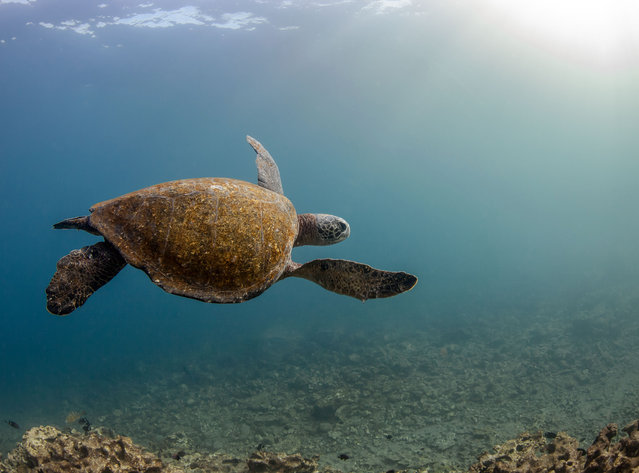
Green turtles take special care of their carapace, scraping algae off on rocks or letting cleaner fish remove parasites. Thanks to long-term protection of nesting sites, and measures to reduce the numbers caught in fishing gear, some green turtle populations are starting to recover. (Photo by Philip Hamilton/The Guardian)

Teeming with images of spectacular underwater scenes from around the world, Call of the Blue is the culmination of a five-year project by the photographer and ocean conservationist Philip Hamilton. This groundbreaking book includes contributions from acclaimed scientists and ocean “guardians”, who reveal what drove them to answer the call of the blue. (Photo by Philip Hamilton/The Guardian)
Details
23 Nov 2018 00:03:00
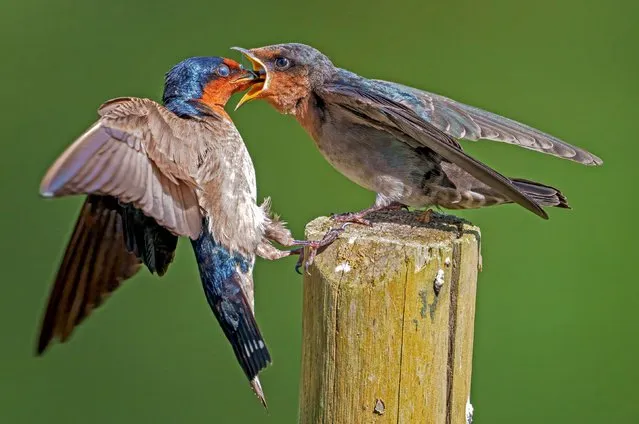
A bird swoops in to deliver its food to its chick, ramming it deep into its mouth while in flight. The photos of the swallows were captured by Kelvin Leong in Hampstead Wetlands Park, Singapore in July 2023. (Photo by Kelvin Leong/Solent News & Photo Agency)

A bird swoops in to deliver its food to its chick, ramming it deep into its mouth while in flight. The photos of the swallows were captured by Kelvin Leong in Hampstead Wetlands Park, Singapore in July 2023. (Photo by Kelvin Leong/Solent News & Photo Agency)
Details
20 Aug 2023 03:27:00
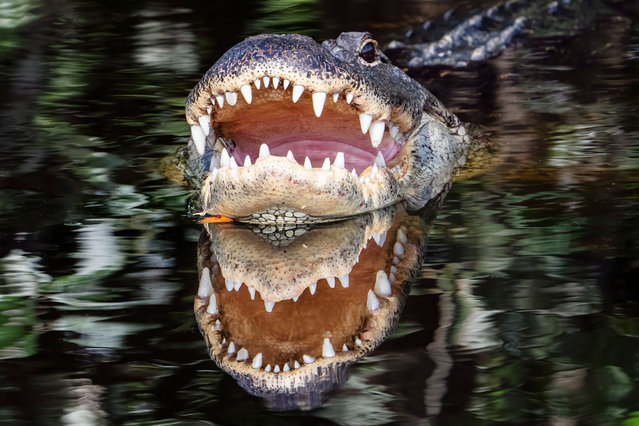
An alligator and his reflection seen in the Wakodahatchee Wetlands in Delray Beach, Florida on May 2, 2024. The wetlands attract nature lovers and wildlife photographers and are home to more than 140 bird species and a variety of other wildlife. (Photo by Ronen Tivony/ZUMA Press Wire/Rex Features/Shutterstock)

An alligator and his reflection seen in the Wakodahatchee Wetlands in Delray Beach, Florida on May 2, 2024. The wetlands attract nature lovers and wildlife photographers and are home to more than 140 bird species and a variety of other wildlife. (Photo by Ronen Tivony/ZUMA Press Wire/Rex Features/Shutterstock)
Details
19 May 2024 05:12:00
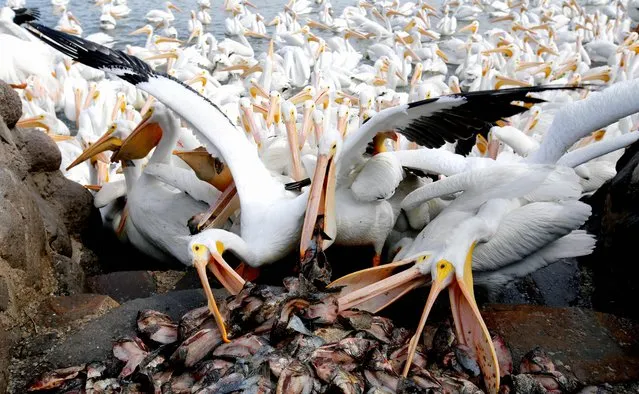
A pod of white pelicans, one of the largest birds in Canada and the US, are seen on the shore of the Chapala lagoon in Cojumatlan de Regules, Mexico, on January 28, 2022. White pelicans travel thousands of kilometers migrating from the cold temperatures of North America. (Photo by Ulises Ruiz/AFP Photo)

A pod of white pelicans, one of the largest birds in Canada and the US, are seen on the shore of the Chapala lagoon in Cojumatlan de Regules, Mexico, on January 28, 2022. White pelicans travel thousands of kilometers migrating from the cold temperatures of North America. (Photo by Ulises Ruiz/AFP Photo)
Details
06 Feb 2022 06:20:00
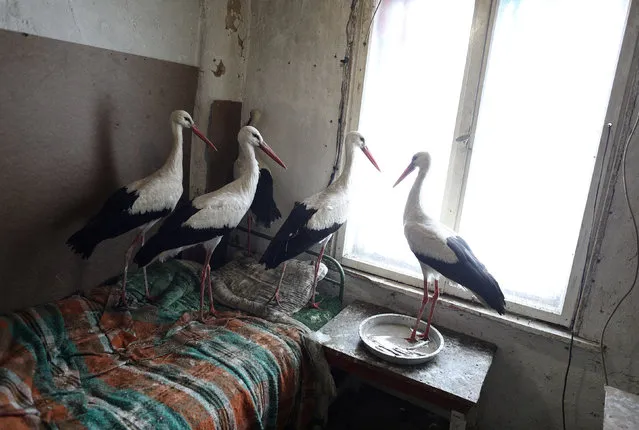
Storks that were saved by Bulgarian farmer Safet Ismail are pictured in the village of Zaritsa, Bulgaria, March 21, 2018. Dozens of people from villages in north-eastern Bulgaria took storks to their houses as a lot of the birds got injured due to freezing temperatures and snowfalls in the area over the last few days. (Photo by Stoyan Nenov/Reuters)

Storks that were saved by Bulgarian farmer Safet Ismail are pictured in the village of Zaritsa, Bulgaria, March 21, 2018. Dozens of people from villages in north-eastern Bulgaria took storks to their houses as a lot of the birds got injured due to freezing temperatures and snowfalls in the area over the last few days. (Photo by Stoyan Nenov/Reuters)
Details
22 Mar 2018 08:26:00
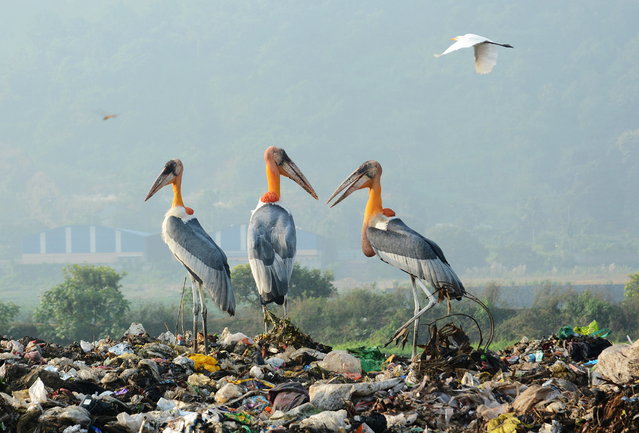
A flock of Adjutants storks sit on a garbage dump at Borgaon in Guwahati, Assam, India, 17 October 2019. Wildlife activists and environmentalists have protested in the past for shifting the garbage dump to another site since it is situated near the Deepor Beel Bird Sanctuary. (Photo by EPA/EFE/Stringer)

A flock of Adjutants storks sit on a garbage dump at Borgaon in Guwahati, Assam, India, 17 October 2019. Wildlife activists and environmentalists have protested in the past for shifting the garbage dump to another site since it is situated near the Deepor Beel Bird Sanctuary. (Photo by EPA/EFE/Stringer)
Details
20 Oct 2019 00:03:00
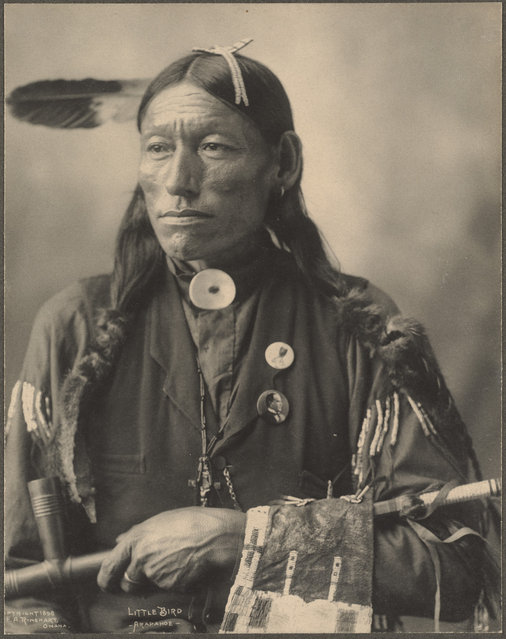
Little Bird, Arapahoe, 1899. (Photo by Frank A. Rinehart)

Frank A. Rinehart, a commercial photographer in Omaha, Nebraska, was commissioned to photograph the 1898 Indian Congress, part of the Trans-Mississippi International Exposition. More than five hundred Native Americans from thirty-five tribes attended the conference, providing the gifted photographer and artist an opportunity to create a stunning visual document of Native American life and culture at the dawn of the 20th century. Photo: Little Bird, Arapahoe, 1899. (Photo by Frank A. Rinehart)
Details
25 Apr 2013 11:30:00