Loading...
Done
Residents observe a police officer take up position during an operation at the Mare slums complex in Rio de Janeiro March 25, 2014. (Photo by Ricardo Moraes/Reuters)

Residents observe a police officer take up position during an operation at the Mare slums complex in Rio de Janeiro March 25, 2014. The federal troops have taken control of security operations in Mare slums complex to help quell a surge in violent crime following attacks by drug traffickers on police posts in three slums on the north side of the city, government officials said. (Photo by Ricardo Moraes/Reuters)
Details
09 Apr 2014 09:22:00
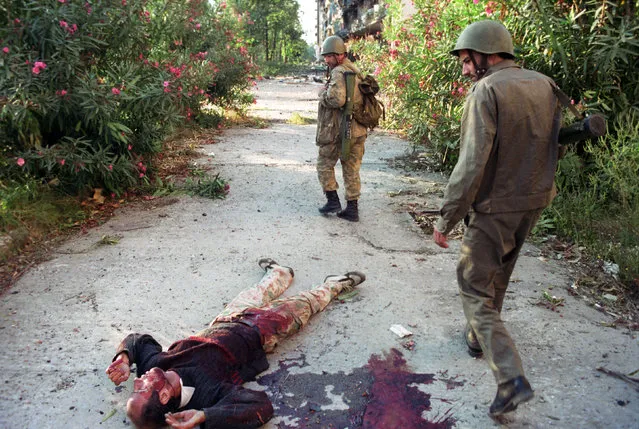
Abkhazia. Sukhumi, 1993. A house-to-house combat. (Photo by Andrei Solovyov/ITAR-TASS)

The War in Abkhazia from 1992 to 1993 was fought between Georgian government forces for the most part, and Abkhaz separatist forces, Russian armed forces and North Caucasian militants. Ethnic Georgians who lived in Abkhazia fought largely on the side of Georgian government forces. Ethnic Armenians and Russians within Abkhazia's population largely supported the Abkhazians, and many fought on their side. The separatists received support from thousands of North Caucasus and Cossack militants and from the Russian Federation forces stationed in and near Abkhazia. Here: Abkhazia. Sukhumi, 1993. A house-to-house combat. (Photo by Andrei Solovyov/ITAR-TASS)
Details
29 Sep 2017 07:31:00
Magical Contamination By Antoine Bridier-Nahmias

Modern art is truly fascinating. Not in a way that it produces some novel things that will fascinate future generations for decades and even centuries to come. No, that is very far from the truth. On the contrary, modern art is essentially anything (yes, any little thing) that is a bit unusual and was created by a famous person. Let’s take the creation of Antoine Bridier-Nahmias for example. His brainchild is a set of pictures of petri dishes that were contaminated by various cultures of fungi. If this is art, I missed my chance of becoming famous when I accidentally left a piece of bread in a bag in a cupboard for about six months, and didn’t take a picture of the rather shocking results that awaited me when I finally discovered it. (Photo by Antoine Bridier-Nahmias)
Details
12 Dec 2014 13:03:00
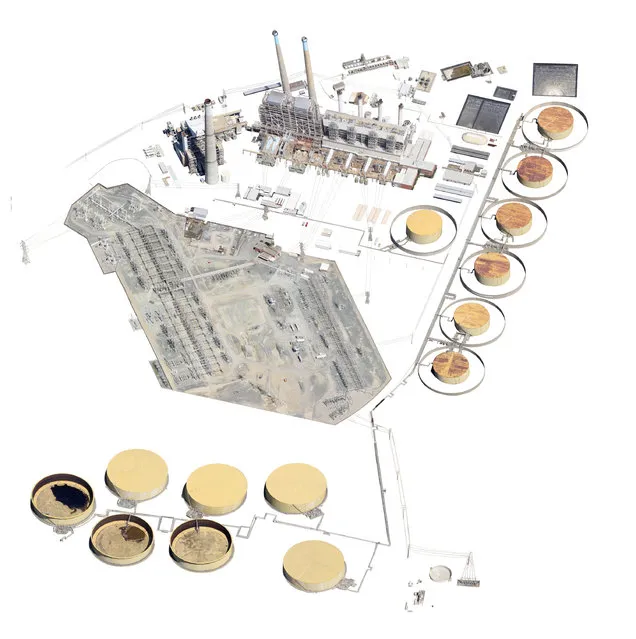
Natural gas plant in Pittsburg, CA (detail of Power Landscape), 2013. (Photo by Jenny Odell)

Jenny Odell repurposes online imagery mostly from Google Maps, but also from YouTube, Craigslist, and other sites. In her “Satellite Collections”, for example, she incorporated aerial views of swimming pools, basketball courts, parking lots, and other recognizable structures, seen from space. Her more recent series, “Satellite Landscapes”, includes painstakingly isolated Google Maps imagery of oil refineries, wastewater treatment plants, solar farms, etc. This work is meant as a reminder of our physically determined and vulnerable existence, since we depend on many of these things for survival and maintenance of our way of life. Photo: Natural gas plant in Pittsburg, CA (detail of Power Landscape), 2013. (Photo by Jenny Odell)
Details
19 Mar 2014 07:28:00
Wooden Churches - Travelling In The Russian North By Richard Davies Part 2

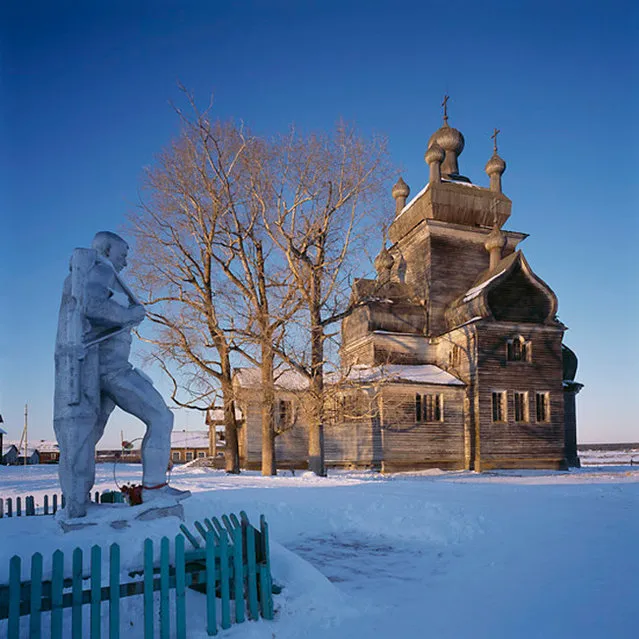
While communism, collectivism, worms, dry rot and casual looting failed to destroy the majestic wooden churches of Russia, it may be ordinary neglect that finally does them in. Dwindled now to several hundred remaining examples, these glories of vernacular architecture lie scattered amid the vastness of the world’s largest country. Just over a decade ago, Richard Davies, a British architectural photographer, struck out on a mission to record the fragile and poetic structures. Austerely beautiful and haunting, “Wooden Churches: Traveling in the Russian North” (White Sea Publishing; $132) is the result. Covering thousands of miles, Mr. Davies described how he and the writer Matilda Moreton tracked down the survivors from among the thousands of onion-domed structures built after Prince Vladimir converted to Christianity in 988.

See also: Wooden Churches Part1
Details
28 Nov 2013 12:13:00
Photo taken on September 19, 2015 shows a baby Brazilian opossum at the “Parque Estoril” zoo in Sao Bernardo do Campo of Sao Paulo, Brazil. According to local press, the “Parque Estoril” zoo houses currently 23 orphan cubs of wild animals rescued in the south region of Sao Paulo, victims of illegal wildlife trade or problems caused by urban growth. (Photo by Rahel Patrasso/Xinhua via ZUMA Wire)

Photo taken on September 19, 2015 shows a baby Brazilian opossum at the “Parque Estoril” zoo in Sao Bernardo do Campo of Sao Paulo, Brazil. According to local press, the “Parque Estoril” zoo houses currently 23 orphan cubs of wild animals rescued in the south region of Sao Paulo, victims of illegal wildlife trade or problems caused by urban growth. According to the zoo, all the animals arrived in the last three months, and many of them, not being able to be reintroduced to their natural habitat, will be used as examples in environmental education classes. (Photo by Rahel Patrasso/Xinhua via ZUMA Wire)
Details
26 Sep 2015 08:00:00
In this July 12, 2007 file photo, a two-day-old piping plover runs along a beach in the Quonochontaug Conservation Area in Westerly, R.I. A court fight to protect the piping plover, a bird listed as “threatened” under the federal Endangered Species Act, is holding up a $207 million plan to replenish sand along a 19-mile stretch of shoreline on New York's Fire Island. The sand was eroded during Superstorm Sandy. (Photo by Steven Senne/AP Photo)

In this July 12, 2007 file photo, a two-day-old piping plover runs along a beach in the Quonochontaug Conservation Area in Westerly, R.I. (Photo by Steven Senne/AP Photo)
Details
25 Nov 2014 11:28:00
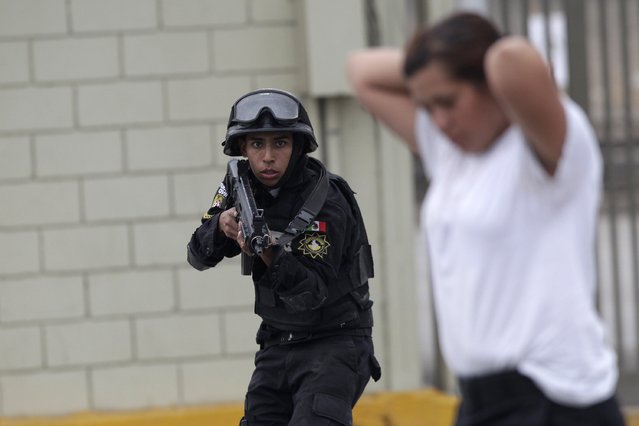
A member of the Fuerza Civil (Civil Force) police unit takes part in a simulated crime situation during a media presentation to show the police model that the federal government wants for the rest of the country, at the police academy in Monterrey December 17, 2014. Fuerza Civil, a tactical team of the police unit trained by the army, was created by the Nuevo Leon government in 2011 to curb down corruption and infiltration by drug gangs in the police corps, local media reported. (Photo by Daniel Becerril/Reuters)

A member of the Fuerza Civil (Civil Force) police unit takes part in a simulated crime situation during a media presentation to show the police model that the federal government wants for the rest of the country, at the police academy in Monterrey December 17, 2014. Fuerza Civil, a tactical team of the police unit trained by the army, was created by the Nuevo Leon government in 2011 to curb down corruption and infiltration by drug gangs in the police corps, local media reported. Promising a new law to stop the infiltration of local governments by organized crime, President Enrique Pena Nieto pledged to reform the penal system and send an proposal to Congress to unify multi-layered police forces in Mexico's 31 states. (Photo by Daniel Becerril/Reuters)
Details
19 Dec 2014 12:35:00