Loading...
Done
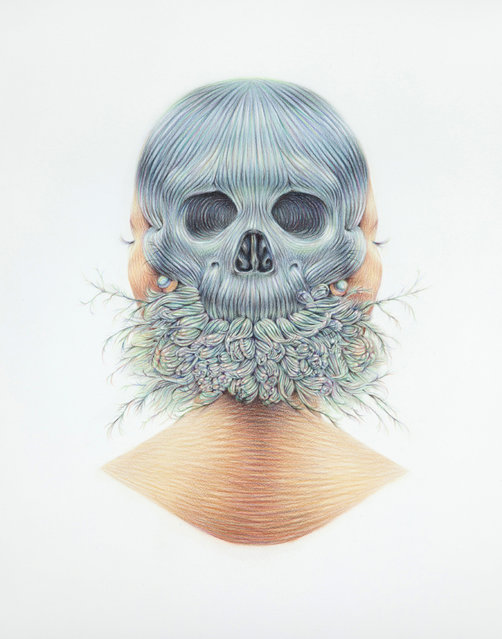
Portrait Drawings Of Winnie Truong

Winnie Truong was born in Toronto, where she still lives, and received her BFA in painting and drawing from Ontario College of Art and Design.

Using pencil, crayon, and chalk pastel on giant sheets of paper, Truong creates portraits with great detail. Her aim is to explore notions of beauty and discomfort and, inspired by science fiction, she portrays hair in all its ‘whiskery, wispy, curly, bristly’ brilliance.
Details
07 Jun 2015 10:44:00
Wet Dogs By Sophie Gamand

In collaboration with Pet Stylist Ruben Santana, Sophie Gamand has photographed dogs as they are being washed before grooming. The way the water plays with their hair, and their facial expressions as the water is poured on them creates striking portraits that resemble famous humans or important characters.
Details
15 Nov 2013 11:35:00
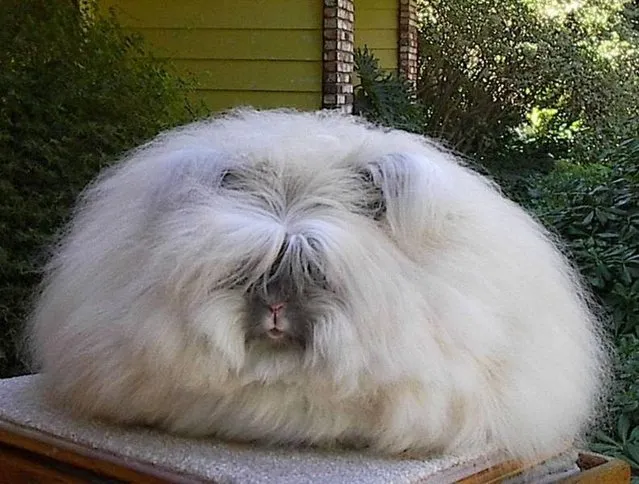
Angora Rabbit

The Angora rabbit is bred a multiplicity of house rabbits for its long, soft hair. The Angora is one of the oldest kinds of house rabbits, with origin in Ankara, Turkey.
Details
09 Oct 2012 08:55:00
Tim Tadder’s Water Wigs

Art and science collide in photographer Tim Tadder’s series “Water Wigs” and “Water Wigs Women”. In these perfectly timed photographs, Tadder captures his models wearing hair that’s made out of water. He achieves the process with water balloons, tacks, a creative vision that defies ordinary poses, and, no doubt, extreme patience. (Photo by Tim Tadder)
Details
13 Mar 2014 12:20:00
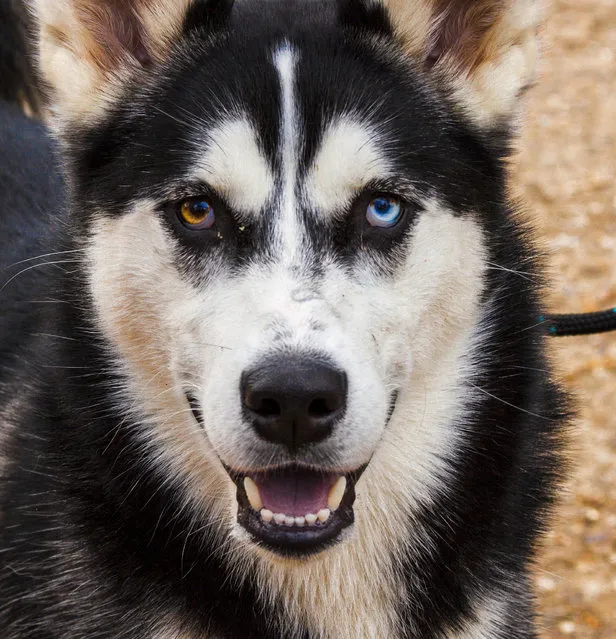
Heterochromia in Animals: Pets With Different Colored Eyes

“In anatomy, heterochromia refers to a difference in coloration, usually of the iris (but also of hair or skin). Although infrequently seen in humans, complete heterochromia is more frequently observed in other species, where it almost always involves one blue eye”. – Wikipedia (Photo by StooMathiesen)
Details
24 Jun 2012 12:47:00
In this Friday, January 9, 2015 photo, bathhouse worker Omid Riahi, 39, scrubs a man to remove dead skin, at the Ghebleh public bathhouse, in Tehran, Iran. The steamy air and curved tiled walls of Iran's famed public bathhouses, some rinsing and massaging patrons for hundreds of years, slowly may wash away as interest in them wanes. (Photo by Ebrahim Noroozi/AP Photo)

In this Friday, January 9, 2015 photo, bathhouse worker Omid Riahi, 39, scrubs a man to remove dead skin, at the Ghebleh public bathhouse, in Tehran, Iran. The steamy air and curved tiled walls of Iran's famed public bathhouses, some rinsing and massaging patrons for hundreds of years, slowly may wash away as interest in them wanes. The bathhouses, known as “hammams” in Persian, find themselves in rough financial times as modern conveniences now allow showers and baths in most homes across the Islamic Republic. (Photo by Ebrahim Noroozi/AP Photo)
Details
03 Apr 2015 12:40:00
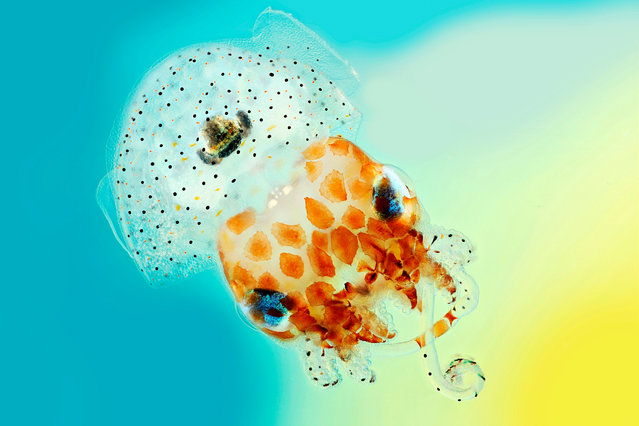
With its huge eyes, comical name and diminutive size, Mark R. Smith’s image of a baby Hawaiian bobtail squid can’t help but raise a smile. A curiously endearing creature, the cephalopod is just 1.5cm across, its mantle cavity bearing more than a passing resemblance to a rather natty shower cap. But it is also a beautiful example of symbiosis – nature’s version of “I’ll scratch your back if you scratch mine” – for on the underside of the squid is a light organ which houses bioluminescent bacteria. The squid offers the bacteria protection and food, while the bacteria emit a glow – a handy trait that the squid uses to offset its silhouette, helping it to evade predators in the depths below. Mark R. Smith’s entry combines several images of a Hawaiian bobtail squid with different focus lengths to create a final picture with greater depth of field than normal. (Photo by Mark R. Smith/Wellcome Images/Macroscopic Solutions)

With its huge eyes, comical name and diminutive size, Mark R. Smith’s image of a baby Hawaiian bobtail squid can’t help but raise a smile. A curiously endearing creature, the cephalopod is just 1.5cm across, its mantle cavity bearing more than a passing resemblance to a rather natty shower cap. But it is also a beautiful example of symbiosis – nature’s version of “I’ll scratch your back if you scratch mine” – for on the underside of the squid is a light organ which houses bioluminescent bacteria. The squid offers the bacteria protection and food, while the bacteria emit a glow – a handy trait that the squid uses to offset its silhouette, helping it to evade predators in the depths below. Mark R. Smith’s entry combines several images of a Hawaiian bobtail squid with different focus lengths to create a final picture with greater depth of field than normal. (Photo by Mark R. Smith/Wellcome Images/Macroscopic Solutions)
Details
08 Mar 2017 00:05:00
In this Sunday, April 28, 2013 photograph, people watch as Indian Sailendra Nath Roy attempts to cross Teesta river suspended from a zip wire attached to his ponytail moments before his death in Siliguri, West Bengal state, India. Roy who was named a Guinness World Record holder in 2011 for travelling the farthest distance on a zip wire using hair died during the stunt Sunday when he suffered a heart attack. (Photo by AP Photo)

In this Sunday, April 28, 2013 photograph, people watch as Indian Sailendra Nath Roy attempts to cross Teesta river suspended from a zip wire attached to his ponytail moments before his death in Siliguri, West Bengal state, India. Roy who was named a Guinness World Record holder in 2011 for travelling the farthest distance on a zip wire using hair died during the stunt Sunday when he suffered a heart attack. (Photo by AP Photo)
Details
30 Apr 2013 08:21:00