Loading...
Done
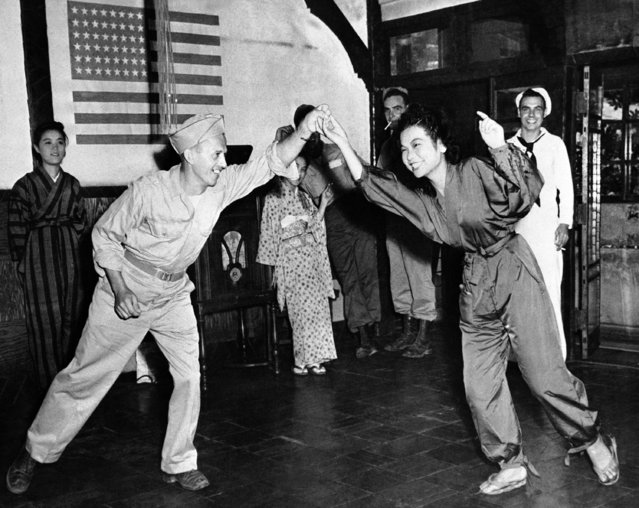
U.S. Corporal Stanley Suski, left, and Miss Tamako, a Geisha girl, whirl a bit of Jitterbug, in a bar, in Tokyo, Japan, on October 1, 1945. (Photo by AP Photo)

U.S. Corporal Stanley Suski, left, and Miss Tamako, a Geisha girl, whirl a bit of Jitterbug, in a bar, in Tokyo, Japan, on October 1, 1945. (Photo by AP Photo)
Details
06 Oct 2015 08:07:00
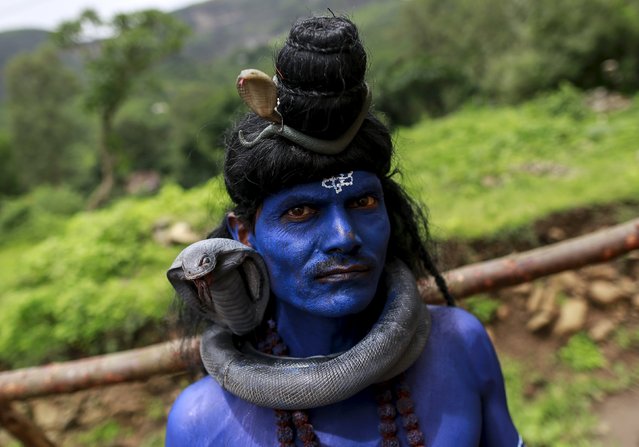
A devotee dressed as Hindu Lord Shiva waits to participate in a parade during “Kumbh Mela” or the Pitcher Festival in Trimbakeshwar, India, August 18, 2015. The Kumbh Mela takes place four times every 12 years at four different river bank locations in India. (Photo by Danish Siddiqui/Reuters)

A devotee dressed as Hindu Lord Shiva waits to participate in a parade during “Kumbh Mela” or the Pitcher Festival in Trimbakeshwar, India, August 18, 2015. The Kumbh Mela takes place four times every 12 years at four different river bank locations in India. (Photo by Danish Siddiqui/Reuters)
Details
19 Aug 2015 12:23:00
“Asaro from the Eastern Highlands”. The mudmen could not cover their faces with mud because the people of Papua New Guinea thought that the mud from the Asaro river was poisonous. So instead of covering their faces with this alleged poison, they made masks from pebbles that they heated and water from the waterfall, with unusual designs such as long or very short ears either going down to the chin or sticking up at the top, long joined eyebrows attached to the top of the ears, horns and sideways mouths. (Jimmy Nelson)

“Asaro from the Eastern Highlands”. The mudmen could not cover their faces with mud because the people of Papua New Guinea thought that the mud from the Asaro river was poisonous. So instead of covering their faces with this alleged poison, they made masks from pebbles that they heated and water from the waterfall, with unusual designs such as long or very short ears either going down to the chin or sticking up at the top, long joined eyebrows attached to the top of the ears, horns and sideways mouths. (Photo and caption by Jimmy Nelson)
Details
20 Oct 2013 08:54:00
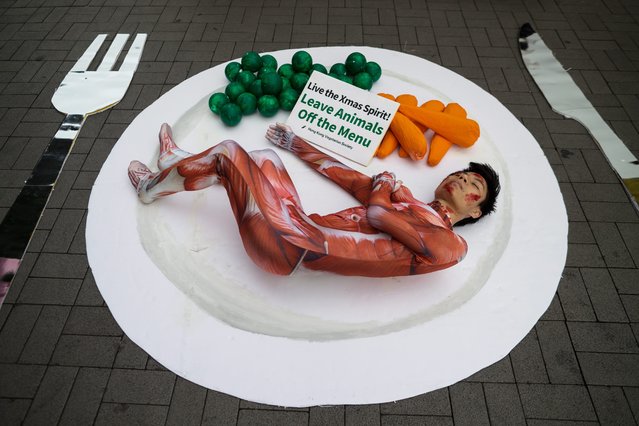
A Hong Kong Vegetarian Society activists lies on a giant plate alongside oversized peas, carrots and cutlery during a protest rally in the tourist district of Tsim Sha Tsui, Hong Kong, China, 23 December 2015. The activists urged passers-by to extend the holiday spirit to animals and to give thoughts to the cruelty inflicted on animals in meat productions. (Photo by Jerome Favre/EPA)

A Hong Kong Vegetarian Society activists lies on a giant plate alongside oversized peas, carrots and cutlery during a protest rally in the tourist district of Tsim Sha Tsui, Hong Kong, China, 23 December 2015. The activists urged passers-by to extend the holiday spirit to animals and to give thoughts to the cruelty inflicted on animals in meat productions. (Photo by Jerome Favre/EPA)
Details
24 Dec 2015 10:21:00
Revelers throw colored corn starch into the air as they celebrate the 2015 Holi (Festival of Colors) at the Krishna Temple in Spanish Fork, Utah on Saturday, March 28, 2015. (Photo by Rick Bowmer/AP Photo)

Revelers throw colored corn starch into the air as they celebrate the 2015 Holi (Festival of Colors) at the Krishna Temple in Spanish Fork, Utah on Saturday, March 28, 2015. (Photo by Rick Bowmer/AP Photo)
Details
04 Apr 2015 11:13:00
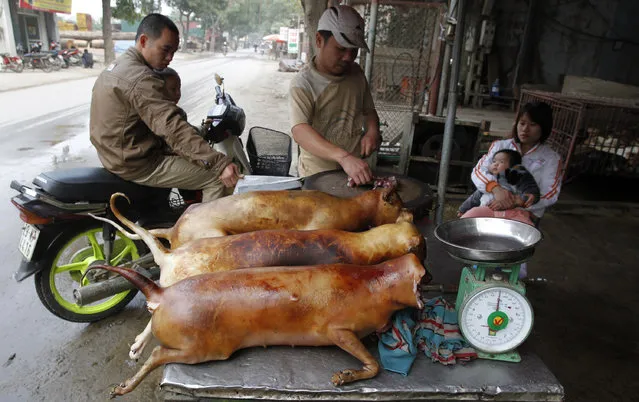
A vendor (C) cuts slaughtered dogs for sale at his roadside stall in Duong Noi village, outside Hanoi December 16, 2011. While animal rights activists have condemned eating dog meat as cruel treatment of the animals, it is still an accepted popular delicacy for some Vietnamese, as well in some other Asian countries. (Photo by Reuters/Kham)

A vendor (C) cuts slaughtered dogs for sale at his roadside stall in Duong Noi village, outside Hanoi December 16, 2011. While animal rights activists have condemned eating dog meat as cruel treatment of the animals, it is still an accepted popular delicacy for some Vietnamese, as well in some other Asian countries. Duong Noi is well-known as a dog-meat village, where hundreds of dogs are killed each day for sale as popular traditional food. Dog-eating as a custom is rooted in Vietnam and was developed as a result of poverty. One kilogram of dog meat costs about 130,000 dongs ($6.2). (Photo by Reuters/Kham)
Details
16 Jul 2013 11:40:00
A woman has her hair blown by the wind during a snowstorm in Quebec City, on December 22, 2013. (Photo by Mathieu Belanger/Reuters)

A woman has her hair blown by the wind during a snowstorm in Quebec City, on December 22, 2013. (Photo by Mathieu Belanger/Reuters)
Details
28 Dec 2013 12:50:00
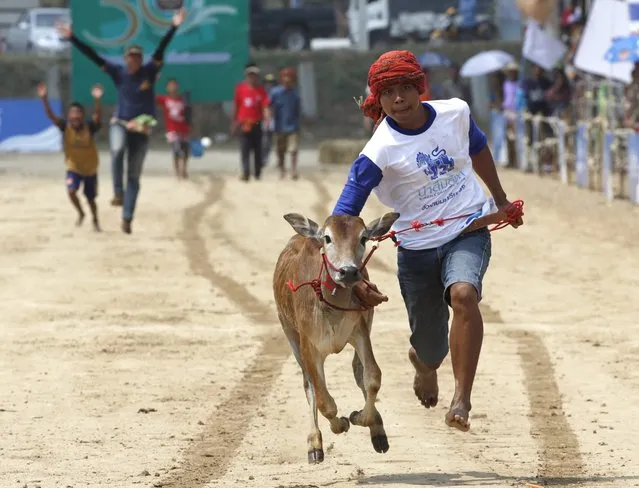
A Thai villager runs with a bullock during a catching a bullock competition as part of the annual bullock cart racing festival in Phetchaburi province, Thailand, 21 February 2016. The annual bullock cart race festival held to celebrate the end of the harvest season. (Photo by Rungroj Yongrit/EPA)

A Thai villager runs with a bullock during a catching a bullock competition as part of the annual bullock cart racing festival in Phetchaburi province, Thailand, 21 February 2016. The annual bullock cart race festival held to celebrate the end of the harvest season. (Photo by Rungroj Yongrit/EPA)
Details
22 Feb 2016 10:33:00