Loading...
Done
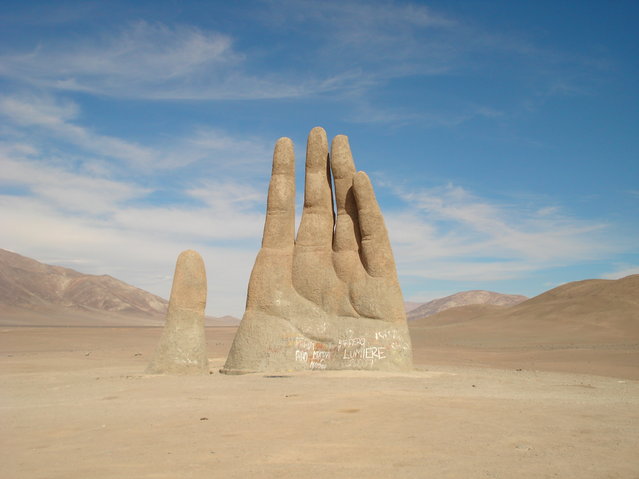
The Giant Hand of Atacama

The Mano de Desierto is a large-scale sculpture of a hand located in the Atacama Desert in Chile, 75 km to the south of the city of Antofagasta, on the Panamerican Highway. The nearest point of reference is the “Ciudad Empresarial La Negra” (La Negra Business City). The sculpture was constructed by the Chilean sculptor Mario Irarrázabal at an altitude of 1,100 meters above sea level. Irarrázabal used the human figure to express emotions like injustice, loneliness, sorrow and torture. Its exaggerated size is said to emphasize human vulnerability and helplessness. The work has a base of iron and cement, and stands 11 metres (36 ft) tall. Funded by Corporación Pro Antofagasta, a local booster organization, the sculpture was inaugurated on March 28, 1992.
Details
21 Dec 2013 10:18:00
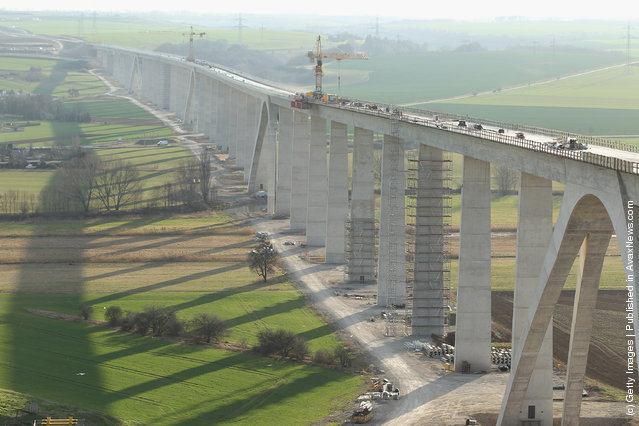
Unstrut Valley high-speed railway bridge near Karsdorf, Germany

Construction cranes stand on the Unstrut Valley high-speed railway bridge on March 19, 2012 near Karsdorf, Germany. The Unstrut bridge, which is 2,668m long (about 1.6 miles), is among 38 bridges and 26 tunnels German state rail carrier Deutsche Bahn is building along a new ICE high-speed railroad connection between Nuremberg, Erfurt, Halle, Leipzig and Berlin in a multi-billion Euro project across eastern Germany called the German Unity Transportation Project (Verkehrsprojekt der Deutschen Einheit). (Photo by Sean Gallup/Getty Images)
Details
22 Mar 2012 10:53:00


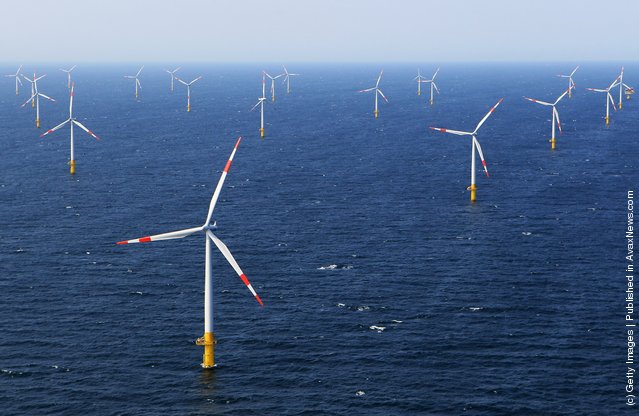
Wind turbines stand in the Baltic 1 offshore wind farm on April 29, 2011 in the Baltic Sea near Zingst, Germany. Baltic 1, a project of German energy utility EnBW that includes 21 turbines rated at 2.3 megawatts each, will be Germany's first commercial offshore wind farm once it officially begins operation on May 2. Germany has thus far lagged in offshore wind farm construction when compared to neighbors like Great Britain and Denmark, though German Chancellor Angela Merkel has vowed to invest heavily into offshore wind farms as part of an overall policy to encourage renewable energy production. (Photo by Joern Pollex/Getty Images)
Details
30 Apr 2011 12:54:00
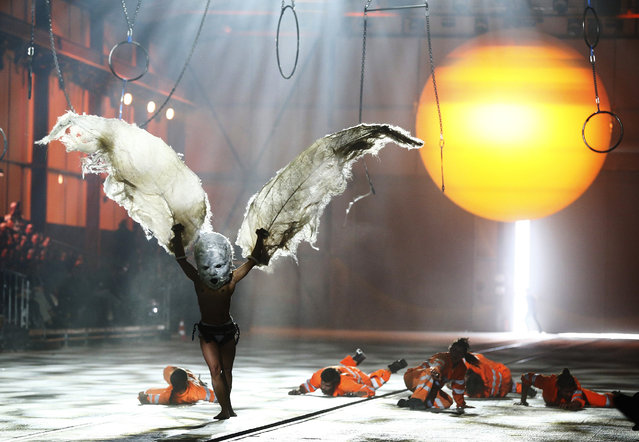
Artists perform during the opening show directed by German director Volker Hesse, on the opening day of the Gotthard rail tunnel,   at the fairground Rynaecht at the northern portal in Erstfeld, Switzerland, Wednesday, June 1, 2016. (Photo by Ruben Sprich\Pool Photo via AP Photo)

Artists perform during the opening show directed by German director Volker Hesse, on the opening day of the Gotthard rail tunnel, at the fairground Rynaecht at the northern portal in Erstfeld, Switzerland, Wednesday, June 1, 2016. The construction of the 57 kilometer long tunnel began in 1999, the breakthrough was in 2010. After the official opening on June 1, the commercial operation will start in December 2016. (Photo by Ruben Sprich\Pool Photo via AP Photo)
Details
02 Jun 2016 11:29:00
World's first forest in the sky, the Bosco Verticale green twin towers

A concept illustration of the world's first forest in the sky, the Bosco Verticale green twin towers currently under construction in Milan, Italy. Towering over the city skyline the world's first forest in the sky will be a sight to behold. With tree equal to one hectare of forest spanning 27 floors these 365 and 260 foot emerald twin towers will be home to an astonishing 730 trees, 5,000 shrubs and 11,000 ground cover plants. (Photo by Boeri Studio)
Details
27 Oct 2011 11:11:00
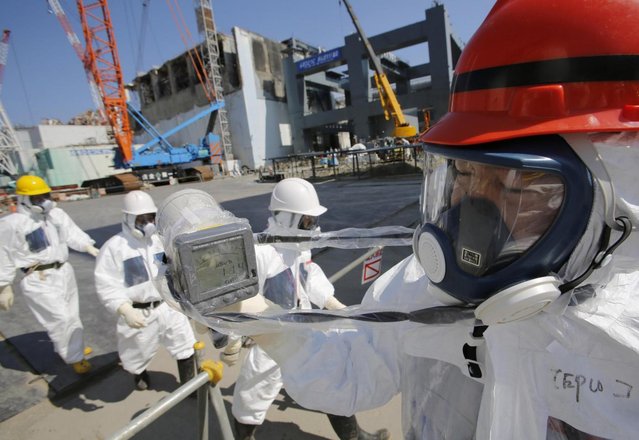
A radiation monitor indicates 114.00 microsieverts per hour near the building housing the plant's No. 4 reactor, center, and an under construction foundation, right, which will store the reactor's melted fuel rods at Tokyo Electric Power Co.'s tsunami-crippled Fukushima Dai-ichi nuclear power plant in Okuma, Fukushima prefecture, Wednesday, March 6, 2013, ahead of the second anniversary of the March 11, 2011 tsunami and earthquake. (Photo by Issei Kato/AP Photo/Pool)

A radiation monitor indicates 114.00 microsieverts per hour near the building housing the plant's No. 4 reactor, center, and an under construction foundation, right, which will store the reactor's melted fuel rods at Tokyo Electric Power Co.'s tsunami-crippled Fukushima Dai-ichi nuclear power plant in Okuma, Fukushima prefecture, Wednesday, March 6, 2013, ahead of the second anniversary of the March 11, 2011 tsunami and earthquake. Some 110,000 people living around the nuclear plant were evacuated after the massive March 11, 2011, earthquake and tsunami knocked out the plant's power and cooling systems, causing meltdowns in three reactors and spewing radiation into the surrounding air, soil and water. (Photo by Issei Kato/AP Photo/Pool)
Details
06 Mar 2013 13:19:00
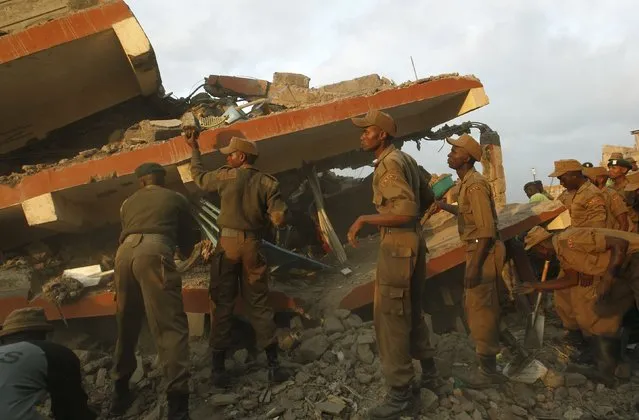
Rescuers search for survivors in the rubble of a collapsed residential building in Makongeni estate in Nairobi December 17, 2014. (Photo by Thomas Mukoya/Reuters)

Rescuers search for survivors in the rubble of a collapsed residential building in Makongeni estate in Nairobi December 17, 2014. Three more bodies were recovered on Wednesday night from the building that collapsed in Makongeni estate in Nairobi, raising the death toll to four, Kenya Red Cross has reported. The residential building whose sixth floor was still under construction had allegedly not been cleared for occupation by the Nairobi City County and its owner has been missing since it collapsed. A search and rescue and rescue operation is ongoing for the unknown number of people still trapped under the rubble, Kenya Red Cross also reported. (Photo by Thomas Mukoya/Reuters)
Details
18 Dec 2014 14:23:00
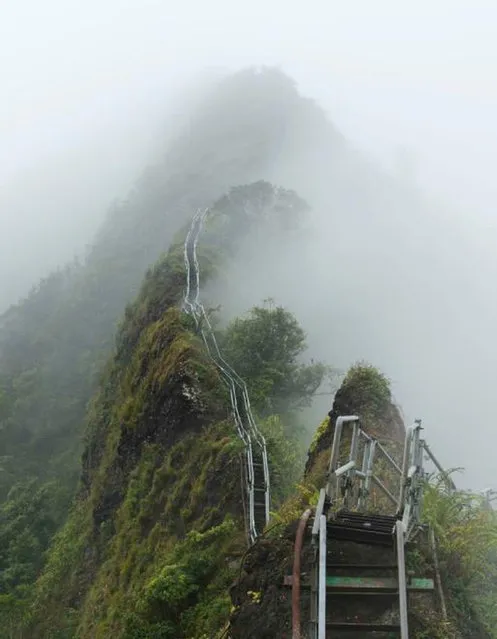
Stairway To Heaven In Hawaii

The Haʻikū Stairs, also known as the Stairway to Heaven or Haʻikū Ladder, is a steep hiking trail on the island of Oʻahu. The trail began as a wooden ladder spiked to the cliff on the south side of the Haʻikū Valley. It was installed in 1942 to enable antenna cables to be strung from one side of the cliffs above Haʻikū Valley to the other. A building to provide a continuous communication link between Wahiawā and Haʻikū Valley Naval Radio Station was constructed at the peak of Puʻukeahiakahoe, elevation about 2,800 feet (850 m). The antennae transmitted very low frequency radio signals from a 200,000-watt Alexanderson alternator in the center of Haʻikū valley. The signals could reach US Navy submarines as far away as Tokyo Bay while the submarines were submerged.
Details
30 Nov 2013 12:47:00