Loading...
Done
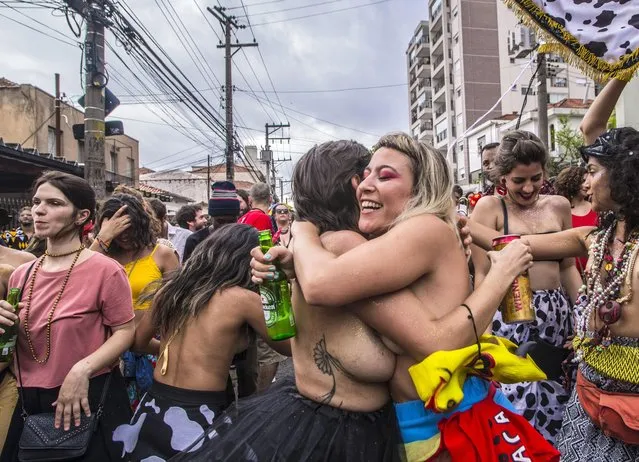
People enjoy carnival while shouting slogans of female empowerment and anti harrassment in Sao Paulo, Brazil on January 28, 2018. The carnival is marked by a lot of fun, but also has space to talk about more serious things – without losing the good mood. Parading for the first time in São Paulo, the Vaca Profana block proposed a reflection on sieges and machismo. With the breasts on display singing not only frevos but, mainly, shouting words of disorder, in order to stimulate female empowerment and against harassment. Our body is our struggle. The preservation of our physical integrity, our freedom of choice. Nude or clothed, we demand respect. (Photo by Cris Faga/Rex Features/Shutterstock)

People enjoy carnival while shouting slogans of female empowerment and anti harrassment in Sao Paulo, Brazil on January 28, 2018. The carnival is marked by a lot of fun, but also has space to talk about more serious things – without losing the good mood. Parading for the first time in São Paulo, the Vaca Profana block proposed a reflection on sieges and machismo. (Photo by Cris Faga/Rex Features/Shutterstock)
Details
29 Jan 2018 08:29:00
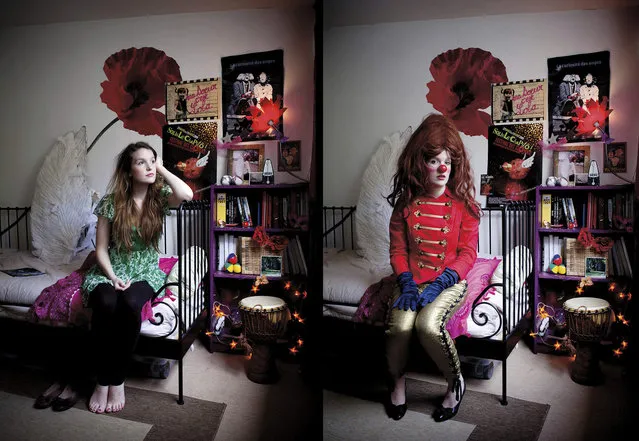
Lola is seen at left in everyday clothes – and then at right in her work clothes. She works as a clown in Paris. (Photo by Bruno Fert/Picturetank)

“The series of photos called Workwears, by French photographer Bruno Fert, visually juxtaposes people’s private lives with their lives at work. A firefighter, a fisherman, a nurse, a diver, a judge. One by one, Fert’s photos show people in their homes wearing everyday clothing – followed by another photo showing them dressed in the clothing of their chosen professions. Our reaction, Fert said, reminds us how tightly humans hold on to certain stereotypes about some professions. “I like to break those stereotypes”, he said”. – Thom Patterson via CNN. Here: Lola is seen at left in everyday clothes – and then at right in her work clothes. She works as a clown in Paris. (Photo by Bruno Fert/Picturetank)
Details
29 Oct 2014 12:40:00
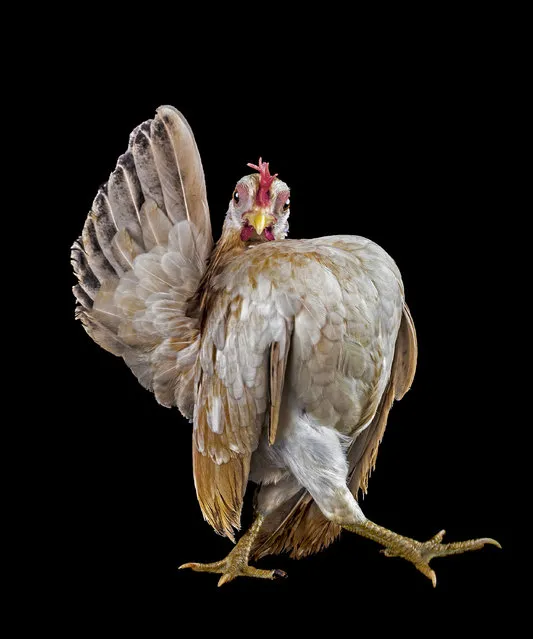
Ornamental chicken breeding clubs have emerged in Indonesia, Thailand, North America and even European countries such as the UK and France. Malaysia is however the epicenter of this cultural phenomenon. (Photo by Ernest Goh/2013 Sony World Photography Awards)

Ornamental chicken breeding clubs have emerged in Indonesia, Thailand, North America and even European countries such as the UK and France. Malaysia is however the epicenter of this cultural phenomenon. These chickens are prized for their build, size, behavior and showmanship by their owners and competitions or beauty contests as they are often described are held almost every week in at least one village in Malaysia. Judges sit around a square table inspecting each chicken for a few minutes trying to determine a champion specimen in its own weight class based on its stance, temperament and physical assets like wings, tails and comb. The walk or strut by an ornamental chicken in a beauty contest, much like a runway model, constitutes a large part of the scoring system. (Photo by Ernest Goh/2013 Sony World Photography Awards)
Details
28 Apr 2013 08:32:00
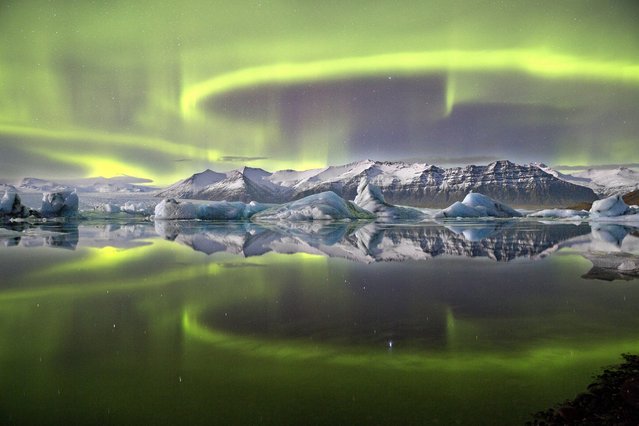
“Aurora over a glacier lagoon”. A vivid green overheaded aurrora pictured in Iceland's Vatnajokull National Park reflected almost symetrically in Jokulsrlon Glacier lagoon. A complete lack of wind and currrent combin in this sheltred lagoon scene to crete an arresting mirror effect giving the image a sensation of utter stillness. Despite theis there is motion on a suprising scale, as the loops and arcs of the aurora are shaped by the shifting forces of the Earth's magnetic field. (Photo by  James Woodend/The Astronomy Photographer of the Year 2014 Contest)

“Aurora over a glacier lagoon”. A vivid green overheaded aurrora pictured in Iceland's Vatnajokull National Park reflected almost symetrically in Jokulsrlon Glacier lagoon. A complete lack of wind and currrent combin in this sheltred lagoon scene to crete an arresting mirror effect giving the image a sensation of utter stillness. Despite theis there is motion on a suprising scale, as the loops and arcs of the aurora are shaped by the shifting forces of the Earth's magnetic field. James Woodend of Great Britain won the grand prize with the image, beating out more than 2,500 other entries. The Astronomy Photographer of the Year 2014 contest is judged by the Royal Observatory Greenwich and BBC Sky at Night magazine. (Photo by James Woodend/The Astronomy Photographer of the Year 2014 Contest)
Details
26 Sep 2014 13:39:00
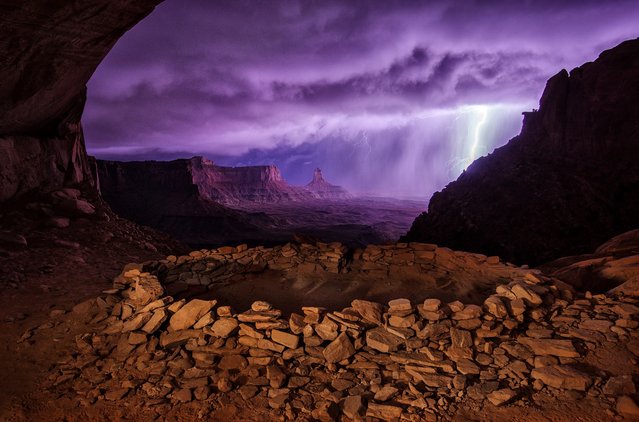
Second Place Winner: “Thunderstorm at False Kiva”. I hiked out to these ruins at night hoping to photograph them with the Milky Way, but instead a thunderstorm rolled through, creating this dramatic image. – Max Seigal. (Photo and caption by Max Seigal/National Geographic Traveler Photo Contest)

Second Place Winner: “Thunderstorm at False Kiva”. I hiked out to these ruins at night hoping to photograph them with the Milky Way, but instead a thunderstorm rolled through, creating this dramatic image. – Max Seigal. National Geographic Traveler Director of Photography Dan Westergren, one of this year's judges, shares his thoughts on the second place winner: “This photo combines two different scenes into one: the small kiva in a cliff dwelling and the grand vista of Canyonlands National Park across the valley. I really like the two different color palettes – warm inside and purple outside. This two-for-one scene was caused by the lightning storm outside the dwelling, which lit up the landscape like it was a huge electronic flash. Looking at this picture I can imagine what a wonderful sight it must have been for the ancient people who lived here. It doesn't seem too amazing now in our modern world, but might have been mind-blowing for the prehistoric residents”. Location: Utah. (Photo and caption by Max Seigal/National Geographic Traveler Photo Contest)
Details
02 Aug 2013 06:16:00
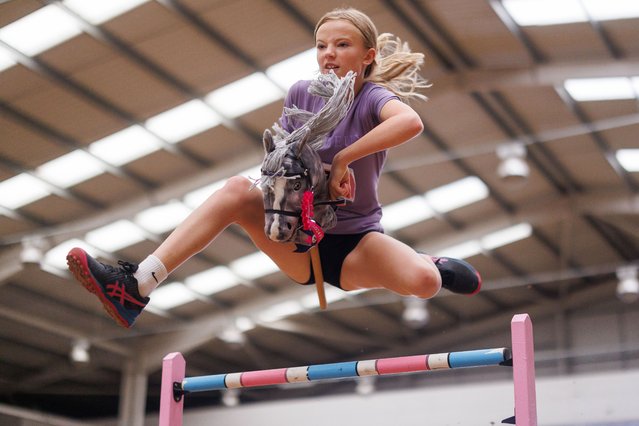
Competitors practice their moves before taking part in the UK Hobby Horse championship at Bury Farm Equestrian Centre on September 08, 2024 in Slapton, United Kingdom. While hobby horsing as a form of play has been around for centuries, the modern-day interpretation of the sport originated in Finland. Hobby horse competitions feature young enthusiasts trotting, galloping, and cantering on toy horses in various disciplines such as jumping and dressage. Its popularity has surged in recent years, especially during covid, and is growing in appeal. Young equine enthusiasts take advantage of its inclusivity, and enjoy the physical activity required, creativity and freedom of expression. The sport has also been found to help young people suffering with autism and ADHD, giving them a chance to connect with other young people with a love of horses. (Photo by Dan Kitwood/Getty Images)

Competitors practice their moves before taking part in the UK Hobby Horse championship at Bury Farm Equestrian Centre on September 08, 2024 in Slapton, United Kingdom. While hobby horsing as a form of play has been around for centuries, the modern-day interpretation of the sport originated in Finland.(Photo by Dan Kitwood/Getty Images)
Details
30 Sep 2024 04:38:00
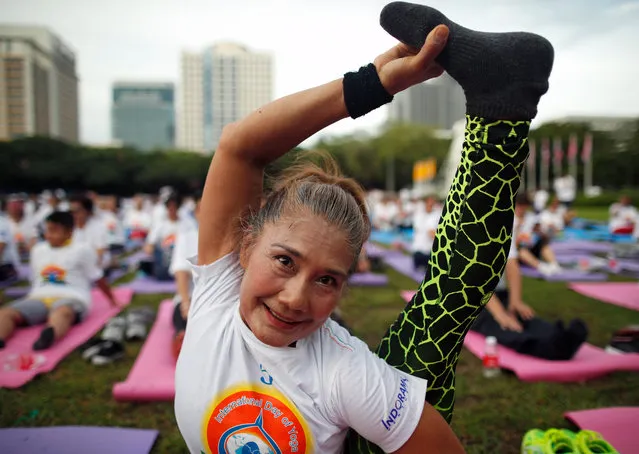
A Thai Yoga enthusiast performs during a mass yoga exercise in Bangkok, Thailand, 16 June 2019. Hundreds of Thai and foreign Yoga enthusiasts took part in the mass Yoga exercise organized by the Indian embassy to mark the International Day of Yoga which annually celebrated on 21 June. (Photo by Rungroj Yongrit/EPA/EFE)

A Thai Yoga enthusiast performs during a mass yoga exercise in Bangkok, Thailand, 16 June 2019. Hundreds of Thai and foreign Yoga enthusiasts took part in the mass Yoga exercise organized by the Indian embassy to mark the International Day of Yoga which annually celebrated on 21 June. (Photo by Rungroj Yongrit/EPA/EFE)
Details
18 Jun 2019 00:05:00
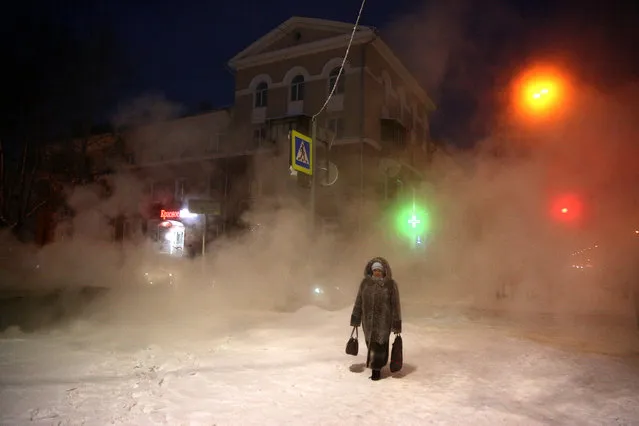
A woman walks in a street in freezing weather of –24 degrees Celsius in Omsk, Russia on January 13, 2021. Daytime temperatures have been below –20 degrees Celsius in the Omsk Region since 25 December 2020. (Photo by Yevgeny Sofiychuk/TASS)

A woman walks in a street in freezing weather of –24 degrees Celsius in Omsk, Russia on January 13, 2021. Daytime temperatures have been below –20 degrees Celsius in the Omsk Region since 25 December 2020. (Photo by Yevgeny Sofiychuk/TASS)
Details
25 Jan 2021 09:17:00