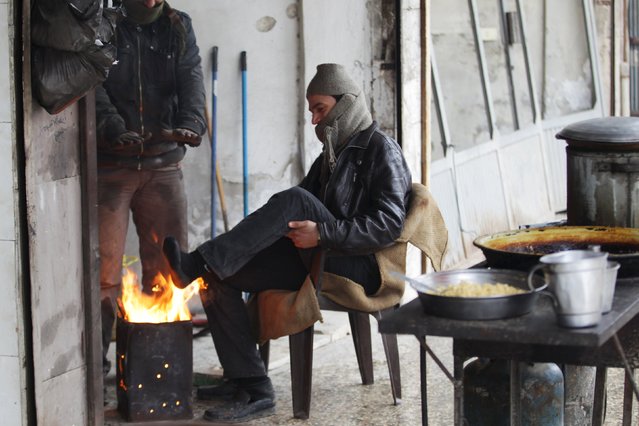
A street vendor warms his foot around a fire during cold weather in the rebel-controlled area of Maaret al-Numan town in Idlib province, Syria, January 4, 2016. (Photo by Khalil Ashawi/Reuters)
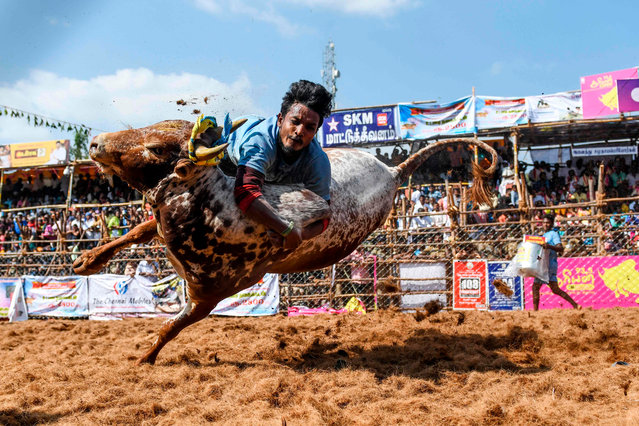
A participant jumps trying to control a bull during the annual bull taming “Jallikattu” festival in Palamedu village on the outskirts of Madurai in the southern Indian state of Tamil Nadu on January 16, 2020. (Photo by Arun Sankar/AFP Photo)
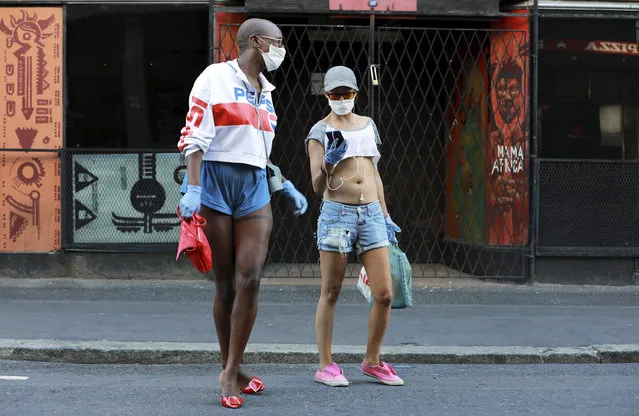
Pedestrians cross a road in Cape Town, South Africa Saturday, March 28, 2020, as South Africa went into a nationwide lockdown for 21 days in an effort to control the spread of the coronavirus. (Photo by Nardus Engelbrecht/AP Photo)
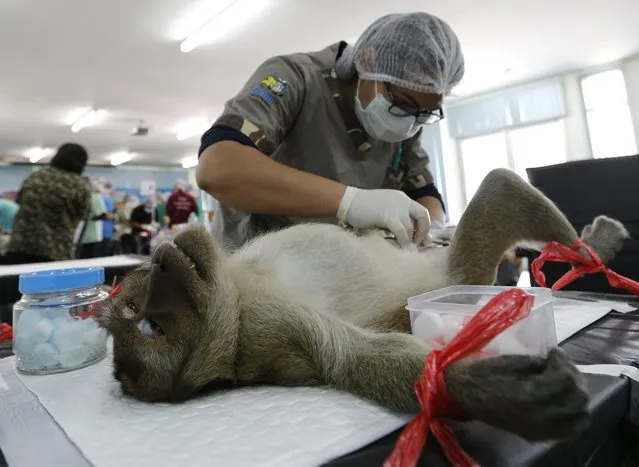
A Thai veterinarian sterilizes a monkey in a bid to control the birth rate of the monkey population in Hua Hin city, Prachuap Khiri Khan Province, Thailand, 15 July 2017. (Photo by Narong Sangnak/EPA/EFE)
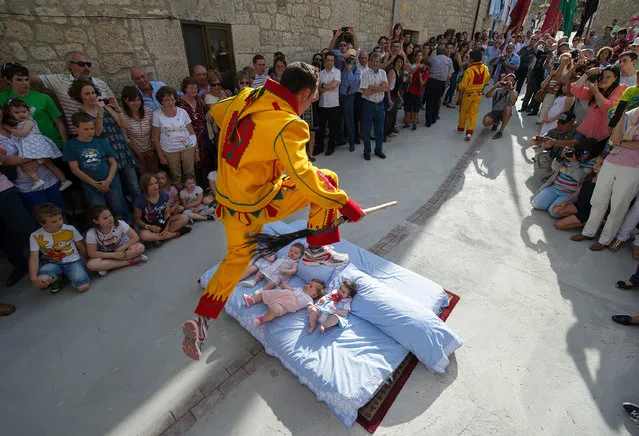
A man representing the devil leaps over babies during the festival of El Salto del Colacho (the devil's jump) on June 22, 2014 in Castrillo de Murcia, Spain. The festival, held on the first Sunday after Corpus Cristi, is a catholic rite of the devil cleansing babies of original sin. (Photo by Denis Doyle/Getty Images)
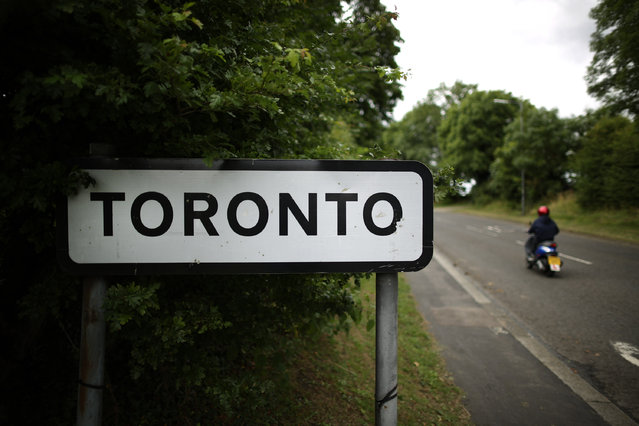
A handful of villages in the U.K. share the same name as cities or countries from around the world, and they’re spending life in the shadows of their more famous namesakes. Photo: A road sign points the way on August 6, 2013 in Toronto, England. Originally called Newton Cap in the county of Durham, built for workers at the nearby colliery, owner Henry Stobart re-named the village Toronto after visiting Canada. (Photo by Peter Macdiarmid/Getty Images)
A visitor passes behind the sculpture “Puma-Dentist” made with plastic, wax and original heads of a puma and a hind by Austrian artist Deborah Sengl during an exhibition at the art gallery Deschler in Berlin April 15, 2008. (Photo by Fabrizio Bensch/Reuters)
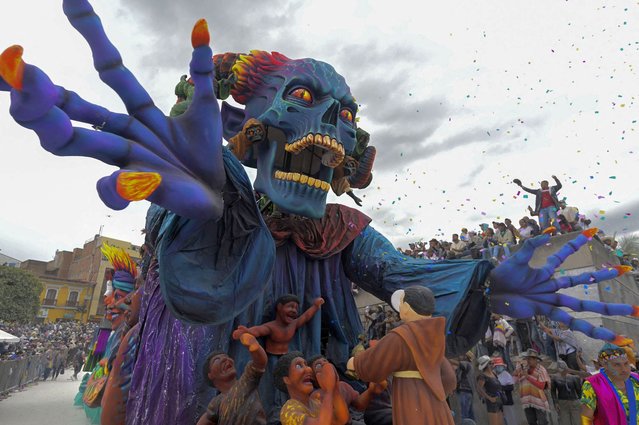
Picture of a float taking part in the “White Day” parade during the Carnival of Blacks and Whites in Pasto, Colombia on January 6, 2024. The Blacks and Whites carnival has its origins in a mix of Andean, Amazonian and Pacific cultural expressions, and it celebrates the ethnic diversity in the region and was proclaimed by UNESCO as intangible cultural heritage in 2009. (Photo by Joaquín Sarmiento/AFP Photo)