Loading...
Done
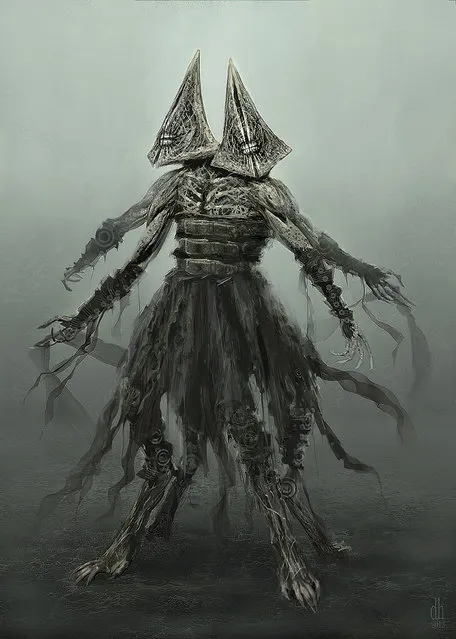
Awesome Zodiac Monsters By Damon Hellandbrand

Have you ever found something mesmerizing in the beautifully and intricately drawn visages of beasts? Damon Hellandbrand finds it to be true, which is the reason why he depicted each of the zodiac signs in a completely new light. Only their main characteristics remain, such as Cancer`s pincers and Scorpio`s stinger, while everything else was completely altered. Other zodiac signs are recognized by their prominent features, such as Gemini`s two heads, Libra`s symbol of balance that looks like two connected cages, and Sagittarius`s bow. Every picture, when looked at separately, resembles a concept art, taken from a video game. However, their combination forms a horrific, yet mystifying puzzle of Zodiac signs. (Photo by Damon Hellandbrand)
Details
15 Jan 2015 13:56:00
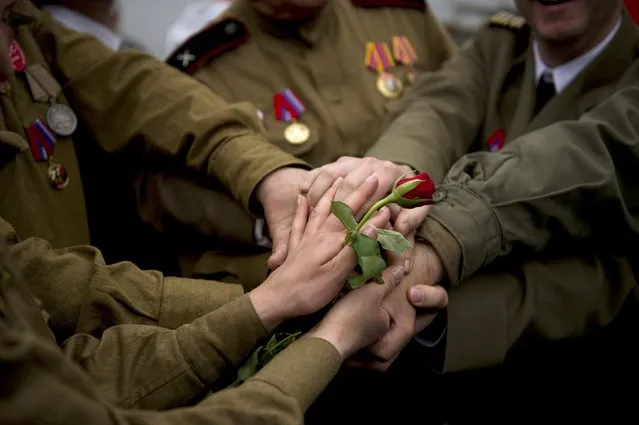
Members of a historical re-enactment group dressed as U.S. and Soviet Army soldiers take part in Elbe Day celebrations, in eastern German city of Torgau at the river Elbe, April 25, 2015. (Photo by Stefanie Loos/Reuters)

Members of a historical re-enactment group dressed as U.S. and Soviet Army soldiers take part in Elbe Day celebrations, in eastern German city of Torgau at the river Elbe, April 25, 2015. Elbe Day commemorates the encounter of the Allies 70 years ago, on the 25th of April 1945 when American and Soviet army units joined together on the destroyed bridge over the river Elbe. The photograph of the meaningful handshake made its way around the world and became a symbol of the near end of World War II in Europe. (Photo by Stefanie Loos/Reuters)
Details
26 Apr 2015 08:58:00
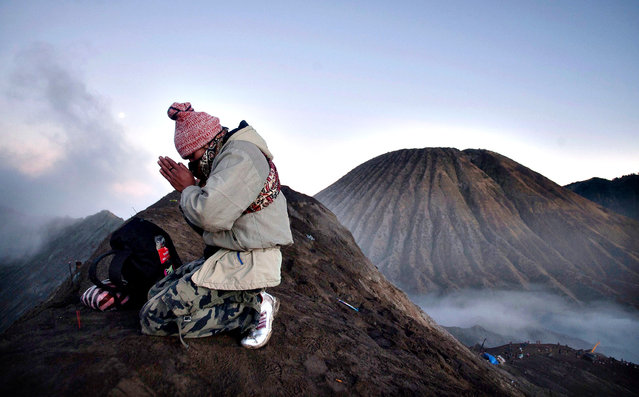
A Tengger tribesman prays at Mount Bromo during the annual Kasada ceremony in East Java on August 12, 2014. The Kasada ceremony is a festival held every 14th day of the Kasada month in the traditional Hindu lunar calender to honour Sang Hyang Widhi (God Almighty) and is based on the legend of Roro Anteng and Joko Seger from the Majapahit Kingdom, from which their Tengger tribe name originates. (Photo by Juni Kriswanto/AFP Photo)

A Tengger tribesman prays at Mount Bromo during the annual Kasada ceremony in East Java on August 12, 2014. The Kasada ceremony is a festival held every 14th day of the Kasada month in the traditional Hindu lunar calender to honour Sang Hyang Widhi (God Almighty) and is based on the legend of Roro Anteng and Joko Seger from the Majapahit Kingdom, from which their Tengger tribe name originates. Hundreds of worshippers from the Tengger tribe offer food and livestock as a symbolic sacrifice which they throw into the crater for the blessings of safety and prosperity to their familyies and community. (Photo by Juni Kriswanto/AFP Photo)
Details
16 Aug 2014 11:19:00
An older model Ford Mustang sits on cinder blocks with missing wheels near an abandoned apartment building in Detroit, Michigan January 7, 2015. Detroit, also known as the Motor City, is the historic hub of automobile manufacturing in the United States. (Photo by Joshua Lott/Reuters)

An older model Ford Mustang sits on cinder blocks with missing wheels near an abandoned apartment building in Detroit, Michigan January 7, 2015. Detroit, also known as the Motor City, is the historic hub of automobile manufacturing in the United States. A federal judge in December 2013 formally declared the city bankrupt but it won court approval to exit bankruptcy last November. Once the proud symbol of U.S. industrial strength, Detroit fell on hard times after decades of population loss, rampant debt and financial mismanagement left it struggling to provide basic services to residents. (Photo by Joshua Lott/Reuters)
Details
14 Jan 2015 12:48:00
People protect themselves behind a trash can as anti-riot olice fires water cannon to disperse thousands of people demonstrating following the death of Berkin Elvan, a teenage boy wounded in mass anti-government demonstrations last year, on March 11, 2014 near the Middle East Technical University (ODTU) in Ankara. (Photo by Adem Altan/AFP Photo)

People protect themselves behind a trash can as anti-riot olice fires water cannon to disperse thousands of people demonstrating following the death of Berkin Elvan, a teenage boy wounded in mass anti-government demonstrations last year, on March 11, 2014 near the Middle East Technical University (ODTU) in Ankara. Elvan's story – he spent 269 days in a coma – gripped the nation and became a symbol of the heavy-handed tactics used by police to reign in the biggest demonstrations against Prime Minister Recep Tayyip Erdogan since he came to power in 2003. (Photo by Adem Altan/AFP Photo)
Details
13 Mar 2014 09:23:00
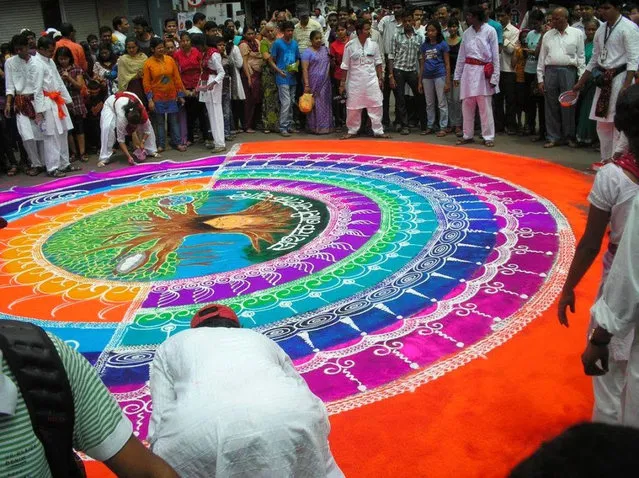
Rangoli Folk Art From India

Rangoli, also known as kolam or Muggu, is a folk art from India in which patterns are created on the floor in living rooms or courtyards using materials such as colored rice, dry flour, colored sand or flower petals. It is usually made during Diwali, Onam, Pongal and other Indian festivals. They are meant to be sacred welcoming areas for the Hindu deities. The ancient symbols have been passed down through the ages, from each generation to the next, keeping both the art form and the tradition alive. Similar practices are followed in different Indian states: in Tamil Nadu, there is Kolam in Tamil Nadu; Mandana in Rajasthan; Chaookpurna in Chhattisgarh; Alpana in West Bengal; Aripana in Bihar; Chowk pujan in Uttar Pradesh; Muggu in Andhra Pradesh and others.
Details
16 Jun 2014 10:37:00
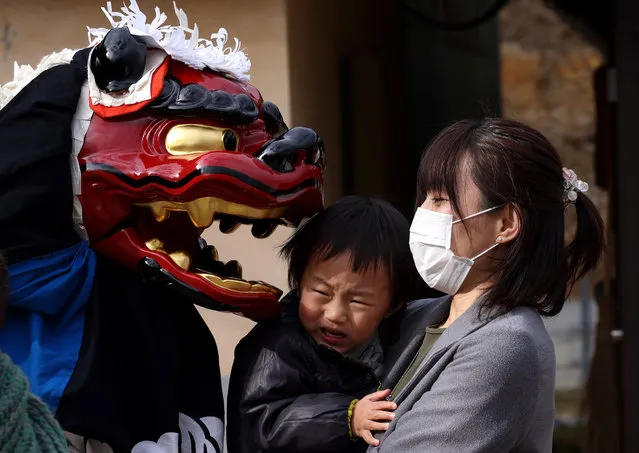
A performer wearing a lion mask performs the Ise Daikagura lion dance at the remote village of Yamanawa on February 08, 2021 in Ryuo, Japan. Ise Daikagura is a group of traditional Lion Dance performers who pray in front of farmers houses and businesses for good grain harvests and disease-free lives. Performers play sacred music using drums and flutes with two lion mask dancers. A lion mask is considered a symbol of God, who enters the house and performs in front of the Shinto God, a statue placed inside the house, mostly in the kitchen. These prayers are called “Kamodo Barai”. After the prayers, they are gifted with money, rice, sake and Japanese sweets from the householders. A group can travel for more than one hundred days to thousands of households and businesses throughout rural-villages in western Japan, and pray to those who are unable to visit the country’s most sacred shrine, the Grand Ise Shrine in Mie Prefecture. The group started its performance in the Edo era between 1603 to 1868 according to Japanese history. The Japanese government designated it as an important folk cultural national property in 1981. (Photo by Buddhika Weerasinghe/Getty Images)

A performer wearing a lion mask performs the Ise Daikagura lion dance at the remote village of Yamanawa on February 08, 2021 in Ryuo, Japan. Ise Daikagura is a group of traditional Lion Dance performers who pray in front of farmers houses and businesses for good grain harvests and disease-free lives. (Photo by Buddhika Weerasinghe/Getty Images)
Details
18 Feb 2021 09:27:00
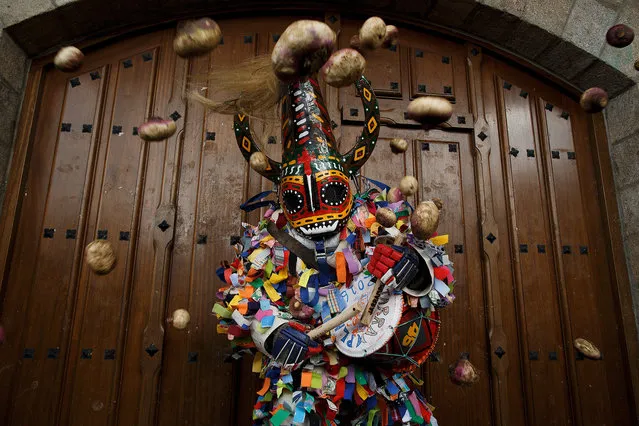
People throw turnips at the Jarramplas as he comes out from the church beating his drum during the Jarramplas Festival on January 20, 2016 in Piornal, Caceres province, Spain. The centuries old Jarramplas festival takes place annually every January 19-20 on Saint Sebastian Day and this year they expect to use more than 20 thousand kilogrames of turnips. Even though the exact origins of the festival are not known, various theories exist including the mythological punishment of Caco by Hercules. (Photo by Pablo Blazquez Dominguez/Getty Images)

People throw turnips at the Jarramplas as he comes out from the church beating his drum during the Jarramplas Festival on January 20, 2016 in Piornal, Caceres province, Spain. The centuries old Jarramplas festival takes place annually every January 19-20 on Saint Sebastian Day and this year they expect to use more than 20 thousand kilogrames of turnips. Even though the exact origins of the festival are not known, various theories exist including the mythological punishment of Caco by Hercules, a relation to ceremonies celebrated by the American Indians that were seen by the first conquerors, to a cattle thief ridiculed and expelled by his village neighbours. It is generally believed to symbolize the expulsion of everything bad. (Photo by Pablo Blazquez Dominguez/Getty Images)
Details
21 Jan 2016 13:21:00