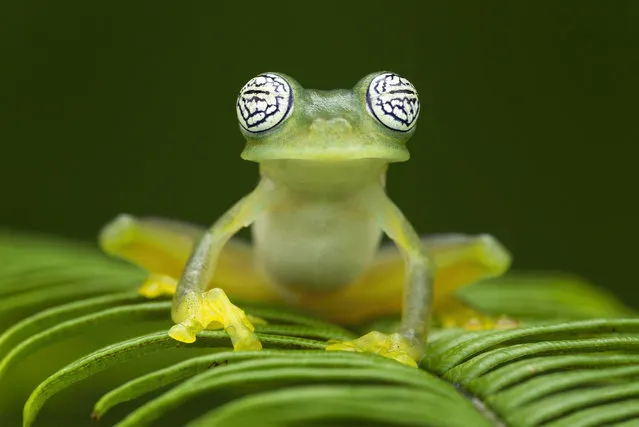
A ghost glass frog in the Chocó rainforest, Ecuador in November 2020. The marbled swirling “hypnotising” eyes are thought to be helpful in attracting a mate. (Photo by David Weiller/WENN)
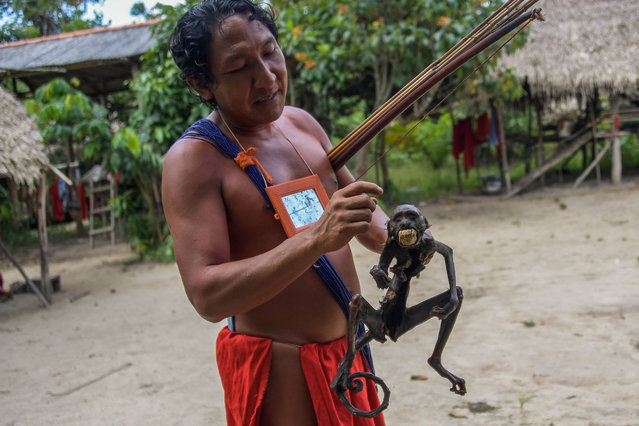
Chieftain Japarupi Waiapi shows a roasted monkey -part of Waiapi's diet, also based in Manioc and fruits- at the reserve in Amapa state in Brazil on October 13, 2017. When Waiapis walks into the Amazon forest surrounding their village, they do not see trees, but a kind of shopping mall providing medicine, food, shelter, tools and weapons all under the eye of multiple spirits. (Photo by Apu Gomes/AFP Photo)
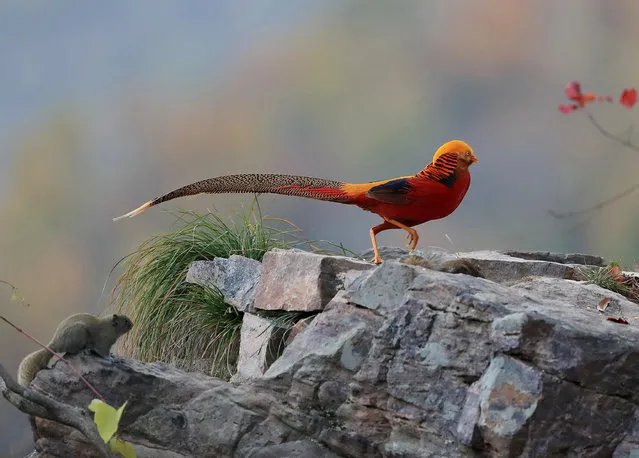
A golden pheasant and squirrels are seen in Lushan County of Pingdingshan City, central China's Henan Province, November 14, 2017. (Photo by Liu Xianguo/Xinhua/Barcroft Images)
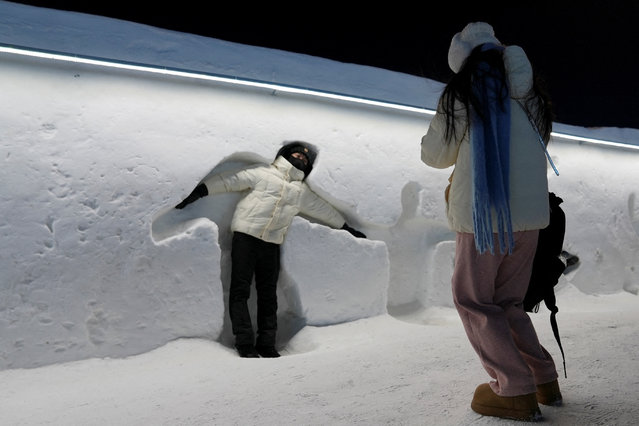
A visitor poses for pictures at the Harbin International Ice and Snow Festival in Harbin, Heilongjiang province, China on January 5, 2025. (Photo by Xiaoyu Yin/Reuters)
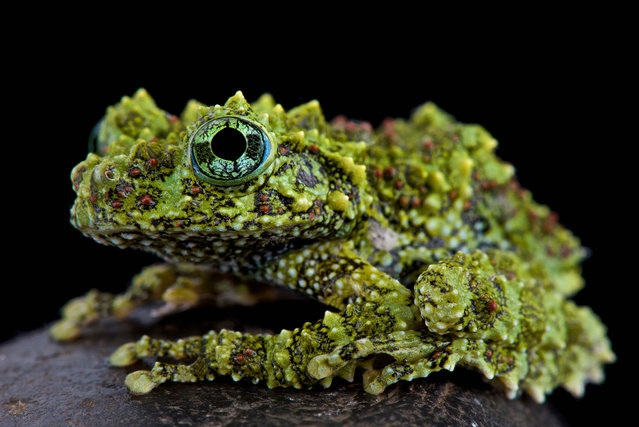
Renowned amphibian and reptile photographer Matthijs Kuijpers has released his first book, “Cold Instinct”. Kuijpers says the aim of the work is “for the viewer to abandon the fear and negative thoughts that often surround these animals”. What’s left is the bizarre beauty of these creatures in their simplest form – no backgrounds and no distractions. Here: Mossy frog (Theloderma corticale). (Photo by Matthijs Kuijpers/The Guardian)
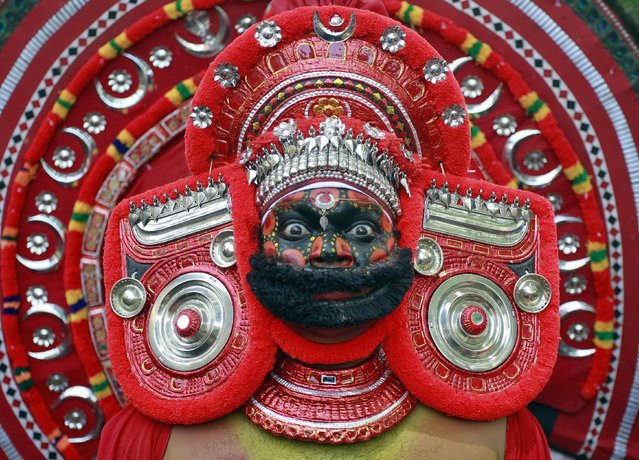
A dancer waits to perform during festivities marking the start of the annual harvest festival of “Onam” in Kochi, India, August 19, 2015. The ten-day-long Hindu festival is celebrated annually in India's southern coastal state of Kerala to commemorate the return of King Mahabali to his beloved subjects. (Photo by Sivaram V/Reuters)
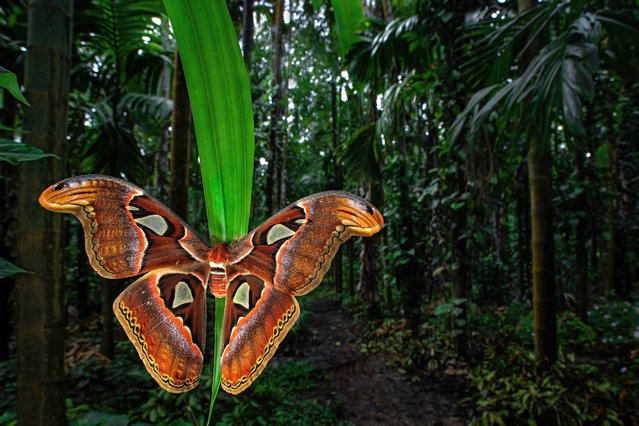
A huge atlas moth, with a wingspan of more than 9in, photographed on an areca nut plantation in Sirsi, India. (Photo by Uday Hegde/Close Up Photographer of the Year)