Loading...
Done
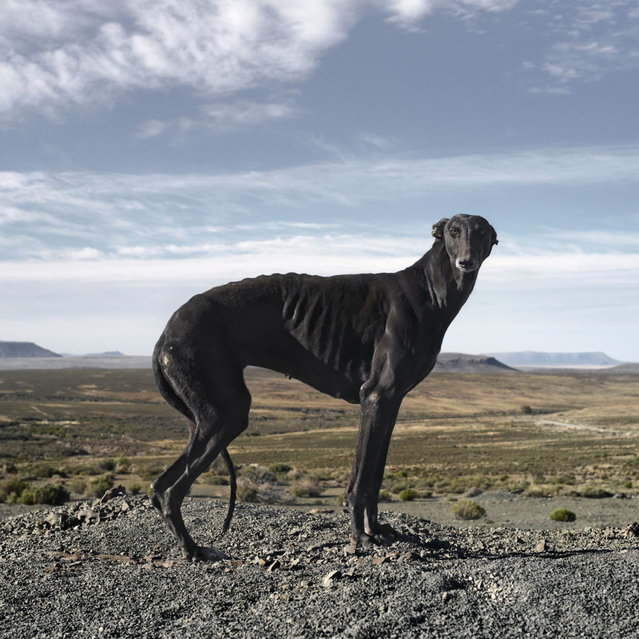
Africanis 18. Murraysburg, Western Cape, May 10, 2010. (Photo by Daniel Naudé)

“The Africanis is a landrace of South African dogs. It is believed to be of ancient origin, directly descended from hounds and pariah dogs of ancient Africa, introduced into the Nile Valley from the Levant. The Swahili name for the breed is umbwa wa ki-shenzi meaning common or mongrel or “traditional dog”. Africanis is also an umbrella name for all the aboriginal dogs in southern Africa”. – Wikipedia. Photo: Africanis 18. Murraysburg, Western Cape, May 10, 2010. (Photo by Daniel Naudé)
Details
19 May 2013 11:51:00
People watch as a young Palestinian performs an acrobatic jump on the beach, during soaring summer temperatures in Gaza City on June 14, 2024, amid the ongoing conflict between Israel and the Palestinian Hamas militant group. (Photo by Omar Al-Qattaa/AFP Photo)

People watch as a young Palestinian performs an acrobatic jump on the beach, during soaring summer temperatures in Gaza City on June 14, 2024, amid the ongoing conflict between Israel and the Palestinian Hamas militant group. (Photo by Omar Al-Qattaa/AFP Photo)
Details
29 Jun 2024 02:09:00
An activist of People for the Ethical Treatment of Animals (PETA) stands along a road wearing a coat with baby dolls to raise awareness about the leather industry, in Hyderabad on May 6, 2022. (Photo by Noah Seelam/AFP Photo)

An activist of People for the Ethical Treatment of Animals (PETA) stands along a road wearing a coat with baby dolls to raise awareness about the leather industry, in Hyderabad, India on May 6, 2022. (Photo by Noah Seelam/AFP Photo)
Details
07 May 2022 05:32:00
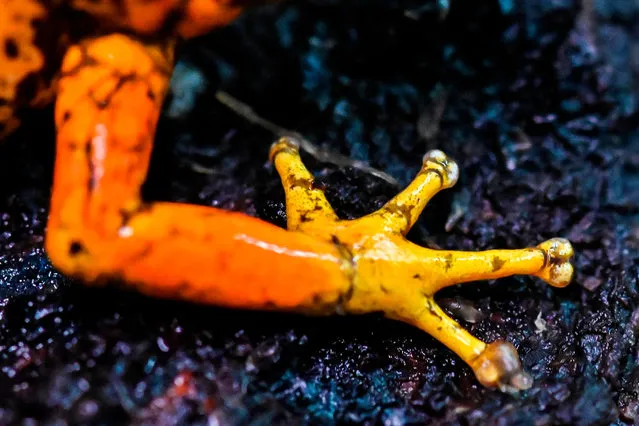
A leg of a “diablito” frog (Oophaga sylvatica) is photographed in a laboratory at a laboratory in the zoo of Cali, Colombia, on July 19, 2019. Colombia is the second country with the largest number of amphibians in the world after Brazil. More than 40% of amphibian species worldwide are in danger of extinction. (Photo by Luis Robayo/AFP Photo)

A leg of a “diablito” frog (Oophaga sylvatica) is photographed in a laboratory at a laboratory in the zoo of Cali, Colombia, on July 19, 2019. Colombia is the second country with the largest number of amphibians in the world after Brazil. More than 40% of amphibian species worldwide are in danger of extinction. (Photo by Luis Robayo/AFP Photo)
Details
28 Nov 2020 00:03:00
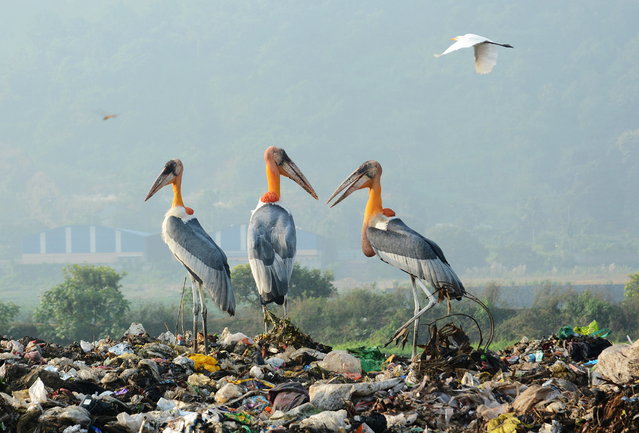
A flock of Adjutants storks sit on a garbage dump at Borgaon in Guwahati, Assam, India, 17 October 2019. Wildlife activists and environmentalists have protested in the past for shifting the garbage dump to another site since it is situated near the Deepor Beel Bird Sanctuary. (Photo by EPA/EFE/Stringer)

A flock of Adjutants storks sit on a garbage dump at Borgaon in Guwahati, Assam, India, 17 October 2019. Wildlife activists and environmentalists have protested in the past for shifting the garbage dump to another site since it is situated near the Deepor Beel Bird Sanctuary. (Photo by EPA/EFE/Stringer)
Details
20 Oct 2019 00:03:00
Ukrainian serviceman Valerii looks on at a position in a frontline, amid Russia's attack on Ukraine, in Mykolaiv region, Ukraine on October 26, 2022. (Photo by Valentyn Ogirenko/Reuters)

Ukrainian serviceman Valerii looks on at a position in a frontline, amid Russia's attack on Ukraine, in Mykolaiv region, Ukraine on October 26, 2022. (Photo by Valentyn Ogirenko/Reuters)
Details
06 Nov 2022 04:06:00
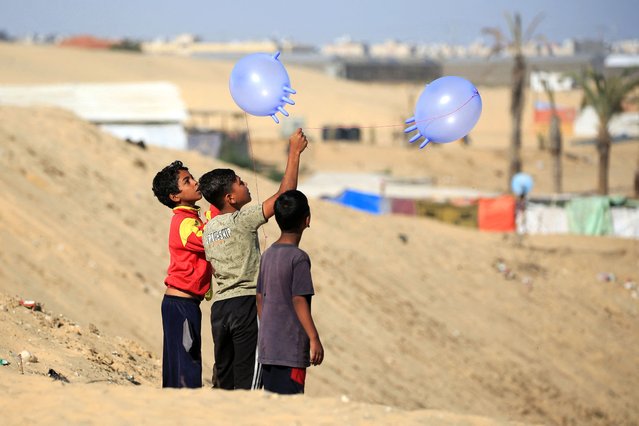
Displaced Palestinian children play with surgical rubber gloves in Rafah in the southern Gaza Strip, on May 31, 2024, amid the ongoing conflict between Israel and the Palestinian Hamas group. (Photo by Eyad Baba/AFP Photo)

Displaced Palestinian children play with surgical rubber gloves in Rafah in the southern Gaza Strip, on May 31, 2024, amid the ongoing conflict between Israel and the Palestinian Hamas group. (Photo by Eyad Baba/AFP Photo)
Details
19 Jun 2024 04:43:00
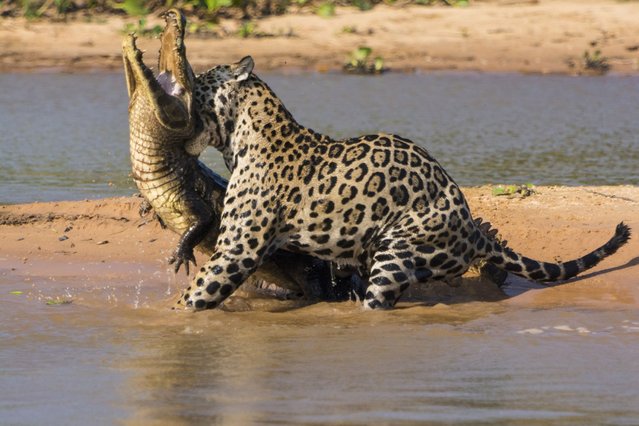
Jaguar attacks a Yacare Caiman. (Photo by Barcroft Media)

These stunning images show the 20-stone cat striking with lightning speed while the eight-foot reptile basks on a river island. The scene unfolded by the Cuiabá River in the Pantanal Wetlands of western Brazil. Photo: Jaguar attacks a Yacare Caiman. (Photo by Barcroft Media)
Details
28 Oct 2013 10:17:00