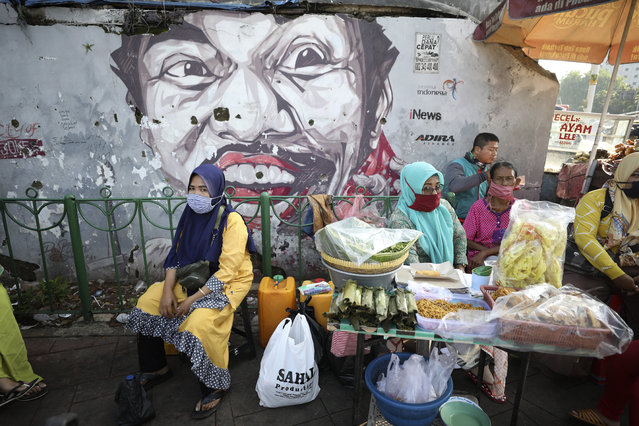
Indonesian women wearing masks as a precaution against the coronavirus outbreak sit at a food stall near a mural in Jakarta, Indonesia, Monday, September 21, 2020. (Photo by Dita Alangkara/AP Photo)
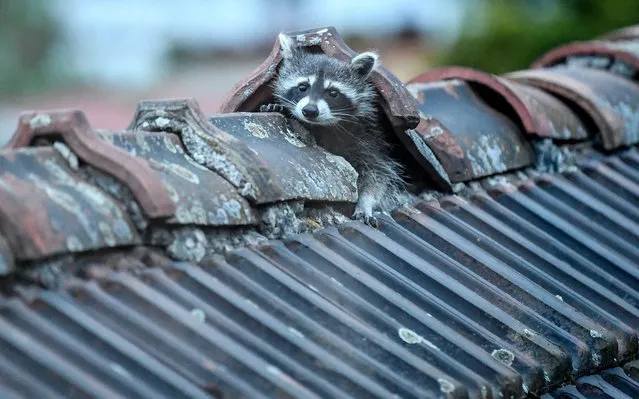
A raccoon crawls out of its hiding place on the roof in Berlin, Germany on May 12, 2020. Every evening he leaves his sleeping place to go in search of food. (Photo by Britta Pedersen/dpa-Zentralbild/dpa)
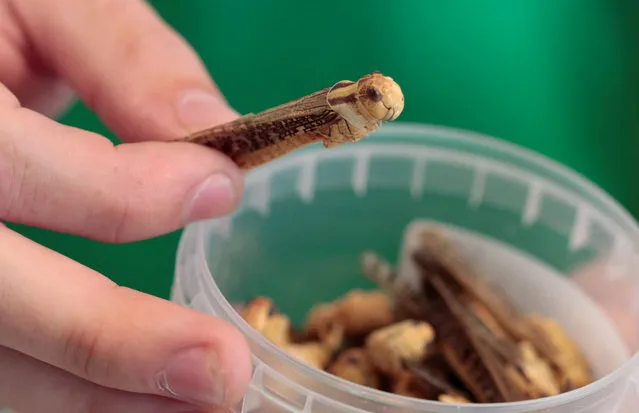
An attendee at the “Eating Insects Detroit: Exploring the Culture of Insects as Food and Feed” conference at Wayne State University shows an edible freeze-dried locust insect in Detroit, Michigan May 26, 2016. (Photo by Rebecca Cook/Reuters)
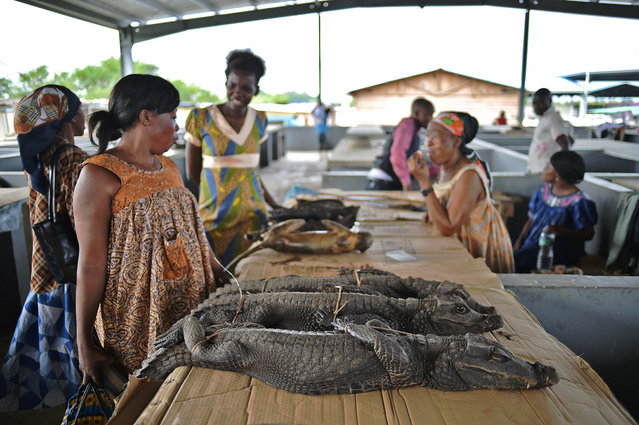
Shoppers walk past crocodiles for sale at a market in Bata on February 3, 2015. Markets in Equatorial Guinea sell a variety of animals including pangolins, monkeys and crocodiles as food. (Photo by Carl de Souza/AFP Photo)
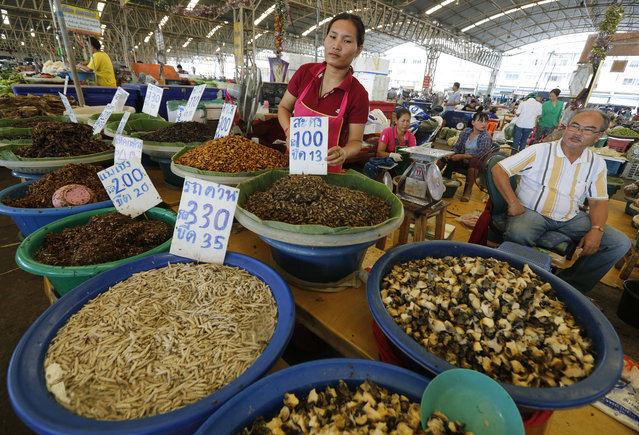
Thai vendors stand next to edible insects for sale at Talad Thai market in Pathum Thani province on the outskirts of Bangkok, Thailand, 15 July 2013. Insects have long been on the menu in Thailand, but academics and the United Nation's Food and Agriculture Organization (FAO) officials are hoping they will become a more common global source of protein and nutrients to meet the need for growing world food requirements in the future. (Photo by Narong Sangnak/EPA)
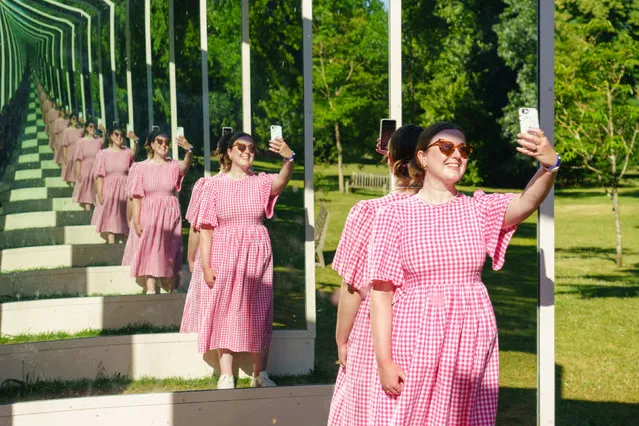
A visitor takes a selfie with “The Breach” by Leandro Erlich, during a photo call for Kew Gardens' forthcoming “Food Forever” exhibition, examining the fragile future of food and the impact of our day-to-day eating habits on the planet, at the Royal Botanic Gardens, in Kew, Richmond, Surrey on Thursday, June 16, 2022. (Photo by Dominic Lipinski/PA Images via Getty Images)
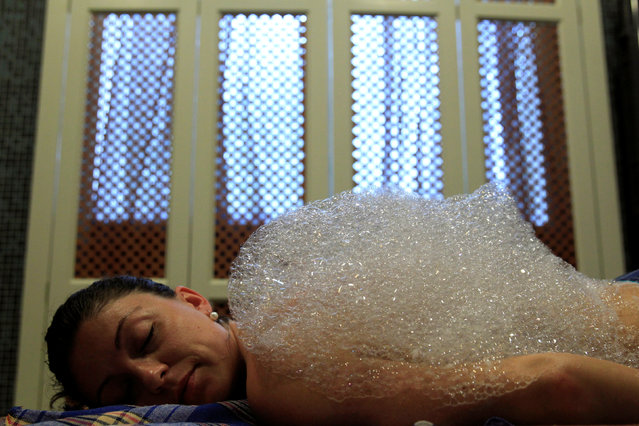
A woman is having a massage at the Lukacs Bath in Budapest, Hungary June 28, 2016. Hungary's capital owes its popularity as a tourist destination partly to its numerous hot springs and bathing culture which have drawn visitors to the area since Roman times. Bath houses range from large, ornate 19th-century buildings like the Gellert and the Szechenyi to tiny Ottoman Turkish-era hamams, some of them more than 500 years old. (Photo by Bernadett Szabo/Reuters)
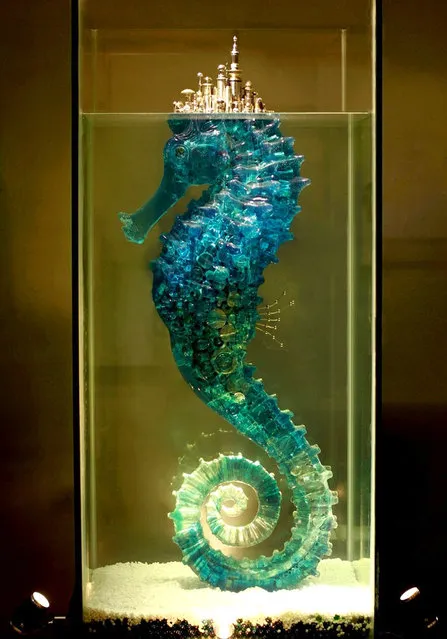
Hu Shaoming is a fantastic artist from China, who has learnt Fine Arts at Guangzhou Academy. The most complex sculpture of all his works is a mechanical seahorse, constructed from many tiny details. The whole composition consists of two complete opposites, including the top part of the seahorse`s head that looks like a golden town, and the bottom which resembles an amazing blue creature. An important problem is reflected in such an idea; it shows how a man forces the nature into submission. The contrast in the opposition of the human buildings and conquered Mother Nature suggests the thought of keeping our natural environment safe.