Loading...
Done


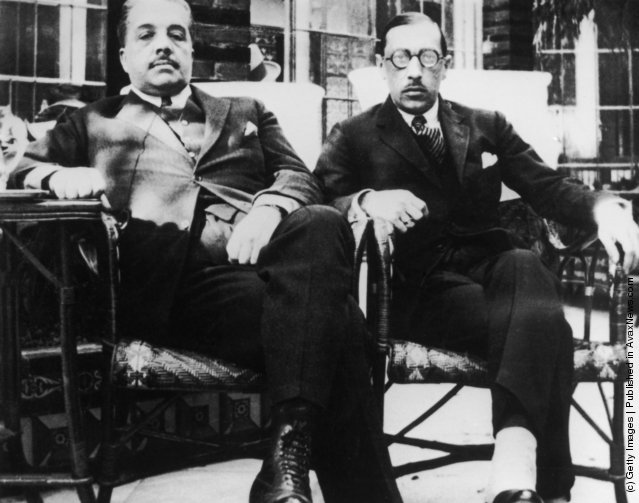
“Igor Fyodorovich Stravinsky (17 June [O.S. 5 June] 1882 – 6 April 1971) was a Russian-born, naturalized French, later naturalized American composer, pianist, and conductor. He is widely acknowledged as one of the most important and influential composers of 20th century music. He was a quintessentially cosmopolitan Russian who was named by Time magazine as one of the 100 most influential people of the century. He became a naturalized French citizen in 1934 and a naturalized US citizen in 1945. In addition to the recognition he received for his compositions, he also achieved fame as a pianist and a conductor, often at the premieres of his works”. – Wikipedia

Photo: Composer Igor Stravinsky (right) and impresario Sergei Diaghilev in Seville during their Ballets Russes collaboration. (Photo by Hulton Archive/Getty Images). 1921
Details
06 Apr 2011 07:59:00
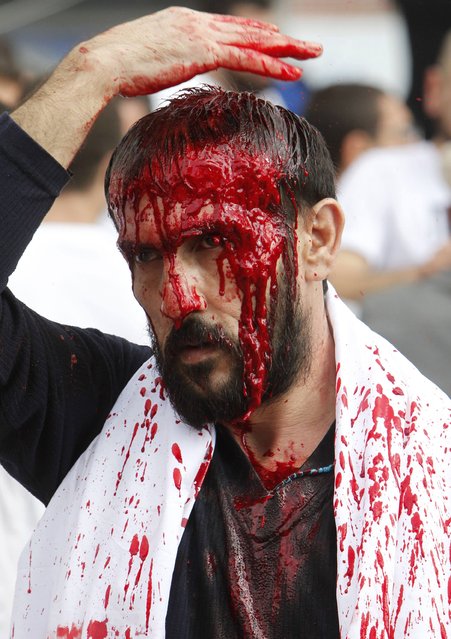
A Shi'ite Muslim man bleeds after tapping his forehead with a razor during a Muharram procession to mark Ashoura in Nabatieh town, southern Lebanon November 4, 2014. Ashoura, which falls on the 10th day of the Islamic month of Muharram, commemorates the death of Imam Hussein, grandson of Prophet Mohammad, who was killed in the seventh century battle of Kerbala. (Photo by Ali Hashisho/Reuters)

A Shi'ite Muslim man bleeds after tapping his forehead with a razor during a Muharram procession to mark Ashoura in Nabatieh town, southern Lebanon November 4, 2014. Ashoura, which falls on the 10th day of the Islamic month of Muharram, commemorates the death of Imam Hussein, grandson of Prophet Mohammad, who was killed in the seventh century battle of Kerbala. (Photo by Ali Hashisho/Reuters)
Details
04 Nov 2014 11:42:00
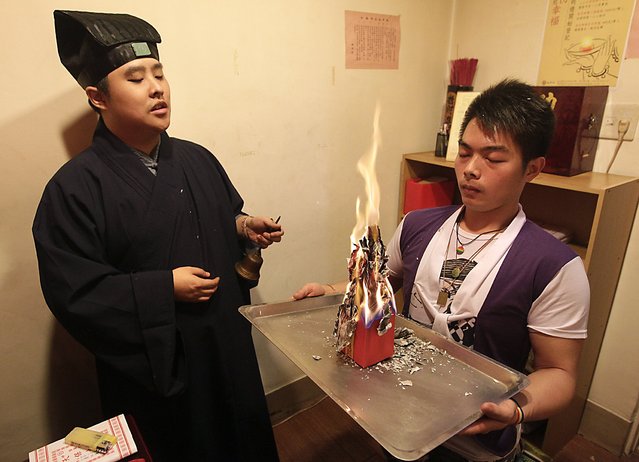
Lu Wei-ming (L), priest of the Wei-ming temple, and a worshipper burn a Taoist paper amulet during a prayer ritual at the temple in New Taipei city January 8, 2015. The shrine, down a narrow alleyway in a bustling district of the city, is dedicated to a deity who has watched over homosexuals for four centuries. (Photo by Pichi Chuang/Reuters)

Lu Wei-ming (L), priest of the Wei-ming temple, and a worshipper burn a Taoist paper amulet during a prayer ritual at the temple in New Taipei city January 8, 2015. The shrine, down a narrow alleyway in a bustling district of the city, is dedicated to a deity who has watched over homosexuals for four centuries. Priest Lu founded the temple in 2006, at a time gays were excluded from most religious ceremonies. (Photo by Pichi Chuang/Reuters)
Details
21 Jan 2015 13:06:00
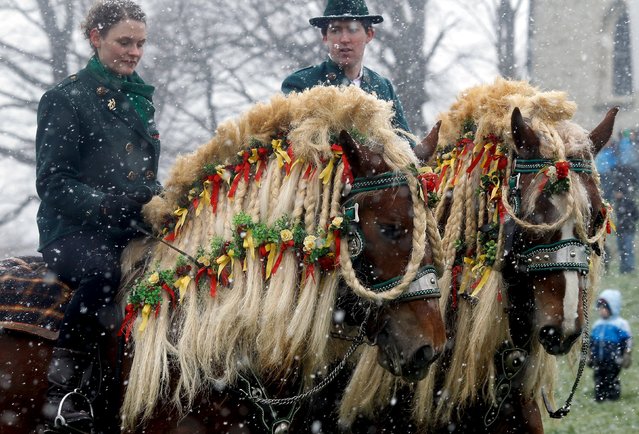
Pilgrims dressed in traditional Bavarian clothes attend the traditional Georgi horse riding procession on Easter Monday in heavy snowfall, in the southern Bavarian town of Traunstein April 6, 2015. Since the early 16th century, farmers have taken part in the pilgrimage to bless their horses. This tradition, the “Georgiritt”, goes back to the legend of Saint George, the horsemen's patron saint. (Photo by Michael Dalder/Reuters)

Pilgrims dressed in traditional Bavarian clothes attend the traditional Georgi horse riding procession on Easter Monday in heavy snowfall, in the southern Bavarian town of Traunstein April 6, 2015. Since the early 16th century, farmers have taken part in the pilgrimage to bless their horses. This tradition, the “Georgiritt”, goes back to the legend of Saint George, the horsemen's patron saint. (Photo by Michael Dalder/Reuters)
Details
07 Apr 2015 12:03:00
People appear dangling as a large-scale installation art piece by Leandro Erlich, named “Dalston House”, is displayed on June 24, 2013 in London, England. Part of the “Beyond Barbican” summer series of events, the interactive installation is a full facade of a late nineteenth-century Victorian terraced house built on the ground with a large mirror above it to reflect people as to appear dangling from the structure.  (Photo by Dan Dennison/Getty Images)

People appear dangling as a large-scale installation art piece by Leandro Erlich, named “Dalston House”, in London, England. Part of the “Beyond Barbican” summer series of events, the interactive installation is a full facade of a late nineteenth-century Victorian terraced house built on the ground with a large mirror above it to reflect people as to appear dangling from the structure. (Photo by Dan Dennison)
Details
02 Jun 2015 10:07:00
“Centuries ago, Inuit hunted the bowhead whale. At that time, whale hunting undoubtedly was part of a complex and very important ritual, if only because of the size of the catch. The position that the ancestors of today's Inuit occupied in the living world involved a relationship with the spirit that inhabited each animal but also their species”. (Photo by Robert Frechette/2014 Sony World Photography Awards)

“Centuries ago, Inuit hunted the bowhead whale. At that time, whale hunting undoubtedly was part of a complex and very important ritual, if only because of the size of the catch. The position that the ancestors of today's Inuit occupied in the living world involved a relationship with the spirit that inhabited each animal but also their species”. (Photo by Robert Frechette/2014 Sony World Photography Awards)
Details
16 Mar 2014 08:01:00
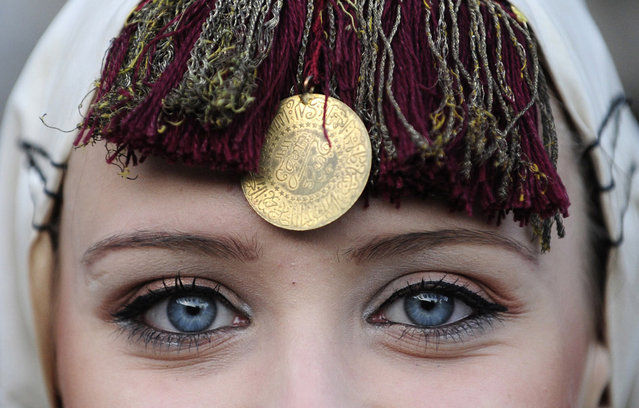
Women dressed in folk costumes take part in a traditional wedding ceremony in the village of Galicnik, west of Macedonia's capital Skopje, July 12, 2014. The Galicnik Wedding, a three-day traditional Macedonian wedding celebration held each “Petrovden” or St. Peter's Day, involves traditional customs, costumes, and rituals and dances that have been passed down over the centuries. (Photo by Ognen Teofilovski/Reuters)

Women dressed in folk costumes take part in a traditional wedding ceremony in the village of Galicnik, west of Macedonia's capital Skopje, July 12, 2014. The Galicnik Wedding, a three-day traditional Macedonian wedding celebration held each “Petrovden” or St. Peter's Day, involves traditional customs, costumes, and rituals and dances that have been passed down over the centuries. (Photo by Ognen Teofilovski/Reuters)
Details
19 Jul 2014 10:11:00
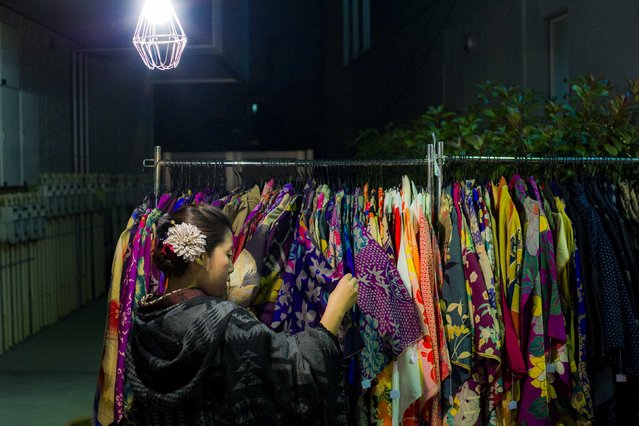
A woman browses through kimonos for sale at Boroichi flea market in Tokyo December 15, 2014. In the 16th century, Boroichi was a place for farmers to buy and sell rags, known as boro, for mending clothes and weaving sandals. Now in its 436th year, the original spirit lingers, with about 700 stands hawking fabric, used clothes and piles of rags. Others sell kitchen tools, pottery, seaweed and spices. (Photo by Thomas Peter/Reuters)

A woman browses through kimonos for sale at Boroichi flea market in Tokyo December 15, 2014. In the 16th century, Boroichi was a place for farmers to buy and sell rags, known as boro, for mending clothes and weaving sandals. Now in its 436th year, the original spirit lingers, with about 700 stands hawking fabric, used clothes and piles of rags. Others sell kitchen tools, pottery, seaweed and spices. About 200,000 people flock to the market, which is only open for four mid-winter days a year – two in December and two in January. (Photo by Thomas Peter/Reuters)
Details
19 Dec 2014 12:50:00